TL;DR:
- Regular driveway maintenance includes sweeping, power washing, sealing, and crack repairs.
- Sealing every 2-5 years extends driveway lifespan by protecting against moisture and UV damage.
- Proper drainage and winter precautions are crucial for Dublin's wet climate to prevent damage.
Your driveway does more work than you give it credit for. It takes the weight of vehicles daily, weathers Dublin's relentless rain, and forms the very first impression of your property. Yet most homeowners treat it as a permanent fixture that simply exists. The truth is, without regular upkeep, even a well-laid driveway deteriorates faster than you'd expect. Sweeping weekly and power washing annually removes the debris, moss, and algae that quietly break down surfaces over time. This guide covers everything you need to know: cleaning routines, sealing, crack repair, drainage, and seasonal care specific to Dublin's climate.
Table of Contents
- What driveway maintenance really involves
- Sealing and protection: extending driveway lifespan
- Repair and damage control: cracks, stains, and seasonal stress
- Managing drainage, weather impact, and long-term care
- What most driveway maintenance guides miss
- Get expert driveway maintenance support in Dublin
- Frequently asked questions
Key Takeaways
| Point | Details |
|---|---|
| Regular cleaning matters | Sweeping weekly and annual power washing are the foundation for preventing damage and prolonging driveway life. |
| Seal for lasting protection | Tarmac and concrete driveways need scheduled sealing to guard against water, UV, and stains. |
| Fix problems early | Prompt crack repair and treating stains prevent small issues from becoming costly repairs. |
| Adapt for Dublin’s weather | Proper drainage, gentle winter care, and managing moisture are crucial for local driveways. |
| Professional help adds value | Expert assessment, quality sealants, and pro repairs can boost curb appeal and save long-term costs. |
What driveway maintenance really involves
Most people assume maintenance means giving the driveway a spray with a hose now and again. In reality, it covers a range of tasks that vary depending on your surface type and how exposed your property is to traffic, shade, and rain.
The core tasks are straightforward:
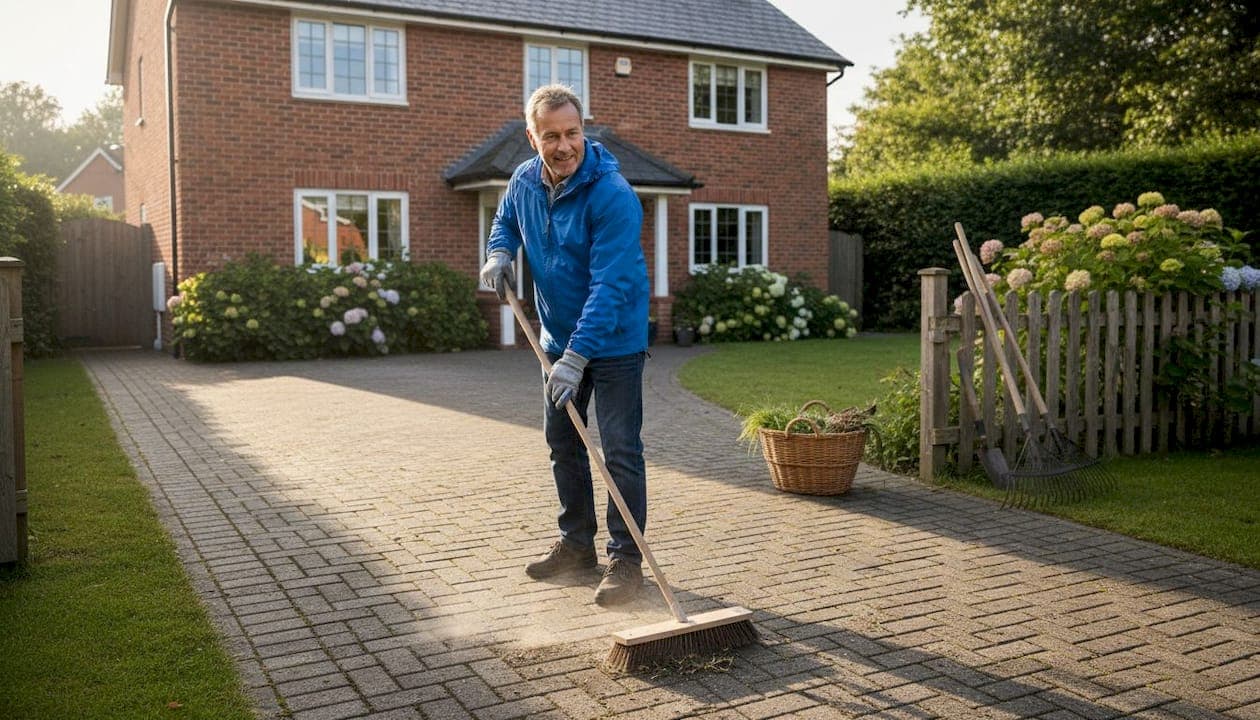
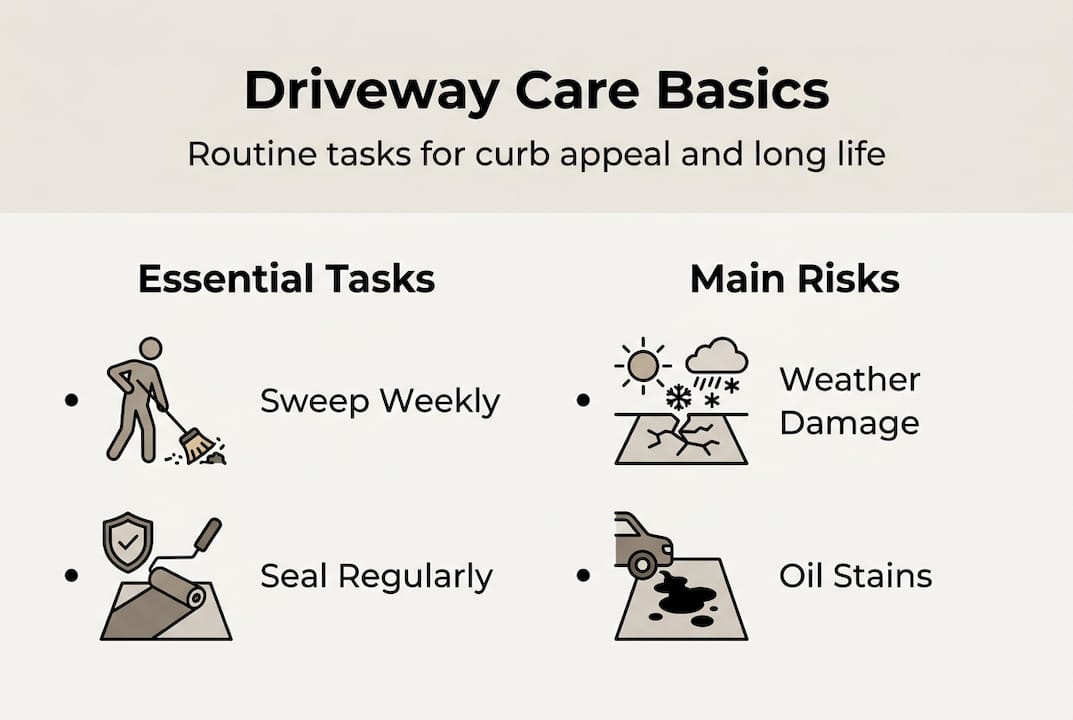
- Sweeping: Remove leaves, grit, and loose debris weekly. This prevents organic matter from breaking down and staining the surface.
- Power washing: Do this once a year, ideally in spring. It clears moss, algae, oil residue, and built-up grime.
- Weeding: Block paving joints attract weeds. Pull them early before roots widen cracks.
- De-mossing: Apply a moss treatment twice a year in shaded or damp areas.
- Edge maintenance: Keep borders clear to prevent soil creeping onto the surface.
Different surfaces have different needs. Tarmac is relatively forgiving but softens in heat and needs sealing to stay protected. Concrete is durable but prone to surface staining and cracking if moisture gets in. Block paving looks great but requires joint sand to be topped up after power washing, otherwise it becomes unstable.
| Surface type | Sweep | Power wash | Treat/seal |
|---|---|---|---|
| Tarmac | Weekly | Annually | Every 3-5 years |
| Concrete | Weekly | Annually | Every 2-3 years |
| Block paving | Weekly | Annually | Every few years |
For oil stains and heavy moss, standard garden hoses won't cut it. These need either a professional-grade pressure washer or a dedicated cleaning solution. Ignoring them allows them to penetrate the surface layer and cause lasting damage. Good driveway maintenance best practices also feed directly into boosting curb appeal, which matters if you ever plan to sell or let the property.
Pro Tip: After power washing block paving, always re-sand the joints. The high pressure dislodges the sand between blocks, and without it, the surface becomes loose and uneven over time.
Sealing and protection: extending driveway lifespan
Sealing is one of the most overlooked steps in driveway care. It acts as a barrier between your surface and everything that tries to break it down: water, UV rays, vehicle fluids, and frost. Yet a surprising number of Dublin homeowners skip it entirely.
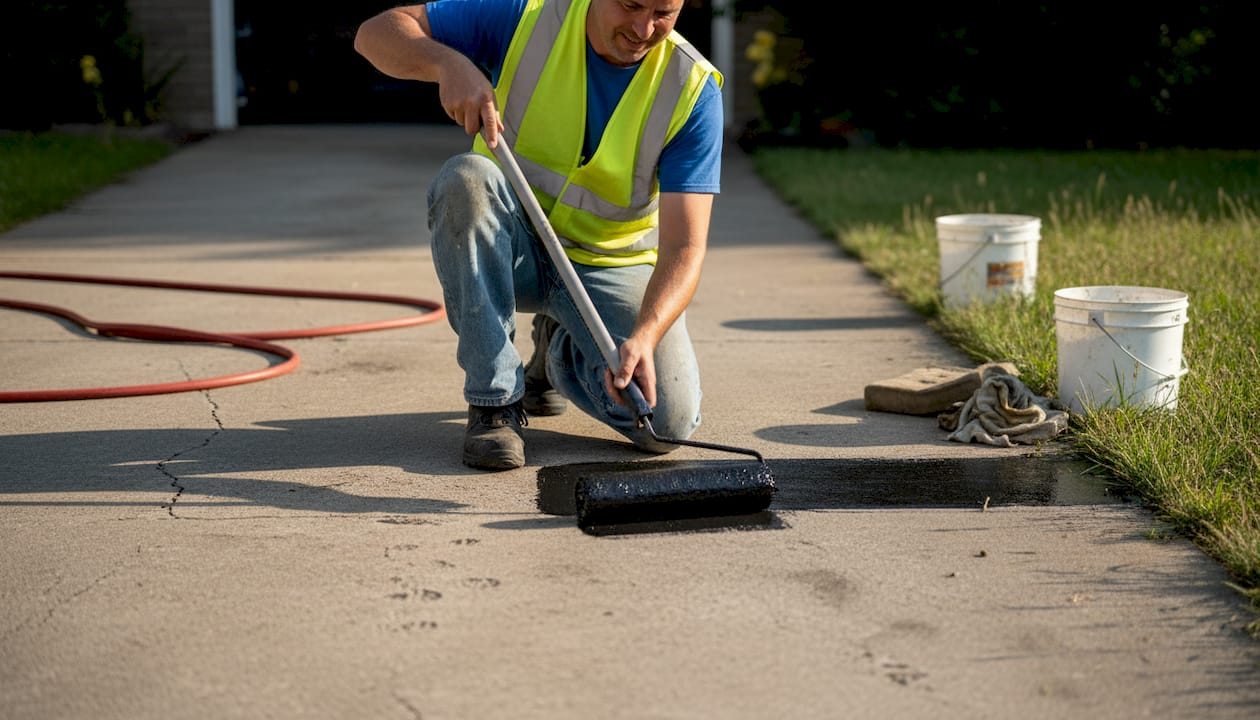
The sealing schedule varies by material. Tarmac and asphalt need sealing every 3-5 years. Concrete requires it every 2-3 years. Block paving should be sealed every few years, particularly after a thorough clean. These aren't arbitrary timelines. They reflect how quickly each material absorbs moisture and UV damage without a protective coat.
| Surface | Sealant type | Frequency | DIY viable? |
|---|---|---|---|
| Tarmac | Bitumen-based sealant | Every 3-5 years | Yes, with care |
| Concrete | Penetrating concrete sealer | Every 2-3 years | Yes |
| Block paving | Block paving sealer | Every 2-4 years | Yes |
The impact on lifespan is significant. Well-maintained tarmac lasts 15-30 years, concrete can reach 25-40 years, and asphalt performs well for 20-30 years. Regular maintenance, including sealing, can add 10 or more years to these figures. That's a meaningful return for a relatively modest investment of time and money.
For driveway material comparisons and long-term cost planning, it pays to understand what you're working with before choosing a sealant. Eco-sealants are increasingly available and worth considering. They perform comparably to conventional options, have lower volatile organic compound (VOC) emissions, and reduce environmental run-off, which is relevant given Ireland's water quality regulations.
Professional sealing is worth it for larger driveways or where the surface has existing cracks and joints that need preparation. A pro will clean, repair, and prime before applying the sealant, which makes the coating last considerably longer. DIY is fine for smaller, straightforward surfaces in good condition. For anything more complex, protecting exterior surfaces with professional input is the smarter call.
Pro Tip: Never seal a driveway that hasn't been properly cleaned first. Trapping moisture or debris beneath the sealant speeds up deterioration rather than preventing it.
Repair and damage control: cracks, stains, and seasonal stress
Even well-maintained driveways develop problems. The key is catching them early. A small crack left untreated allows water in. Water freezes, expands, and widens the crack. What started as a hairline fracture becomes a pothole.
Here's a practical inspection and repair process:
- Inspect twice a year: Check in spring after winter and again in autumn before temperatures drop. Look for cracks, surface lifting, sunken areas, and loose blocks.
- Measure crack width: Hairline cracks under 3mm can be sealed with a liquid crack filler. Wider cracks need a rubberised filler for asphalt or a patching compound for concrete, as highlighted in crack repair guidance.
- Clean before you fill: Remove all grit and debris from the crack with a wire brush before applying any filler. Adhesion depends on a clean surface.
- Address stains immediately: Oil, fuel, and algae stains should be treated the day they appear. Use an absorbent like cat litter for fresh oil spills, then scrub with a degreasing detergent.
- Call in professionals for large areas: If cracking covers more than 25% of the surface, or if the base layer is shifting, repairs beyond filler are needed.
"Oil stains need immediate treatment to avoid permanence; shaded and wet areas prone to moss require hot water, detergent, or professional cleaning." Block paving maintenance
Winter is particularly hard on Dublin driveways. The freeze-thaw cycle is the primary culprit. Water sits in micro-cracks overnight, freezes, and forces the crack wider. A post-winter driveway inspection is essential every spring. Pairing that with winter driveway care and removing driveway stains promptly keeps costs down and avoids premature resurfacing.
Heavy traffic driveways, such as those serving apartment complexes or multiple vehicles, wear faster. Sealing and inspecting on the shorter end of each recommended interval is the right approach for these properties.
Managing drainage, weather impact, and long-term care
Dublin's rainfall is consistent throughout the year. That means drainage isn't optional. It's a fundamental part of driveway design and ongoing maintenance. Poor drainage accelerates almost every problem: cracking, staining, moss growth, surface erosion, and frost damage.
Here's what to check and maintain:
- Slope: Your driveway should slope slightly away from the property, ideally 1-2% gradient, to direct water towards the road or a drainage channel rather than pooling near the house.
- Drainage channels: Clear any gullies or channels at least twice a year. Autumn leaf fall blocks them quickly.
- Gutters and downpipes: Make sure they don't discharge directly onto the driveway surface. Concentrated water flow erodes even robust materials.
- Permeable surfaces: If you're planning a new driveway or major resurfacing, permeable options such as resin-bound aggregate or permeable block paving handle drainage in Ireland's climate far better than solid concrete.
- Edging integrity: Broken or sunken edging allows water to pool along borders. Check and repair these annually.
Winter care in Ireland requires specific steps. Avoid salt-based de-icers on concrete and block paving. They accelerate surface breakdown and can damage nearby plants. Use sand or fine grit instead for traction. When clearing snow or ice, use plastic shovels rather than metal, which scratch and gouge surfaces. After any cold spell, inspect for new cracks before water gets the chance to work its way in.
Handling exterior weather issues is a recurring responsibility for Dublin property owners. Building drainage checks into your seasonal routine, alongside groundskeeping for property owners, keeps the whole exterior performing well year-round.
For properties with weatherproofing needs beyond standard maintenance, consider a professional assessment that looks at both the driveway and its surroundings together.
What most driveway maintenance guides miss
Most guides focus on the obvious: clean it, seal it, fix the cracks. That's sound advice. But in our experience working with Dublin properties, the problems that lead to early replacement usually come from a handful of oversights that rarely get mentioned.
The biggest one is sealant selection. Applying the wrong sealant for your surface type doesn't just fail to protect, it can trap moisture and accelerate deterioration. Professional sealing and repairs consistently outperform DIY for longevity, and that gap widens significantly when the surface needs preparation work first.
The second is re-sanding after power washing. It's one of the most common mistakes we see with block paving. The sand goes, the blocks shift slightly, and within a season or two the surface starts to look uneven and worn.
Finally, drainage is treated as a construction issue rather than a maintenance one. It isn't. Gutters block, channels shift, and gradients can change after ground movement. Check professional maintenance impact on your property's long-term value and you'll see why the details matter far more than most people expect.
Get expert driveway maintenance support in Dublin
Knowing what to do and having the time and equipment to do it properly are two different things. Sealing, power washing, crack filling, and drainage checks all benefit from the right tools and a trained eye.

At Sherry Property Care, we work with homeowners and property managers across Dublin to keep driveways and exterior surfaces in excellent condition. Whether you need a one-off power wash, a full sealing treatment, or an ongoing maintenance plan for an apartment complex, we're here to help. Get in touch for a free quote and we'll assess exactly what your driveway needs to stay protected and looking its best.
Frequently asked questions
How often should I clean my driveway in Dublin?
Sweep weekly and power wash once a year for best results in Dublin's damp climate. This removes moss, algae, and debris before they cause surface damage.
Is sealing really necessary for my driveway?
Yes. Sealing tarmac every 3-5 years and concrete every 2-3 years protects against moisture, UV exposure, and staining. Skipping it shortens surface life considerably.
How do I deal with oil stains and moss?
Oil stains need immediate treatment to prevent them becoming permanent. Use an absorbent material first, then a degreasing detergent. For persistent moss, hot water and detergent work well, or consult a professional.
What is the expected lifespan of a well-maintained driveway?
Tarmac lasts 15-30 years, concrete up to 40 years, and asphalt 20-30 years with regular upkeep. Consistent maintenance can add a decade or more to any of these.
How does Dublin weather affect driveway care?
Frequent rain makes drainage essential, and winter requires sand instead of de-icers to protect surfaces from chemical damage. Post-winter inspections catch freeze-thaw cracks before they worsen.