TL;DR:
- Choosing a grounds maintenance provider with a modern fleet and thorough servicing records is essential for Dublin commercial properties.
- Battery-powered tools and robotic mowers are increasingly practical, reducing costs and environmental impact on large sites.
The best choice for any commercial property in Dublin is a provider with a modern, well-maintained fleet, documented servicing records, spare machines on hand, and trained crews — not one particular brand or model. Landscaping maintenance can boost property value significantly, which makes the quality of your provider's equipment directly relevant to your asset.
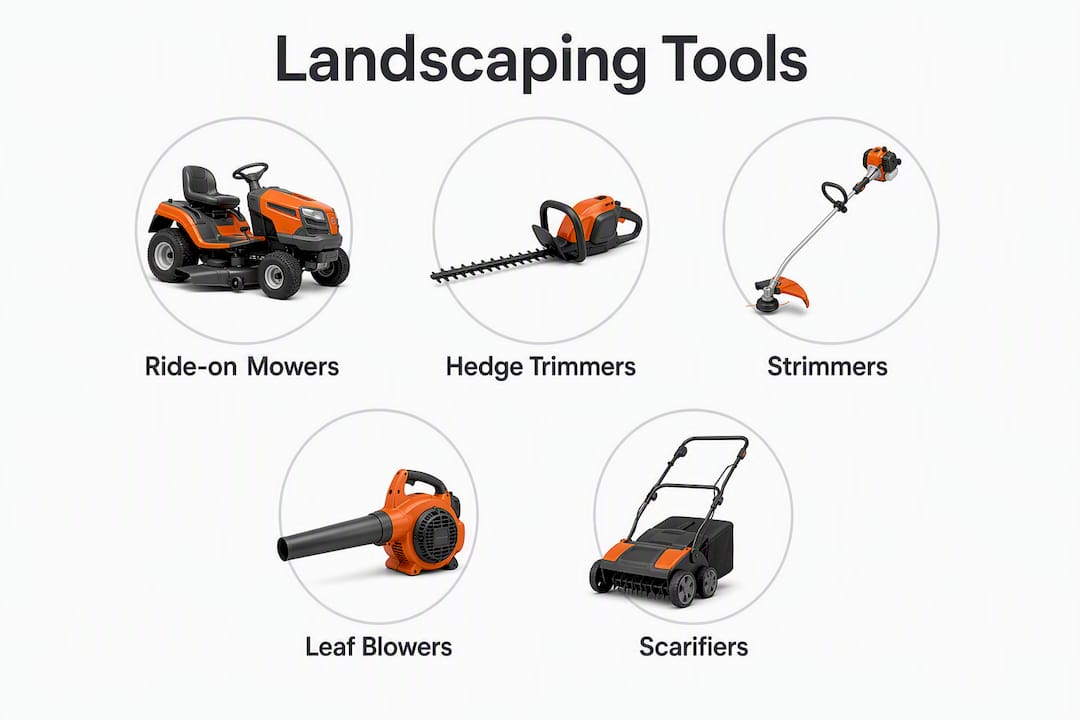
For large commercial sites, the machine categories that matter most are:
- Ride-on, tractor, and flail mowers for open lawns and rough ground
- Commercial hedge trimmers and pole trimmers for boundary and formal hedging
- Strimmers and brushcutters for edges and hard-to-reach areas
- Scarifiers for turf health on high-use lawns
- Leaf blowers and vacuums for seasonal clearance
- Chippers for green waste reduction
- Pressure washers for hard surfaces and car parks
On first contact with any provider, ask for HSE compliance records, evidence of HAVS monitoring, operator training certificates, and public liability insurance. Then book a site visit and send photos so you receive a written, tailored quote.
Table of Contents
- What operator training and insurance tell you about a provider
- How often should commercial grounds be maintained?
- Which brands and models lead on durability and output?
- Are eco-friendly options practical for commercial sites?
- How battery tools and smart equipment are changing commercial maintenance
- How long do professional landscaping tools last?
- Sherrypropertycare: grounds maintenance for Dublin commercial properties
- Key takeaways
- FAQ
What operator training and insurance tell you about a provider
Certifications and insurance are the clearest indicators of a professional operation. A credible commercial provider will hold public liability insurance, carry method statements for each task, and employ operators trained to the relevant standard for each machine category. Ask specifically for evidence of vibration exposure monitoring under the Control of Vibration at Work Regulations 2005, which set a daily exposure action and limit values for vibration exposure. Providers who cannot produce HAVS records are a red flag.
References and before-and-after photos from comparable Dublin sites are equally telling. A provider confident in their work will share them without hesitation.
How often should commercial grounds be maintained?
Most commercial properties in Dublin require grounds maintenance on a scheduled basis, typically fortnightly or monthly during the growing season and less frequently in winter. A planned maintenance schedule should specify visit frequency, tasks per visit, response times for reactive work, and invoicing cadence. One-off clearances are available for sites that have fallen behind, but a rolling contract delivers better results and more predictable costs.
Which brands and models lead on durability and output?
For commercial grounds maintenance, durability and output per pass matter more than brand prestige. The Billy Goat PL2501SPH aerator, powered by a Honda 196 cc engine, covers up to 4,000 m² per hour and is built for hire-fleet reliability. The Kress KC270.9 60V pole hedge trimmer delivers cutting power with a brushless motor and an articulating head for reduced operator fatigue on tall hedging. John Deere's ride-on range and Husqvarna's professional battery systems are widely used across Dublin commercial sites for their serviceability and parts availability.
The real differentiator is not the model name. It is whether the provider owns multiple units, services them regularly, and can deploy a replacement if one fails mid-contract.
Are eco-friendly options practical for commercial sites?
Battery-powered professional tools have become genuinely viable for commercial use. Husqvarna's professional battery systems reduce fuel costs and noise on sensitive sites such as office campuses and residential blocks. Cordless leaf blowers and battery hedge trimmers with rapid-swap systems allow crews to work continuously without refuelling. For turf management, robotic mowers such as the STIGA APX Pro use GPS-RTK navigation to cover up to 27,000 m² per charge cycle autonomously, cutting emissions and staff hours on large open sites.
How battery tools and smart equipment are changing commercial maintenance
The shift to battery and robotic kit is accelerating across commercial property maintenance. GPS-guided robotic mowers reduce the number of passes per service, helping lower labour costs. Smart fleet management tools let providers track machine hours, schedule servicing, and monitor operator vibration exposure in real time. For property managers, this means fewer disruptions, quieter sites, and providers who can demonstrate compliance data at any point.
How long do professional landscaping tools last?
Commercial-grade machines, when properly serviced, typically last many years longer than consumer equivalents. Blade sharpening, filter changes, oil intervals, and battery cycle management all affect operational lifespan. A provider with in-house servicing and spare units on standby reduces contract risk considerably. Always ask how old the fleet is, when each machine was last serviced, and whether the provider carries spare units for key categories.
Sherrypropertycare: grounds maintenance for Dublin commercial properties
Sherrypropertycare delivers commercial grounds maintenance across Dublin, covering scheduled lawn care, hedge and tree work, scarifying, leaf clearance, power washing, and one-off site clearances. The practical advantage over managing grounds ad hoc is straightforward: one provider, one written contract, and no equipment headaches on your side.

Sherrypropertycare provides equipment maintenance records, HAVS monitoring evidence, operator training certificates, and public liability insurance on request. Written quotes follow a site visit or photo submission, so pricing reflects your actual site rather than a generic estimate. Modern battery and robotic kit in the fleet reduces passes per service and keeps noise levels low on occupied sites.
Pro Tip: Send photos of your full site boundary, any access restrictions, and areas of overgrowth before requesting a quote. It cuts the back-and-forth and gets you an accurate figure faster.
Cost drivers to expect in any commercial quote include labour hours, visit frequency, equipment type, access and traffic management, waste disposal, and site complexity. The more detail you provide upfront, the more accurate your quote will be.
Ready to get a written quote? Contact Sherrypropertycare with your site photos and preferred frequency.
Key takeaways
For commercial properties in Dublin, the provider's fleet quality, servicing records, and HSE compliance matter far more than any single tool brand.
| Point | Details |
|---|---|
| Provider over product | Choose a contractor with a maintained fleet and spare units, not the latest model name. |
| HSE and HAVS compliance | Require vibration exposure records; the legal daily limit value is 5 m/s² under the 2005 Regulations. |
| Contract frequency | Most Dublin commercial sites need fortnightly or monthly visits during the growing season. |
| Battery and robotic kit | GPS-RTK robotic mowers and battery tools reduce passes, noise, and long-term labour costs. |
| Sherrypropertycare | Provides written quotes after site visits or photo submissions, with full insurance and maintenance records available. |
FAQ
What machines should a commercial landscaping provider own?
A credible provider should carry ride-on or flail mowers, commercial hedge trimmers, strimmers, scarifiers, leaf blowers, chippers, and pressure washers. Spare units for key categories reduce the risk of contract delays.
What is HAVS and why does it matter for commercial landscaping?
Hand-arm vibration syndrome (HAVS) is a risk from prolonged use of vibrating tools. The Control of Vibration at Work Regulations 2005 set a daily exposure limit of 5 m/s²; ask any provider for their vibration monitoring records before signing a contract.
How often do commercial grounds need professional maintenance?
Most commercial sites in Dublin require fortnightly or monthly visits during the growing season, with reduced frequency in winter. A written planned maintenance schedule should confirm exact visit intervals.
Can battery-powered tools handle large commercial sites?
Yes. Professional battery systems from manufacturers such as Husqvarna, combined with GPS-RTK robotic mowers covering up to 27,000 m² per charge cycle, are now practical for large commercial sites and reduce both fuel costs and noise.
How does Sherrypropertycare quote for commercial work?
Sherrypropertycare provides written quotes following a site visit or photo submission, so the price reflects your specific site conditions, access requirements, and preferred maintenance frequency.