TL;DR:
- Regular scheduled maintenance boosts property value and reduces costly repairs.
- Seasonal planning and professional expertise optimize grounds and surface upkeep in Dublin's climate.
- Consistent care attracts quality tenants and enhances curb appeal significantly.
Keeping a commercial property in top condition is one of the most direct ways to protect its value and attract quality tenants. Poor upkeep leads to costly repairs, lower rental yields, and a weaker first impression. Landscaping alone boosts perceived value by up to 12%, and preventive maintenance consistently costs less than corrective work. For Dublin property managers and commercial owners, having a clear, structured approach to grounds care and surface cleaning is not optional. It is essential. This guide walks you through everything you need, from understanding your property's specific needs to verifying results and troubleshooting problems before they become expensive.
Table of Contents
- Understanding commercial property maintenance needs
- Preparing for year-round property care
- Step-by-step: Maintaining gardens and exterior surfaces
- Verifying results and troubleshooting common issues
- Why regular professional care outperforms DIY fixes
- Enhance your property with Dublin's leading maintenance experts
- Frequently asked questions
Key Takeaways
| Point | Details |
|---|---|
| Maintenance boosts value | Professional care can increase commercial property appeal and value by up to 12%. |
| Prevention saves costs | Routine, scheduled maintenance prevents costly repairs and extends asset life. |
| Seasonal planning matters | Planning seasonal tasks ensures gardens and surfaces stay attractive and safe all year. |
| Verification is key | Regular outcome checks and records ensure lasting results and rapid issue resolution. |
Understanding commercial property maintenance needs
Neglecting a commercial property does not just affect its appearance. It affects your bottom line. Cracked paving, overgrown hedges, and stained surfaces signal poor management to prospective tenants and visitors. The longer these issues are left, the more expensive they become to fix.
To boost curb appeal and value, you need to understand what areas of your property require regular attention. Most commercial properties in Dublin share the same core maintenance zones:
- Exterior surfaces: Car parks, pathways, entrance steps, and paved areas that accumulate dirt, moss, and staining over time
- Gardens and planted areas: Lawns, flower beds, hedges, and trees that require seasonal care to stay healthy and presentable
- Drainage and guttering: Often overlooked but critical for preventing water damage and surface deterioration
- Boundary features: Fencing, walls, and gates that affect both security and visual appeal
- Building facades: Rendered or painted surfaces that benefit from periodic cleaning and inspection
The financial case for staying on top of these areas is clear. Preventive maintenance reduces costs significantly compared to corrective work. A blocked drain left unattended can cause subsidence. An overgrown garden can deter tenants before they even step inside.
For property maintenance in Dublin, the local climate adds another layer of complexity. Dublin's wet winters and mild summers create ideal conditions for moss growth on surfaces, waterlogging in garden beds, and accelerated wear on exterior materials. Knowing this helps you prioritise tasks at the right time of year.
The key takeaway here is simple. Reactive maintenance is always more expensive than planned maintenance. Building a schedule around your property's specific zones means fewer surprises, lower costs, and a consistently presentable property throughout the year.
Preparing for year-round property care
A solid maintenance plan does not happen by accident. It requires a seasonal structure, the right tools, and clear records. Without these, tasks get missed and problems compound.
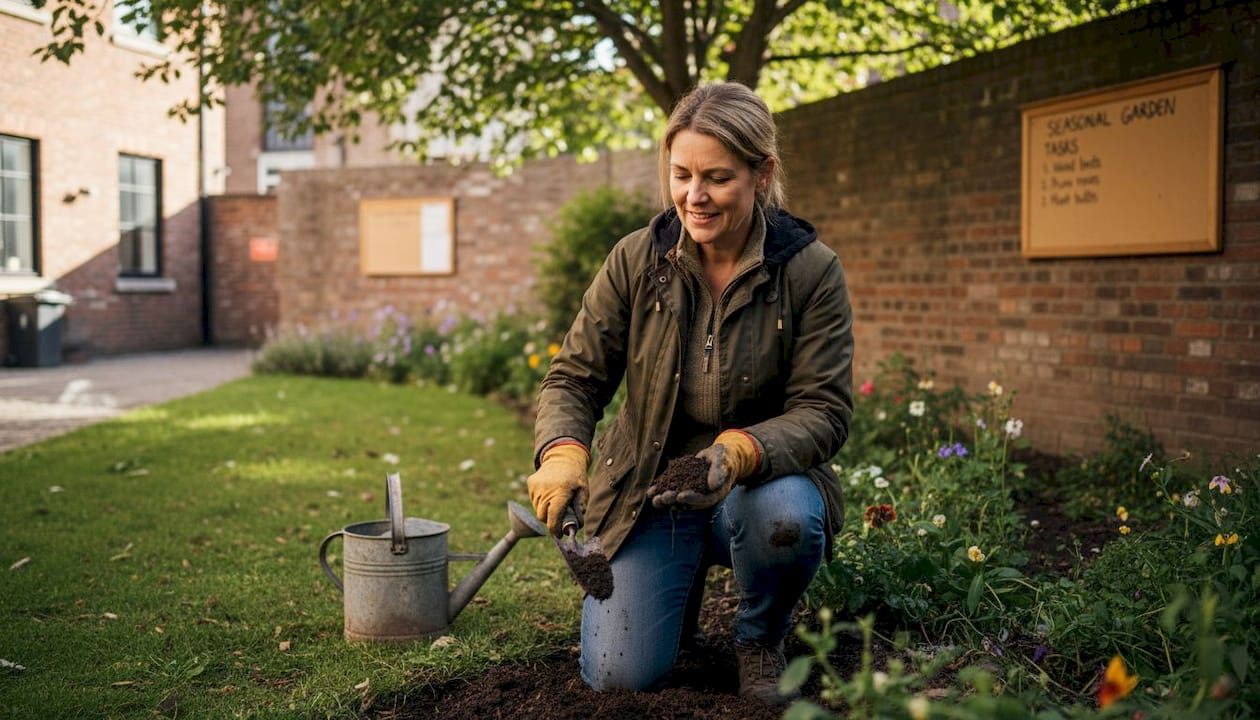
Year-round seasonal grounds maintenance follows a consistent pattern: autumn is for fertilising, soil testing, and rodent prevention; winter is for monitoring and minor repairs; spring is for aerating, fertilising again, and installing pest barriers; summer is for active growth management and surface cleaning. Choosing pest-resistant plants and maintaining proper irrigation also reduces the burden across all seasons.
Here is a comparison of seasonal priorities to help you plan:
| Season | Gardening tasks | Surface tasks |
|---|---|---|
| Spring | Aerate, fertilise, plant, pest barriers | Jet wash paths, clear moss |
| Summer | Mow, trim hedges, water management | Stain removal, inspect surfaces |
| Autumn | Fertilise, soil test, leaf clearance | Seal surfaces, clear drains |
| Winter | Monitor, rodent prevention, prune | Inspect for frost damage |
For seasonal maintenance tips tailored to Dublin properties, timing matters. Starting spring tasks too late means your grounds look tired during the busiest letting season.
A good preparation checklist should include:
- Lawnmower, hedge trimmer, and leaf blower in working order
- Fertiliser and soil treatment products appropriate for the season
- Pest barriers and rodent deterrents ready before autumn
- Jet washer with appropriate nozzles for different surface types
- Safety gear including gloves, goggles, and non-slip footwear
- A maintenance log to record dates, tasks completed, and any issues spotted
For effective maintenance scheduling, digital calendars or property management software work well. Set recurring reminders for monthly and seasonal tasks so nothing falls through the gaps.
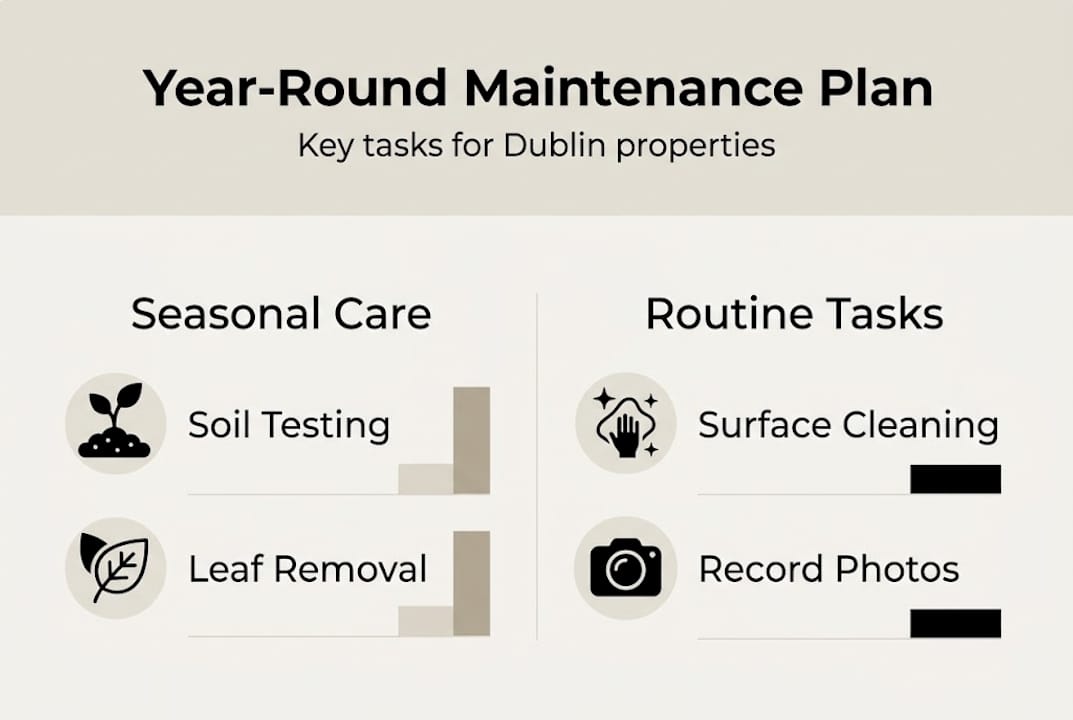
Pro Tip: Walk your entire property at the start of each season and photograph any issues. This creates a visual record that helps you track progress and justify maintenance spend to stakeholders.
Step-by-step: Maintaining gardens and exterior surfaces
With your plan in place, consistent execution is what delivers results. Here is a practical step-by-step approach to the two core areas: gardens and exterior surfaces.
Garden maintenance steps:
- Mow lawns regularly at the correct height for the season. Cutting too short weakens grass and encourages weeds.
- Edge borders and paths to keep planted areas looking neat and defined.
- Prune hedges and shrubs to maintain shape and prevent overgrowth onto pathways or neighbouring areas.
- Apply fertiliser according to your seasonal schedule, using products suited to Dublin's soil conditions.
- Check for pests on leaves, stems, and soil surfaces. Early detection prevents widespread damage.
- Water planted areas consistently during dry spells, using drip irrigation where possible to reduce waste.
For step-by-step garden maintenance guidance specific to Dublin conditions, following a structured routine makes a visible difference within weeks.
Surface cleaning steps:
- Sweep all hard surfaces to remove loose debris before applying water or cleaning agents.
- Apply a suitable pre-treatment to heavily stained or moss-covered areas and allow it to dwell.
- Jet wash surfaces using appropriate pressure for the material. Concrete tolerates higher pressure than block paving.
- Treat stubborn stains with targeted products and re-wash if needed.
- Inspect for cracks or damage while surfaces are clean and visible.
Year-round seasonal grounds maintenance recommends pairing surface work with garden tasks in the same visit to maximise efficiency.
Safety note: Always use non-slip footwear when jet washing. Wet surfaces are hazardous. Ensure bystanders are clear of the area before operating high-pressure equipment.
Pro Tip: To streamline your maintenance workflow, group tasks by zone rather than by type. Complete all work in one area before moving to the next. This reduces equipment movement and saves time.
| Task | Frequency | Key tool |
|---|---|---|
| Lawn mowing | Weekly (summer) | Lawnmower |
| Hedge trimming | Monthly | Hedge trimmer |
| Jet washing paths | Monthly | Pressure washer |
| Fertilising | Seasonal | Spreader |
| Pest inspection | Fortnightly | Visual check |
Verifying results and troubleshooting common issues
Doing the work is only half the job. Checking that it has been done correctly, and catching problems early, is what separates good maintenance from great maintenance.
After each maintenance visit, walk the property and check against these key points:
- Lawn edges are clean and defined with no ragged borders
- Hedges are uniform in height and shape with no bare patches
- Hard surfaces are free of moss, staining, and standing water
- Planted beds are weed-free and mulched where appropriate
- Drainage channels and gullies are clear and flowing freely
- No visible pest damage on plants or turf
For outdoor space upkeep that holds its standard over time, keeping a written or photographic record after each visit is invaluable. It helps you spot patterns, such as recurring moss in a shaded corner or persistent weeds in a particular bed.
Common issues and how to address them:
Uneven grass growth often points to compacted soil or poor drainage. Aerating in spring and adjusting watering frequency usually resolves it. Recurring surface stains that return quickly after cleaning suggest an underlying source, such as a leaking pipe or oil drip. Address the source, not just the symptom. Pest damage appearing repeatedly in the same area indicates a nearby habitat. Removing shelter sources like dense leaf litter or debris piles reduces the risk.
Preventive maintenance reduces costs far more effectively than corrective work, and this is where your records pay off. When you can show that a problem was caught early and addressed, you avoid the larger bills that come from deferred action.
For a clearer picture of what professional service covers, groundskeeping services explained outlines the scope of work that experienced teams bring to each visit.
Pro Tip: Set a quarterly review date where you compare current photos with those taken three months prior. This gives you an objective view of progress and helps you justify ongoing maintenance investment.
Why regular professional care outperforms DIY fixes
Many property managers start with good intentions. They schedule ad hoc work when something looks bad, bring in contractors reactively, or rely on a general handyman for everything from gardening to surface cleaning. In our experience, this approach always costs more in the long run.
Consistency is what drives value. A property that receives regular, scheduled care looks better, attracts better tenants, and avoids the large corrective bills that come from deferred maintenance. One-off fixes rarely address root causes.
Local professional services also understand Dublin's specific conditions. They know when to fertilise for Irish soil, how to manage moss growth in wet winters, and which surface treatments hold up against local weather. That knowledge is not something a general contractor brings.
When you compare local maintenance versus national chains, the difference in responsiveness and contextual knowledge is significant. A local team can react quickly, knows your property, and builds a relationship that improves service over time. That consistency is where the real value lies.
Enhance your property with Dublin's leading maintenance experts
If you manage commercial property in Dublin and want reliable, consistent results, working with a trusted local provider makes the process straightforward.

Sherry Property Care offers professional gardening, grounds maintenance, and surface cleaning services tailored to Dublin commercial properties. From lawn mowing and hedge trimming to jet washing and seasonal planting, every service is carried out to a high standard with attention to detail. Whether you manage a single building or a portfolio of properties, we can put together a maintenance plan that fits your schedule and budget. For expert landscaping solutions and a free quote, get in touch today and let us show you what consistent professional care looks like.
Frequently asked questions
What is the most cost-effective maintenance plan for a Dublin commercial property?
A year-round preventative maintenance schedule is most cost-effective, as preventive maintenance reduces costs significantly compared to ad hoc or corrective work. Planning tasks by season ensures nothing is missed and spend is spread evenly throughout the year.
How often should exterior surfaces and gardens be professionally maintained?
Surfaces should be cleaned at least monthly and gardens serviced seasonally as a minimum, with more frequent visits recommended for high-traffic or exposed properties. Year-round seasonal maintenance is widely recommended for best results.
Can effective property maintenance really increase rental value?
Yes. Quality landscaping and consistent upkeep can lift perceived property value by 12%, making well-maintained properties more attractive to prospective tenants and buyers.
What tools or materials are essential for commercial grounds care?
Essential tools include lawnmowers, hedge trimmers, fertilisers, pest barriers, jet washers, and safety gear. Year-round grounds maintenance guidance specifies that tool selection should be tailored to the season and the specific surfaces or planted areas being managed.