TL;DR:
- Scheduled maintenance prevents costly repairs and enhances property value in Dublin.
- Regular upkeep improves energy efficiency, BER ratings, and tenant satisfaction.
- Proactive planning ensures legal compliance and protects landlords' investments.
Most Dublin property owners see maintenance as a cost to be delayed as long as possible. That thinking is understandable, but it leads to bigger bills, more stress, and lost rental income. The reality is that scheduled maintenance is one of the most reliable ways to protect and grow your property's value in a competitive market like Dublin. This article breaks down exactly how planned maintenance works, what it costs, what the law requires, and how you can use it to stay ahead, whether you manage a single rental home or a portfolio of commercial properties.
Table of Contents
- How scheduled property maintenance works
- The impact on property value, BER, and energy bills
- Seasonal maintenance essentials for Dublin homes and businesses
- Legal standards and peace of mind: compliance in Dublin
- Maximising kerb appeal and rental returns through maintenance
- Why prioritising scheduled maintenance beats 'fix-it-later' thinking
- Take the next step with expert scheduled maintenance
- Frequently asked questions
Key Takeaways
| Point | Details |
|---|---|
| Scheduled beats reactive | Planned maintenance prevents sudden failures and is more cost-effective than waiting for things to go wrong. |
| Higher value and lower bills | Routine upgrades improve BER ratings and can cut your property’s energy bills by half. |
| Legal peace of mind | Regular checks keep landlords compliant and reduce the chance of disputes. |
| Seasonal checklists work | Simple recurring tasks timed with the Irish climate can prevent thousands in repair costs. |
| Curb appeal drives returns | Investing in visible upkeep like power washing and painting attracts tenants and boosts rental yields. |
How scheduled property maintenance works
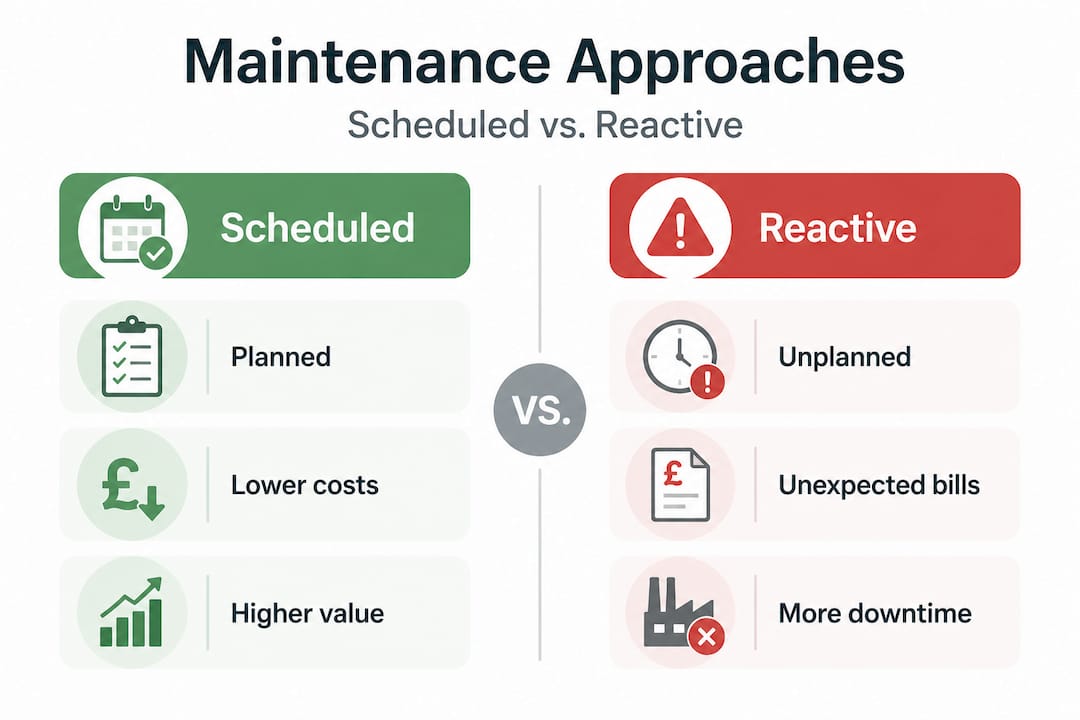
Scheduled maintenance is planned in advance. You set dates, book tradespeople, and carry out checks and tasks before anything breaks down. Reactive repairs are the opposite. Something fails, you scramble to fix it, and you often pay a premium for urgent call-outs.
Understanding the distinction between maintenance vs repairs helps you see why the planned approach saves money. With scheduled maintenance, you know what is coming. Budgeting becomes easier. Tenants experience fewer disruptions. And small issues get caught before they turn into expensive problems.
Dublin City Council handles 70,000 repair requests annually from tenants and invests €24.8 million in preventative upgrades each year. That scale of reactive demand is a strong signal of what happens when maintenance is skipped or delayed. For private landlords and property managers, the lesson is clear: getting ahead of problems is far cheaper than responding to them.
Common scheduled maintenance tasks include:
- Boiler servicing and heating system checks
- Gutter clearing and roof inspections
- Lawn care, hedge trimming, and landscaping upkeep
- Exterior painting and power washing
- Window and door sealing checks
- Smoke alarm and carbon monoxide detector testing
- Damp and ventilation assessments
For maintenance scheduling tips that are practical and easy to follow, a simple calendar or property management app makes a real difference. Set recurring reminders for each task so nothing slips through the gaps.
| Feature | Scheduled maintenance | Reactive repairs |
|---|---|---|
| Timing | Planned in advance | After failure occurs |
| Cost | Predictable and lower | Higher, often urgent |
| Disruption | Minimal | Significant |
| Property value impact | Positive | Neutral or negative |
| Tenant satisfaction | High | Low |
Pro Tip: Follow a preventive maintenance guide designed for homeowners to build a simple checklist you can run through each quarter.
The impact on property value, BER, and energy bills
Once the basics of scheduled maintenance are clear, the next question is: how does this actually translate to higher value, especially in Dublin's fast-moving property market?
The short answer is that it has a measurable effect. Retrofits cut energy bills by up to 50%, and areas like Dublin 18 show 69% of properties rated A or B, with correspondingly higher sale prices and median values around €490,000. The link between a good Building Energy Rating (BER) and a stronger sale price is well established in the Dublin market.
BER ratings run from A (most efficient) to G (least efficient). A property that moves from a D rating to a B rating through scheduled upgrades is not just cheaper to run. It is genuinely worth more on the open market and attracts better tenants at higher rents. That is a direct financial return on your maintenance investment.
High-value maintenance tasks that improve BER include:
- Attic and wall insulation: One of the most cost-effective upgrades available
- Boiler replacement or annual servicing: Keeps heating efficient and safe
- Window upgrades: Double or triple glazing reduces heat loss significantly
- Draught-proofing: A low-cost task with a meaningful impact on energy use
- Ventilation improvements: Reduces condensation and damp, protecting structure and air quality
The impact of maintenance on property value in Dublin is not just theoretical. Properties that are well maintained sell faster and closer to asking price. For landlords, a maintained property reduces void periods and supports premium rental pricing.
Consider also the visual side. Improving curb appeal through landscaping, fresh paintwork, and clean exteriors signals to buyers and tenants that the property has been looked after throughout, not just tidied up before a sale. And when it comes to the interior, indoor maintenance tips such as fixing damp, repainting tired walls, and servicing appliances keep the property feeling fresh and functional year-round.
Key insight: A well-maintained property in Dublin does not just look better. It commands a premium. BER improvements alone can add tens of thousands of euros to a sale price in certain Dublin postcodes.
Seasonal maintenance essentials for Dublin homes and businesses
A property's value gain is not just about one-off upgrades. It is about doing the right maintenance at the right time, every year.
Dublin's climate is wet, windy, and unpredictable. That makes seasonal planning especially important. Irish weather patterns create specific risks that vary throughout the year, and seasonal checks tailored to those conditions can prevent costly repairs costing €2,500 to €8,000 or more when problems are caught early.
Here is a practical seasonal checklist for Dublin properties:
- Autumn Clear gutters of leaves and debris. Have the roof inspected for loose or missing slates. Check flashings and seals around chimneys. Remove moss from paths and patios before it becomes a slip hazard.
- Winter Service the boiler and check radiators. Lag pipes in exposed areas to prevent freezing. Inspect attic insulation. Test smoke and carbon monoxide alarms. Check window and door seals for draughts.
- Spring Inspect the exterior for any damage caused by frost or storms. Repair fences, gates, and garden walls. Begin landscape clean-up, including lawn aeration and pruning. Check drainage and downpipes for blockages.
- Summer Power wash driveways and patios. Repaint or touch up exterior woodwork. Trim hedges and maintain lawns regularly. Service any air conditioning units or ventilation systems.
The seasonal maintenance guide for Dublin homes is a useful reference to build your annual schedule around. Pair it with advice on outdoor maintenance essentials to make sure nothing is missed.
Moisture and ventilation deserve special attention. Dublin's damp climate means mould can develop quickly in poorly ventilated spaces. Checking extractor fans, ensuring bathroom and kitchen ventilation is working, and monitoring for condensation are all simple tasks that prevent very expensive remediation work later. Good plumbing maintenance habits, such as checking for slow drains and minor leaks, also help you avoid major water damage.
"Early detection and seasonal preparation are the single most effective tools for avoiding large unplanned repair bills on Irish properties."
Pro Tip: At the start of each season, set a recurring reminder in your phone or calendar to run through your seasonal checklist. It takes thirty minutes to plan but can save you thousands in avoided repairs.
Legal standards and peace of mind: compliance in Dublin
Beyond proactive care for value and aesthetics, maintenance is also a legal requirement for many Dublin property owners and managers.
Landlords must comply with the Housing Standards Regulations 2019, which set out specific requirements for the structural condition of properties, working amenities, safe heating, and adequate ventilation. Failure to meet these standards can result in substantial fines and disputes with tenants or the Residential Tenancies Board.
Your core legal obligations as a Dublin landlord include:
- Maintaining the structure of the property in good repair
- Ensuring heating systems are safe and functional
- Providing working sanitary facilities and hot water
- Keeping common areas clean and safe
- Ensuring gas, electrical, and ventilation systems are safe
Regular scheduled inspections make it far easier to demonstrate compliance. When you have a documented maintenance log, you have evidence that you have met your obligations, which is invaluable if a dispute arises. Inspections also need to be carried out with proper notice given to tenants, usually 24 hours in writing.
The landlord responsibilities guide provides a clear breakdown of what is required and when. For those managing commercial properties, commercial maintenance standards in Dublin carry their own set of requirements and best practices that go beyond residential obligations.
"A maintenance log is not just a management tool. It is legal protection. It shows that you acted responsibly and proactively as a landlord."
Scheduled maintenance removes much of the stress from compliance. When checks happen regularly and records are kept, you are not scrambling to demonstrate that the boiler was last serviced or that the gutters were cleared before a tenant complained. You simply have the documentation ready.
Maximising kerb appeal and rental returns through maintenance
Legal compliance ensures a solid foundation, but savvy owners also use maintenance as a tool to stand out and attract tenants in a competitive market.
Visible, well-maintained properties rent faster and hold their value better. Power washing, painting, and landscaping tasks directly support kerb appeal and contribute to higher rents and sale prices in Dublin. These are not luxury extras. They are practical investments with a clear return.
Key tasks that boost kerb appeal and rental returns include:
- Regular lawn mowing and edging: A tidy lawn is one of the first things a prospective tenant or buyer notices
- Hedge trimming and shrub maintenance: Overgrown hedges look neglected and can obstruct pathways
- Exterior painting and woodwork: Fresh paint on gates, fences, and window frames signals a well-cared-for property
- Power washing driveways, paths, and patios: Removes grime, moss, and staining that makes a property look older than it is
- Seasonal planting: Adds colour and life to front gardens at a low cost
The benefits of pressure washing alone are often underestimated. A single power wash session can dramatically improve how a property looks from the street, at a fraction of the cost of repainting. When combined with exterior appeal strategies such as well-maintained planting and clean pathways, the overall impression is of a property that is actively looked after.
There is also a marketing angle. Cleaning as a kerb appeal tool is something letting agents and estate agents increasingly recommend before viewings and photography. A clean, tidy exterior converts more viewings into offers. For landlords, that means shorter void periods and stronger tenant interest.
"In Dublin's rental market, where competition for good tenants is strong, a well-maintained exterior sets your property apart before anyone even steps inside."
Why prioritising scheduled maintenance beats 'fix-it-later' thinking
Here is something we see time and again in Dublin: owners who delay maintenance do not save money. They just move the cost later, and by then, it is always higher.
The 'break and fix' mentality sounds economical on paper. Why spend money on something that is still working? But in practice, it creates a cycle of reactive spending, tenant complaints, and periods where the property is not rentable. Boilers that are never serviced fail in February. Gutters that are never cleared lead to damp in walls. Overgrown gardens deter tenants and reduce the rental value before a viewing even takes place.
Dublin property owners who build scheduled maintenance into their annual budget consistently experience smoother occupancy and better overall returns. They know what they are spending and when. There are no surprise bills. Tenants stay longer because the property feels looked after. And when it comes time to sell, the maintenance history supports a stronger asking price.
The hidden costs of reactive management go beyond repair bills. There is the cost of vacancies while urgent work is being done. There is the reputational damage that comes from dissatisfied tenants who leave and write reviews. There is the stress of managing multiple emergency situations at once. None of these show up as a line item in a budget, but they are very real.
Local maintenance expertise makes a genuine difference here. A local provider who knows Dublin's housing stock, weather patterns, and seasonal demands will give you practical, relevant advice, not a generic checklist designed for a different climate or market.
Pro Tip: At the start of each year, sit down and map out your maintenance budget across twelve months. Include seasonal tasks, planned inspections, and an emergency contingency of around 10 to 15 percent. This single habit reduces financial stress significantly.
Take the next step with expert scheduled maintenance
You now have a clear picture of what scheduled maintenance involves, how it protects your investment, and what the law requires. The next step is putting that knowledge into action before the next season brings avoidable problems.

At Sherry Property Care, we specialise in scheduled grounds maintenance and landscaping for residential and commercial properties across Dublin. From regular lawn care and hedge trimming to seasonal clean-ups and exterior upkeep, we provide reliable, high-quality service tailored to your property's needs. Send us a few photos of your property and we will put together a customised quote. It is straightforward, with no obligation and no guesswork. Get in touch today and let us help you keep your property looking its best all year round.
Frequently asked questions
What is the difference between scheduled property maintenance and repairs?
Scheduled maintenance is planned in advance to prevent issues, while repairs are reactive fixes after something has failed. Dublin City Council's data on 70,000 annual repair requests illustrates the scale of reactive demand when planned maintenance is not in place.
Does scheduled maintenance really increase my property's value in Dublin?
Yes. Regular maintenance boosts BER ratings and kerb appeal, helping achieve higher sale and rental prices. Dublin 18's higher BER ratings are directly linked to a median property price of around €490,000, showing the clear value of maintained, energy-efficient homes.
What seasonal checks are most important for Dublin homes?
Key checks include gutter clearing in autumn, heating system servicing for winter, and damage inspection in spring. Seasonal maintenance tailored to Irish weather conditions can prevent repair costs of €2,500 to €8,000 or more.
Am I legally required to do scheduled maintenance as a Dublin landlord?
Yes. Landlords must comply with the Housing Standards Regulations 2019, which require regular checks for structural safety, working amenities, and safe heating systems.
How does scheduled maintenance help me save money?
It prevents small issues from growing into large, costly problems and can reduce energy bills significantly. Retrofits cut energy bills by up to 50%, and early detection of issues avoids repair costs that often run into thousands of euros.