
TL;DR:
- Proper property maintenance involves scheduled inspections, early repairs, clear communication, and legal compliance. Regular budgeting and outdoor upkeep are essential to prevent costly reactive repairs and preserve property value. Consistent organization and documentation help landlords manage their properties efficiently and respond to issues proactively.
Common property maintenance mistakes are routine oversights that inflate repair bills, reduce property value, and damage tenant relationships. In property management, these errors fall under the broader category of deferred or reactive maintenance, a pattern where problems are addressed only after they escalate. Maintenance and repairs represent 31–39% of total landlord expenditure, and reactive emergency repairs cost 3 to 5 times more than scheduled work. For homeowners and property managers in Dublin, where seasonal weather puts constant pressure on buildings, recognising these pitfalls early is the difference between a well-run property and a costly liability.
1. Common property maintenance mistakes: skipping a preventative schedule
The single most damaging maintenance oversight is the absence of a scheduled, calendar-driven maintenance plan. Without one, every repair becomes a crisis rather than a routine task.
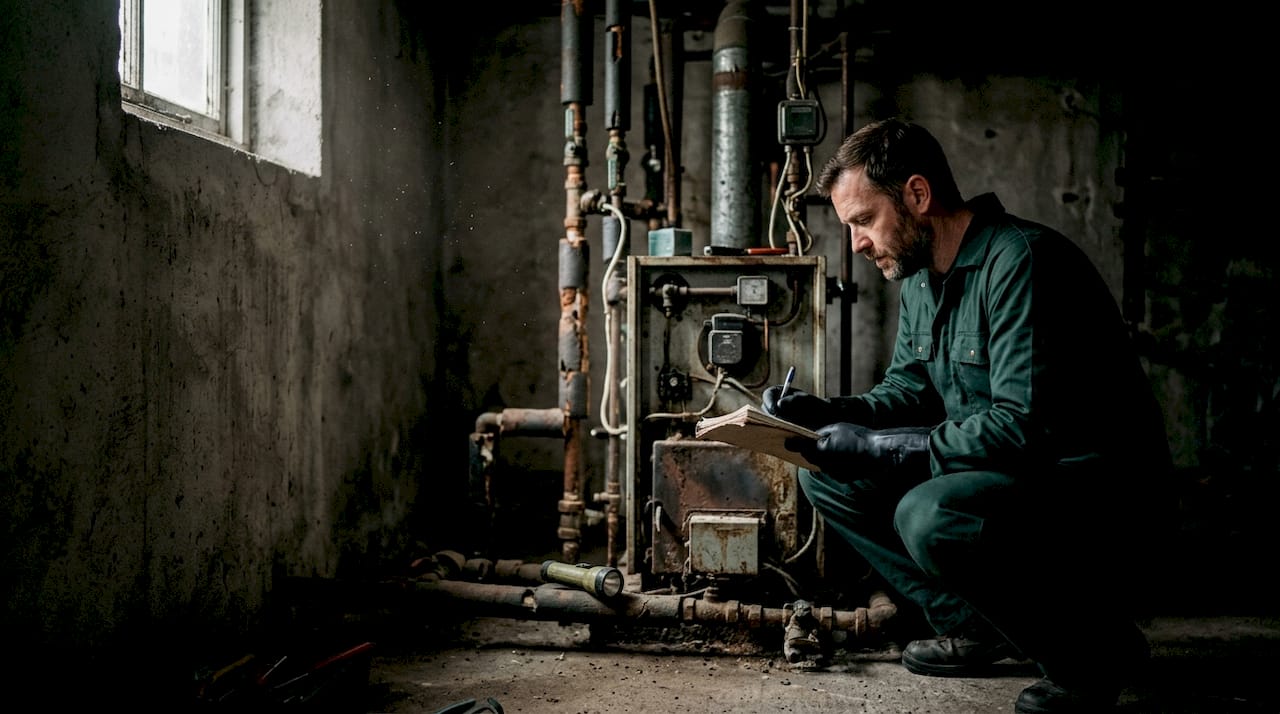
Preventive maintenance costs approximately one third of what reactive emergency repairs cost for the same system. That gap compounds quickly across a full property portfolio. A boiler that receives annual servicing rarely fails mid-winter. One that does not can leave tenants without heat and landlords facing emergency call-out fees.
A practical Dublin maintenance calendar runs on two deep-dive rounds per year, in spring and autumn, plus quarterly checkups. Spring covers roof inspections, gutter clearing after winter debris, and testing smoke and carbon monoxide alarms. Autumn focuses on heating system servicing, draught-proofing, and checking external drainage before the wet season arrives. Quarterly visits handle detector battery checks, tap washer inspections, and a visual sweep of the exterior.
Pro Tip: Schedule HVAC servicing in October and roof inspections in spring. Off-peak bookings cost less and contractors are easier to secure.
2. Ignoring early warning signs and minor repairs
Small defects become expensive structural problems when left unaddressed. A hairline crack above a window frame, a dripping tap, bubbling paint on a bathroom ceiling, or a minor damp patch on an external wall are all early signals that something is wrong.
The cost gap between early and late intervention is significant. A leaking tap repaired promptly costs very little in parts and labour. Left for six months, the same leak can rot floorboards, damage ceiling plaster below, and create a mould problem that requires specialist remediation. Reactive repair costs have risen 121% over two years, averaging £1,043 per property. That figure reflects exactly this pattern of deferred small fixes turning into large bills.
The table below shows how costs escalate when early signs are ignored.
| Issue | Early intervention cost | Deferred repair cost |
|---|---|---|
| Dripping tap | Low (washer replacement) | High (floor and ceiling damage) |
| Minor damp patch | Low (repointing or sealant) | High (structural damp treatment) |
| Cracked render | Low (filler and paint) | High (water ingress, internal damage) |
| Blocked gutter | Low (clearing) | High (fascia rot, damp walls) |
Regular property inspections, conducted at least twice a year, catch these issues before they escalate. Documenting every maintenance action with dated photos and invoices also protects landlords in deposit disputes and insurance claims.
Pro Tip: Use a simple inspection checklist with photo fields on your phone. Date every image. This creates a timestamped record that is legally defensible and takes less than 30 minutes per visit.
You can find a ready-to-use format in this Dublin landlord checklist built specifically for local properties.
3. Poor tenant communication and maintenance request management
Disorganised communication is a property management pitfall that turns minor issues into major ones. When tenants do not know how to report a problem, or feel their reports are ignored, they stop reporting early. By the time a landlord hears about a leak, it has often been dripping for weeks.
Accessible, documented reporting systems encourage prompt issue escalation. The format matters less than the consistency. A dedicated email address, a written maintenance request form, or a simple shared log all work. What does not work is relying on informal methods such as personal mobile numbers, text messages, or verbal promises.
Clear communication practices that reduce maintenance oversight issues include:
- Setting written response time expectations with tenants at the start of a tenancy (for example, 24 hours for urgent issues, 5 working days for routine requests)
- Logging every request with a date, description, and outcome
- Confirming repair completion in writing, even briefly
- Keeping a separate maintenance contact number or email distinct from personal accounts
- Reviewing open requests monthly to prevent anything slipping through
These habits protect landlords legally and build the kind of tenant relationship where problems get reported early, not hidden.
4. Neglecting legal and safety compliance obligations
Legal compliance is not optional, and treating it as a low-priority task is one of the most serious frequent upkeep missteps a Dublin landlord can make. Legal obligations require landlords to maintain property structure, heating, water, and electrical systems in good repair. Failure to comply leads to council enforcement, fines, and in serious cases, legal action.
The Housing Health and Safety Rating System (HHSRS) provides a baseline framework for assessing property hazards. A formal self-assessment checklist based on HHSRS indicators helps landlords identify deficiencies before they become statutory hazards. Dublin landlords should also be familiar with their obligations under Irish residential tenancy legislation, which mirrors many of these standards.
Key compliance checks to integrate into your maintenance schedule:
- Smoke alarms tested monthly, with annual professional inspection
- Carbon monoxide detectors checked and replaced per manufacturer guidance
- Gas boiler serviced annually by a registered engineer
- Electrical installations inspected every five years or at change of tenancy
- All safety certificates stored digitally with dates and engineer details
Documentation is your legal protection. Maintenance that is not recorded is treated as maintenance that did not happen in any formal dispute.
5. Failing to budget adequately for maintenance and repairs
Insufficient financial planning is a core property management pitfall that forces landlords into reactive spending. Without a maintenance reserve, every unexpected repair becomes a cash flow crisis.
The standard budgeting guideline is to set aside approximately 1% of the property's value per year for maintenance. Setting aside CapEx reserves of £200–£300 per unit annually improves maintenance readiness and prevents deferred repairs from accumulating. For a Dublin property worth €400,000, that means budgeting €4,000 per year for upkeep, split across scheduled tasks and a contingency reserve.
The comparison below shows the financial difference between planned and reactive approaches.
| Approach | Annual cost pattern | Risk level |
|---|---|---|
| Planned maintenance budget | Predictable, spread across the year | Low |
| Reactive-only spending | Unpredictable, spike-driven | High |
| No budget at all | Deferred repairs compound into major costs | Very high |
Landlords without a systematic maintenance approach spend upwards of 400 to 600 hours annually managing reactive calls, paying 40–60% more than planned maintenance costs. That time and money cost is avoidable with a simple annual budget and a scheduled maintenance plan built around your property's specific needs.
For further guidance on pool waterproofing and long-term protection, the same principle applies: early investment in protection prevents far larger costs later.
6. Treating maintenance as a cost rather than an investment
The mindset behind neglected property repairs matters as much as the repairs themselves. Landlords who view maintenance spending as a loss rather than an asset protection measure consistently underspend, defer work, and face larger bills as a result.
Procrastination and treating property maintenance as optional is the root cause of many expensive problems. A well-maintained Dublin property retains its rental value, attracts reliable tenants, and avoids the void periods that come with disrepair. A poorly maintained one does the opposite.
The practical shift is simple. Scheduled maintenance is a planned expense with a known cost. Emergency repairs are unplanned expenses with unpredictable costs. Choosing the former protects both the property and the landlord's income. Explore how scheduled maintenance boosts value for Dublin properties specifically.
7. Overlooking outdoor and grounds maintenance
Grounds maintenance is one of the most visible and most frequently neglected areas of property upkeep. Overgrown hedges, cracked paths, blocked drains, and unkempt lawns signal neglect to tenants and prospective buyers alike.
In Dublin, outdoor maintenance follows the same seasonal logic as interior work. Spring is the time for lawn treatment, hedge shaping, and clearing winter debris from paths and drainage channels. Autumn requires leaf clearance, cutting back growth before the wet season, and checking external drainage is clear. Skipping these rounds allows minor outdoor issues, such as a blocked drain or an overgrown boundary hedge, to become disputes with neighbours or local authority complaints.
Grounds upkeep also directly affects property value. A well-presented exterior supports higher rental yields and faster lettings. For Dublin property managers handling multiple sites, outsourcing grounds maintenance to a local specialist is often more cost-effective than managing it ad hoc. This is exactly the kind of common maintenance issue that benefits from a regular, contracted service rather than reactive attention.
Key takeaways
Avoiding common property maintenance mistakes requires a shift from reactive to planned maintenance, backed by documentation, budgeting, and clear tenant communication.
| Point | Details |
|---|---|
| Schedule preventative maintenance | A seasonal calendar with spring and autumn deep-dives prevents most emergency repairs. |
| Act on early warning signs | Small repairs cost a fraction of the structural damage they prevent if left unaddressed. |
| Document everything | Dated photos and invoices protect landlords in disputes, insurance claims, and compliance checks. |
| Budget 1% of property value annually | A maintenance reserve prevents cash flow crises and deferred repair accumulation. |
| Maintain outdoor spaces consistently | Grounds upkeep protects property value and avoids tenant and neighbour disputes. |
What I have learned from watching Dublin landlords get this wrong
Working in property care in Dublin, the pattern I see most often is not ignorance. Most landlords know they should be doing more maintenance. The problem is that they treat it as something to get to when things go quiet. Things never go quiet.
The landlords who manage their properties well share one habit: they run their maintenance like a business calendar, not a to-do list. They book the boiler service in september before every other landlord is scrambling in november. They walk the property in march and october with a checklist, not just when a tenant calls. That discipline is not complicated. It just requires deciding that maintenance is a scheduled activity, not a response to a crisis.
The other thing I have noticed is that documentation separates confident landlords from anxious ones. When a dispute arises, the landlord with dated photos and signed inspection records is in a completely different position to the one relying on memory. Start that habit now, even if it feels unnecessary. You will use it eventually.
Outdoor maintenance is the area most often treated as optional. In Dublin's climate, it is not. Blocked drains, overgrown hedges, and neglected paths create real problems fast. Outsourcing grounds care to a reliable local team is one of the most practical decisions a busy property manager can make.
— gerard
Sherrypropertycare: professional grounds care for Dublin properties
Keeping on top of outdoor maintenance is one of the most time-consuming parts of managing a Dublin property. Sherrypropertycare specialises in high-quality grounds maintenance for residential and commercial properties across Dublin, covering lawn care, hedge trimming, seasonal clearance, and general grounds upkeep.

Working with a local team means your outdoor spaces are maintained on a consistent schedule, tailored to Dublin's seasons and your property's specific needs. Sherrypropertycare offers customised maintenance quotes based on your property, so you know exactly what you are getting and when. Send a photo of your grounds and get a quote that fits your property, not a generic package.
FAQ
What are the most common property maintenance mistakes?
The most common mistakes are skipping preventative schedules, ignoring early warning signs, poor tenant communication, and failing to budget for repairs. Each one increases the likelihood of expensive reactive repairs.
How much should Dublin landlords budget for property maintenance?
The standard guideline is approximately 1% of the property's value per year. Setting aside CapEx reserves of £200–£300 per unit annually also improves maintenance readiness and reduces emergency spending.
Why does reactive maintenance cost more than planned maintenance?
Reactive emergency repairs cost 3 to 5 times more than scheduled maintenance for the same system. Emergency call-outs carry premium labour rates and parts costs that planned work avoids.
How often should a Dublin landlord inspect their property?
A minimum of twice a year, in spring and autumn, with quarterly checkups for detectors and visible exterior issues. Each inspection should be documented with dated photos.
What legal compliance checks are required for rental properties in Dublin?
Landlords must maintain heating, water, electrical systems, and structure in good repair. Annual gas boiler servicing, regular alarm testing, and five-yearly electrical inspections are the core requirements under HHSRS-aligned standards.