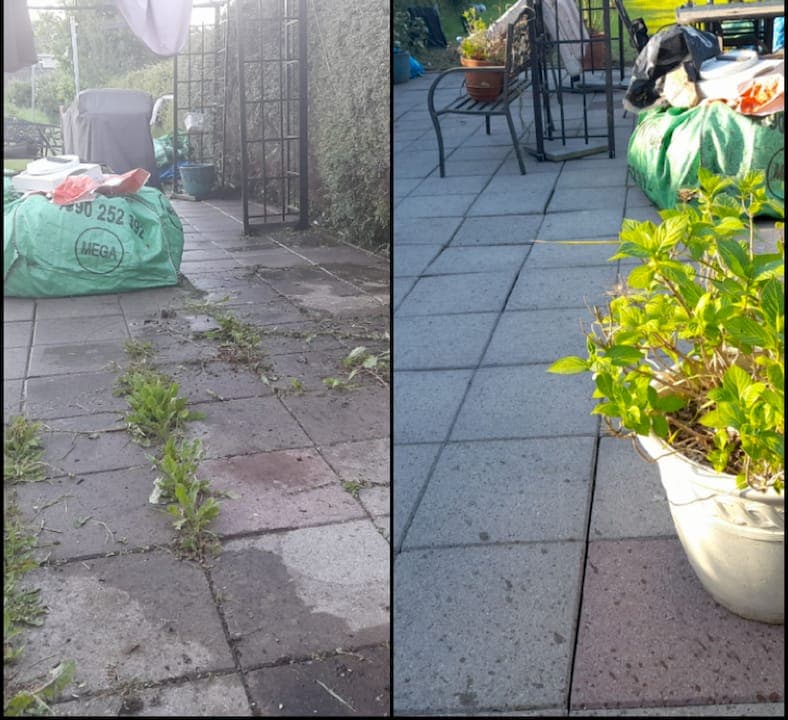
TL;DR:
- Lingering debris on Dublin properties poses safety hazards, reduces appeal, and risks fines if mishandled. Proper categorization, preparation, and compliance with local regulations help ensure cost-effective, safe, and ongoing property maintenance. Working with professional debris removal services simplifies the process and supports sustainable, legal waste management practices.
Lingering debris on your Dublin property is more than just an eyesore. It creates genuine safety hazards, lowers kerb appeal, and can even attract fines if waste is handled incorrectly. Whether you’re a homeowner clearing out after a garden renovation or a property manager keeping a rental block in good order, getting debris removal right saves you time, money, and stress. This guide walks you through everything you need to know, from identifying what you’re dealing with, to understanding local council services, current regulations, and the most practical ways to keep your property clean and compliant all year round.
Table of Contents
Key Takeaways
| Point | Details |
|---|---|
| Local services save time | Dublin City Council’s bulky waste collection covers large items and can be booked for a modest fee. |
| Segregate debris for savings | Sorting construction and demolition debris cuts costs and complies with the new €10/tonne levy rules. |
| Regular management prevents hazards | Seasonal debris removal stops slip risks, drainage issues, and costly property damage. |
| Professional support ensures compliance | Expert services help maintain clean properties and adhere to council waste guidelines. |
Understanding debris removal needs in Dublin
Before you start clearing anything, it pays to understand what type of debris you’re dealing with. Not all waste is treated the same way in Dublin, and mixing it up can lead to higher costs, refused collections, or even legal issues.
The most common debris types Dublin homeowners and property managers encounter include:
-
Garden waste: Grass clippings, hedge trimmings, tree branches, leaves, and soil. This is seasonal and often high in volume after summer or storm damage.
-
Household bulky waste: Old furniture, mattresses, carpets, and white goods that simply won’t fit in your regular bin.
-
Construction and demolition (C&D) waste: Rubble, concrete, timber, plasterboard, and metal from renovation or building work.
-
General mixed waste: Everyday items that accumulate in sheds, garages, or communal areas on managed properties.
Each category has its own removal process and cost implications. Garden waste, for instance, can often be composted or collected via your brown bin service, while bulky items need a separate booking. Dublin City Council offers a nominal fee bulky household waste collection service for large items like furniture and carpets that homeowners cannot fit in regular bins.
Getting the right category sorted from the start makes the whole process far smoother. It also prevents you from paying unnecessarily for mixed loads when cheaper or free options exist.
“The longer debris sits, the more problems it creates. Moss builds up on damp wood, paths become slip hazards, and vermin are attracted to garden waste left uncollected.”
Safety is a real concern here, not just aesthetics. Broken materials and overgrown clearings can cause injuries to residents, visitors, or tradespeople. For garden areas specifically, following garden waste clearance steps keeps you on the right side of safety and keeps your outdoor space looking well maintained. Planning your approach around seasonal property maintenance also helps you stay ahead of accumulation rather than reacting to a crisis.

Pro Tip: Before booking any private waste service, check whether your local council area covers the debris type you need removed. Dublin City Council and the surrounding county councils each have slightly different provisions, and using the right service first can save you a significant amount.
Preparing for debris removal: Tools, requirements, and planning
Once the types and risks are clear, the next step is preparing the right materials and approach for removal. Good preparation saves time on the day and reduces the chance of problems mid-job.
Start with a simple checklist before any debris removal:
-
Sort your waste into categories: garden, bulky, C&D, and general. Keep them separate from the outset.
-
Gather your tools: Heavy-duty bags, gloves, a wheelbarrow, rakes, and appropriate containers for sharp or hazardous materials.
-
Check collection schedules with your local council or private waste contractor.
-
Book in advance for bulky item collections, as slots fill quickly, especially in spring and post-Christmas.
-
Photograph your waste before removal, particularly for larger volumes, so you can get accurate quotes from expert property care professionals.
For construction and demolition debris, planning is even more critical. Source segregation into skips for concrete, metals, and wood is now standard practice, and a new €10 per tonne levy applies to recovery and landfill to encourage reuse and recycling. This means if you mix your C&D waste into one skip, you’ll pay more. Keep material streams separate from day one.
Here’s a quick comparison to help you decide on your approach:
| Approach | Best suited for | Approximate cost | Key limitation |
|---|---|---|---|
| Dublin City Council collection | Bulky household waste | Nominal fee | Booking required, limited items |
| Private waste contractor | Mixed or large volumes | Variable | Higher cost for mixed loads |
| Skip hire | C&D or garden | €150+ depending on size | Permit needed on public road |
| Self-drop at civic amenity | Small volumes | Low or free | Transport required |
If you’re dealing with leftover materials from a renovation or a refurb job, connecting with handyman services Dublin can make the whole process easier. Many tradespeople will arrange removal as part of the job, which saves you dealing with it separately.
Pro Tip: Segregating your debris correctly before collection doesn’t just make things tidier. Under the new C&D levy structure, properly sorted materials attract lower charges and may qualify for recycling credits. It’s one of the most straightforward ways to cut costs on a renovation or landscaping project.
Step-by-step debris removal process for Dublin properties
With preparation in place, it’s time to tackle the debris with a systematic removal process. Following a clear order prevents missed steps and ensures you stay compliant with local waste regulations.
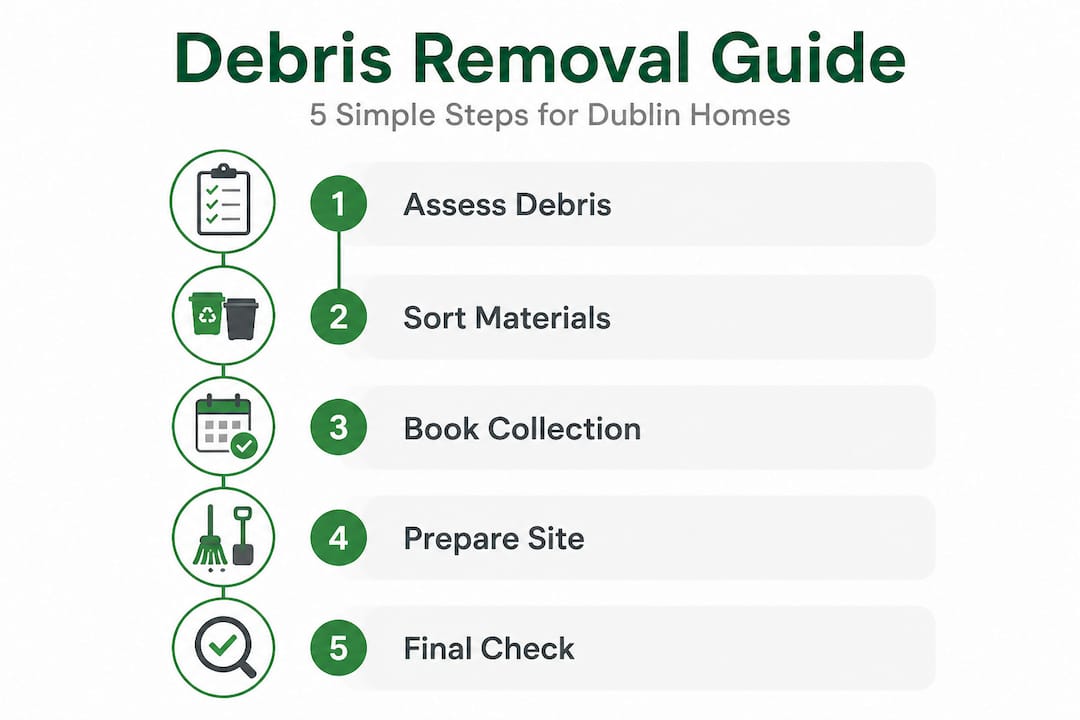
-
Assess the full scope. Walk the property and note every area with debris. Don’t overlook drains, gutters, and boundary edges where waste accumulates unseen. Checking gutter cleaning for debris at this stage prevents blockages from worsening.
-
Categorise everything before moving it. Place coloured bags or markers near each debris type. This prevents mixing and saves time at the disposal stage.
-
Clear in order of safety risk. Address sharp materials, broken glass, and trip hazards first. Then move to bulk volume items, and finally lighter garden waste.
-
Dispose of each category through the correct channel. Use council services for bulky household items, licensed skip companies for C&D waste, and brown bins or composting for garden matter.
-
Verify disposal and keep records. For C&D waste especially, get a receipt or waste transfer note from your licensed contractor. This is a legal requirement in Ireland and protects you if questions arise later.
-
Final inspection. Walk the property again. Check pathways, communal areas, drainage points, and boundary fences. A clean garden maintenance workflow at this stage ensures nothing is missed.
Understanding typical costs helps you budget accurately. Typical costs in Dublin break down roughly as follows:
| Debris type | Typical cost |
|---|---|
| Bulky waste uplift (council) | €40 to €75 per booking |
| Garden waste add-on service | €40 per collection |
| General waste | €0.20 to €0.35 per kilogram |
| Skip hire (2 to 4 tonne) | €180 to €350 depending on location |
These figures give you a solid baseline, but costs vary based on volume, access, and the specific waste contractor. Always get at least two quotes for larger jobs.
Pro Tip: Before dropping off waste at a civic amenity site, ring ahead to confirm their current accepted materials list and any updated tip fees. Policies change more often than people realise, and showing up with the wrong type of waste wastes a full trip.
Key fact: General waste charges in Dublin run at €0.20 to €0.35 per kilogram, meaning a typical mid-sized garden clearance generating 200 kg of mixed waste could cost up to €70 in disposal fees alone, before labour.
Seasonal and ongoing debris management strategies
After handling immediate debris, ongoing strategies ensure properties stay safe and clean throughout the year. Reactive clearance is always more expensive and disruptive than a planned maintenance schedule.
Property managers should schedule seasonal cleanups, including autumn leaf removal and spring post-winter checks, to prevent liability from slip hazards or drainage clogs. Clear signage and conveniently placed bins significantly boost tenant compliance on managed properties.
Here’s what a practical seasonal schedule looks like for Dublin properties:
-
Spring (March to May): Clear winter storm debris, check drains and gutters, remove dead plant material, inspect boundary walls and fences for damage.
-
Summer (June to August): Manage fast-growing garden waste, trim hedges regularly, clear communal bin areas weekly on managed blocks.
-
Autumn (September to November): Prioritise leaf clearance from paths and car parks, check roof drainage before heavy rain season, clear garden beds.
-
Winter (December to February): Remove any windfall branches after storms, keep paths clear of debris to prevent icy build-up, inspect skips and waste areas on managed properties.
“A property that’s consistently maintained is always cheaper to run than one that needs emergency clearance. Scheduled removal prevents small issues from becoming large, costly problems.”
For property managers, tenant engagement matters too. When residents understand where to place garden bags, what goes in each bin, and when bulky item collections are available, compliance improves noticeably. Simple printed guides or notices near bin areas make a real difference.
Check out our groundskeeping guide for a more detailed look at how to structure ongoing grounds maintenance across different property types. Pairing that resource with our seasonal maintenance tips gives you a full-year framework.
Pro Tip: Set a recurring calendar reminder every three months to walk your property perimeter specifically looking for debris accumulation. This simple habit catches problems before they escalate into safety liabilities or costly emergency clearances.
What most guides miss about debris removal in Dublin
Most guides focus on the practical steps of debris removal. That’s useful, but it leaves out the financial and regulatory nuances that actually determine whether you save or overspend.
Here’s the reality: proper debris segregation is not just good practice. It is increasingly a financial decision. Under the new C&D waste levy structure, correctly sorted waste costs less to dispose of because recyclers and processors pay less per tonne for clean material streams. Some contractors will pass that saving on to you, particularly if you’re a repeat client or handling a large volume job.
Many homeowners and even some property managers see tip fees as a fixed, unavoidable cost. They’re not. The choices you make at the sorting stage directly influence what you pay at the disposal stage. A mixed skip load costs more than a segregated one. An unsorted garden clearance costs more than one where compostable waste is kept separate from general refuse.
There’s also the issue of illegal dumping. Some cheaper contractors avoid licensed disposal facilities entirely. If waste carrying your address ends up fly-tipped, you can be held liable even if you paid someone else to remove it. Always ask for a waste transfer note and check that your contractor holds a current waste collection permit from the National Waste Collection Permit Office.
Our groundskeeping advice goes into this in more detail, particularly for managed properties where multiple parties generate waste simultaneously and accountability becomes more complex.
The long-term view is clear. Investing in compliant, well-organised debris removal costs slightly more upfront but avoids fines, liability claims, and emergency clearance fees that dwarf any short-term saving.
Connect with trusted Dublin debris removal professionals
Keeping your property debris-free is straightforward when you have the right support in place. Whether you’re dealing with a one-off garden clearance after a storm or you need a reliable ongoing maintenance schedule for a managed block, working with experienced professionals makes a real difference to both the result and your peace of mind.

At Sherry Property Care, we specialise in high-quality grounds maintenance and debris clearance for residential and commercial properties across Dublin. From hedge trimming to full garden clearances and seasonal tidy-ups, we offer personalised quotes based on your specific property needs. Just send us a photo of the area you need cleared, and we’ll get back to you with a practical, no-fuss quote. Getting started is simple, and the results speak for themselves.
Frequently asked questions
What items can I include in Dublin’s bulky waste collection service?
Bulky household waste collection in Dublin covers large items such as furniture, carpets, and mattresses that don’t fit in regular bins. A booking is required, and a nominal fee applies depending on the volume and type of items.
How much does debris removal usually cost in Dublin?
Bulky waste uplift costs €40 to €75 per booking, garden waste can attract a €40 add-on per collection, and general waste charges run €0.20 to €0.35 per kilogram. Costs vary based on volume, access, and the service provider you use.
Are there new regulations for construction and demolition debris removal?
Yes. A €10 per tonne levy now applies for recovery and landfill, making proper segregation of concrete, metals, and timber more financially important than ever. Mixing materials in a single skip increases your costs under the new structure.
How often should property managers schedule debris removal?
Seasonal cleanups, particularly in autumn and spring, dramatically reduce safety hazards and prevent costly urgent repairs. A quarterly schedule covering all outdoor areas is the most practical approach for managed Dublin properties.