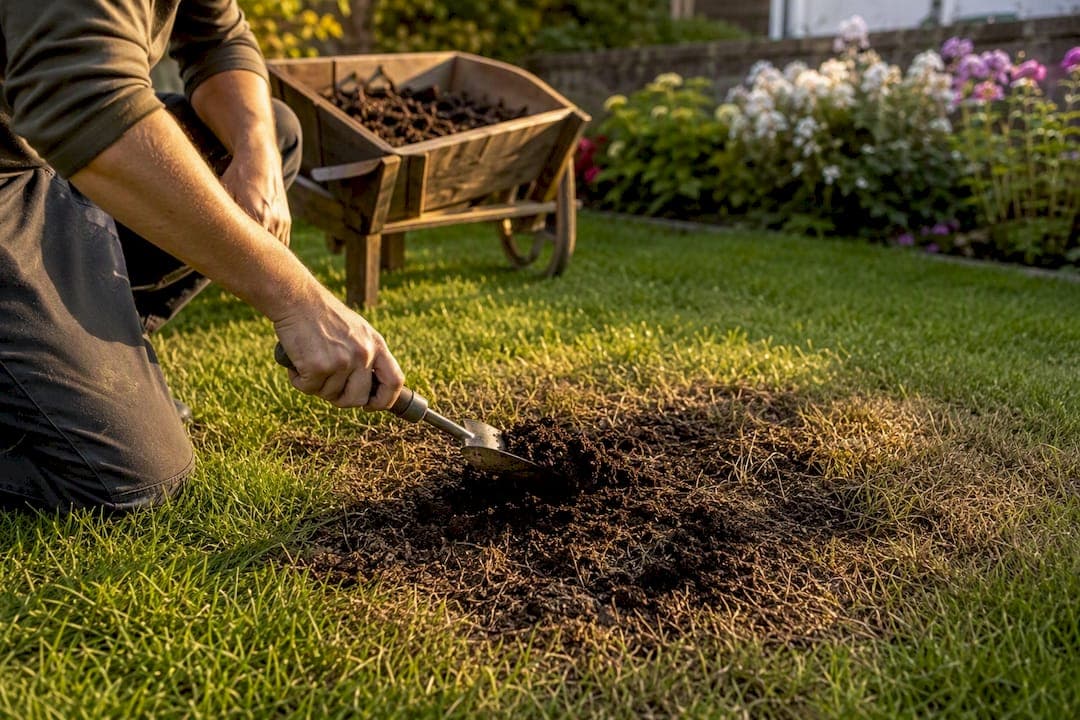
Flush the spot with water immediately, and you stop most damage before it starts. If the patch is already brown, the fix depends on size: small spots need a rake and reseed, medium patches need soil work first, and large or repeated damage often needs sod or a soil conditioner like gypsum.
The repair sequence that works in order:
- Dilute fresh urine with water within minutes to hours of the event.
- Neutralise the soil with gypsum if the same spot keeps burning.
- Reseed or sod once the ground is ready to hold new grass.
If you're dealing with one or two spots now and then, DIY handles it easily. If you're staring at dozens of scorched patches or a lawn that looks salty and crusted, that's a soil problem, not a spot problem, and it's worth calling in help.
Key Takeaways
Dog urine lawn repair works when you flush fresh spots immediately, correct soil salinity before reseeding, and match your repair method (seed, plug, or sod) to the size of the damage.
| Point | Details |
|---|---|
| Flush fast | Water fresh spots within 5 to 30 minutes to dilute nitrogen before it burns the roots. |
| Match method to size | Small spots need overseeding; large or visible patches recover faster with sod plugs. |
| Fix soil before reseeding | Recurring spots usually mean a salt build-up; treat with gypsum before sowing new seed. |
| Skip dietary fixes | Additives claiming to alter urine pH are unreliable; always check with a vet first. |
| Call in help for scale | Sherrypropertycare handles soil correction and larger repairs for Dublin lawns with widespread damage. |
Table of Contents
- What to do in the first minute, the next few hours and the first day
- Repair paths by patch size: small, medium and large areas
- How can you stop repeat urine damage on your lawn?
- Which products actually help repair dog urine damage?
- What do professional groundskeepers do differently?
- When should you call a professional instead of DIY?
- Get a lawn that holds up to a dog, without the guesswork
- Sources
- FAQ
What to do in the first minute, the next few hours and the first day
Speed matters more than technique here. A concentrated dose of nitrogen and salt in dog urine scorches grass roots fast, and flushing the area with roughly two gallons of water within minutes prevents most spots from ever developing. Wait a few hours and you're managing damage instead of preventing it.
- Within 5 to 30 minutes: soak the spot thoroughly with a hose or watering can. There's no need to measure precisely, just enough to run the water through the root zone.
- Within a few hours: if you missed the ideal window, still flush it. Some benefit remains even hours later.
- The next day: check the spot. If it's still green, you've likely dodged damage. If it's yellowing, leave it alone for now rather than piling on fertiliser.
Avoid two common mistakes: don't reach for a high-nitrogen lawn feed on a fresh spot (it compounds the problem), and don't try unproven dietary supplements marketed to "correct" urine pH without asking a vet first.
For households where flushing after every visit isn't realistic, do a morning and evening sweep instead, watering can by the back door.
Pro Tip: If you've got more than one dog, keep a dedicated watering can near the usual toilet spot. Multi-dog households see damage cluster fast, and removing the friction of finding a hose makes flushing an actual habit rather than a good intention.
Dietary additives that claim to change urine composition are largely unreliable, and vets and lawn scientists agree that watering the area remains the simplest, safest method — changing your dog's diet should only happen on veterinary advice.
Repair paths by patch size: small, medium and large areas
Not every brown patch needs the same fix. Match the method to how bad it actually is.
- Small spot (fresh or lightly browned): flush thoroughly, rake out the dead grass, and overseed with a matching perennial ryegrass or common lawn seed blend. Keep the area moist, not soaked, until you see germination.
- Medium spot (larger dead patch or repeat offender): flush first, then dig out the dead crown material down a centimetre or two. Work in fresh topsoil or compost, apply a starter feed that's low in nitrogen and higher in phosphorus to support root growth, then seed or plug. Water daily for the first two weeks.
- Large or highly visible area: matching sod or turf plugs give an immediate visual fix rather than weeks of bare ground, and sod typically roots within 14 to 21 days under decent conditions. This is the better option when the patch sits somewhere you look at daily, like beside a patio or front path.
Materials worth having on hand:
- Perennial ryegrass or matching lawn seed
- Low-nitrogen starter feed
- Topsoil or compost
- Gypsum (calcium sulfate) for salt-affected soil
- Sod or turf plugs for larger repairs
- A hand rake, seed spreader, and watering can
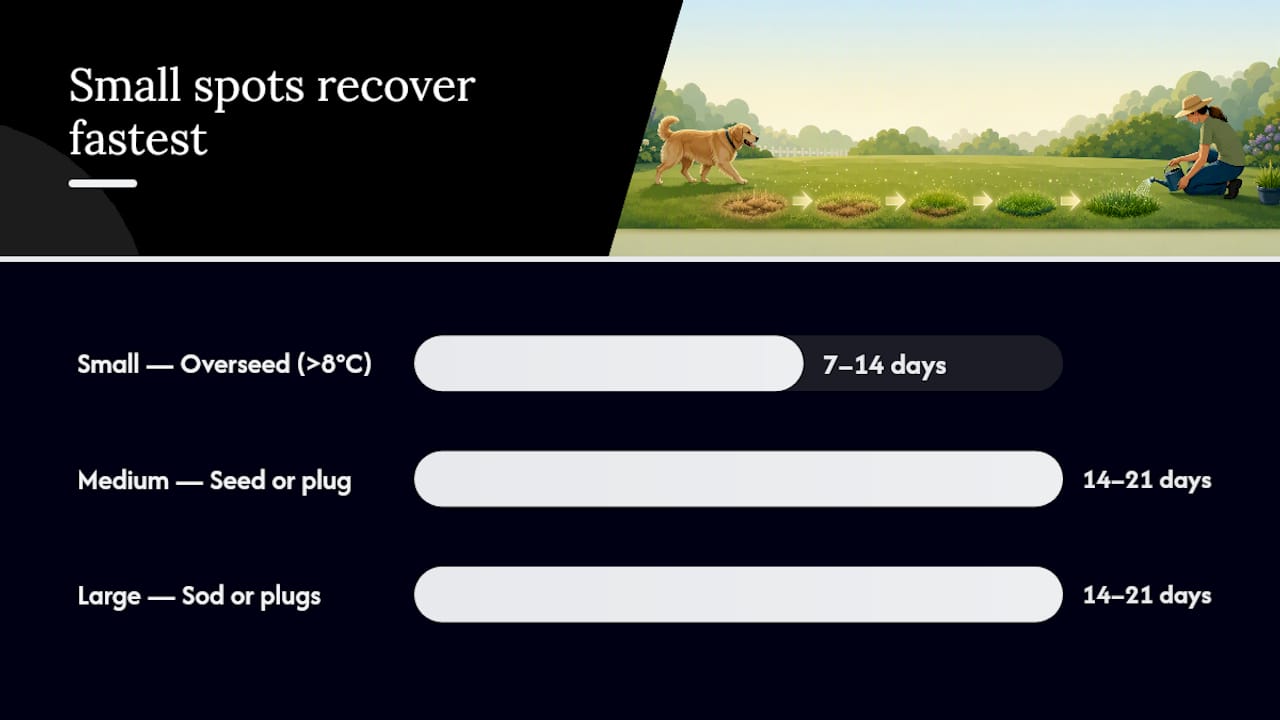
| Method | Time to visible progress | Notes |
|---|---|---|
| Overseeding small spot | 7 to 14 days to sprout | Full blend into surrounding lawn takes 6 to 8 weeks |
| Medium patch repair | 14 to 21 days | Depends on soil prep and consistent watering |
| Sod or turf plugs | 14 to 21 days to root | Fastest visual fix for high-traffic or visible areas |
Reseeding works best when soil temperature sits above roughly 8°C, which usually means spring or early autumn in most gardens. Sowing into cold, wet soil in midwinter mostly wastes seed.
How can you stop repeat urine damage on your lawn?
Prevention beats repair every time, and the fix is almost always simpler than owners expect. Watering the spot as soon as possible after urination dilutes the nitrogen and salt load before it burns the roots, and everything else you do is really just support for that one habit.
- Train your dog to use a designated gravel or bark toilet area rather than the open lawn.
- Take walks at consistent times so most business happens off your own grass.
- Raise your mowing height slightly; more leaf area means more resilience to a nitrogen pulse.
- Stick to a balanced, low-nitrogen feeding schedule rather than piling extra fertiliser onto stressed patches.
- Aerate once or twice a year to reduce compaction, which otherwise lets salts build up in the soil.
Larger or heavier dogs, and multi-dog households, put down more concentrated urine more often, so recurring spots in the same corner usually point to a favourite toilet zone rather than bad luck. Where the same patch keeps failing to hold seed, the soil itself has likely built up a salt bank, and gypsum applied at typical conditioner rates helps displace that salt before you try seeding again.
Pro Tip: Overseed thin patches with a slightly more urine-tolerant grass variety where you can, and keep the rest of the lawn thick and vigorous. A dense lawn hides small spots far better than a sparse one, even before they're fully repaired.
Repeated urine deposits build up a salt bank in the soil, and without correcting that with gypsum or a similar conditioner, seed and sod often fail to establish and the same spot reappears.
Which products actually help repair dog urine damage?
Several product categories are marketed at this exact problem, and they're worth understanding honestly: they support the repair, they don't replace it.
- Urine neutralisers and repair treatments – applied to the spot to help with appearance or seed establishment.
- Gypsum and soil conditioners – correct salt build-up in soil that keeps failing to hold new grass.
- Starter feeds and matched seed – give reseeded patches the right nutrient balance without pushing more nitrogen onto stressed ground.
- Small sod plugs or turf rolls – patch visible areas fast without a long bare-ground wait.
Two named products come up repeatedly for buyers in Ireland. PEE FIX, sold on Amazon.ie, is marketed as a urine neutraliser and patch repair treatment, applied directly to affected spots. Envii Neuturine is a UK spot repair product designed to treat burn spots caused by dog urine and support recovery. Both are reasonable additions to a repair plan, but neither substitutes for flushing fresh spots or correcting soil chemistry where damage keeps recurring. Follow the label's timing and keep pets off treated ground for the stated interval.
Commercial neutralisers are genuinely useful for appearance and seed take on individual spots, but they work alongside dilution and soil correction, not instead of them.
For cost and effort, a bag of gypsum and matching seed usually costs less than a bottle of proprietary neutraliser and does more of the structural work. Products like PEE FIX or Neuturine suit owners who want a quick, targeted fix on a handful of spots. Widespread damage calls for the soil-first approach, or a professional visit.
What do professional groundskeepers do differently?
Professionals rarely reach for seed first. Where soil is compacted or salt-affected, they treat that before reseeding, because grass sown into damaged soil tends to fail again within weeks. A typical seasonal rhythm looks like this:
- Flush urine spots as routine, not as an afterthought.
- Scarify and overseed in spring or early autumn windows, when soil temperature supports germination.
- Aerate at least once a year to keep compaction and salinity from building up.
- Apply balanced, low-nitrogen feeds through the season rather than one heavy dose.
For high-visibility patches, matching sod plugs cut down weeks of bare-looking lawn, and picking a seed variety close to what's already growing avoids a patchwork look once it fills in. Sherrypropertycare applies exactly this sequence, soil correction before cosmetic repair, across residential lawns in Dublin.
Pro Tip: When a lawn has more than a handful of urine spots, check soil texture before buying more seed. Compacted, salty ground defeats good seed every time.
When should you call a professional instead of DIY?
A handful of spots a season is a DIY job. Certain signs mean it's time to book help instead:
- Dozens of recurring spots across the lawn, not isolated incidents.
- Visible soil crusting or a whitish salt residue where grass has died repeatedly.
- Broad worn or bare areas alongside poor drainage or compacted soil.
- No time for the daily watering and mowing care that fresh seed or sod needs.
DIY materials (seed, gypsum, topsoil) cost relatively little but demand ongoing attention. A professional service costs more upfront but handles soil correction, seeding or sodding, and aftercare in one visit, useful when the lawn has moved past spot repair into a systemic problem. Sherrypropertycare offers personalised quotes for Dublin properties needing exactly this kind of larger repair.
A note from a Dublin groundskeeper
Most call outs for urine damage aren't really about the dog, they're about soil that's never been corrected. The lawns that recover fastest are the ones where the owner started flushing spots and got the soil right before reseeding. At Sherrypropertycare, that sequence is the basis for every repair we do across Dublin gardens.
Get a lawn that holds up to a dog, without the guesswork
Sherrypropertycare is the practical alternative to trial-and-error DIY repair for Dublin homeowners whose lawn has moved past a spot or two, giving you soil correction, reseeding or sodding, and ongoing care in one visit instead of weeks of watering, waiting, and hoping the patch takes.

If you've read this far because your lawn has more brown patches than green, that's usually a soil issue rather than a seed issue, and it's the kind of job that benefits from an experienced eye rather than another bag of seed. Sherrypropertycare works with Dublin homeowners and landlords to assess lawns properly, from proper mowing height adjustments that build resilience to full soil remediation for lawns with widespread salt damage. Whether you need a one-off repair or a seasonal maintenance plan that keeps urine spots from becoming a recurring headache, send a few photos of the affected areas and get a personalised quote back. Request your quote from Sherrypropertycare and get a straight answer on what your lawn actually needs.
Sources
- Dog urine lawn patches: best treatment for 2026 - Lawnscience
- How to keep dog pee from ruining your lawn – PetMD
FAQ
How do I fix a lawn ruined by dog urine?
Flush affected spots with water, remove dead grass, and reseed small patches or use sod for larger, more visible areas. For lawns with dozens of dead spots, correct the soil with gypsum before reseeding, since salt build-up is usually why grass won't grow back.
Will grass grow back after dog urine damage?
Yes, in most cases, once the underlying soil salt is diluted or corrected. Small spots typically sprout new growth within 7 to 14 days of reseeding and blend into the surrounding lawn within 6 to 8 weeks.
What neutralises dog urine on a lawn?
Water is the simplest and most effective neutraliser, diluting the nitrogen and salt concentration before it damages roots. Commercial products like PEE FIX or Envii Neuturine can support spot appearance, but they work alongside flushing, not instead of it.
Why are there brown patches on my grass after my dog pees?
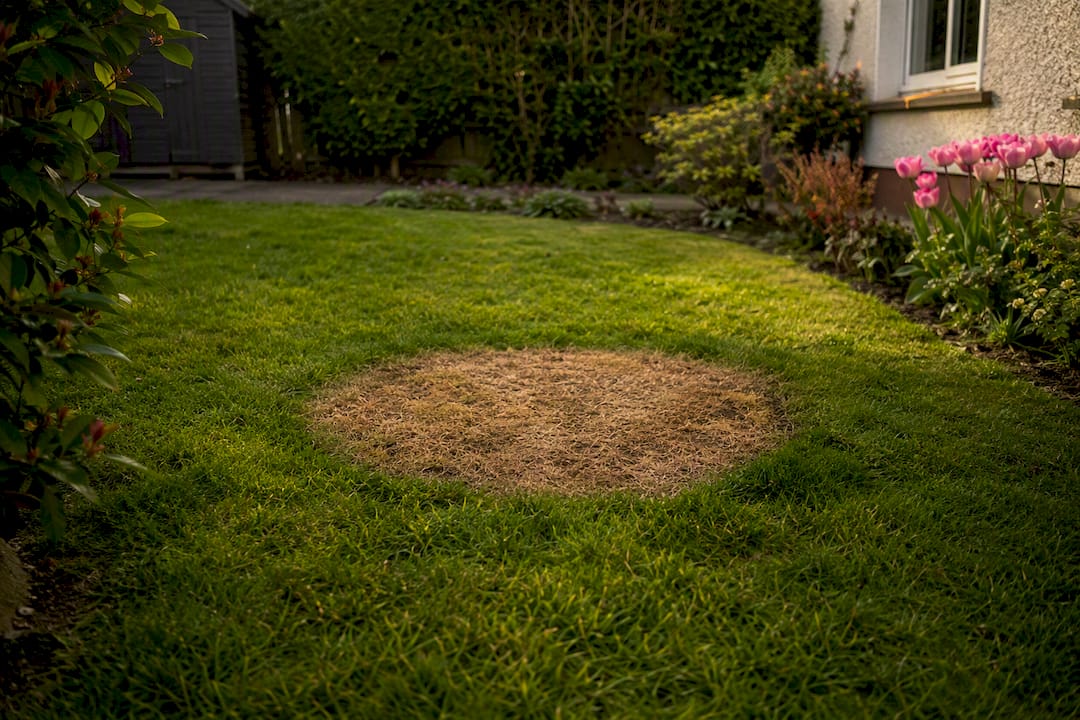
A concentrated dose of nitrogen and salt in the urine scorches the grass crown and roots at the centre of the spot, while diluted urine at the edges acts like fertiliser, creating the classic dark green ring around a dead centre.
When should I call a professional for dog urine damage?
If you're seeing dozens of recurring spots, visible soil crusting, or broad worn areas rather than a few isolated patches, the issue is likely soil compaction or salinity that needs proper correction. Sherrypropertycare provides personalised quotes for Dublin lawns needing this level of repair.