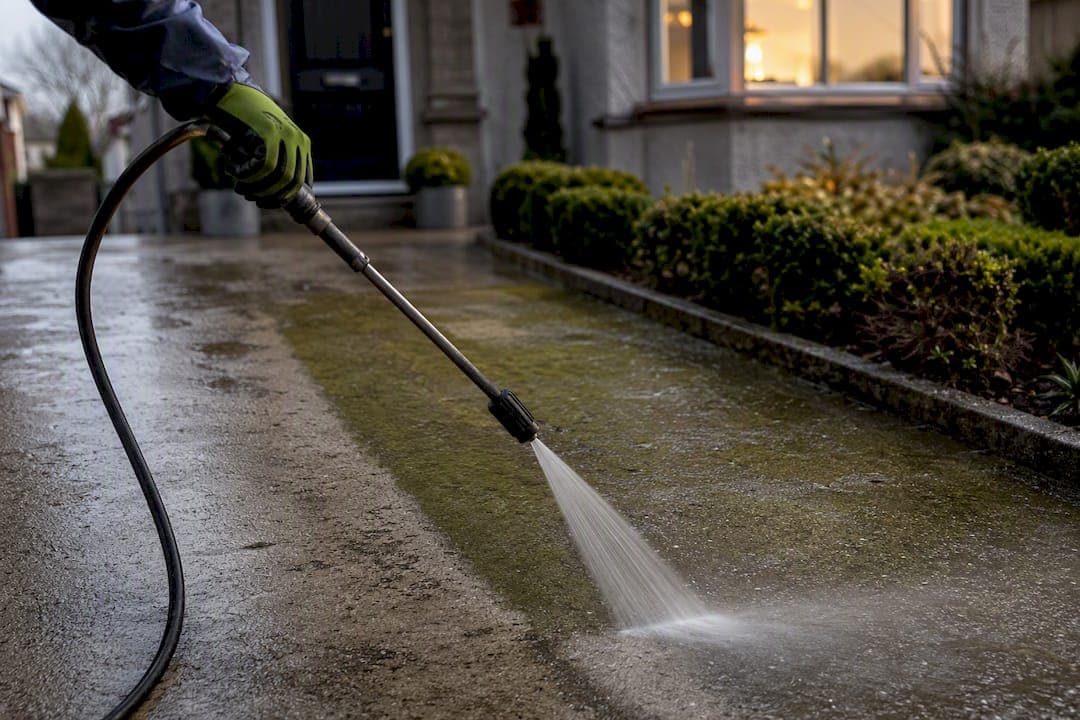
The most reliable fix is a combined sequence: apply a surface-appropriate treatment where the moss is thick, wait 7 to 14 days for it to die back, then remove it mechanically or with a pressure washer, before fixing the drainage or shade that let it grow in the first place. Skip the wait and you'll just scrub live spores around the surface. Skip the drainage fix and it's back within a season. Avoid DIY chemical shortcuts like undiluted bleach or washing powder on tarmac, as these can soften the binder and harm nearby plants.
TL;DR:
- Using a biocide appropriate for your driveway surface, waiting 7 to 14 days for moss to die back, is essential before mechanical removal to prevent spores from spreading.
- Pressure washing on tarmac requires a wider nozzle and lower pressure, with professional hot-water systems offering longer-lasting results than domestic machines.
- Routine maintenance like pruning shade, removing debris, and inspecting drainage is crucial to prevent moss regrowth, which thrives in shaded, moist, and porous environments.
- Chemical treatments such as vinegar or washing powders are risky for tarmac and plants, making labeled biocides the safer and more effective choice.
- Large moss problems or delicate surfaces often justify hiring professionals, as they deliver longer-lasting suppression with proper treatment, re-sanding, and sealing.
Table of Contents
- Choosing the right driveway moss removal method
- How to remove moss by driveway surface type
- What chemicals actually work, and which ones risk damage
- Pressure washing settings that won't damage your driveway
- Preventing moss from coming back
- When does moss removal need a professional?
- What most driveway moss advice gets wrong
- Get a professional driveway clean without the guesswork
- Sources
- FAQ
Choosing the right driveway moss removal method
Not every driveway needs the same approach, and picking the wrong one wastes a weekend. Light, patchy moss on concrete usually responds to a stiff brush and a bucket of hot water. Thicker growth wedged into joints or textured block paving needs chemical pre-treatment first, because scrubbing live moss just spreads spores into the cracks you've already cleared.
- Brushing and scraping: cheap, immediate, but only removes surface growth. Best for light moss on concrete or slabs. Results last a few months at most without follow-up.
- Chemical pre-treatment: kills moss at the root over 7 to 14 days. Works on all surfaces if the product is labelled for that material. Essential before removing heavy growth.
- Pressure washing: fast and thorough on robust surfaces. Avoid high pressure at close range on tarmac, it can strip the surface. Results typically last 6 to 12 months.
- Professional hot-water cleaning: deeper kill, better suppression, and usually needed for large or heavily colonised areas.
How to remove moss by driveway surface type
Preparation matters more than most people expect. Clear leaves and loose debris first, check that drains and gulleys aren't blocked, and put on gloves, eye protection, and old clothes before handling any chemical product. Here's the sequence to follow, adapted to your surface.
- Tarmac or asphalt: apply a biocide labelled safe for bituminous surfaces. Avoid anything containing strong alkalis or high concentrations of surfactants, since these can soften the binder over time, as Express. Wait 7 to 14 days, then brush off dead moss with a stiff outdoor broom.
- Block paving: treat the joints directly, since that's where moss establishes first. A rotating weed sweeper works well here, as Homebuilding notes, reaching into textured gaps a flat brush misses. After washing, re-sand the joints to keep the blocks stable.
- Concrete or slabs: these tolerate a wider range of treatments and higher pressure washing settings. Scrape stubborn patches with a flat-edged tool before rinsing.
- Final clean: rinse thoroughly, collect and bin the dead moss rather than sweeping it into borders, and let the surface dry fully before deciding if a seal coat is worthwhile.
What chemicals actually work, and which ones risk damage
Household hacks get repeated online constantly, but vinegar, washing powder, and neat bleach carry real risks. Detergents contain surfactants that can gradually break down tarmac binder, and bleach runoff kills grass and border plants outright. Labelled garden or driveway biocides are formulated to avoid this, which is why the RHS recommends mechanical and cultural control first, reserving chemical treatment for hazardous, slippery growth.
- Check the product label states it's safe for your specific surface, tarmac, block paving, or concrete, before buying.
- Dilute exactly to the manufacturer's ratio; stronger isn't more effective, just riskier.
- Wear gloves and eye protection when mixing or spraying any biocide.
- Never let runoff drain into soil, drains, or nearby watercourses.
- Ask a local garden centre if you're unsure which product suits your driveway.
Pro Tip: Test any chemical product on a small, hidden corner of the driveway first and leave it 24 hours. If the surface discolours or softens, don't treat the rest of the area with it.
Pressure washing settings that won't damage your driveway
Domestic cold-water washers typically run lower pressure than professional units, but even a modest machine can gouge tarmac if you hold the nozzle too close. A minimum of 2,000 PSI at a 30 to 40 cm standoff distance is the standard used on robust surfaces like concrete, but tarmac needs a wider berth and a fan nozzle rather than a pinpoint jet.
Professional hot-water systems achieve a deeper kill than cold-water machines, and practitioner reports suggest suppression lasting 18 to 24 months, against roughly 6 to 12 months for domestic cold-water cleaning. Block paving always needs re-sanding afterwards, or the joints loosen and moss returns faster than before.
Before washing the whole driveway, test a small patch, check the surface holds up, and confirm drains aren't blocked. Our patio power-washing guide covers the same standoff principles in more detail.
Preventing moss from coming back
Moss needs four things to thrive: moisture, shade, organic debris, and a porous surface to root into. Remove any one of those and regrowth slows dramatically, which is why the RHS points out that removal without addressing the underlying cause rarely lasts.
Ranked by cost and effect, shade reduction pays off fastest. Pruning back an overhanging shrub or tree branch costs nothing and cuts moisture retention significantly. Annual biocide treatment comes next, cheap and quick if done during the right window. Sealing the surface adds a longer-term barrier against porosity but costs more upfront. Drainage works such as regrading a slope or adding a gravel edge channel are the most expensive but solve chronic pooling that nothing else fixes.
A simple annual timetable helps:
- Spring (March to May) or autumn (September to November): treat with biocide when temperatures sit above roughly 12°C and a dry 24 to 48 hour window is forecast, as Goodgrow advises.
- Monthly: sweep leaves and organic debris before they compost into moss-friendly mulch.
- Annually: inspect drainage channels and gulleys for blockages before the wet season sets in.
Our driveway maintenance guide covers a fuller seasonal schedule if you want to plan the whole year around it.
When does moss removal need a professional?
Large or recurring moss problems, slip hazards near steps or slopes, and delicate surfaces that scar under DIY pressure washing are the clearest signs it's time to call a professional. Hot-water treatment and correct re-sanding after washing are where a properly equipped crew earns its fee, delivering suppression that lasts noticeably longer than a weekend DIY job.
If your driveway has deep, established moss across a large area, sits on a slope where slipping is a real risk, or uses block paving that needs re-sanding after every clean, a professional job saves you the repeat effort. Our deep cleaning services guide explains what that process typically involves.
What most driveway moss advice gets wrong
Most guides treat moss removal as a one-off scrub, and that's the mistake. The research is consistent on one point: mechanical removal without fixing shade or drainage buys you a few tidy months, nothing more. What gets underrated is timing. Treating moss in the wrong season, deep winter or high summer, wastes product and effort for no real gain.
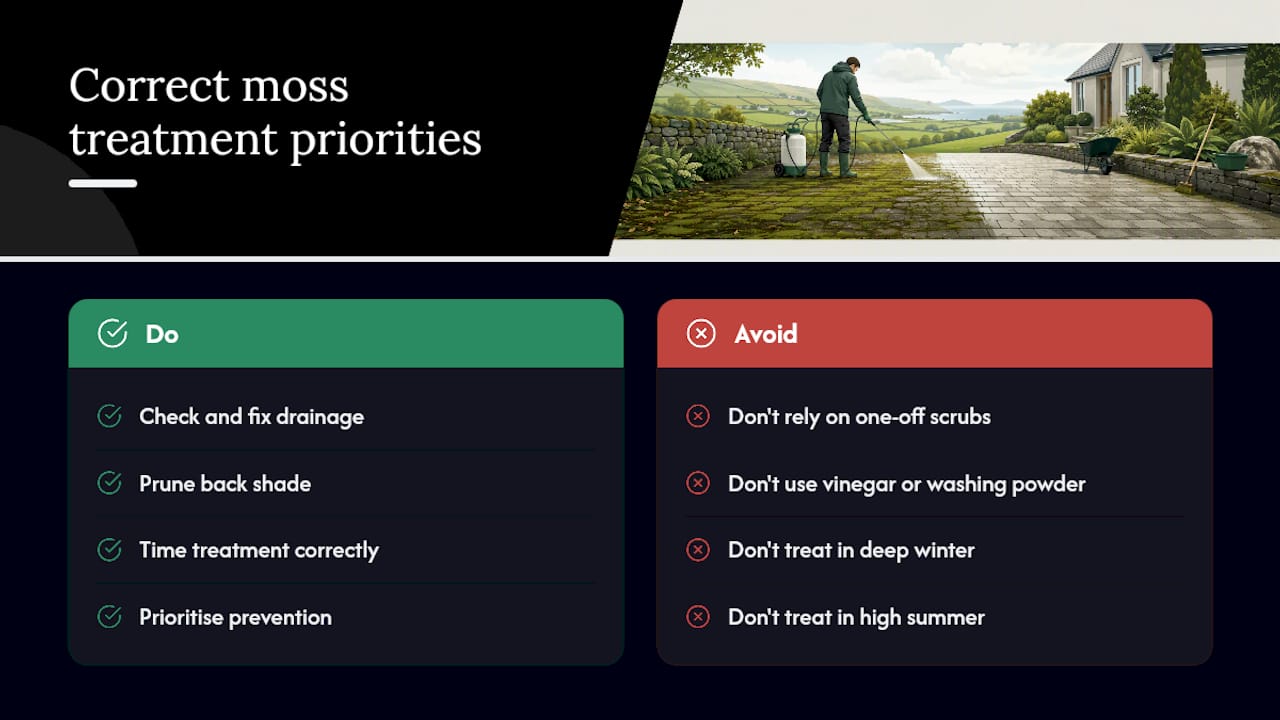
The bigger issue is how casually chemical shortcuts get recommended online. Vinegar and washing powder circulate as free-and-easy fixes, but neither carries any guarantee against damaging tarmac binder or harming plants nearby. A driveway is a long-term asset. Treating it with whatever's under the kitchen sink is a false economy if it shortens the surface's life.
What should come first is the boring stuff, checking drainage, pruning back shade, timing the treatment properly. Removal is the easy part. Prevention is where most homeowners give up too soon, and it's exactly where the effort pays off longest.
— gerard
Get a professional driveway clean without the guesswork
Professional services are a practical alternative when a driveway needs more than a weekend of scrubbing, offering hot-water treatment, moss control, re-sanding, and sealing, without you having to hire or handle pressure equipment yourself.

If your moss keeps coming back, covers a large area, or sits on a slope where slipping is a concern, that's usually the point where a professional job costs less than repeated DIY attempts over a season. The professional service handles the treatment, the wait period, the removal, and the re-sanding or sealing that keeps results lasting, rather than leaving you to guess at dilution ratios or pressure settings. Getting a quote is straightforward: send a few photos of the driveway and its condition, and you'll get guidance tailored to the surface and the extent of the growth. Check our driveway cleaning services overview for what's typically included, then request your customised quote through the Sherry Property Care website.
Sources
This guide draws on RHS hard-surface guidance, Homebuilding's driveway moss feature, Express.co.uk's RHS explainer, and practitioner guides from Checkatrade and SameDayJetWash.
- RHS: Algae, lichens, liverworts and mosses on hard surfaces
- Goodgrow: Best time to kill moss in the UK
- Express
- SameDayJetWash: Moss removal from driveways guide
- Homebuilding: How to kill moss on driveways and patios
FAQ
What is the best way to get rid of moss on a driveway?
Apply a surface-appropriate biocide, wait 7 to 14 days for the moss to die, then remove it by brushing, scraping, or pressure washing, and address drainage or shade afterwards to stop it returning.
Can I use washing powder to remove moss from a tarmac driveway?
It's best avoided. Surfactants in washing powder can gradually soften tarmac binder, so a product labelled safe for tarmac is the safer choice.
What is the best time of year to kill moss?
Spring and autumn, when temperatures sit consistently above roughly 12°C and you have a dry 24 to 48 hour window for the treatment to work.
Can you jet wash moss off a driveway?
Yes, on robust surfaces like concrete, using at least 2,000 PSI at a 30 to 40 cm standoff distance. Tarmac needs a wider standoff and lower close-range pressure to avoid surface damage, and block paving needs re-sanding afterwards.
When should I hire a professional instead of doing it myself?
Large or recurring moss areas, slopes with slip risk, and delicate surfaces are the clearest signs, since professional hot-water treatment and correct re-sanding typically last longer than DIY cold-water cleaning.