TL;DR:
- Hedges around Dublin properties enhance privacy, curb appeal, and property value but must be trimmed within legal seasonal windows to avoid penalties.
- The best times for hedge trimming are February and September, with species like beech, laurel, and whitethorn being ideal choices for local conditions.
If you own property in Dublin, the hedges around your garden do more than mark a boundary. They add privacy, kerb appeal, and genuine value to your home. But many Dublin homeowners are surprised to learn that cutting a hedge at the wrong time of year can result in a criminal offence and a fine of up to €14,000. This guide covers everything you need to know about Dublin hedges: the best species for local conditions, the legal rules you must follow, practical maintenance advice, and smart landscaping ideas to make your outdoor space work harder for you.
Table of Contents
- Key takeaways
- Types of Dublin hedges worth knowing
- Legal rules for trimming hedges in Dublin
- Practical hedge maintenance for Dublin gardens
- Landscaping with hedges in Dublin
- My honest take on hedges in Dublin
- Let Sherrypropertycare handle your hedges
- FAQ
Key takeaways
| Point | Details |
|---|---|
| Legal trimming window | Hedge cutting on uncultivated land is banned from 1 March to 31 August under Irish law. |
| Best trimming months | February and September are the safest and most effective months to trim hedges in Dublin. |
| Top hedge species | Beech, laurel, and whitethorn are among the most reliable choices for Dublin gardens. |
| Feeding timing matters | Apply compost or light fertiliser in spring, just before rain, for the healthiest results. |
| Professional help pays off | Well-maintained hedges can add measurable value to your Dublin property. |
Types of Dublin hedges worth knowing
Choosing the right hedge species is one of the most consequential decisions you will make for your garden. Dublin's mild, wet climate suits a wide range of plants, but some perform far better than others depending on your soil, sunlight, and privacy needs.
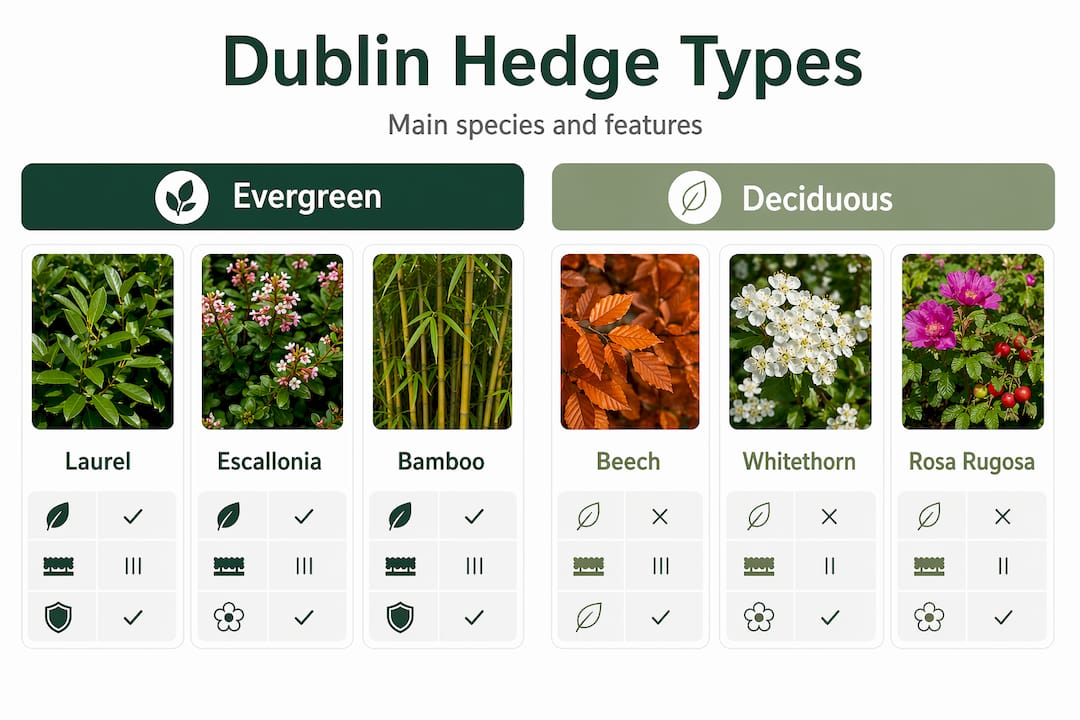
Beech (Fagus sylvatica) is one of the most popular choices for garden hedges in Dublin. It holds its copper-brown leaves through winter, giving you year-round privacy even after the growing season ends. Beech grows well in most Dublin soils and tolerates shade reasonably well. It responds beautifully to an annual trim and can reach a tidy, dense wall of growth within a few years.
Laurel (Prunus laurocerasus) is fast-growing and evergreen, making it a go-to for homeowners who want quick, thick cover. It does well in both sun and partial shade. Beech and laurel thrive in most Dublin areas, while whitethorn works better in shallower soils. Laurel is low maintenance but can become large if left untrimmed, so it benefits from at least one good cut per year.
Whitethorn (Crataegus monogyna), also called hawthorn, is a native Irish species that wildlife absolutely loves. It produces white blossoms in spring and red berries in autumn, making it one of the most visually interesting hedging options available. It suits exposed, windy gardens and shallow soils particularly well.
Escallonia is a firm favourite for coastal and semi-coastal Dublin gardens. It is semi-evergreen, produces pink or red flowers in summer, and handles sea breezes well. The one caveat is that escallonia can be susceptible to fungal issues in poorly drained soils, so good drainage is key.
Rosa Rugosa offers a softer, wilder look with fragrant flowers and colourful hips in autumn. It works well as an informal boundary rather than a clipped formal hedge. It is also excellent for wildlife.
Bamboo is worth a mention, though it requires careful management. It creates a striking, modern screen but spreads aggressively if planted without a root barrier. Use it in containers or with a physical barrier underground to prevent it taking over.
Here is a quick comparison to help you choose:
| Species | Growth rate | Evergreen | Wildlife value | Best for |
|---|---|---|---|---|
| Beech | Moderate | Semi (winter leaf) | Medium | Formal boundaries |
| Laurel | Fast | Yes | Low | Quick privacy screens |
| Whitethorn | Moderate | No | Very high | Native gardens, exposed sites |
| Escallonia | Moderate | Semi | Medium | Coastal or windy gardens |
| Rosa Rugosa | Moderate | No | High | Informal, wildlife-friendly |
| Bamboo | Fast | Yes | Low | Modern screens with root barrier |
A species-rich hedgerow can support up to 2,000 species per kilometre, so mixing native species like whitethorn and Rosa Rugosa where space allows is genuinely beneficial for local biodiversity.
Legal rules for trimming hedges in Dublin
This is where many homeowners get caught out. The rules are clear, but they are not widely known, and the consequences of getting it wrong are serious.
Under the Wildlife Acts, cutting or destroying hedges on uncultivated land between 1 March and 31 August is a criminal offence. This period covers the entire bird nesting season, during which hedges provide critical shelter for breeding wildlife. It is not limited to farmers or large landholders. It applies broadly, and enforcement is active.
In 2025, the National Parks and Wildlife Service (NPWS) initiated 17 prosecutions for illegal cutting, with fines reaching up to €14,000. The NPWS works closely with An Garda Síochána on enforcement, and vigilance has increased considerably in recent years.
Beyond the seasonal ban, the law goes further:
- It is an offence at any time to knowingly disturb or destroy wild bird nests or eggs under Section 22 of the Wildlife Acts.
- Homeowners must check whether a hedge is jointly owned before trimming it. You cannot trim a neighbour's hedge without their consent, even if branches extend onto your property.
- Tree Preservation Orders (TPOs) may apply to certain hedges or trees, particularly on older or period properties in Dublin.
- Road safety obligations do exist. You may have a duty to trim hedges that obstruct visibility at junctions or on public roads, but this must be done outside the protected period where possible.
The safest rule of thumb: plan all hedge cutting for February or September. These months sit outside the nesting season, give plants time to recover before or after winter, and are recommended by horticultural experts as the optimal periods for healthy, legal hedge maintenance.
Pro Tip: If you are unsure whether your hedge falls under any specific protection or shared ownership arrangement, check with your local authority before lifting any tool.
For a full seasonal maintenance planner, the seasonal property maintenance tips guide from Sherrypropertycare covers the full calendar year, including hedge care.
Practical hedge maintenance for Dublin gardens
Good Dublin hedge maintenance does not require a lot of time. It requires good timing and the right technique. Here is how to keep your hedges in excellent condition throughout the year.
-
Trim twice a year, not once. Regular trimming twice a year encourages denser growth and is far more manageable than one annual cut. A light trim in February followed by a tidy-up in September is the ideal rhythm for most Dublin hedges.
-
Keep your cutting height at eye level or below. Cutting at awkward heights causes uneven patches that are difficult to correct later. Work at a comfortable level, keep your cuts level, and step back frequently to check the line.
-
Feed in spring. Feeding hedges with compost or a light fertiliser in spring supports healthy growth. Apply it when rain is expected within a day or two. This improves uptake and reduces the risk of nutrient burn, particularly for young plants.
-
Water young hedges through their first two summers. Newly planted hedges are the most vulnerable. Water deeply and consistently during dry spells, particularly from May through August. Once established, most Dublin hedge species are resilient enough to manage on rainfall alone.
-
Manage weeds around the base. Weeds compete directly with hedges for moisture and nutrients. Apply a thick layer of bark mulch around the base each spring to suppress weeds, retain moisture, and gradually improve soil quality as it breaks down.
Pro Tip: Applying light feeding in early spring and mid-summer, timed to coincide with rain, leads to the healthiest hedge growth without risk of overfeeding. Avoid fertilising in late autumn as it encourages soft new growth that frost can damage.
One common mistake Dublin homeowners make is cutting hedges too hard in a single session. This shocks the plant and can leave it looking bare for months. Take no more than one-third of the growth in any single cut, and your hedge will recover quickly and fill in more densely over time.

Landscaping with hedges in Dublin
Beyond the practicalities, hedges are genuinely one of the best tools available for improving the appearance and value of a Dublin property. Used well, they transform an outdoor space.
Here are some ideas worth considering for your garden design in Dublin:
- Privacy screens along boundaries. A well-placed beech or laurel hedge along a rear or side boundary creates a dense, attractive screen that outperforms fencing in both appearance and longevity. It also absorbs sound, which matters if you are near a busy road.
- Mixed-species hedges for seasonal colour. Planting whitethorn alongside Rosa Rugosa or escallonia gives you spring blossom, summer flowers, and autumn berries in a single hedge line. This approach also adds significant wildlife value.
- Mature hedge installation for immediate impact. Nurseries in Dublin can supply semi-mature or instant hedging plants. These cost more than bare-root stock but give you privacy and structure from day one.
- Formal clipped hedges for period properties. Box and yew are classic choices for formal hedging around period Dublin homes, though box is currently under threat from box blight. Speak to a specialist before committing.
- Low hedges as garden dividers. A knee-height lavender or rosemary hedge works beautifully as a path edger or border divider in smaller Dublin gardens. It adds scent, structure, and pollinators.
Well-kept hedges can add 10 to 15 per cent to the value of a Dublin home when combined with general garden upkeep. That figure matters if you are planning to sell or let your property in the near future. For broader garden design guidance, the expert garden advice from Sherrypropertycare is a solid starting point.
My honest take on hedges in Dublin
I have seen a lot of Dublin gardens over the years, and the hedges tell you a great deal about how a property is managed. The ones that are trimmed at the wrong time, hacked back hard in July, or left to sprawl until they block a footpath are not just eyesores. They are a sign that someone did not know the rules, or did not think they applied to them.
What I find genuinely encouraging is that enforcement has tightened. The prosecutions in 2025 were a real signal. People are starting to take the seasonal protections seriously, and that is good for Dublin's wildlife and for the general standard of its streetscapes and gardens.
From my perspective, the practical case for getting hedge care right is just as strong as the legal one. Hedges that are trimmed correctly and on schedule grow denser, look better, and require less corrective work over time. A February trim and a September tidy-up is really all most Dublin hedges need. It is not complicated. It just needs to be done at the right time and done properly.
What I would encourage every Dublin homeowner to do is treat their hedges as a long-term investment rather than a chore to deal with once a year. The difference between a well-maintained hedge and a neglected one is visible from the street. And in a city where garden space is precious, getting this right matters.
— gerard
Let Sherrypropertycare handle your hedges
Managing Dublin hedges properly takes knowledge, timing, and the right equipment. Sherrypropertycare provides professional hedge trimming services for residential and commercial properties across Dublin, with full awareness of seasonal legal restrictions and local growing conditions.

Whether you need a one-off tidy-up before a property viewing or regular scheduled maintenance throughout the year, Sherrypropertycare tailors every service to your specific property. The team works within the legal trimming windows, advises on the best species and shaping options for your garden, and helps you avoid the costly mistakes that catch many homeowners off guard.
Send a photo of your garden to get a personalised quote. Visit Sherrypropertycare today and take the guesswork out of hedge care in Dublin.
FAQ
When can you legally cut hedges in Dublin?
Hedge cutting on uncultivated land is banned from 1 March to 31 August under the Irish Wildlife Acts. The safest months to trim are February and September, outside the bird nesting season.
What are the best hedges for Dublin gardens?
Beech, laurel, and whitethorn are among the most reliable choices for Dublin's climate. Escallonia suits coastal or exposed gardens, while Rosa Rugosa works well as an informal wildlife-friendly boundary.
What fine can you get for illegal hedge cutting in Ireland?
Fines for illegal hedge cutting can reach up to €14,000. In 2025, the NPWS brought 17 prosecutions for illegal cutting or burning, showing that enforcement is active and serious.
Can you trim a hedge that borders your neighbour's property?
You cannot trim a neighbour's portion of a shared hedge without their consent. Joint ownership rules apply, and homeowners should also check for any Tree Preservation Orders before cutting.
How often should Dublin hedges be trimmed?
Most Dublin hedges benefit from two trims per year, once in February and once in September. This encourages dense, healthy growth and keeps the workload manageable throughout the season.