TL;DR:
- Electrical maintenance involves proactive inspections, testing, and servicing of building systems to ensure safety and reliability. Regular procedures include monthly visual checks, quarterly technical reviews by electricians, and deep services every 3–5 years, with documentation essential for compliance. Modern properties with EV chargers and smart devices require inclusion in maintenance plans to prevent failures and improve safety standards.
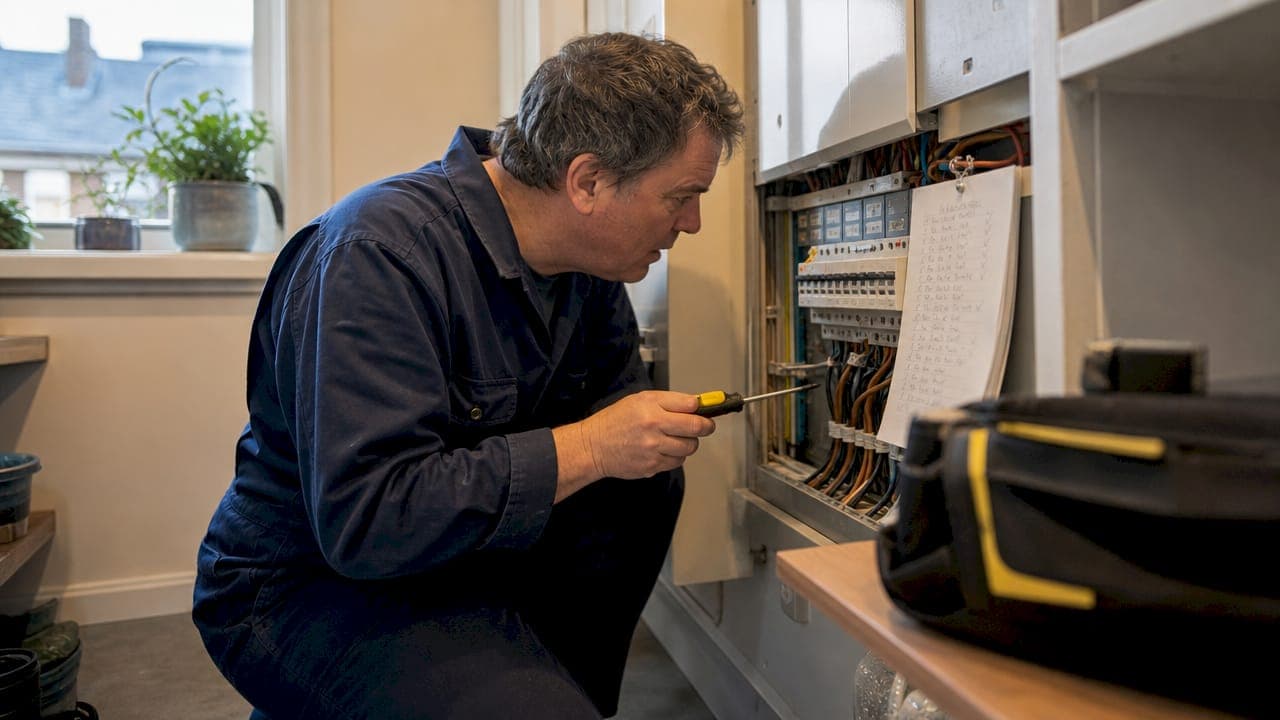
Electrical maintenance is the planned inspection, testing, and servicing of a building's electrical systems to prevent faults, protect occupants, and keep power running reliably. For property managers and homeowners in Dublin, the role of electrical maintenance goes well beyond changing a fuse. It is a structured programme that covers everything from consumer units and wiring to modern loads like EV chargers and smart home devices. The US Department of Energy's Federal Energy Management Program describes electrical maintenance as a system tune-up that restores intended performance, shifting the focus from reactive fixes to proactive asset management. NFPA 70B, now a core requirement rather than a recommendation, sets the international benchmark for documented maintenance programmes in 2026. Getting this right protects your property, your tenants, and your insurance position.
What are the key electrical maintenance procedures property owners should follow?
Industry-standard maintenance follows a three-tier rhythm that suits both residential and small commercial properties in Dublin.
-
Monthly visual inspections. A property owner or facility staff member walks the building and checks for obvious warning signs. These include scorch marks around sockets, tripped breakers, flickering lights, and the condition of the main consumer unit. GFCI and RCD outlets should be tested by pressing the test button and confirming the circuit drops. This takes less than 30 minutes and catches the most visible problems early.
-
Quarterly technical checks by a licensed electrician. A qualified contractor carries out thermal imaging of panels, tests arc fault circuit interrupters (AFCIs), and checks load balance across circuits. These checks identify heat build-up and overloaded circuits that visual inspection misses entirely. Records should be logged per asset, with overdue alerts tracked in a simple spreadsheet or maintenance log.
-
Deep service every 3–5 years. This involves thorough testing of all circuits, servicing of breakers and transformers, and a full review of wiring condition. It is the point at which an electrician can identify ageing insulation or undersized cabling before it becomes a hazard.
Documentation is not optional. Every inspection, repair, and test result should be recorded with a date, the name of the person who carried it out, and any follow-up actions. This record becomes your evidence during insurance claims, safety audits, or property sales. For guidance on structuring these records, the planned maintenance examples resource from Sherrypropertycare is a practical starting point.
Modern properties also require attention to low-voltage infrastructure such as Power over Ethernet switches, IP security cameras, and network video recorders. These devices cause early system failures in smart buildings when overlooked. Any Dublin home with a smart alarm, video doorbell, or networked heating system needs these components included in the maintenance schedule.

Pro Tip: After installing an EV charger or any high-load appliance, schedule a specific inspection to verify that breakers, labelling, and system protection are still adequate. Do not assume the installation sign-off covers ongoing maintenance.
Why is electrical maintenance vital for safety, reliability, and cost management?
The importance of electrical maintenance sits in three areas: safety, reliability, and money. Neglect any one of them and the other two suffer.
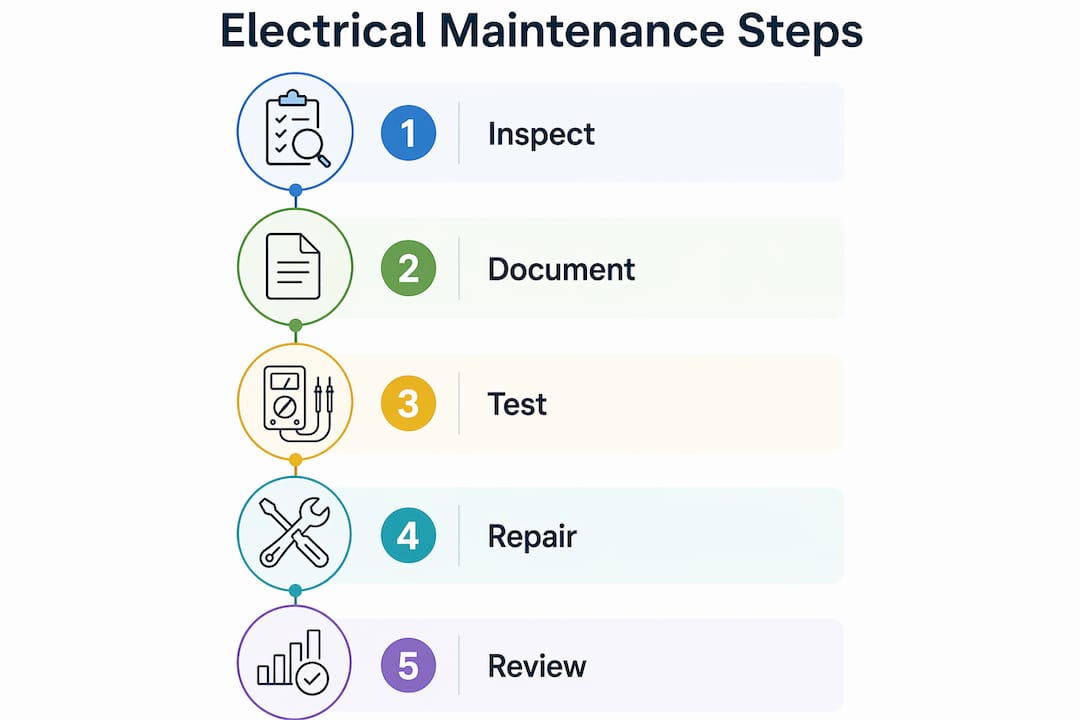
Consistent electrical system upkeep reduces unplanned outages by catching faults before they escalate into failures. That means fewer emergency call-out fees, less disruption to tenants, and no data loss from sudden power cuts. For a Dublin landlord managing multiple units, one avoided emergency repair can offset an entire year of routine maintenance costs.
The safety case is equally direct:
- Electrical fires. Faulty wiring and overloaded circuits are among the leading causes of residential fires in Ireland. Regular inspection catches these before ignition.
- Arc flash incidents. An arc flash releases intense heat and energy. Preventive checks identify the conditions that lead to arc flash, protecting both occupants and contractors working on the system.
- Equipment lifespan. Breakers, transformers, and motors last significantly longer when serviced on schedule. Replacing a breaker during a planned service costs a fraction of replacing a failed transformer in an emergency.
- Energy efficiency. Loose connections and unbalanced loads waste electricity. Correcting them during routine checks reduces energy bills directly.
- Insurance costs. Documented maintenance reduces risk exposure and can lower insurance premiums. Undocumented properties face higher scrutiny after any incident.
- Power quality. Stable voltage and clean power delivery directly support the uptime of critical home technologies like Wi-Fi routers, security systems, and smart thermostats.
The role of preventive maintenance for properties is well established: properties with structured programmes spend less over time and experience fewer serious incidents. The cost of prevention is predictable. The cost of failure is not.
How do regulatory standards like NFPA 70B shape electrical maintenance roles in 2026?
NFPA 70B moved from a set of recommendations to a core requirement by 2026. It now mandates a documented Electrical Maintenance Program that defines specific activities, protocols, and responsibilities. For Dublin property managers, this standard provides the clearest framework available for structuring a compliant programme, even where Irish regulations reference it indirectly.
The table below outlines the key compliance requirements and their practical implications:
| Requirement | Frequency | Practical implication |
|---|---|---|
| Arc flash risk assessment review | Every 5 years or after major changes | Protects contractors and occupants; required for insurance |
| NFPA 70E personnel training refresh | Every 3 years | Applies to anyone performing electrical maintenance tasks |
| Documented maintenance programme | Ongoing | Must define activities, protocols, and responsible persons |
| Asset-specific incident energy records | Per inspection | Enables rapid retrieval during audits and safety inspections |
| Scheduled inspections and testing | Per programme schedule | Monthly, quarterly, and deep-service intervals as defined |
Proper NFPA 70B documentation reduces the burden during audits by making records easy to retrieve. The focus is on defensible, accessible records rather than paperwork for its own sake. A property manager who can produce a clear inspection log during an insurance claim or safety inspection is in a far stronger position than one who cannot.
Tracking asset-specific incident energy levels and PPE categories per piece of equipment further strengthens your position during inspections. This level of detail distinguishes a professionally managed property from one that treats electrical upkeep as an afterthought.
Pro Tip: Store your maintenance records digitally with a clear folder structure per property and per year. A simple cloud folder shared with your electrician means records are retrievable within minutes, not days.
What practical steps can property managers and homeowners take?
Building a reliable electrical maintenance programme does not require a large budget. It requires consistency and a clear starting point.
- Start with a full asset inventory. List every electrical asset in the property: consumer unit, circuits, sockets, lighting, heating controls, security systems, EV chargers, and any low-voltage networking equipment. This inventory becomes the backbone of your maintenance schedule.
- Set realistic intervals. Base your schedule on manufacturer guidelines and the risk level of each asset. High-use circuits and older wiring warrant more frequent checks. A scheduled maintenance approach helps you set these intervals without guesswork.
- Use standardised checklists. A consistent checklist for each inspection type ensures nothing is missed. It also makes it easy to hand over to a new contractor without losing continuity.
- Engage a qualified local electrician. Quarterly and deep-service checks require a licensed contractor. Build a relationship with one who knows your property. Long-term contractor partnerships improve emergency response speed and maintenance budgeting because the contractor already understands your system.
- Review trends quarterly. Look at your inspection records every three months. If the same circuit keeps tripping or the same outlet keeps failing, that pattern tells you where to spend next.
- Include training for anyone performing checks. Anyone carrying out monthly visual inspections should know what they are looking for and what to escalate. NFPA 70E training, refreshed every three years, sets the standard for safe working practices.
The 2026 property maintenance checklist from Yearlong provides a useful reference for aligning electrical checks with broader home maintenance rhythms.
Pro Tip: Photograph the consumer unit and any areas of concern during each inspection. A dated photo library costs nothing and provides clear evidence of the property's condition over time.
Key takeaways
Preventive electrical maintenance is the most cost-effective way to protect a Dublin property from fire risk, equipment failure, and regulatory non-compliance.
| Point | Details |
|---|---|
| Follow a three-tier schedule | Monthly visual checks, quarterly electrician visits, and deep service every 3–5 years form the core rhythm. |
| Document every inspection | Dated records with named responsible persons protect you during audits, insurance claims, and property sales. |
| Include modern equipment | EV chargers, PoE switches, and smart devices must be part of the maintenance programme, not afterthoughts. |
| NFPA 70B sets the standard | Arc flash assessments every 5 years and NFPA 70E training every 3 years are now core compliance requirements. |
| Build contractor relationships | A trusted local electrician who knows your system responds faster and budgets more accurately. |
What I have learned from watching Dublin properties neglect their electrics
Working with property owners across Dublin over the years, the pattern I see most often is the same one. A landlord or homeowner runs a property for a decade without a single documented electrical inspection. Everything seems fine. Then a routine survey before a sale or a tenancy renewal uncovers wiring that should have been replaced years ago, and the repair bill dwarfs what a decade of preventive maintenance would have cost.
The shift I would encourage every property manager to make is simple. Stop thinking of electrical maintenance as something you do when something breaks. Think of it as a standing relationship with a trusted local electrician who knows your property as well as you do. That relationship pays for itself the first time they spot a failing breaker during a quarterly check rather than at 11pm on a Sunday.
Modern Dublin properties add complexity that older maintenance habits do not account for. EV chargers draw significant load. Smart home systems depend on clean, stable power. A property with three EV chargers and a networked security system has a very different electrical profile from the same house ten years ago. Your maintenance programme needs to reflect that.
The lighting maintenance guide from Sherrypropertycare covers one specific area where this matters. Lighting circuits are often the first place ageing wiring shows up, and they are easy to overlook in a broader inspection.
Compliance is not bureaucracy. It is the paper trail that protects you when something goes wrong. Property managers who treat documentation as a burden are the ones who struggle most during insurance claims. The ones who treat it as a professional habit find audits straightforward.
— gerard
Sherrypropertycare: property maintenance support in Dublin
Sherrypropertycare works with residential and commercial property owners across Dublin to keep properties in excellent condition year-round.

Electrical system upkeep is one part of a broader property care routine, and getting the right support locally makes a real difference. Whether you need help structuring a maintenance programme for your property or want a professional eye on your grounds and building upkeep, Sherrypropertycare offers customised support tailored to your property's needs. Send a photo of your property and get a quote that fits your situation. Reliable, local, and straightforward.
FAQ
What is the role of electrical maintenance in a property?
Electrical maintenance is the planned inspection, testing, and servicing of a building's electrical systems to prevent faults, protect occupants, and maintain reliable power. It shifts the focus from reactive repairs to proactive upkeep, reducing risk and cost over time.
How often should a Dublin homeowner schedule electrical inspections?
The industry standard involves monthly visual checks by the owner, quarterly technical checks by a licensed electrician, and a full deep service every 3–5 years. High-load properties with EV chargers or smart systems may need more frequent reviews.
What does NFPA 70B require from property managers in 2026?
NFPA 70B now requires a documented Electrical Maintenance Program with defined activities, protocols, and responsible persons. Arc flash risk assessments must be reviewed every five years, and NFPA 70E training must be refreshed every three years for anyone performing maintenance tasks.
Why does documentation matter for electrical maintenance?
Documented records are retrievable during insurance claims, safety audits, and property sales, providing clear evidence of due diligence. Proper NFPA 70B documentation reduces risk exposure and makes audits straightforward rather than stressful.
Do EV chargers and smart devices change my maintenance requirements?
Yes. Installing an EV charger or expanding smart home systems changes the electrical load profile of your property. A specific inspection after installation verifies that breakers, labelling, and system protection remain adequate for the new demand.