
TL;DR:
- Many Dublin property owners mistakenly view estate management as only a visual task focused on tidiness. Effective management requires compliance, structured maintenance, and lifecycle oversight to prevent property decline and legal risks. Professional estate management involves proactive planning, regular documentation, and holistic strategies that sustain property value and resident satisfaction.
Many property owners and managers in Dublin assume that estate management is primarily a visual exercise. Keep the grass cut, tidy the hedges, and the job is done. In reality, professional estate management involves compliance obligations, structured maintenance planning, and lifecycle oversight that go well beyond appearances. When you ignore these factors, you risk declining property values, legal exposure, and unexpected repair costs. This guide breaks down the key pillars of quality estate management in Ireland so you can make informed decisions for your property.
Table of Contents
- Licensing and compliance requirements for estate management in Ireland
- Planned preventative maintenance: why proactive care matters
- Grounds maintenance checklist for Dublin estates
- Landscape planning and aftercare for lasting value
- Why professional estate management is more than aesthetics
- Connect with Dublin estate management experts
- Frequently asked questions
Key Takeaways
| Point | Details |
|---|---|
| Verify licensing | Always confirm your estate manager holds a PSRA licence to ensure compliance and professionalism. |
| Prioritise planned maintenance | Timely, preventative schedules safeguard property value and minimise costly failures. |
| Use detailed checklists | A grounds maintenance checklist keeps tasks on track and standards high for aesthetics and safety. |
| Plan landscape long-term | Thoughtful plant selection and multi-year aftercare strategies reduce maintenance costs and improve estate success. |
Licensing and compliance requirements for estate management in Ireland
Before anything else, you need to understand the legal side of property management in Ireland. This is not optional. Property management services require a licence from the Property Services Regulatory Authority (PSRA) for any individual or company providing such services in the State. That includes block management, estate management, and related property services.
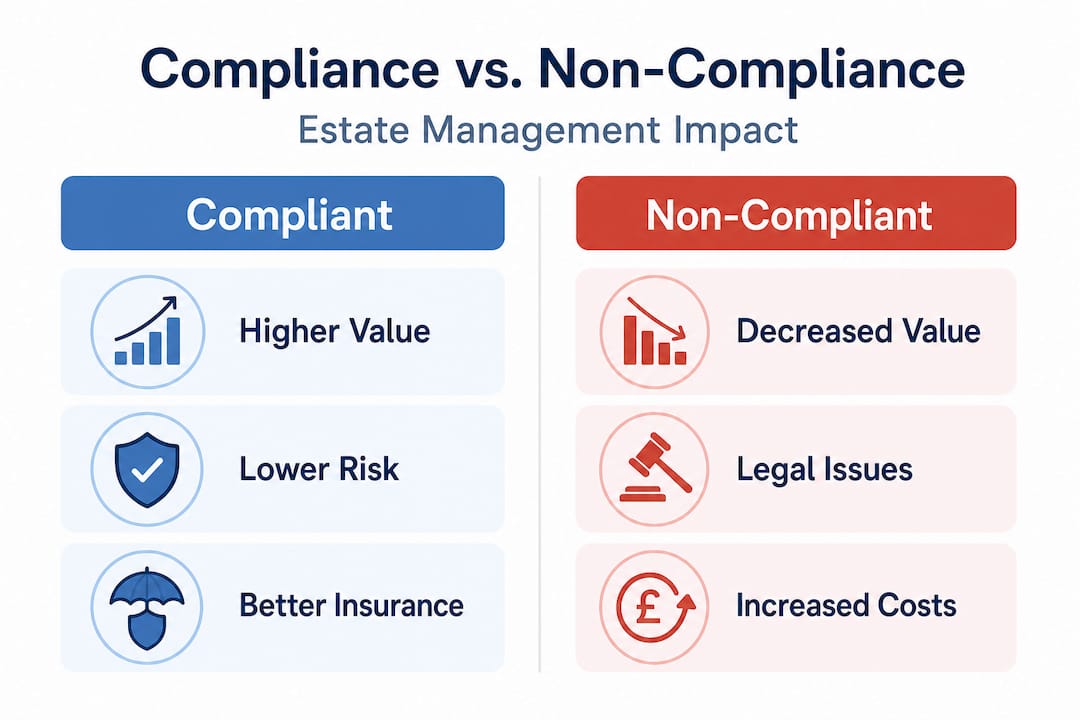
This matters to you as a property owner or manager for a straightforward reason. When you engage a service provider without verifying their PSRA licence, you are taking a real risk. Unregulated providers have no formal accountability framework. If something goes wrong, your legal position is far weaker.
Here is what PSRA licensing covers and why it protects you:
- Formal accountability: Licensed providers must meet defined standards and are subject to regulatory oversight.
- Consumer protection: You have recourse through the PSRA if a licensed provider fails to deliver.
- Trust and transparency: Licensing confirms that the provider has passed required checks and is operating legally.
- Value protection: Working with compliant providers safeguards your property's standing, particularly for block or multi-unit estates.
You can verify any provider's licence status directly on the PSRA website. It takes minutes and it is worth doing before signing any agreement.
Choosing a PSRA-licensed estate management provider is not just about ticking a box. It is about protecting your investment and ensuring the people managing your property are held to professional standards.
Compliance also influences how lenders, insurers, and future buyers view your estate. A well-documented compliance history adds credibility and can smooth the process when it comes to refinancing or selling units. Understanding the full property care guide Ireland helps you see how licensing sits within the broader picture of responsible ownership.
With regulations so influential, owners and managers should next understand what defines a proactive, quality-managed estate.
Planned preventative maintenance: why proactive care matters
Reactive maintenance is expensive. You wait for something to break, then pay premium rates to fix it urgently. Proactive estate management works differently, and the results are measurable.
Planned Preventative Maintenance (PPM) is a structured, lifecycle-oriented approach to managing critical estate systems including drainage, landscaping, pump stations, and access controls. Rather than fixing problems after they appear, PPM schedules inspections and interventions before failures occur. This is the standard approach used in professional estate and block management across Ireland.
Here is a direct comparison of the two approaches:
| Factor | Reactive maintenance | Planned preventative maintenance |
|---|---|---|
| Cost profile | High, unpredictable | Lower, budgeted in advance |
| Risk of failure | High | Significantly reduced |
| Documentation | Often absent | Structured and regular |
| Property value impact | Negative over time | Positive, sustained |
| Resident satisfaction | Low during incidents | Consistently higher |
| Long-term planning | Difficult | Central to the model |
The practical benefits of PPM are significant for Dublin estate managers. Think about a drainage system left unchecked. Over two or three years, blockages develop, water pools in communal areas, and eventually you face a major repair. A PPM schedule would have flagged that risk early, resolved it at a fraction of the cost, and kept residents satisfied throughout.
Key elements of a sound PPM programme include:
- Scheduled inspections for drainage, access systems, and shared infrastructure
- Seasonal landscaping interventions timed around Dublin's weather patterns
- Documented reporting after each visit so you have a clear maintenance history
- Forward budget planning based on lifecycle data for each system
- Clear communication with residents or leaseholders about planned works
Pro Tip: Ask your estate management provider to show you a sample PPM schedule and reporting template before you engage them. If they cannot produce one, that tells you something important about how they operate.
Scheduled maintenance in Dublin properties is increasingly recognised as a direct driver of value. Buyers and valuers notice a well-kept estate. They also notice deferred maintenance. Understanding how maintenance shapes property value gives you a stronger case for investing in a professional PPM approach from the outset.
Once proactive maintenance is understood, focus shifts to what comprehensive grounds upkeep actually involves.
Grounds maintenance checklist for Dublin estates
A well-run estate in Dublin needs a structured grounds maintenance schedule. Without one, tasks get missed, seasonal issues escalate, and the overall appearance suffers. Here is a practical, comprehensive grounds checklist covering the core areas you should expect any professional provider to cover.
Routine turf and lawn care
- Mow grass to appropriate seasonal heights, adjusting frequency in spring and summer growth periods.
- Edge all lawn borders, paths, and kerbs for a clean, defined finish.
- Fertilise lawns on a seasonal schedule to maintain health and colour.
- Apply weed control treatments to suppress moss and broadleaf weeds.
- Aerate compacted areas to improve drainage and root health.
Seasonal planning tasks
- Collect and remove fallen leaves in autumn to prevent slippery surfaces and lawn damage.
- Prepare lawns and beds for winter by cutting back and applying protective treatments.
- Clear gutters and drainage channels before heavy rainfall seasons.
- Spring tidy-up including bed preparation, mulching, and early planting.
Tree and shrub care
- Prune trees and shrubs according to species-specific schedules to promote healthy growth.
- Inspect for disease, pest damage, or structural weakness after storms.
- Remove deadwood and manage any trees close to buildings or walkways.
Irrigation and water management
- Inspect irrigation systems for leaks, blockages, or coverage gaps.
- Adjust timers and settings seasonally to match rainfall patterns.
- Check drainage across all communal areas and hard surfaces.
Hardscape and safety inspections
- Inspect paths, steps, and paving for trip hazards and report or repair promptly.
- Check fencing, gates, and boundary structures for damage or instability.
- Assess lighting in communal areas to confirm safety standards are met.
| Maintenance area | Frequency | Notes |
|---|---|---|
| Lawn mowing | Weekly to fortnightly | Seasonal adjustment required |
| Edging | Each mowing visit | Kerbs, paths, beds |
| Tree inspection | Twice yearly | Post-storm checks also |
| Drainage check | Quarterly | Before winter and spring |
| Safety inspection | Monthly | Document all findings |
| Fertilising | 2 to 3 times per year | Soil test recommended |
| Hedge trimming | 2 to 3 times per year | Species dependent |
Pro Tip: Keep a digital log of every grounds maintenance visit, task completed, and any issues flagged. This record is valuable if disputes arise and demonstrates diligent management to insurers or potential buyers.
Reviewing a homeowner's guide to groundskeeping helps clarify what professional providers should be delivering on each visit. For those managing properties in south Dublin, the garden maintenance guide for Ballinteer homes gives locally relevant seasonal advice. You should also pay attention to boundary upkeep, and this Dublin fence maintenance guide covers what good practice looks like for perimeter structures.
Having a robust checklist in hand, readers should next understand the broader landscape planning and aftercare principles influencing estate longevity.
Landscape planning and aftercare for lasting value
Grounds maintenance keeps an estate functional week to week. Landscape planning determines how well that estate performs over five, ten, or twenty years. These are different things, and both matter.
Irish community landscaping frameworks emphasise that plant selection, placement, and multi-year maintenance planning are central to landscape success. The "right plant, right place" principle is widely recognised in Irish horticulture guidance. It means selecting species suited to local soil conditions, light levels, and climate so that plants thrive with minimal intervention.
When this principle is ignored, you end up with high-maintenance plantings that require frequent replacement, excessive pruning, or specialist treatment. Over time, the cost adds up significantly.
Key landscape planning and aftercare principles for Dublin estates:
- Plant selection: Choose hardy, native, or locally adapted species where possible. They require less water, resist local pests better, and integrate naturally with the surrounding environment.
- Placement decisions: Consider growth rates and mature sizes when positioning trees and shrubs. A tree planted too close to a path or building becomes a costly problem within a decade.
- Scheduled aftercare: New planting requires intensive care in the first one to two years. Watering, staking, and early pruning establish root systems and healthy structure.
- Multi-year maintenance plans: Professional providers should offer a written plan covering the first several seasons of a new planting scheme, with clear milestones.
- Avoid over-pruning: Heavy or incorrect pruning weakens plants and creates disease entry points. Work to species-specific schedules and avoid cosmetic cutting that damages long-term health.
- Integration with estate strategy: Landscape plans should align with the broader estate maintenance programme, not exist in isolation from drainage, hardscape, or safety planning.
Pro Tip: When reviewing a landscape proposal for your estate, ask specifically what the aftercare plan covers in year one and year two. A provider who stops at installation is not offering you full value.
Investing in thoughtful landscaping maintenance in Dublin creates compounding returns. Well-established planting reduces future maintenance costs, improves kerb appeal, and directly supports property valuations. The practical actions and frameworks now converge into insights about what really sets effective estate management apart.

Why professional estate management is more than aesthetics
Here is a perspective worth considering. Much of the marketing around estate management focuses on how a property looks. Neat lawns, trimmed hedges, attractive planting. These things matter. But they are outcomes, not the drivers.
The real mechanics of quality estate management sit beneath the surface. Service level agreements define response times and standards. Key performance indicators track whether a provider is actually meeting those standards. Documented PPM schedules ensure nothing critical gets missed. Regular reporting creates accountability and gives you the data to make informed decisions.
Safety checks and drainage oversight are two of the most commonly neglected areas in estate management. A blocked drain does not announce itself until it causes flooding. A loose paving slab is invisible until someone trips on it and you face a liability claim. These are not dramatic failures. They are predictable, preventable issues that a disciplined management approach catches early.
We have seen estates in Dublin that look presentable on the surface but are carrying deferred maintenance that will cost tens of thousands to address. The grass is cut, the hedges are trimmed, but the drainage is neglected, the boundary fencing is deteriorating, and there is no PPM record in sight. That is not estate management. It is cosmetic upkeep.
The difference between a genuinely well-managed estate and a superficially maintained one shows up in valuations, insurance assessments, and resident satisfaction scores over time. If you want to know what good looks like operationally, reviewing a step-by-step grounds keeping guide gives you a clearer picture of what professional service delivery actually involves.
Professional estate management that delivers lasting value is built on operational discipline. Schedules, records, standards, and accountability. The aesthetics follow naturally when the foundations are right.
Connect with Dublin estate management experts
Understanding the compliance, planning, and maintenance requirements behind quality estate management gives you a significant advantage as a property owner or manager in Dublin. You know what to look for, what questions to ask, and what good practice looks like.
The next step is working with a provider who delivers on all of it. At Sherry Property Care, we provide professional grounds maintenance and property care services tailored to Dublin estates. From detailed grounds upkeep to seasonal planting and routine safety checks, we bring the expertise and reliability your property deserves. Send us a few photos of your grounds and we will put together a personalised quote that fits your exact requirements. Get in touch today.
Frequently asked questions
Who needs a PSRA licence for estate management in Ireland?
Any person or company providing property management services must hold a valid PSRA licence under Irish law. This applies to block management, estate management, and related property services.
What is included in routine grounds maintenance for Dublin estates?
Routine grounds maintenance covers lawn care, seasonal tasks, tree and shrub management, irrigation system checks, hardscape inspection, and regular safety reviews of communal areas.
How does planned preventative maintenance (PPM) enhance estate value?
PPM manages lifecycle elements such as drainage and access systems, prevents costly reactive repairs, and sustains property value through structured, documented maintenance schedules.
Why is plant selection important in landscape planning?
Choosing the correct plants for local conditions directly reduces maintenance burden and improves long-term landscape outcomes, as recognised in Irish community landscaping guidance.