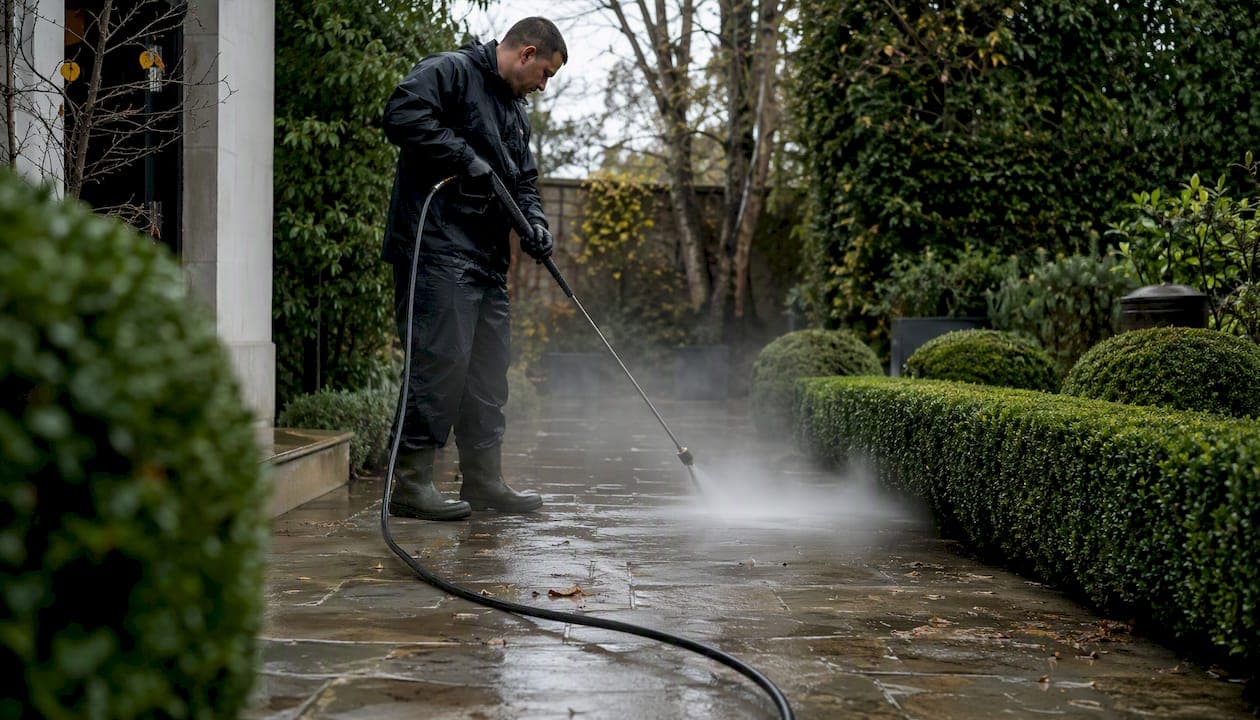
Outdoor deep cleaning is a professional service that removes algae, moss, lichen, embedded dirt and biological growth from hard external surfaces — patios, driveways, decking, stone steps and garden paths — restoring safety, appearance and surface longevity. It goes well beyond a quick hose-down. A proper deep clean follows a structured process: manual scraping of heavy deposits, application of a chemical softwash or biocidal treatment, low-pressure or targeted high-pressure washing, and controlled waste removal. The RHS confirms that algae and moss make surfaces slippery and grow back quickly in wet, shady conditions unless the underlying site issues are addressed.
Core elements of a professional outdoor deep clean:
- Manual scraping and stiff-brush removal of loose debris and heavy deposits
- Softwash or biocidal chemical treatment applied according to product instructions with correct dwell time
- Low-pressure washing (within a recommended range for suitable equipment) or targeted high-pressure jetting for durable surfaces
- Controlled waste collection and disposal
- Optional surface sealing or re-pointing where required
Pro Tip: If you manage multiple Dublin properties, pair each deep clean with a simple drainage check. Improving surface slope or clearing blocked channels does more to reduce recurrence than any chemical treatment alone.
Key takeaways
Outdoor deep cleaning delivers lasting results only when the right method is matched to the surface, safety controls are in place, and site conditions that drive regrowth are addressed alongside the clean itself.
| Point | Details |
|---|---|
| Method must match the surface | Softwash suits delicate stone and decking; low-pressure washing (100–120 bar) suits block paving and concrete; high-pressure jetting above 250 bar is for durable surfaces only. |
| Safety paperwork is non-negotiable | Always request a written method statement, COSHH assessment, product SDS sheets, and confirmation of RCD use before work starts. |
| Recurrence is a site condition problem | The RHS confirms algae and moss return if wet, shady or poorly drained conditions remain unchanged after cleaning. |
| Bundle cleaning with maintenance | A seasonal softwash follow-up and simple drainage fixes extend results and keep costs predictable across multiple Dublin sites. |
| Sherrypropertycare for Dublin sites | Sherrypropertycare provides itemised quotes, method statements and COSHH documentation for outdoor deep cleaning across Dublin. |
Table of Contents
- What does a professional outdoor deep clean actually include?
- What safety and regulatory standards should your contractor meet?
- How should contractors handle environmental and surface-protection issues?
- What should you expect on the day, and what drives the cost?
- How do you stop algae and moss coming back?
- How do you choose the right outdoor cleaning contractor?
- A Dublin grounds-maintenance perspective on deep cleaning
- Sherrypropertycare can inspect, quote and get your Dublin surfaces clean
- Sources
- FAQ
What does a professional outdoor deep clean actually include?
A professional service covers the full range of hard external surfaces: block paving, concrete driveways, natural stone patios, timber or composite decking, rendered boundary walls at ground level, stone steps and garden paths. Each surface type calls for a different approach.
The three main methods are softwash/chemical treatment, low-pressure washing and high-pressure jetting, as detailed in Pressure Washing vs. Soft Washing | Goleta Pressure Washing. Choosing the wrong one damages surfaces or leaves growth behind.
| Method | Typical pressure | Best for | HSE risk note | Recurrence expectation |
|---|---|---|---|---|
| Softwash/chemical | No mechanical pressure | Delicate stone, render, decking, biological growth | COSHH controls required; SDS must be followed | Longer interval if conditions improve |
| Low-pressure washer | a suitable low-pressure range | Block paving, concrete, general hard surfaces | SR01 controls apply: RCD, barriers, correct dilution | Moderate; depends on site conditions |
| High-pressure jetting | High-pressure range suitable for durable surfaces | Heavily fouled concrete, specific stain removal only | Misting risk; not suitable for fragile paving or near electrics | Short if underlying conditions unchanged |
Professionals should not use high-pressure jetting on fragile or newly laid paving, apply corrosive sodium hypochlorite near planting without masking, or direct water towards electrical enclosures. Specialist detergents such as concentrated alkaline formulations designed for pressure-cleaning equipment require the same SDS discipline as any other chemical product.
Pro Tip: Always remove heavy debris before applying any treatment. Debris reduces the chemical's contact time with the surface and increases misting risk during the wash stage.
What safety and regulatory standards should your contractor meet?
Any contractor carrying out outdoor deep cleaning in Dublin should work within HSE pressure-cleaning guidance, apply COSHH controls wherever chemicals are used, and manage electrical risk through RCD protection and sealed or isolated enclosures.
A professional contractor should arrive with a written method statement, a COSHH assessment, product safety data sheets for every chemical on site, and evidence of operator training. Public liability insurance and before/after photographs of comparable local jobs are the minimum trust signals a property manager should expect before work starts.
Procedural controls to expect on every job:
- Site risk assessment and written method statement completed before work starts
- COSHH assessment covering all cleaning agents, with correct dilution and PPE/RPE in place
- RCD protection on all electrical equipment; cables inspected before use
- Barriers and warning notices erected to protect the public
- Heavy deposits scraped and removed before chemical application
- Waste residues labelled, stored and disposed of safely (residues can be classed as hazardous)
On-the-day safety checklist for property managers:
- RCD fitted and tested before equipment is switched on
- Barriers and notices in place before work begins
- Operator wearing appropriate RPE (respiratory protection) and waterproof PPE
- Electrical fittings near the work area isolated or waterproofed
- PM29 equipment standards met: correct IP rating for outdoor use, fixed wiring where practicable
For Dublin properties with tight access or adjacent public footpaths, a local power-washing safety guide covers site-specific precautions worth reviewing before any contractor arrives.
How should contractors handle environmental and surface-protection issues?
Contractors must choose products and methods that protect soil, planting and drainage, and limit harmful runoff. Bleach-based formulations, particularly high-concentration sodium hypochlorite products, are effective against biological growth but are corrosive to metals and harmful to plants if applied without masking. Eco and organic alternatives, such as bleach-free formulations marketed as safe near planting, may need repeat applications but carry lower risk on sensitive sites.
Practical protections a contractor should apply:
- Mask or cover adjacent planting and lawn edges before any chemical application
- Divert runoff away from drains and watercourses where possible
- Use low-pressure injectors or foam applicators to limit overspray
- Follow the product SDS for dilution, neutralisation and disposal
- Comply with local authority rules on chemical waste disposal
Pro Tip: Dublin's wet climate means surfaces stay damp for longer, which speeds up biological regrowth. Time treatments for a dry spell of at least 24–48 hours and protect nearby shrubbery with plastic sheeting before applying any biocidal product.
What should you expect on the day, and what drives the cost?
A standard deep clean follows a clear sequence: site setup and barriers, debris removal, chemical or softwash application with dwell time, low-pressure washing or targeted jetting, waste removal and surface inspection. A small patio or single driveway can be completed in a half day. Heavily fouled areas, large sites or surfaces requiring re-pointing take longer.
Timeline checkpoints on arrival:
- Contractor erects barriers and places warning notices
- Pre-work condition documented with photographs
- Electrical fittings checked and RCD connected
- Loose debris scraped and removed before any treatment is applied
- Test area treated first on unfamiliar surfaces
Cost is determined by several variables, and a written quote should itemise each one clearly:
- Total surface area (m²) and number of distinct surface types
- Degree of fouling (light algae film vs. thick moss or lichen)
- Surface type and fragility (block paving, natural stone, decking, concrete)
- Access and parking constraints
- Proximity to sensitive planting or drainage
- Need for re-pointing, edge repairs or sealant application
- Disposal of any hazardous chemical residues
For a detailed breakdown of what professional driveway cleaning services typically include, the scope and pricing variables are covered in full.
How do you stop algae and moss coming back?
Recurrence is driven by site conditions, not by the quality of the clean. The RHS is clear that algae and moss re-establish quickly wherever surfaces stay wet, sit in shade or have poor air circulation. A deep clean without addressing those conditions is a temporary fix.
Steps to reduce regrowth:
- Improve surface drainage or slope to prevent standing water
- Prune back overhanging trees and shrubs to increase light and airflow
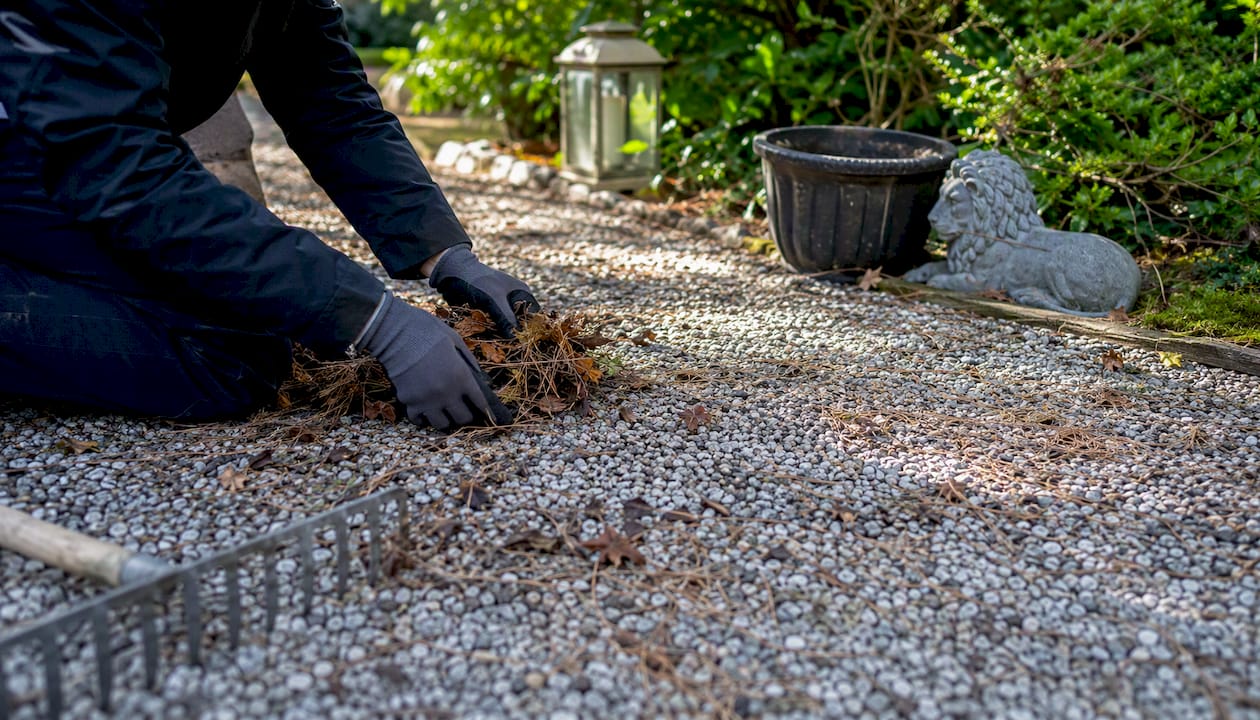
- Clear leaf litter and organic debris regularly, especially in autumn
- Schedule a softwash follow-up treatment before each winter
- Consider surface sealing on porous materials to reduce moisture absorption
A maintenance contract that bundles seasonal softwash treatments with the annual deep clean reduces the frequency of full cleans and extends the result. Driveway maintenance scheduling follows the same principle.
Pro Tip: Installing a simple edge drainage channel along the low side of a patio costs very little and removes the standing water that feeds most biological growth. It is the single most cost-effective recurrence fix on Dublin sites.
How do you choose the right outdoor cleaning contractor?
Choose a contractor who demonstrates HSE and COSHH awareness, supplies a written method statement before work starts, provides SDS sheets for every product used, and carries public liability insurance with verifiable local references.
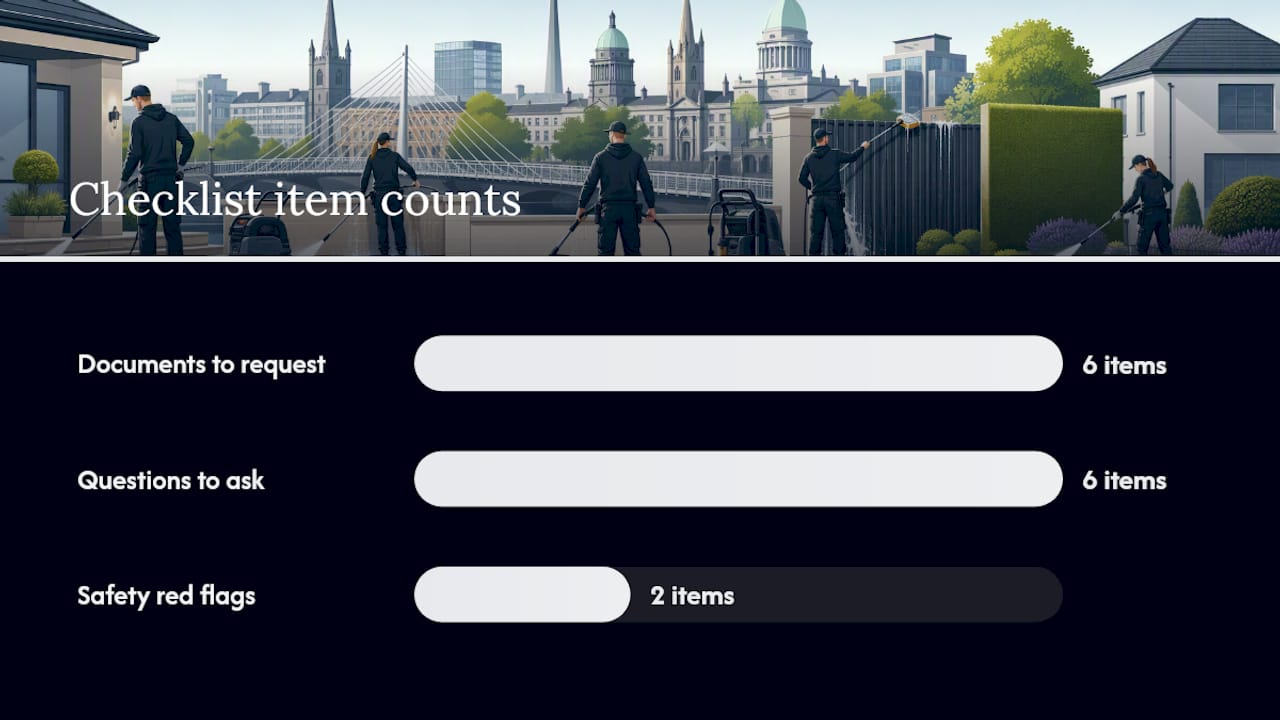
Documents and assurances to request:
- Written method statement covering the specific surfaces and methods to be used
- COSHH risk assessment with product SDS for each cleaning agent
- Evidence of operator training (pressure-cleaning or relevant grounds-maintenance qualification)
- Public liability insurance certificate
- Waste disposal plan for chemical residues
- Confirmation of RCD use and electrical isolation arrangements
Questions to ask when getting a quote:
- What pressure ranges do you use, and why for this surface?
- How do you protect adjacent planting and drainage?
- Do you use an RCD on all electrical equipment?
- How do you manage and dispose of chemical waste?
- Can you provide before/after photos from a comparable Dublin job?
- What follow-up or guarantee do you offer if growth returns within six months?
A contractor who cannot answer the electrical safety and COSHH questions clearly, or who does not offer a written method statement, is not operating to the standard HSE guidance requires. Move on.
For a practical overview of what to look for in professional patio power washing, the procedural steps and safety checks are set out in detail.
A Dublin grounds-maintenance perspective on deep cleaning
Integrated outdoor maintenance — combining a thorough deep clean with simple corrective works and a seasonal upkeep schedule — delivers better long-term results than a one-off clean alone. For Dublin properties, where rainfall is frequent and many gardens have shaded north-facing surfaces, that integration is not optional; it is what separates a surface that stays clean for two years from one that needs attention every six months.
Local site conditions matter. Dublin's clay-heavy soils compact easily against paved edges, raising moisture levels at the surface boundary and accelerating biological growth. A contractor who understands that will recommend clearing soil build-up from paving edges as part of the job, not as an upsell. The same thinking applies to scheduling: a late-summer clean before the wet season gives treatments the best chance to work and the longest window before regrowth begins.
Outdoor upkeep in Dublin has a measurable effect on property presentation and value, particularly for landlords and property managers maintaining multiple sites. Treating deep cleaning as a line item in a maintenance programme, rather than a reactive call-out, keeps costs predictable and surfaces consistently safe.
Sherrypropertycare can inspect, quote and get your Dublin surfaces clean
Sherrypropertycare provides professional outdoor deep cleaning and grounds maintenance for residential and commercial properties across Dublin. You get a site inspection, a written method statement and COSHH assessment on request, and a clear itemised quote before any work begins.

To get a quote, send across:
- Photos of the surfaces to be cleaned (patio, driveway, decking, paths)
- Approximate surface area or property address
- Any access notes (gates, parking, neighbouring planting)
- Your preferred timing or urgency
Visit Sherrypropertycare to request your quote. A local Dublin team, proper safety documentation, and no guesswork on price.
Sources
- Algae and moss on hard surfaces — RHS Advice
- Pressure cleaning – external structures
- INDG68 - Do you use a steam/water pressure cleaner? You could be in for a shock!
- Electrical risks from steam/water pressure cleaners (PM29)
- Cleaning and disinfection using a low‑pressure washer (SR01)
FAQ
What surfaces does outdoor deep cleaning cover?
Outdoor deep cleaning covers patios, block-paved and concrete driveways, timber or composite decking, stone steps, garden paths and rendered surfaces at ground level.
What is the difference between softwash and pressure washing?
Softwash uses a biocidal chemical treatment with no mechanical pressure, making it suitable for delicate surfaces and biological growth. Pressure washing uses water at 100–120 bar (low-pressure) or above 250 bar (high-pressure jetting) for harder, more durable surfaces.
What documents should I ask a contractor to provide?
Ask for a written method statement, a COSHH risk assessment, product SDS sheets for all chemicals, proof of operator training, public liability insurance, and a waste disposal plan.
How often should I schedule an outdoor deep clean in Dublin?
Most Dublin properties benefit from a full deep clean annually, with a softwash follow-up treatment before winter. Sites in heavy shade or with poor drainage may need more frequent attention.
Can Sherrypropertycare provide a written quote and safety documentation?
Yes. Sherrypropertycare provides itemised written quotes, method statements and COSHH documentation for outdoor deep-cleaning and grounds-maintenance work across Dublin. Contact the team at Sherrypropertycare.