
TL;DR:
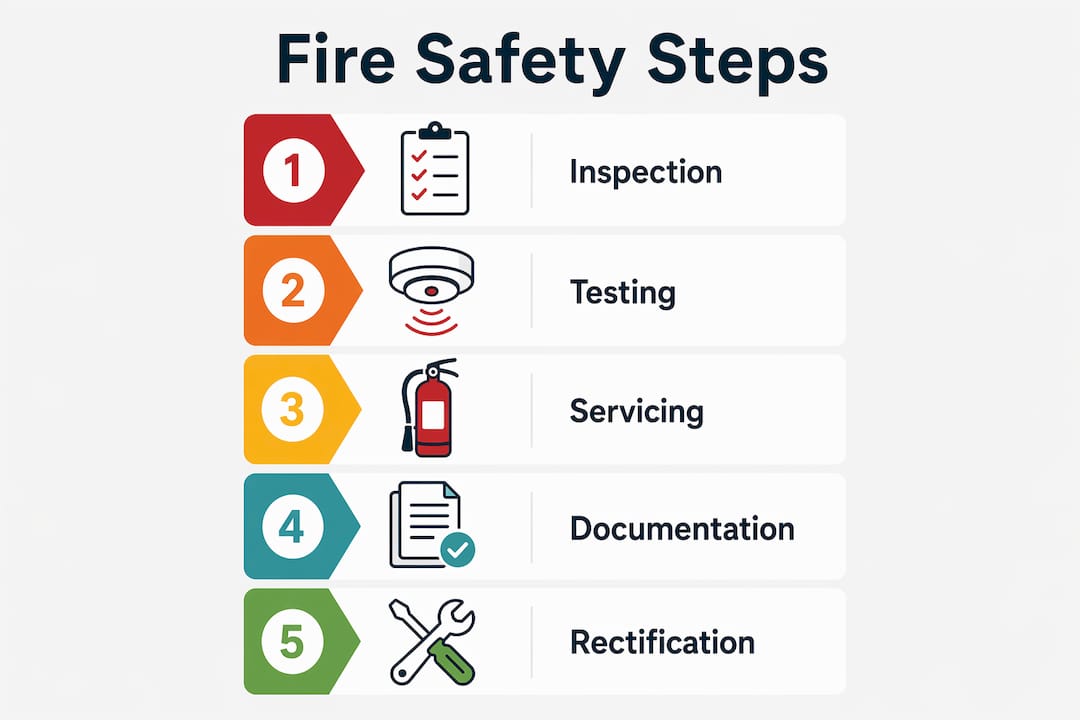
- Fire safety maintenance is a legal and ongoing process that ensures fire protection systems function properly in Irish properties. Proper documentation, regular inspections, and scheduled servicing are essential to meet Irish standards and stay compliant. Moving from reactive fixes to a scheduled program protects occupants, property, and legal standing.
Fire safety maintenance is the ongoing process of inspecting, testing, and servicing fire protection systems and equipment to keep them fully operational and legally compliant. For property owners and managers in Ireland, this is not optional. The Fire Services Act 1981 and 2003 places a direct legal duty on the "person in control" of any premises to actively manage fire safety at all times. Standards such as IS 3218 for fire alarm systems and IS 291 for portable fire extinguishers set out specific maintenance frequencies that must be followed. Getting this right protects your occupants, your property, and your legal standing.
What does fire safety maintenance actually involve?
Fire safety maintenance covers every system and component that contributes to detecting, containing, or escaping a fire. Each element has its own upkeep schedule, and missing any one of them creates a gap in your overall protection.
Fire alarm systems
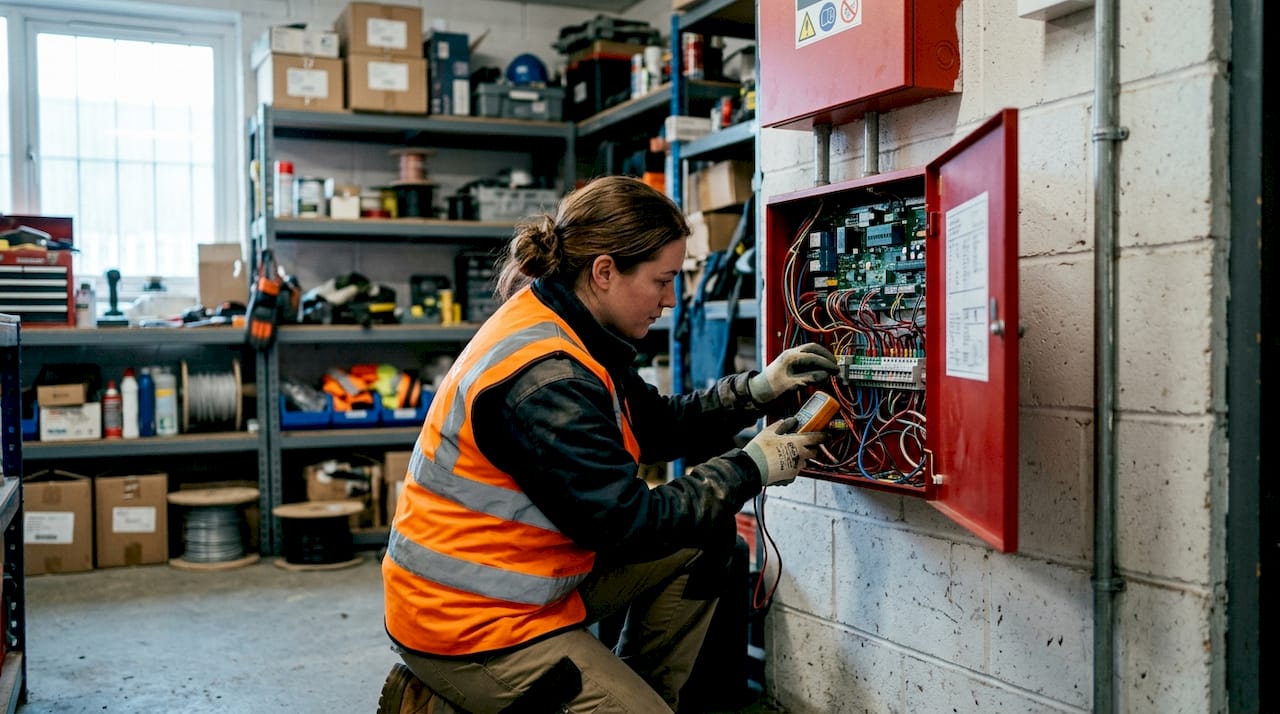
IS 3218:2013 + A1:2019 sets the standard for fire alarm maintenance in Irish commercial properties. The schedule is structured in three tiers. Weekly manual call point tests must be carried out by a responsible person on site and logged immediately. Biannual inspections by a certified engineer are required to check detector sensitivity, panel condition, and wiring integrity. A full annual service and compliance certification must then be completed by a qualified contractor. Missing any tier puts you in breach of the standard and exposes you to enforcement action.
Portable fire extinguishers
IS 291 governs extinguisher maintenance with a clear timeline. Annual servicing by a competent person is the baseline requirement. Extended servicing applies at the five-year mark, and full replacement or overhaul is required at ten years. Extinguishers that look fine on the outside can fail under pressure. Annual servicing catches internal corrosion, pressure loss, and tamper evidence issues before they become a problem.
Emergency lighting and passive fire protection
Emergency lighting must be tested regularly to confirm it activates on mains failure and illuminates escape routes for the required duration. Passive fire protection, which includes fire stopping, compartmentation, fire doors, fire dampers, and fire-resistant walls, requires periodic inspection. Best practice recommends reviewing compartmentation every 1–3 years, with immediate checks following any refurbishment or new service penetration.
- Weekly: manual call point tests, visual check of extinguisher condition and signage
- Six-monthly: certified engineer inspection of fire alarm system
- Annually: full fire alarm service, extinguisher servicing, emergency lighting test
- Every 1–3 years: passive fire protection and compartmentation survey
- After any building works: fire stopping inspection before reoccupation
Pro Tip: Assign a named responsible person for each weekly test. A named individual creates accountability and makes your logbook credible to a fire officer during inspection.
What legal duties govern fire safety maintenance in Ireland?
The legal framework for fire safety maintenance in Ireland is clear and carries real consequences for non-compliance. The "person in control" of a premises holds primary responsibility. That means property owners and managers cannot delegate this duty away entirely.
The key legislation includes:
- Fire Services Act 1981 and 2003: Imposes active fire safety management duties on persons in control of premises.
- Building Regulations Part B: Sets fire safety requirements for the design and construction of buildings, which inform ongoing maintenance obligations.
- Safety, Health and Welfare at Work Act 2005: Requires employers to manage fire risks in workplaces, including maintaining fire safety equipment.
Fire safety enforcement in Ireland is active. Local authority fire officers have issued fire safety notices, prohibited building use, and pursued prosecution for inadequate management. Penalties extend beyond fines. A fire safety notice can shut your premises immediately, causing direct financial loss and reputational damage.
Possession of a fire safety certificate does not absolve you of ongoing maintenance responsibilities. Compliance is a continuous duty, not a one-off achievement. Failing to maintain active records of testing, servicing, and training is treated as evidence of poor compliance, regardless of the condition of your equipment.
Keeping up-to-date maintenance records is not just good practice. It is your primary defence during a fire officer inspection, an insurance claim, or any legal proceedings following an incident. For a broader view of your legal obligations as a property owner in Dublin, the landlord maintenance responsibilities guide covers the wider picture.
How should you organise and document fire safety records?
Fire officers focus their inspections on the fire safety management file rather than just the physical equipment. A well-maintained file demonstrates active management. A poor or incomplete file signals neglect, even if your alarm system is in perfect working order.
Your fire safety management file should contain:
- Weekly test logs with dates, times, call points tested, and the name of the responsible person
- Six-monthly and annual inspection certificates from certified engineers
- Extinguisher servicing records and replacement dates
- Emergency lighting test results
- Fire stopping survey reports and any remediation records
- Staff fire safety training records and fire drill logs
- A current fire risk assessment, reviewed at least every two years or after significant changes
Failing to document maintenance and training is one of the most common reasons insurance claims are denied following a fire. Insurers treat an incomplete maintenance record as evidence that the property was not properly managed. That finding can void your cover entirely.
Best practice is to keep the file in a single, accessible location on site. Fire officers expect to review it during an unannounced inspection. If you manage multiple properties across Dublin, a consistent file format across all sites makes compliance audits far more manageable. The property maintenance checklist for Dublin landlords provides a useful starting framework for structuring your records.
Pro Tip: Digital record-keeping tools that timestamp entries and store certificates as PDFs make your file tamper-evident and instantly accessible. A fire officer can review a digital log on a tablet in minutes.
When should passive fire protection be inspected?
Passive fire protection is the most frequently overlooked element of fire safety maintenance. Unlike a fire alarm, a compromised fire door or an unsealed cable penetration gives no visible warning that it has failed.
| Component | Recommended inspection frequency | Key trigger events |
|---|---|---|
| Fire stopping and compartmentation | Every 1–3 years | After any refurbishment or service penetration |
| Fire doors | Annually, with monthly visual checks | After damage, tenant changeover, or fit-out works |
| Fire dampers | Annually | After HVAC works or ductwork modifications |
| Fire-resistant walls and ceilings | Every 1–3 years | After any structural or fit-out works |
Fire stopping surveys regularly uncover missing seals, poor original installations, and damage caused by subsequent building works. These defects are not visible during a routine walk-through. A qualified fire stopping surveyor uses specialist equipment to assess penetration seals, cavity barriers, and linear joint seals throughout the building.
Fire door checks must confirm that doors close fully under their own weight, that intumescent seals are intact and undamaged, and that no components are missing or broken. A wedged-open fire door provides zero compartmentation. That single failure can allow a fire to spread through an entire floor in minutes.
Remediation after a survey is not optional. Identified defects must be rectified promptly to restore compartment integrity. Leaving known defects unaddressed after a survey creates a documented liability that is very difficult to defend.
What practical steps keep fire safety systems in good order?
Maintaining fire safety systems effectively comes down to consistent scheduling, clear accountability, and good communication between property managers, contractors, and occupants.
- Align your maintenance calendar with IS 3218 and IS 291 frequencies from the start of each year. Book certified engineers for biannual alarm inspections and annual extinguisher servicing well in advance.
- Assign a named responsible person for weekly call point tests. Rotate the call point tested each week so the full system is covered over time.
- Conduct a visual fire door check monthly. Look for damage to seals, missing closer mechanisms, and any signs that doors are being wedged open.
- Walk escape routes monthly to confirm they are clear of obstructions. A blocked corridor or a locked emergency exit is an immediate enforcement risk.
- Train all staff or occupants in fire safety procedures at induction and repeat training annually. Log every session with names, dates, and content covered.
- Coordinate fire safety maintenance with other property upkeep activities. Scheduling a fire stopping inspection at the same time as a planned refurbishment avoids double disruption and catches new penetrations before they become a compliance issue.
Proactive maintenance reduces false alarms, lowers insurance risk, and keeps business operations running without costly disruptions. Well-maintained systems are also far less likely to fail at the moment they are needed most.
Pro Tip: When engaging contractors for building works, include a clause requiring them to notify you of any penetrations made through fire-rated elements. This gives you a clear trigger for a fire stopping inspection before the works are signed off.
For a broader view of common maintenance issues that Dublin property managers face, the common maintenance issues guide covers practical priorities across all property types.
Key takeaways
Active fire safety management is a continuous legal duty for Irish property owners and managers, requiring documented inspection, servicing, and training across all fire protection systems.
| Point | Details |
|---|---|
| Legal duty is continuous | The Fire Services Act places ongoing responsibility on the person in control, not just at construction stage. |
| Standards set the schedule | IS 3218 governs alarm maintenance; IS 291 governs extinguisher servicing, each with defined frequencies. |
| Records are your primary defence | Fire officers inspect the management file first; incomplete logs signal non-compliance regardless of equipment condition. |
| Passive protection needs active attention | Fire stopping and compartmentation should be surveyed every 1–3 years and after any building works. |
| Proactive maintenance pays off | Well-maintained systems reduce false alarms, support insurance claims, and avoid costly enforcement action. |
Fire safety maintenance: what I've learned from working with Dublin properties
The most common mistake I see property managers make is treating fire safety as a box-ticking exercise completed once a year when the alarm contractor visits. The legal framework does not work that way, and fire officers know it immediately when they open a logbook with twelve entries and nothing else.
The weekly call point test is where active management either lives or dies. It is a five-minute task that creates 52 entries per year in your logbook. That logbook tells a fire officer, at a glance, whether someone is genuinely managing the building or just going through the motions at inspection time. Properties that maintain weekly logs consistently tend to sail through inspections. Properties that do not tend to receive notices.
Passive fire protection is the area where I see the biggest gap between what property managers think they are doing and what is actually happening inside their walls. A refurbishment that looks finished and tidy can leave cable penetrations through fire-rated walls completely unsealed. No alarm will tell you that. Only a survey will find it.
The shift I recommend to every property manager in Dublin is simple. Move from reactive fixes to a scheduled, evidence-based programme. Book your contractors at the start of the year. Set calendar reminders for weekly tests. Keep your file in one place and update it in real time. That approach costs very little extra effort but creates a defensible compliance record that protects you legally, financially, and practically.
— gerard
Property maintenance support from Sherrypropertycare in Dublin
Keeping a Dublin property compliant across fire safety, grounds, and general upkeep takes consistent attention and reliable contractors.

Sherrypropertycare works with property owners and managers across Dublin to keep properties well maintained and professionally presented. From scheduled grounds maintenance to coordinating property upkeep programmes, the team understands what Dublin landlords and managers need to stay on top of their responsibilities. If you are reviewing your property maintenance programme and want to work with a reliable local team, get in touch with Sherrypropertycare for a tailored quote. Send a photo of your property and the team will come back to you promptly.
FAQ
What does fire safety maintenance include?
Fire safety maintenance covers the regular inspection, testing, and servicing of fire alarms, portable extinguishers, emergency lighting, fire doors, and passive fire protection elements such as fire stopping and compartmentation. Each component has its own required maintenance frequency under Irish standards including IS 3218 and IS 291.
How often must fire alarms be tested in Ireland?
IS 3218 requires weekly manual call point tests by a responsible person on site, biannual inspections by a certified engineer, and a full annual service with compliance certification.
What are the legal consequences of poor fire safety maintenance in Ireland?
Under the Fire Services Act 1981 and 2003, fire officers can issue fire safety notices, prohibit use of a building, and pursue prosecution. Non-compliance can also result in insurance claims being denied if maintenance records are incomplete.
How often should passive fire protection be inspected?
Best practice recommends inspecting fire stopping and compartmentation every 1–3 years, with immediate inspections following any refurbishment, fit-out, or new service penetration through fire-rated elements.
What records should a fire safety management file contain?
The file should include weekly test logs, engineer inspection certificates, extinguisher servicing records, emergency lighting test results, fire stopping survey reports, staff training records, and a current fire risk assessment.