TL;DR:
- Regular maintenance with native plants and proper tools enhances Dublin gardens' curb appeal.
- Seasonal tasks like aeration, fertilizing, and weed control are essential for healthy lawns.
- Proactive, consistent garden care prevents costly repairs and boosts property value.
A neglected garden in Ballinteer can quietly drag down your property's curb appeal and market value faster than most homeowners realize. Dublin's damp, mild climate creates ideal conditions for moss, weeds, and waterlogged lawns if you don't stay on top of things. This guide walks you through every stage of garden maintenance, from gathering the right tools to fixing common mistakes, with advice tailored specifically to Ballinteer's conditions. Whether you manage a single family home or a multi-unit property, you'll find practical, step-by-step strategies that fit your schedule and budget.
Table of Contents
- What you need: Essential tools and materials for Ballinteer gardens
- Preparation steps: Getting your garden ready for maintenance
- Step-by-step maintenance: Lawn, beds, and hardscaping for Ballinteer
- Troubleshooting and common mistakes: Avoiding pitfalls in Ballinteer
- Expert perspective: Balancing lush appeal and easy upkeep in Ballinteer
- Connect with expert garden maintenance for Ballinteer homes
- Frequently asked questions
Key Takeaways
| Point | Details |
|---|---|
| Right tools matter most | Using suitable tools and materials tailored to Ballinteer's climate ensures efficient garden upkeep and saves time. |
| Prep prevents headaches | Preparation, including soil assessment and planning, makes ongoing maintenance easier and more successful. |
| Native plants are easier | Choosing hardy natives and perennials simplifies care and improves the garden’s resilience in Dublin conditions. |
| Routine beats overhaul | Consistent, light garden work avoids expensive seasonal fixes and keeps your property looking its best. |
What you need: Essential tools and materials for Ballinteer gardens
Getting the right tools before you start saves time and prevents frustration. Ballinteer gardens face specific challenges: heavy rainfall, clay-heavy soils in some areas, and the kind of persistent dampness that encourages moss and fungal growth. Your equipment needs to match those conditions.
Essential tools checklist:
- Lawn mower (rotary for flat lawns, cylinder for fine finish)
- Garden fork and spade for aeration and bed preparation
- Hand trowel and cultivator for planting and weeding
- Hedge trimmer (electric or battery-powered for precision)
- Leaf blower or rake for seasonal cleanup
- Wheelbarrow for moving soil, mulch, and clippings
- Hose with adjustable nozzle or drip irrigation kit
- Kneeling pad and waterproof gloves
When it comes to manual vs. powered tools, powered options save effort on larger Ballinteer plots, but manual tools give you more control in tight beds and borders. Battery-powered tools are a solid middle ground: quieter, lighter, and no cord to manage.
Comparison: Manual vs. powered garden tools
| Feature | Manual tools | Powered tools |
|---|---|---|
| Cost | Lower upfront | Higher upfront |
| Effort | Higher | Lower |
| Precision | High | Moderate |
| Maintenance | Minimal | Regular servicing |
| Best for | Small beds, detail work | Lawns, hedges, large areas |
For plants, prioritize native Irish species and hardy perennials. They're adapted to Dublin's rainfall and require far less intervention than exotic imports. Good choices include lavender, hardy geraniums, and native hedging like beech or hawthorn.
Pro Tip: Invest in stainless steel tools rather than painted carbon steel. They resist rust in Ballinteer's wet conditions and last significantly longer with basic cleaning.
A well-organized garden maintenance workflow also helps you use your tools efficiently, so nothing gets missed during busy seasons. For broader property upkeep, understanding groundskeeping services can help you decide what to handle yourself and what to outsource. And as any solid lawn maintenance in Dublin resource will confirm, you should aerate lawns annually to improve drainage in Dublin's damp climate.
Preparation steps: Getting your garden ready for maintenance
With your tools gathered, it's important to prepare your garden before diving into routine maintenance. Skipping this step is one of the most common reasons gardens in Ballinteer underperform despite regular effort.
Start with a garden assessment. Work through this checklist:
- Check soil drainage by digging a small hole and filling it with water. If it drains slowly, you likely have clay soil that needs amendment or raised beds.
- Identify bare or patchy lawn areas that need overseeding.
- Look for signs of moss, which signals poor drainage or low soil pH.
- Note any overgrown hedges, dead plants, or damaged hardscaping.
- Assess your current weed pressure, both in beds and lawn edges.
Once you've assessed the garden, build a realistic maintenance schedule. Ballinteer's climate means you'll be working year-round, but the tasks shift with the seasons.

Typical prep tasks and frequency
| Task | Frequency |
|---|---|
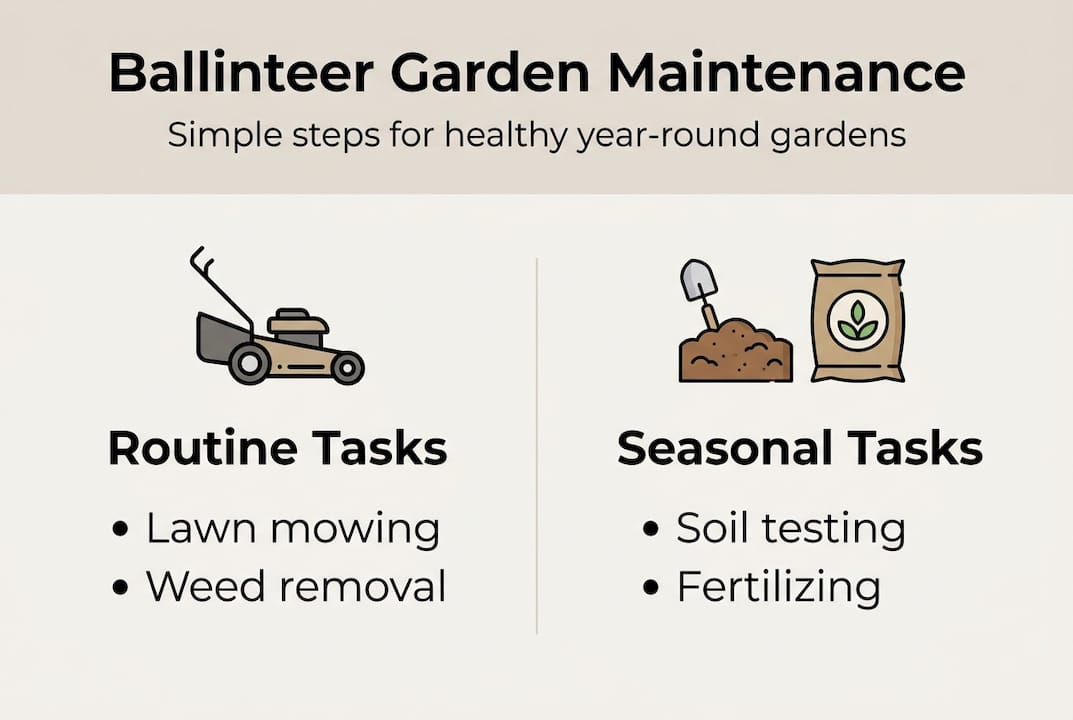
| Soil pH testing | Annually (spring) |
| Lawn aeration | Annually (autumn) |
| Fertilizing | Spring and early autumn |
| Hedge trimming | 2 to 3 times per year |
| Weed control | Monthly (growing season) |
| Moss treatment with lime | Every 3 to 5 years |
A reliable lawn care guide can help you adapt these timings to your specific garden layout. For ideas that reduce prep time overall, explore low-maintenance garden ideas that work well in the Dublin climate.
Pro Tip: Install raised beds and gravel paths between planting areas. This suppresses weeds naturally and dramatically cuts down the time you spend on ground-level maintenance each week.
According to established Dublin lawn guidance, you should apply slow-release fertilizer in spring, mow only one-third of grass height weekly, and control moss and weeds with lime every 3 to 5 years. These three habits alone will keep most Ballinteer lawns in strong shape. A few targeted improvements can also boost curb appeal significantly without requiring a full garden overhaul.
Step-by-step maintenance: Lawn, beds, and hardscaping for Ballinteer
Once preparation is complete, the core of garden maintenance begins with ongoing care tailored for Ballinteer's conditions. Here's how to approach each area systematically.
Lawn care steps:
- Mow weekly during the growing season (March through October), cutting no more than one-third of the grass height per session.
- Aerate in autumn using a garden fork or hollow-tine aerator to relieve compaction.
- Apply a slow-release granular fertilizer in spring to support steady growth.
- Treat moss with a moss killer in early spring, then rake it out and overseed bare patches.
- Edge lawn borders monthly to keep them sharp and tidy.
Flower bed and planting maintenance:
- Mulch beds in spring with bark chips or compost to retain moisture and suppress weeds.
- Deadhead flowering plants regularly to extend blooming periods.
- Divide perennials every 2 to 3 years to keep them healthy and prevent overcrowding.
- Remove dead or diseased plant material promptly to stop spread.
For plant selection, hardy natives and perennials like succulents, ground covers, evergreens, and artificial grass offer low-maintenance structure and strong curb appeal year-round.
Hardscaping care:
Gravel paths need occasional raking and a weed membrane underneath to stay tidy. Raised beds should be checked each spring for structural integrity and topped up with fresh compost. Artificial grass requires a brush-down monthly and occasional rinsing to remove debris.
Overwatering is one of the most overlooked problems in Dublin gardens. With Ballinteer's natural rainfall, most established plants need very little supplemental watering. Check soil moisture before reaching for the hose.
Good ongoing maintenance directly supports property value landscaping goals, and consistent effort is one of the most reliable ways to boost property value in Dublin over time.
Troubleshooting and common mistakes: Avoiding pitfalls in Ballinteer
Even with a solid routine, occasional issues and mistakes can arise. It's vital to know how to spot and fix them quickly before small problems become expensive ones.
Common mistakes to avoid:
- Mowing too short (scalping), which stresses grass and invites moss and weeds
- Over-fertilizing in autumn, which promotes soft growth vulnerable to frost
- Ignoring drainage issues and allowing waterlogging to persist
- Planting high-maintenance exotic species that struggle in Dublin's climate
- Skipping seasonal adjustments and applying the same routine year-round
Quick troubleshooting guide:
- Moss spreading: Check drainage and soil pH. Apply lime if pH is below 6.0, and aerate compacted areas.
- Lawn bald patches: Overseed in early autumn with a quality ryegrass mix suited to Irish conditions.
- Persistent weeds in beds: Apply a thick layer of mulch (at least 5 cm) and consider a weed membrane under gravel areas.
- Yellowing plants: Test soil nutrients. Yellowing often signals iron or nitrogen deficiency, both treatable with targeted feeds.
Pro Tip: Adjust your maintenance routine with the seasons. In winter, focus on structure: prune, clear debris, and check drainage. In spring, shift to feeding, seeding, and planting. This prevents you from doing the wrong tasks at the wrong time.
The numbers make a strong case for consistency. Regular light maintenance is cheaper than seasonal overhauls and balances lush appeal with low-maintenance needs. A garden that gets steady attention costs a fraction of one that's left to deteriorate and then requires a full reset. Understanding the difference between maintenance vs repairs helps you make smarter decisions about where to spend your time and money. The role of maintenance in real estate is well documented, and gardens are no exception.
Expert perspective: Balancing lush appeal and easy upkeep in Ballinteer
Here's something most garden advice gets wrong: it treats lush and low-maintenance as opposites. They're not. The real issue is that many Ballinteer homeowners swing between two extremes, either doing nothing for months or throwing money at a full seasonal overhaul. Neither approach works well.
What actually works is a consistent, manageable routine built around your garden's real conditions. Native plants and smart hardscaping don't just reduce effort. They create a garden that looks intentional and well-kept without demanding constant attention.
The contrasting approaches between intensive and low-maintenance gardens show clearly that regular light work is more efficient and affordable than periodic heavy intervention. A 30-minute weekly check beats a full-day overhaul every quarter.
The most successful property managers we work with in Dublin have one thing in common: they've built effective maintenance scheduling into their routine rather than reacting to problems. That shift in mindset, from reactive to proactive, is what separates a garden that adds value from one that quietly detracts from it.
Connect with expert garden maintenance for Ballinteer homes
If you're looking for professional support or time-saving solutions after following this guide, local expert services can make a real difference.

At Sherry Property Care, we specialize in garden maintenance for Ballinteer and across Dublin. From lawn mowing and hedge trimming to full grounds maintenance for apartment complexes, we offer meticulous, customized care that fits your property's needs. Whether you want a one-off tidy-up or a regular maintenance plan, we're here to help. Explore our Ballinteer garden maintenance services and get a free quote today. Send us a picture of your garden and we'll get back to you with a straightforward plan and honest pricing.
Frequently asked questions
How often should I aerate my lawn in Ballinteer?
Aerate your lawn once a year, ideally in autumn, to relieve compaction and improve drainage in Ballinteer's consistently damp climate. Annual aeration is one of the most impactful single tasks you can do for lawn health.
What are the best low-maintenance plants for Ballinteer gardens?
Hardy natives and perennials such as succulents, creeping thyme, ajuga, and evergreens suit Ballinteer's climate well and need minimal ongoing care. These plants provide year-round structure without demanding frequent attention.
Should I mow my lawn weekly in Ballinteer?
Yes, mow weekly during the growing season from March through October, but never remove more than one-third of the grass height in a single cut. Cutting too short stresses the lawn and creates openings for moss and weeds.
How can I suppress weeds in my garden beds?
Use gravel, raised beds, and hardy ground covers like creeping thyme or ajuga to block weed growth effectively. A weed membrane under gravel paths adds an extra layer of protection with very little ongoing effort.