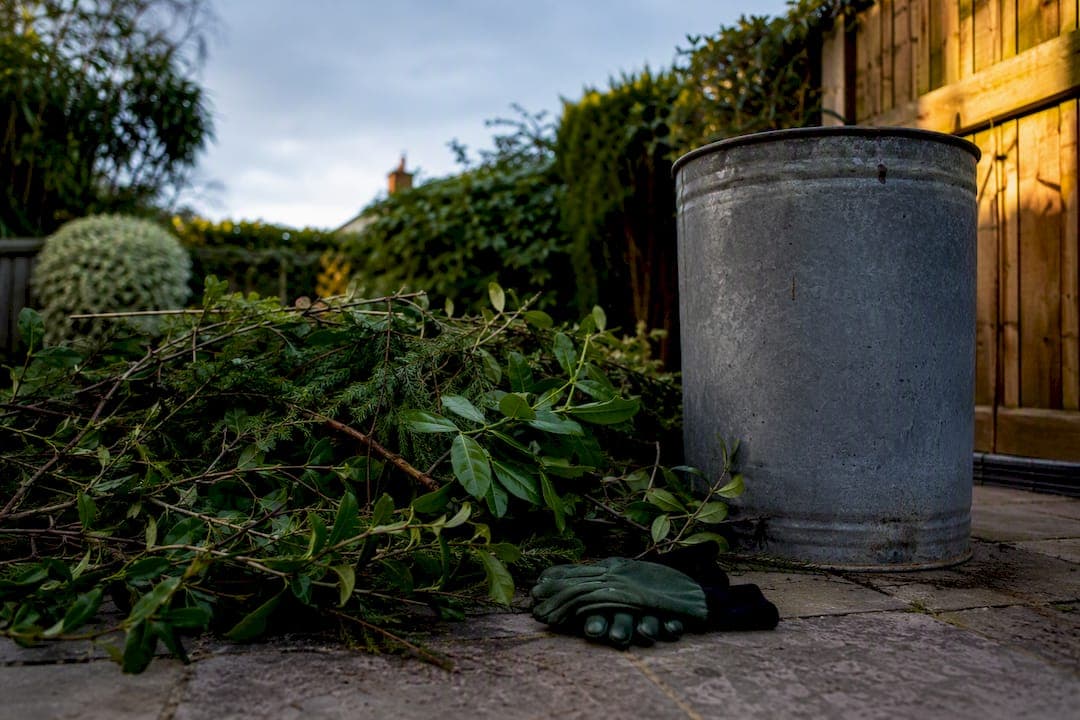
Light garden waste, such as grass clippings, small prunings and dead flowers, belongs in your brown bin where the service is provided. Burning garden waste in your own garden is illegal across Ireland, with fines potentially reaching several thousand euros. For anything bulkier, home composting, a trip to your local civic amenity centre, skip hire or a professional removal service will get it gone lawfully.
TL;DR:
- Burning garden waste in Ireland is illegal and can result in fines up to €5,000 or imprisonment, with authorities actively monitoring smoke complaints.
- Light garden waste such as grass clippings, leaves, and small prunings should be disposed of via brown bins, home composting, or civic amenity centres, depending on volume.
- Large branches, trunks, and thick woody material must never go in the brown bin or composters but be processed through wood chipping, civic centres, or licensed professionals.
- Costs for disposal vary: brown bin collection is often included in waste charges, while skip hire and professional removal depend on size and access, with reputable contractors providing proof of proper disposal.
- Proper planning based on garden waste volume is key, as overfilling bins or DIY handling can lead to missed collections or safety risks; hiring licensed services ensures lawful and efficient removal.
Table of Contents
- What counts as garden waste in Ireland?
- Is it legal to burn garden waste in Ireland?
- What are the practical ways to dispose of garden waste?
- How do you deal with tree stumps and thick branches?
- How much does garden waste disposal cost in Dublin?
- How do you choose a professional garden waste removal service?
- Sherry Property Care: a local, compliant option
- The gap between the rules and what people actually do
- Get a quote for garden waste removal in Dublin
- Sources
- FAQ
What counts as garden waste in Ireland?
Garden waste, sometimes called green waste, covers organic material produced by ordinary maintenance of a landscaped garden. It's a narrower category than people assume, and getting it right avoids contamination fines or a rejected bin.
Under standard Irish waste guidance, garden waste includes leaves, flowers, grass, prunings and similar light organic matter generated from routine upkeep. In practice, that means:
- Grass clippings and lawn cuttings
- Leaves and dead flowers
- Small prunings, twigs and hedge trimmings
- Weeds pulled from beds or paths
- Home-grown vegetable and fruit waste from the garden
What doesn't belong in your brown bin: large branches, tree trunks, soil, stones, rubble, and treated or painted timber. Treated wood often contains preservatives that make it unsuitable for composting or standard green recycling streams. Material from invasive species, such as Japanese knotweed, needs separate handling entirely. Never compost or bin it loose, since fragments can regrow and spread. Ask your local authority or a professional contractor about licensed disposal for invasive plant material before you touch it.
Is it legal to burn garden waste in Ireland?
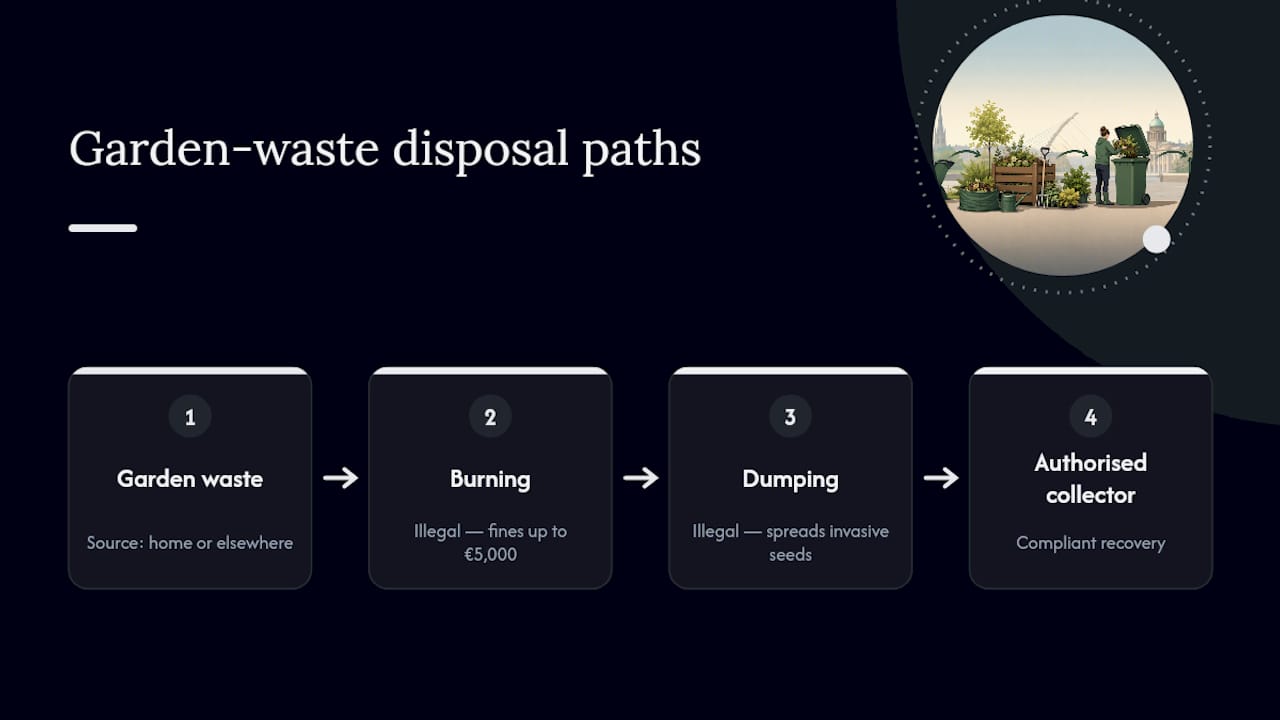
No. Burning garden waste in a domestic garden, including in a barrel, pit or open bonfire, is prohibited under the Waste Management (Prohibition of Waste Disposal by Burning) Regulations 2009 (SI No. 286/2009) and later amending regulations. This applies whether the waste came from your own garden or somewhere else.
Fines up to €5,000, or 12 months in prison. That's the maximum penalty on summary conviction for illegal burning of household or garden waste, according to the Environmental Protection Agency. Buying or owning a backyard incinerator isn't illegal in itself, but using one to burn garden or household waste is, and local authorities actively monitor smoke complaints.
The health argument matters as much as the legal one. Burning garden waste releases dioxins and particulate smoke that can affect neighbours with respiratory conditions, not just yourself. If you spot someone burning waste nearby, the EPA encourages reporting it to the National Environmental Complaints Line on 1800 365 123.
Dumping garden waste in public spaces, laneways or waterways is equally illegal and can help spread invasive plant seeds or fragments into wild habitats. As a waste holder, you have a duty to pass garden waste only to an authorised collector or facility, never to an unlicensed operator or an informal "man with a van."
What are the practical ways to dispose of garden waste?
Five lawful routes cover almost every situation a Dublin homeowner will face. Which one fits depends on volume, urgency and how much labour you want to take on yourself.
- Brown bin. Accepts light garden waste such as grass, leaves, weeds, small prunings and food scraps where your council offers a combined organic bin. Households must be offered brown bin collection except on offshore islands. Keep bags loose rather than tied in plastic, and never add soil or stones, which contaminate the load.
- Home composting. The cheapest and greenest option for small, steady volumes. Layer green material (grass, peelings) with brown material (dry leaves, cardboard) and turn the pile every few weeks. If it smells sour, it's too wet; add dry material and turn it more often.
- Civic amenity centres. Best for occasional larger loads. Many centres accept garden waste and Christmas trees, though some apply a small entry or per-load fee. Check your local authority's site before travelling.
- Skip hire. Sensible when you're clearing an overgrown garden in one go. You'll need to check parking permits with your local authority if the skip sits on a public road.
- Professional removal. The fastest compliant option when you want the job done and gone in one visit, with no van hire or dump runs of your own.
Pro Tip: Keep your brown bin lid closing fully before collection day. Overfilled bins are a common reason for missed collections, especially after a big weekend of hedge cutting.
How do you deal with tree stumps and thick branches?
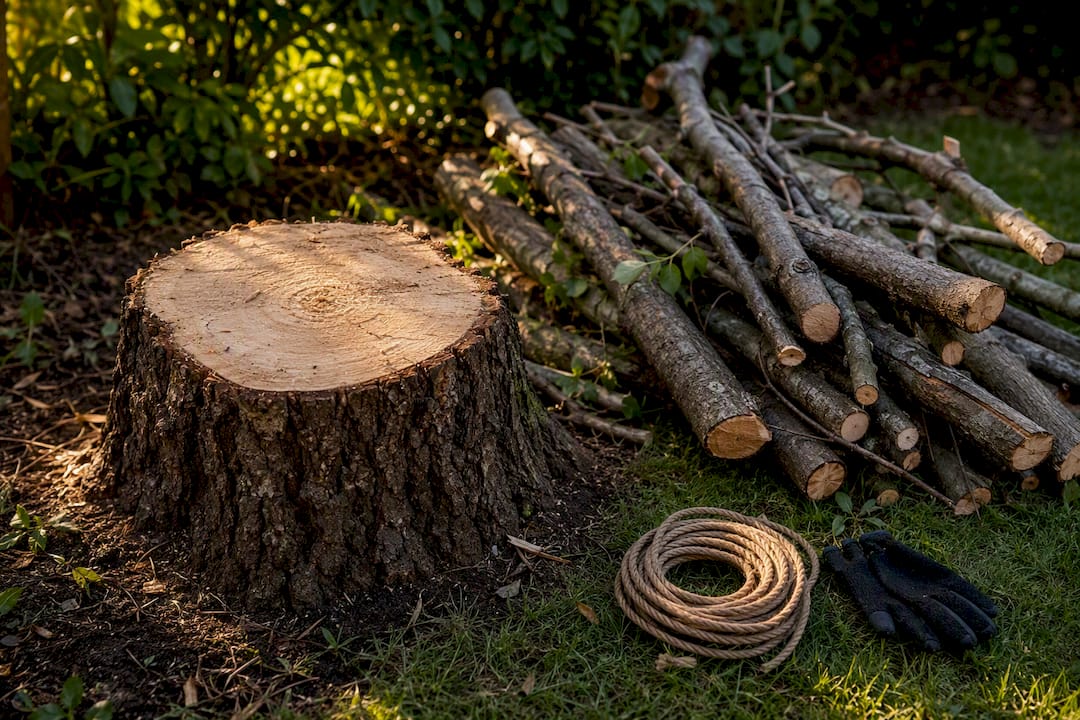
Bulky woody material, tree trunks, stumps and thick branches, must never go in the brown bin or a home composter. It's too slow to break down and too large for kerbside collection to handle safely.
Your realistic options are:
- Wood chipping, which turns branches into mulch you can reuse on beds or paths
- Civic amenity centre acceptance for smaller stumps and branch sections, subject to size limits
- Licensed wood recovery or professional collection, where a contractor takes the material away and processes it through an authorised facility
Always ask a contractor for proof of final disposal, such as a waste transfer note, before they leave your property. Cutting large branches or removing a stump yourself carries real injury risk from chainsaws, falling limbs and unstable root systems. If a tree is more than a modest hedge job, hire a qualified arborist rather than tackling it solo.
How much does garden waste disposal cost in Dublin?
Costs vary sharply by route, and so does the time you'll spend on it.
- Brown bin: usually included in your standard household waste charge, with collections typically weekly or fortnightly depending on season and council area.
- Civic amenity centres: often free for small loads, but expect a modest fee for larger volumes or vehicle-based drop-offs, since there's no free doorstep collection for bulk garden waste.
- Skip hire: price depends on skip size, how long you keep it, and whether access to your property is easy or tight.
- Professional removal: quoted per job based on volume and access, with most reputable contractors able to schedule a visit within days rather than weeks.
How do you choose a professional garden waste removal service?
A few checks up front save you from a bad hire, especially with unlicensed operators who quietly dump or burn what they collect.
- Ask for proof of lawful disposal. A legitimate contractor can show waste transfer notes or name the facility they use.
- Check insurance. Public liability cover matters if a branch or fence gets damaged during clearance.
- Get a written quote. Verbal estimates leave you exposed to price creep on the day.
- Watch for red flags. Vague answers about "where it goes," offers to burn it on-site, or no paperwork at all are all warning signs.
- Prepare your site. Clear access paths and flag anything fragile nearby; it speeds up the job and keeps the quote accurate.
Pro Tip: Send photos of the area before you request a quote. It lets a contractor price the job properly instead of guessing on-site, which usually means a fairer number for you.
For anyone weighing this against doing it themselves, our guide on clearing garden waste in Dublin walks through the practical steps in more detail.
Sherry Property Care: a local, compliant option
Sherry Property Care handles landscaping, hedge trimming, lawn care and garden clearance across Dublin, with every quote built from photos or an on-site look at your garden. Waste generated during a job goes through civic amenity centres or licensed recovery routes, never burned or dumped. For homeowners who'd rather skip the van hire and paperwork, that's the whole point of calling a local specialist instead of doing it yourself.
The gap between the rules and what people actually do
Most articles on this topic recite the legislation and stop there. The real gap in Ireland isn't awareness that burning is illegal, most homeowners already know that, it's the assumption that "no burning" automatically means "brown bin is enough." It usually isn't, once you've had a proper hedge cut or a storm brings a branch down.
The conventional advice undersells how quickly volume outpaces a brown bin's capacity. One decent autumn tidy of a mid-sized Dublin garden can fill several bin-loads worth of prunings and leaves in an afternoon, far more than a fortnightly collection absorbs. That's the point where composting stalls, civic amenity queues get long, and people start weighing a skip against a phone call to a contractor.
My honest read: prioritise knowing your volume before you pick a route, not the other way round. Small and steady favours composting. Occasional and moderate favours the civic amenity centre. Anything involving a chainsaw, a stump, or more than a car boot's worth favours a professional who already knows where it's legally allowed to go.
— gerard
Get a quote for garden waste removal in Dublin
Sherry Property Care is the practical alternative to a weekend spent loading a trailer and queuing at a recycling centre. Send us photos of what needs clearing and a brief outline of the job, garden clearance, hedge trimming, chipping or a full haulage run, and you'll get a customised quote back with no guesswork about where the waste ends up.

We serve homeowners, landlords and property managers across Dublin and the surrounding areas, and every job includes lawful disposal through civic amenity centres or licensed recovery routes. If your garden's got branches too thick for the brown bin or a clearance job that's grown beyond a DIY afternoon, request a quote from Sherry Property Care and we'll get back to you with a plan and a price.
Sources
- Backyard burning | Environmental Protection Agency
- Brown bins and composting waste at home | Citizens Information
- Garden waste | MyWaste
- Best ways to get rid of garden waste | Barna Recycling
FAQ
How can I dispose of garden waste for free in Ireland?
Home composting is free for grass, leaves and small prunings, and your brown bin covers light garden waste at no extra charge if your council provides that service. Civic amenity centres are often free or low-cost for small drop-off loads.
What's the quickest way to get rid of a large amount of garden waste?
Skip hire or a professional removal service clears large volumes fastest, usually within days, compared with multiple car trips to a civic amenity centre.
Can I burn garden waste in my garden in Ireland?
No. Backyard burning of garden waste is illegal under the Waste Management (Prohibition of Waste Disposal by Burning) Regulations 2009, with fines up to €5,000 or up to 12 months' imprisonment on summary conviction.
Is it illegal to dump grass cuttings in public spaces in Ireland?
Yes. Dumping grass cuttings or any garden waste in public spaces, laneways or waterways is illegal and can also spread weed seeds or invasive plant material into the wider environment.
Does Sherry Property Care handle garden waste removal in Dublin?
Yes. Sherry Property Care collects and disposes of garden waste from clearance, hedge trimming and landscaping jobs across Dublin, using civic amenity centres and licensed recovery routes for every job.