
For most gardens, fortnightly visits through the growing season and monthly visits in winter are the best balance of cost and upkeep. That default pattern, roughly March to October fortnightly and November to February monthly, works for the majority of lawns, borders and hedges found on ordinary residential and commercial properties.
There are exceptions worth flagging before you book anything:
- Weekly visits suit formal lawns, competition-standard turf, or gardens with topiary that needs constant shaping.
- Monthly or ad-hoc visits are usually enough for gravel gardens, succulent planting, or anything designed to need minimal intervention.
- Fortnightly plus winter monthly covers everything in between, which is most gardens in Dublin.
Cost tends to reward consistency. Regular visits generally cost less per visit and often less across the year than infrequent catch-ups, because a gardener working a tidy, familiar space every fortnight spends less time per visit than one arriving to tackle three months of overgrowth in one go.
Key Takeaways
Most gardens are best served by fortnightly visits from March to October and monthly visits from November to February, adjusted for size, planting density and how the space is used, especially when following an easy plant care routine for busy homeowners.
| Point | Details |
|---|---|
| Default schedule | Fortnightly during the growing season (March–October) and monthly in winter (November–February) works for most gardens. |
| Frequency depends on complexity | Border-heavy and formal gardens need more frequent visits than lawn-dominant plots of the same size. |
| Regular visits cost less | Routine fortnightly visits are typically cheaper per visit than infrequent catch-ups requiring longer sessions. |
| Get the schedule in writing | Confirm visit length, included tasks, waste removal and pricing structure before the first visit. |
| Sherrypropertycare offers tailored quotes | Sherrypropertycare builds Dublin garden schedules around the property's actual condition rather than a fixed package. |
Table of Contents
- What determines gardener visit frequency for your garden?
- How often should a gardener visit through the year?
- What tasks happen at each gardener visit?
- Choosing and locking in the right gardening service schedule
- Why local experience matters when setting a schedule
- What the schedule debate gets wrong
- Get a tailored garden maintenance quote for your Dublin property
- Sources
- FAQ
What determines gardener visit frequency for your garden?
Size is the obvious starting point, but it's not the only variable, and treating it as the only one is where most people get their schedule wrong.
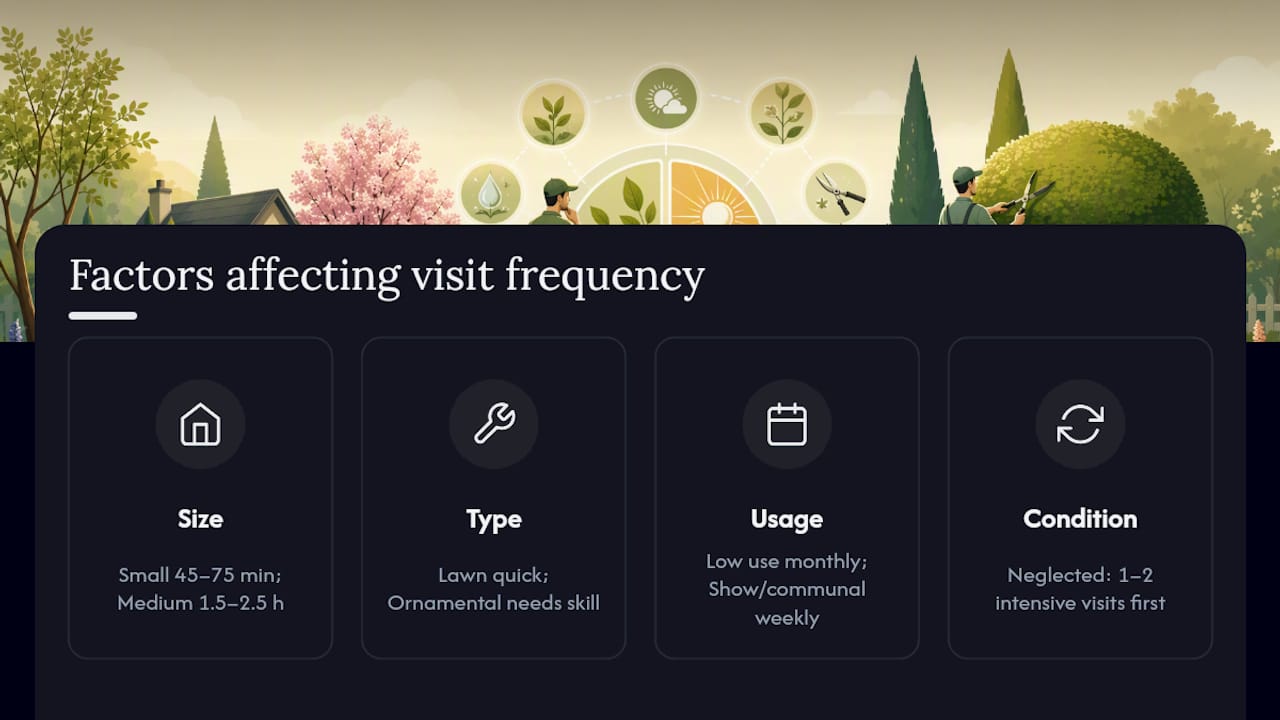
Garden size sets the baseline. A small garden under 40 square metres typically needs 45 to 75 minutes per fortnightly visit, while a medium garden runs 1.5 to 2.5 hours. Larger grounds, particularly commercial or multi-unit sites, scale up from there, and time on site is what drives the price per visit.
Garden type matters just as much as square footage. A lawn-dominant plot with a couple of borders is far quicker to maintain than one packed with ornamental beds, mixed shrubs or topiary, which need skilled, more frequent attention to look right. Planting density and design choices change the labour required far more than most homeowners expect.
Usage and presentation level shift the calculation too. A rented property with tenants who want low fuss can often run on monthly visits. A show garden, a communal entrance to an apartment block, or a front garden that's the first thing clients see before a business meeting usually justifies fortnightly or even weekly attention.
Starting condition affects the first few visits regardless of your long-term plan. A neglected garden needs one or two intensive sessions to get back to a maintainable baseline before settling into its regular rhythm.
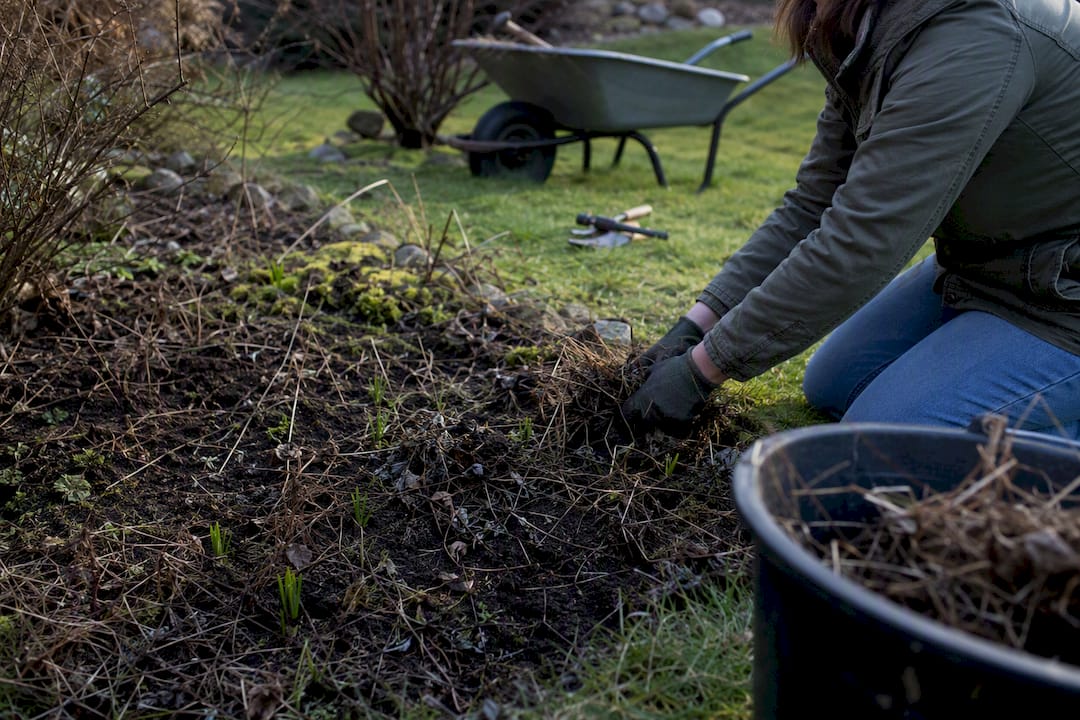
Don't forget logistics: check whether waste removal, access arrangements and storage for tools are included in the quote, since these details change both the price and how smoothly the schedule runs.
Pro Tip: Take five minutes to walk your garden and note which areas need attention every two weeks versus which ones you'd barely notice changing monthly. That split tells you more about the right frequency than square footage ever will.
How often should a gardener visit through the year?
There's no single correct answer, but there are four practical patterns worth knowing, each suited to a different kind of garden and budget.
- Weekly. Reserved for formal lawns, striped turf, or gardens with topiary and hedging that need shaping constantly through the growing season. Visits tend to be shorter (30 to 60 minutes) because the garden never gets the chance to grow out of shape.
- Fortnightly. The most common and cost-effective choice for mixed gardens with lawn and borders. Running fortnightly from March to October gives roughly 15 to 16 growing-season visits, and switching to monthly over winter adds another 4 to 5. That totals around 19 to 21 visits a year, which is the figure most quotes will be built around.
- Monthly. Suits low-maintenance or mature gardens where growth is slower. The trade-off is that each visit runs longer, since grass and weeds have had a full month to establish rather than two weeks.
- Hybrid seasonal plan. This is fortnightly and monthly combined deliberately by season rather than picked once and left fixed. Seasonal switching, fortnightly in the active growing months and monthly through dormancy, is standard professional practice, and it usually gives the best value because you're not paying for growing-season frequency during months when nothing is growing much.
Regularity has a compounding benefit beyond the calendar. A gardener who visits on a set schedule learns the plot quickly, which cuts time per visit as familiarity builds, unlike ad-hoc call-outs where every visit starts from scratch.
What tasks happen at each gardener visit?
What actually gets done at each visit should scale with how often the gardener comes, and knowing this in advance helps you compare quotes properly rather than guessing what's included.
Spring and summer visits typically cover mowing, edging, weeding, deadheading, feeding, and a quick check on watering needs, especially during dry spells. This is the busiest stretch of the routine for garden maintenance and where fortnightly visits earn their keep.
Autumn visits shift towards leaf clearance, lawn aeration, hedge trimming before winter dormancy, and preparing beds for the colder months.
Winter visits are lighter on lawn care and heavier on structural work: hard pruning of shrubs and trees, cleaning patios and hard surfaces, and any planned renovation work that's easier to do while the garden is dormant.
The frequency you choose changes the depth of each visit, not just the calendar gap between them:
- Fortnightly visits mean lighter, quicker tasks each time because nothing gets the chance to get out of hand.
- Monthly visits mean longer grass, more established weeds, and a heavier session every time the gardener arrives.
- One-off extras, green-waste removal beyond the normal bag allowance, major structural pruning, or pest treatment, usually sit outside the standard visit and get quoted separately.
Choosing and locking in the right gardening service schedule
Picking a schedule is a short process if you work through it in order. Start by identifying your garden type (lawn-dominant, border-heavy, or formal), then decide the finish level you actually want, not the one that looks best in a magazine, and finally check that against what you're willing to spend annually.
Once you've got a shortlist of gardeners, ask them directly:
- How long does each visit typically last for a garden this size?
- Exactly which tasks are included, and which count as extras?
- Is green waste removed, and is that cost included in the quote?
- What's the pricing structure, per visit, seasonal, or annual contract?
- Are they insured, and can they provide references or examples of past work?
- What notice period applies if either side wants to change or end the arrangement?
Watch for red flags while you're comparing answers: vague scope with no written task list, pricing that's quoted verbally with nothing in writing, or reluctance to send before-and-after photos of previous jobs.
On contract type, each has a clear trade-off:
- Per-visit gives flexibility but no guaranteed slot in a busy gardener's calendar.
- Seasonal contract locks in the growing-season rhythm without committing you for a full year.
- Annual contract typically runs £800 to £1,800 for a medium garden and gives price certainty plus priority booking. If you want the structure of a formal agreement, it's worth reading what scheduled landscaping actually involves before signing anything.
Why local experience matters when setting a schedule
Sherrypropertycare works across landscaping, lawn care, hedge trimming, patio and garden cleaning, and power washing for residential and commercial properties in Dublin, and every quote is customised to the property rather than pulled from a fixed price list.
That matters because a generic monthly rate doesn't account for a border-heavy front garden versus a lawn-only rear plot, and Sherrypropertycare builds quotes around what your garden actually needs, not a one-size-fits-all package.
A schedule only works if it's built around your garden's actual condition and use, not a generic industry average. Property managers in particular benefit from a provider who adjusts frequency as tenants change and seasons shift.
A few resources worth reading before you book:
- Garden maintenance checklist to boost home value
- Streamline your garden maintenance workflow for Dublin
- Reactive maintenance for Dublin gardens: a landlord's guide
Property managers and landlords tend to value responsive scheduling most, since tenant turnover and seasonal weather both throw off a fixed plan, and personalised quotes handle that better than a rigid package ever could.
What the schedule debate gets wrong
Most advice on this topic treats frequency as a fixed number you pick once and stick to, and that's the part worth pushing back on. The research is consistent: seasonal switching between fortnightly and monthly beats picking one frequency and holding it all year, yet plenty of homeowners still lock themselves into a single monthly rate out of habit rather than reviewing it each spring.
The bigger gap I see is between what people think drives cost (garden size) and what actually drives it (planting complexity and starting condition). Two gardens of identical size can need wildly different visit counts depending on whether one is lawn and the other is dense borders with topiary. Ask about complexity before you ask about square metres.
If there's one thing to prioritise, it's getting the schedule in writing before the first visit, with tasks, waste handling and pricing spelled out. A verbal agreement to "pop round every couple of weeks" is how scope creep and disappointing results happen. A specific, written schedule protects both sides and gives you something concrete to hold the gardener to.
— gerard
Get a tailored garden maintenance quote for your Dublin property
Sherrypropertycare builds every schedule around your actual garden, not a generic monthly rate, so you're not paying for weekly attention a low-maintenance plot doesn't need or stuck with monthly visits when a border-heavy garden needs more.

To get an accurate quote, send photos of your garden from a few angles, note your priorities (tidy lawn, hedge shape, seasonal colour), and mention any access details like side gates or shared driveways. Sherrypropertycare covers residential and commercial properties across Dublin, with customised quotes built around what your garden needs rather than a fixed package.
Pro Tip: Photograph your garden at its worst moment, right before a scheduled visit, not right after. That gives the gardener the clearest picture of how much work each visit actually needs to keep on top of.
Ready to sort your schedule? Get a customised quote from Sherrypropertycare and tell them what you want your garden to look like all year round.
Sources
- Garden Maintenance Cost 2026: From £25/hr | Full UK Guide
- How Much Does Garden Maintenance Cost in 2026? UK Guide
- Ground maintenance: what homeowners are actually hiring
FAQ
How often should a gardener come to a typical garden?
Most gardens do best with fortnightly visits from March to October and monthly visits from November to February, adjusted for size and planting type.
Is fortnightly or monthly gardening cheaper overall?
Fortnightly is usually cheaper per visit because the work stays light and routine, whereas monthly visits often involve longer catch-up sessions that push up the per-visit cost.
How many gardener visits does a year of fortnightly maintenance involve?
A fortnightly growing season plus monthly winter schedule typically adds up to around 19 to 21 visits a year.
Should I choose a contract or pay per visit?
An annual or seasonal contract suits homeowners who want price certainty and a guaranteed slot, while per-visit arrangements suit those who want flexibility; Sherrypropertycare offers customised quotes to match either approach.
Does visit frequency need to change during a heatwave or heavy growth spurt?
Yes. Extended dry spells or fast spring growth can justify a temporary switch to weekly visits, and a good gardener will flag this rather than sticking rigidly to the standard schedule.