TL;DR:
- Dublin lawns require tailored maintenance focusing on drainage, moss control, and seasonal adjustments.
- Regular light effort and proper timing of tasks keep properties healthy and reduce long-term costs.
- Consistent assessment, documentation, and patience are key to achieving sustainable, professional grounds care results.
Patchy lawns, mossy paths, and weed-choked borders are among the most common complaints from Dublin property owners. The city's wet winters and unpredictable springs make consistent grounds keeping genuinely challenging, whether you manage a family home in Ranelagh or a commercial site in Sandyford. This guide walks you through a proven, step-by-step process built around Dublin's specific conditions. You'll learn how to assess your grounds, choose the right tools, execute core tasks correctly, and measure results over time. Both residential and commercial properties can benefit from the same disciplined approach.
Table of Contents
- Assessing your landscape's needs
- Tools, materials, and setup essentials
- Executing key grounds keeping tasks
- Troubleshooting and adapting for Dublin's climate
- Measuring results and maintaining excellence
- What most Dublin guides miss about grounds keeping
- Ready to transform your property's landscape?
- Frequently asked questions
Key Takeaways
| Point | Details |
|---|---|
| Preparation is essential | Assess your property’s needs and choose the right tools for long-term success. |
| Routine trumps chemicals | Consistent mowing, aeration, and scarifying yield better results than relying on quick fixes. |
| Adapt for Dublin’s climate | Tweak methods seasonally to handle wet winters, moss, and shaded areas common in the city. |
| Measure to improve | Use checklists and records to track outcomes and ensure enduring curb appeal. |
Assessing your landscape's needs
Before you cut a single blade of grass, you need a clear picture of what your property actually requires. Dublin sites vary enormously. You might have open lawns, paved hardscaping, planted beds, hedgerows, or even sports and recreational areas. Each surface type has its own maintenance rhythm, and treating them all the same is one of the most common mistakes property managers make.
Grounds maintenance broadly splits into two approaches. Preventive maintenance means scheduled, routine tasks regardless of visible problems. Condition-based maintenance means responding to what you actually observe, such as moss patches, waterlogged areas, or weed pressure. Scheduled tasks like mowing, fertilising, and condition-based diagnostics are foundational to any professional grounds keeping programme. Most well-run properties use both approaches together.
| Grounds feature | Routine task | Frequency |
|---|---|---|
| Open lawn | Mow, edge, fertilise | Weekly (spring/summer) |
| Planted beds | Weed, mulch, prune | Fortnightly |
| Paths and hardscaping | Clear debris, treat moss | Monthly |
| Hedgerows | Trim, shape | 2 to 3 times per year |
| Shaded areas | Scarify, overseed, monitor | Post-winter, annually |
Before any mowing session, carry out a quick pre-inspection. Walk the area and clear debris, stones, and any hazards that could damage equipment or create safety risks. This takes five minutes and prevents costly tool damage or accidents.
Key areas to assess on every visit:
- Lawn density and colour
- Visible moss or weed encroachment
- Waterlogged patches or soft ground
- Edge definition along paths and beds
- Condition of any hardscaping or paving
If you want a fuller overview of what professional grounds care involves, the groundskeeping services overview covers the scope in plain detail. Addressing these basics early can also directly boost property value and kerb appeal.
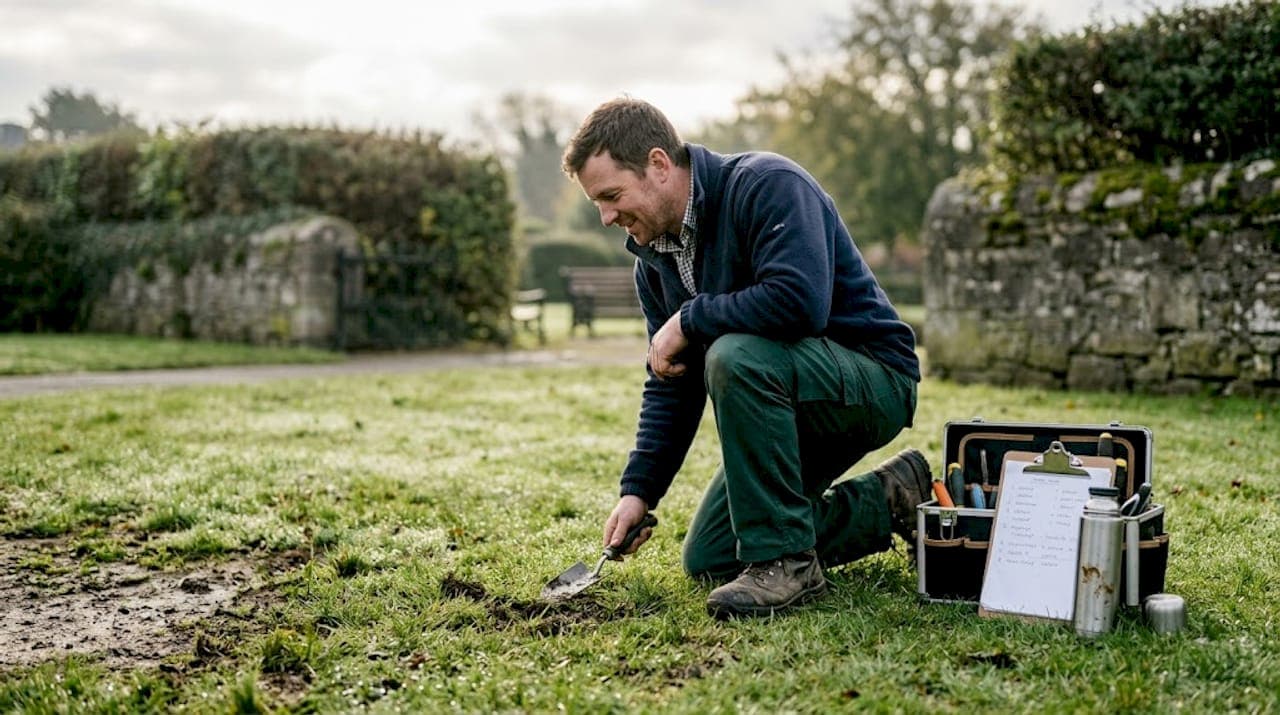
Pro Tip: After any wet winter period, pour a bucket of water onto a suspect area of lawn. If it pools for more than 30 seconds, you have compaction that needs aerating before your spring programme begins.
Tools, materials, and setup essentials
Once you've outlined your property's needs, you'll need the right tools and safe setup to deliver professional results.
The core equipment list for Dublin grounds keeping includes:
- Rotary or cylinder mower for open lawns
- Robotic mower for lower-maintenance schedules or large flat areas
- Scarifier to remove thatch and moss
- Hollow-tine aerator for compacted or clay-heavy soil
- Hedge trimmer (electric or petrol)
- PPE: gloves, eye protection, steel-toe boots, high-visibility vest for commercial sites
| Feature | Petrol mower | Electric mower | Robotic mower |
|---|---|---|---|
| Power output | High | Moderate | Low to moderate |
| Noise level | High | Low | Very low |
| Best for | Large or rough areas | Small to medium lawns | Flat, maintained lawns |
| Running cost | Higher | Lower | Low (electricity) |
| Maintenance needed | Regular | Occasional | Minimal |
SOPs create consistency and reduce errors in grounds maintenance teams, so establishing a simple pre-use safety checklist is well worth the effort. Here is a reliable setup sequence for the first mow of the season:
- Inspect mower blades for damage or blunting
- Check fuel or battery charge levels
- Verify grass height settings are correct for the season
- Clear the working area of debris, toys, and stones
- Put on all PPE before starting
- Do a slow first pass to check for any ground irregularities
Caution: Never store petrol and chemical treatments such as weedkillers or fertilisers in the same space. Fumes and accidental spills create a genuine fire and health risk. Keep them in separate, clearly labelled, ventilated storage.
For streamlined workflow tips that save time across larger properties, a structured approach to tool organisation pays off throughout the season.
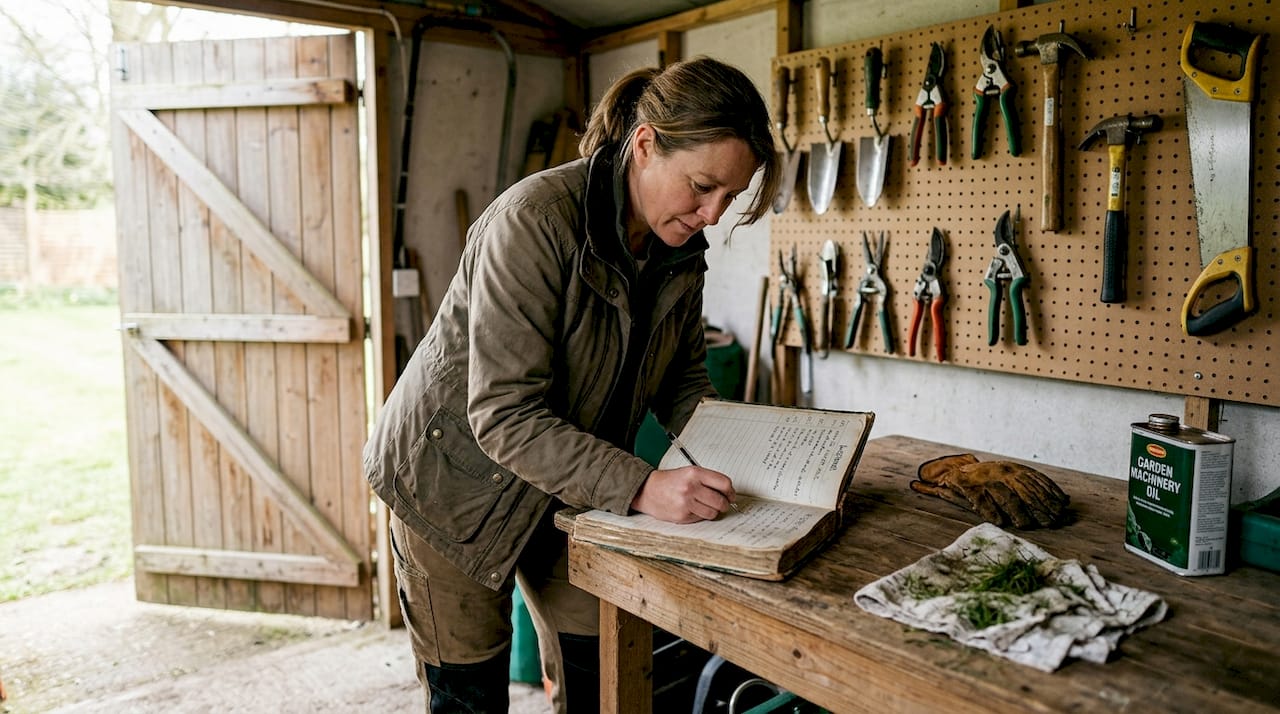
Pro Tip: Keep a simple maintenance logbook for every piece of equipment. Note service dates, blade changes, and any faults noticed. This single habit reduces unexpected breakdowns and extends the working life of expensive tools significantly.
Executing key grounds keeping tasks
With the right setup, you're ready to tackle the core tasks. Here is a step-by-step routine built for year-round Dublin results.
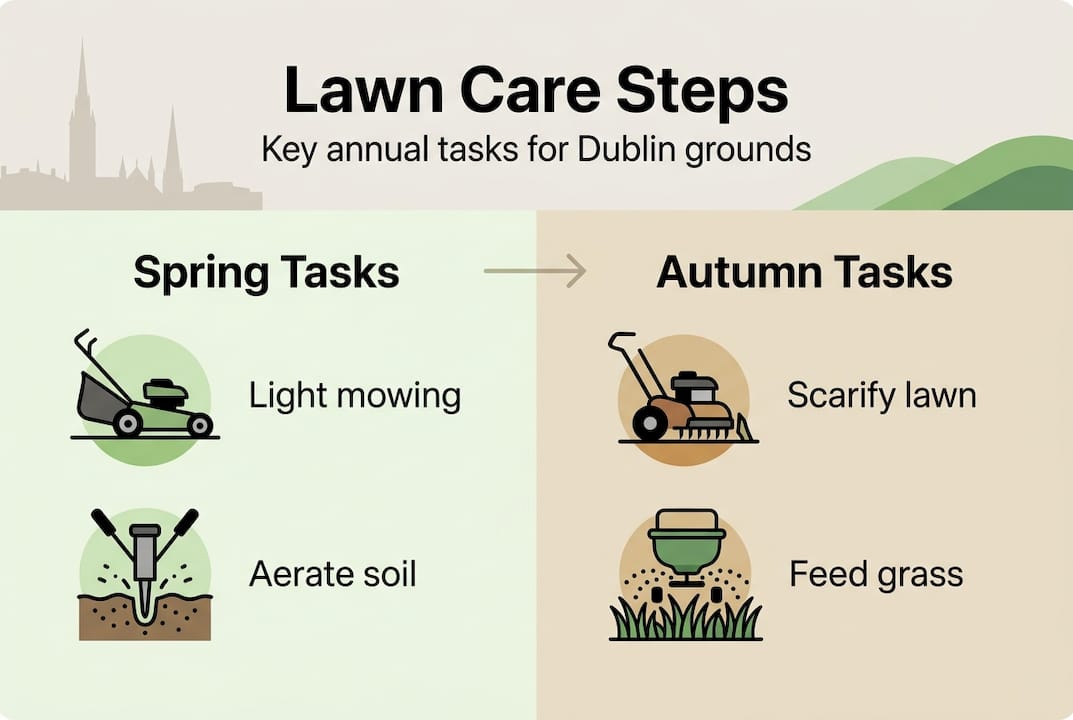
- Mow at the correct height. Mowing height should be adjusted seasonally, set higher in summer to reduce stress on grass during dry spells and lower in spring and autumn for growth stimulation.
- Aerate compacted areas. Use a hollow-tine aerator on any area showing poor drainage or heavy foot traffic damage.
- Scarify to remove thatch. Scarifying and aeration reduce moss and compaction, especially after Irish winters when surface debris and dead material accumulate.
- Fertilise appropriately. Apply a slow-release fertiliser in spring and a potassium-rich feed before winter to strengthen root systems.
- Edge borders and paths. Clean, sharp edges make the entire property look cared-for and professional.
- Apply integrated pest management (IPM). Target weeds and pests selectively rather than blanket-spraying chemicals across the whole lawn.
Avoid these common mistakes:
- Mowing wet or frosty grass, which compacts soil and tears rather than cuts
- Skipping pre-mow inspections, which risks equipment damage
- Overusing chemical treatments, which damages soil biology over time
- Cutting too short too early in spring, which weakens new growth
- Ignoring moss until it dominates, at which point recovery is much harder
For guidance on the right cut length for Dublin lawns specifically, see this proper mowing height guide. Reactive-only maintenance approaches consistently cost more in the long run because small issues become large repairs. Following seasonal maintenance tips throughout the year keeps costs and effort predictable. Professional groundskeepers also follow expert turf guides to refine technique across seasons.
Spring's first mow should always be light. A gentle, high cut encourages strong root development and helps the lawn recover evenly from winter stress.
Troubleshooting and adapting for Dublin's climate
Even with solid routines, Dublin's unpredictable climate means challenges are inevitable. Wet Irish winters require altered mowing, and moss thrives in shade and poor drainage, so adapting your methods is essential rather than optional.
Quick fixes for the most common Dublin lawn problems:
- Moss: Scarify in early spring, improve drainage, overseed bare patches promptly
- Compaction: Hollow-tine aerate, top-dress with sharp sand to open the soil structure
- Heavy wet conditions: Pause mowing entirely, clear standing water if possible, inspect drainage channels
- Shaded lawns: Use shade-tolerant grass seed varieties, raise mowing height, reduce foot traffic
- Weed pressure: Hand-weed early before flowering, use targeted spot treatments rather than broadcast application
'Never mow wet or frosty grass. A damaged lawn costs far more than a skipped week.'
Monitoring drainage does not need to be complicated. A simple observation after any significant rainfall tells you a great deal. Areas that drain slowly, stay soft underfoot, or develop a grey-green sheen are signalling a problem. Address these with aeration before they worsen.
For broader lawn care for healthier yards advice tailored to the greater Dublin area, the principles are consistent: prioritise drainage, reduce chemical reliance, and act early. Your garden value advice decisions start with getting the soil and drainage right first.
Pro Tip: Shaded areas under trees or along north-facing boundaries should be scarified each year after winter and overseeded immediately. Do not wait until summer. Early action gives the new seed the best chance to establish before heat and drought stress arrive.
Measuring results and maintaining excellence
Once your routine is in place, measuring success and maintaining standards is what sets well-managed properties apart from average ones.
Key outcome checks after each maintenance visit:
- Lawn density and evenness of growth
- Weed levels and moss coverage
- Edging quality along all paths, beds, and boundaries
- Path and surface safety, especially after wet weather
- Overall visual appearance from street level or main entrance
Routine assessments and standard operating procedures ensure long-term consistency and cost-effectiveness. For property managers overseeing multiple sites, a simple weekly and monthly review table keeps standards visible and accountable.
| Review task | Frequency | Who checks |
|---|---|---|
| Lawn condition and growth | Weekly | Site manager or groundskeeper |
| Weed and moss assessment | Fortnightly | Groundskeeper |
| Edge definition check | Weekly | Site manager |
| Drainage and path safety | After rainfall | Property manager |
| Tool and equipment review | Monthly | Groundskeeper |
| Before-and-after photo log | Monthly | Property manager |
Documentation matters more than most property owners realise. Keeping a written record of tasks completed, conditions observed, and products applied creates an audit trail that is invaluable if a problem arises or when comparing results over seasons.
Before-and-after photos are one of the simplest and most effective tools available. They make improvement visible, support accountability, and build a clear picture of which interventions work best for your specific site. Linking consistent results to appearance and condition also has a direct impact on upkeep to boost value for your property over the long term.
What most Dublin guides miss about grounds keeping
Most step-by-step guides focus on the tasks. Fewer address the mindset that makes or breaks the results.
The most common failure we see in Dublin grounds keeping is impatience. Owners mow when the lawn is wet because it is convenient. Managers apply heavy chemical treatments to get quick results. These shortcuts feel efficient in the moment but create compaction, soil damage, and weed resistance that takes seasons to undo.
Dublin's climate actually rewards a biology-first and drainage-first approach over chemical shortcuts. A healthy soil with good drainage grows a lawn that naturally resists moss and weed pressure. No product from a garden centre replaces that foundation.
Results also depend far more on consistent, modest effort than on occasional intensive work. A property that receives regular light attention throughout the year will outperform one that gets a single aggressive intervention each spring. Every time.
For a deeper look at what professional grounds care actually involves day to day, the in-depth services explanation covers the full picture. Small adjustments, done consistently, are always the better investment.
Ready to transform your property's landscape?
This guide has given you a solid, practical foundation for grounds keeping in Dublin. From assessing your site and choosing the right tools to executing tasks correctly and measuring results, each step builds on the last.

If you want consistent, professional results without the guesswork, we can help. At Sherry Property Care, we provide expert groundskeeping across Dublin for both residential and commercial properties. Send us a photo of your grounds and we will put together a tailored quote for you. No obligation, just straightforward advice and a plan built around your property's specific needs.
Frequently asked questions
What makes Dublin grounds keeping different compared to other regions?
Dublin's wet, mild climate calls for unique mowing, drainage, and moss control techniques. Moss thrives in shade and poor drainage, making local adaptation essential throughout the year.
When should I avoid mowing my Dublin lawn?
Avoid mowing when grass is wet, frosty, or during extended rainy periods. Mowing wet or frosty grass compacts soil and tears rather than cuts cleanly, causing lasting damage.
How often should scarifying and aeration be performed?
Scarify and aerate at least once per year, ideally in early spring after winter. Scarifying and aeration reduce compaction and moss build-up, particularly in shaded or high-traffic areas.
What is the benefit of using fewer chemicals on lawns?
Reducing chemical use supports healthier soil biology and better drainage, making lawns naturally more resilient. Drainage and biology over chemicals is consistently the more effective long-term approach for Irish conditions.