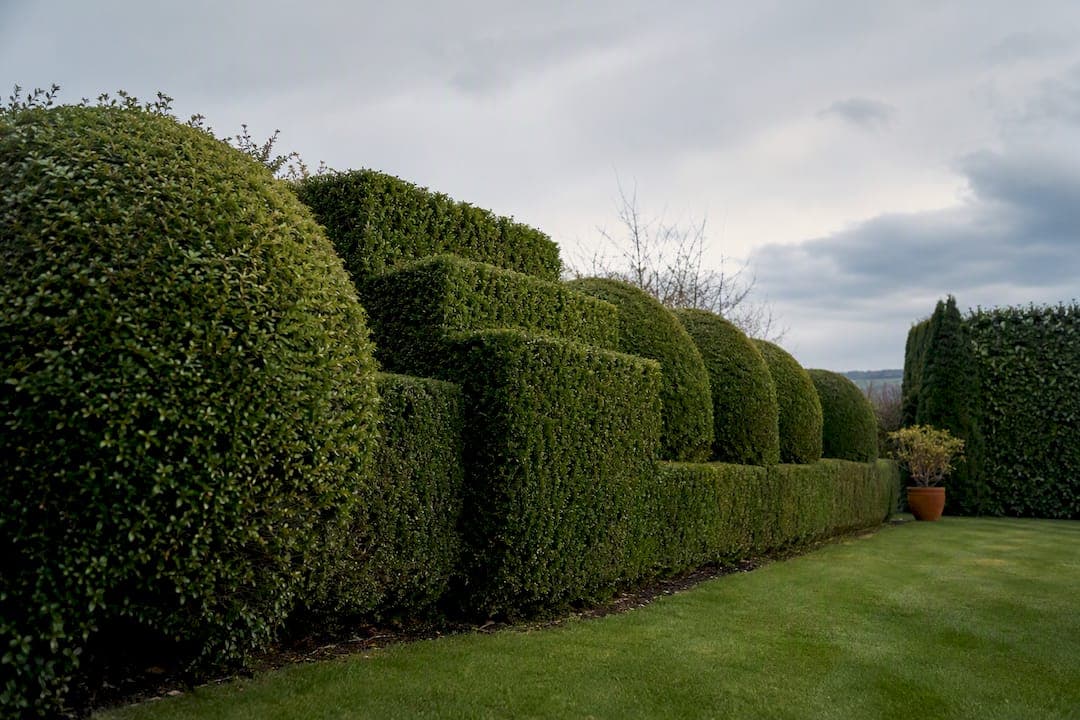
The most reliable hedge topiary comes from matching the shape to your site and picking a species you'll actually keep trimming. Yew, Japanese holly and privet cover most gardens: yew for slow, long-lived structure, holly for tight small balls, privet where you want fast results and don't mind clipping twice a year. Get the shape, the plant and a simple trimming schedule right, and crisp topiary follows almost automatically.
TL;DR:
- Yew grows about 20 to 30 centimeters annually and needs only one trim per year once established, making it ideal for long-lasting topiary shapes.
- Fast-growing plants like privet and Lonicera nitida require multiple trims annually but offer quicker results for shaping.
- Most formal topiary is best maintained with two trims a year, around late May and August, with additional midsummer trims on fast growers if desired.
- Starting with simple shapes such as balls, cones, or spirals makes topiary manageable for beginners, using basic tools and minimal framing techniques.
- Hiring professionals becomes practical beyond small projects or intricate designs, especially for mature hedges, high access, or limited time for maintenance.
Table of Contents
- Hedge topiary ideas for every garden and skill level
- Best plants for hedge topiary and when to choose them
- When to prune and how often
- Tools, frames and simple techniques for a crisp finish
- Step-by-step: creating a simple topiary ball or cone
- When DIY topiary makes sense, and when it doesn't
- How Sherry Property Care keeps your topiary sharp without the DIY risk
- Sources
- FAQ
Hedge topiary ideas for every garden and skill level
Start with shapes you can actually maintain; for practical guidance on designing around garden spaces, see these garden studio ideas that actually work for your space. These ten hedge shaping ideas run from a Sunday-afternoon project to a multi-year commitment, so pick according to how much time you want to give it each year.
- Simple ball. The classic starting shape. Use a wire hoop frame, trim monthly on fast growers like box alternatives, twice yearly on yew. Suits almost any evergreen.
- Paired standards either side of a door. Bay or holly on a clear stem with a rounded head. Needs formative pruning early, then light maintenance once shaped.
- Spiral. Best attempted on conifers with dense, even growth. Mark the spiral with tape first; it takes patience but no special tools beyond sharp shears.
- Cloud pruning (niwaki-style). Clip a shrub into rounded, cloud-like lobes with clear gaps between. Works well on yew or juniper; expect to revisit shaping choices for two or three seasons before it settles.
- Low formal hedge with a flat top. A tidy alternative to full topiary. Lonicera nitida or privet respond fast and forgive early mistakes.
- Archway over a path. Train two hedges together over a metal arch. Slow to establish but a genuine focal point once mature.
- Layered or tiered terraces. Cutting a hedge into stepped tiers rather than one solid block. Better suited to experienced hands; a frame here is nearly essential.
- Playful shapes: birds, animals, simple figures. Fun but demanding, usually needing a purpose-built wire form and regular hand-finishing.
- Potted topiary by a doorway or on a patio. Box alternatives or bay in large containers. Ideal for renters or small gardens; small garden design approaches often lean on pots for this reason.
- Formal shapes against informal planting. One or two clipped balls or cones set among relaxed borders. This contrast is one of the easiest creative topiary designs to pull off and forgives an imperfect shape either side.
Beginners should start with a column, ball or spiral, since Gardens Illustrated points to these as needing only basic tools and a simple template to look convincing early on.
Best plants for hedge topiary and when to choose them
Growth rate decides how much work you're signing up for. Yew grows around 20 to 30cm a year and copes with sun or shade, which is why it's the long-standing benchmark for serious topiary hedge shapes that need to hold detail for decades.
- Yew (Taxus baccata): slow, dense, tolerant of most sites; often just one trim a year once established.
- Japanese holly (Ilex crenata) and Euonymus: solid box alternatives for small balls and pots, usually needing two trims a year.
- Privet and Lonicera nitida: fast growers that reward you quickly but demand more frequent clipping to stay sharp.
- Bay: good for standards near doorways, moderate growth, needs a sheltered spot in cold winters.
- Photinia, olives, conifers: situational choices. Photinia gives colour, olives suit warm sheltered corners, conifers hold fine detail but resent hard renovation cuts.
Box grows slower than many alternatives, which is worth knowing if you've been told box alternatives grow faster; several genuinely do.
Pro Tip: Before buying anything, ask yourself how many trims a year you'll realistically manage, how exposed the site is, and what final shape you actually want. Those three answers narrow the plant list fast.
If you want species suited specifically to Irish gardens and coastal exposure, this guide to privacy hedge plants covers the trade-offs in more depth.
When to prune and how often
Most topiary and formal hedges do best on a twice-yearly schedule: late May or June after the spring growth flush, then again in late August to mid-September to lock the shape in before winter. Slow growers like established yew often need only one trim a year.
- Trim on an overcast day. Cutting in full sun scorches freshly exposed foliage.
- Fast growers (privet, Lonicera nitida) may need a third light tidy in midsummer.
- Check thoroughly for active nests before any spring cut. Disturbing nesting birds during the main nesting season, roughly early March to early August, is an offence under the Wildlife and Countryside Act 1981.
- Pots dry out faster than in-ground specimens, so water well before and after a heavy trim.
Pro Tip: If you're ever in doubt about whether a hedge holds an active nest, wait a fortnight and check again rather than trim through it. One missed season costs you far less than a legal problem or a dead brood.
Tools, frames and simple techniques for a crisp finish
Detail work needs sharp single-handed shears, not a powered trimmer. Powered blades bruise fine foliage and leave ragged, browning edges on close topiary work, whereas hand shears give you a clean cut and proper control near the surface.
- Single-handed shears for detail and finishing cuts.
- Two-handed shears for larger balls, cones and broader hedge faces.
- Frames (hoop, A-frame, wire forms) keep shapes consistent year-on-year and stop the slow geometric drift that happens when you shape freehand every time, as the beginners' topiary guide explains.
- Safety kit: gloves, eye protection, a sturdy stepladder or tripod ladder on soft ground, and an RCD adaptor for any corded trimmer.
- Sharpen shears every few sessions; a dull blade tears rather than cuts and leaves brown edges that take weeks to grow out.
Step-by-step: creating a simple topiary ball or cone
- Check and choose your moment. Inspect for nests, pick an overcast day, and confirm the plant has had at least a full season to establish before your first formative cut.
- Set your guide. Fit a hoop frame over the shrub, or mark height and width with cane and string. Remove any long stray shoots first, then trim evenly from the base upward so light reaches the lower growth, following the tapered profile RHS guidance recommends for formal shapes.
- Finish and feed. Lift the frame off, tidy stray points by hand with single-handed shears, then mulch and feed lightly. Note the date so you know when the next trim falls due.
Pro Tip: If you overcut and expose bare wood, don't panic. Most evergreens used for topiary respond to a season or two of steady light trimming and fill back in; it's rarely worth digging up a plant over one heavy-handed pass.
When DIY topiary makes sense, and when it doesn't
A simple ball or cone on a young, low shrub is a fair weekend project if you've got sharp shears and patience. Once you're dealing with a mature hedge, an intricate frame, high access, or you simply don't have three sessions a year to spare, hiring a professional makes more sense than risking the shape, or your safety.
— gerard
How Sherry Property Care keeps your topiary sharp without the DIY risk
Professional services exist as alternatives to trial-and-error topiary work for homeowners seeking properly done results. Some providers handle hedge trimming, topiary maintenance and general grounds upkeep for residential and commercial properties, with jobs quoted based on the individual site rather than using generic price lists.

Getting a fast, accurate quote is simple. Send a few photos of the hedge or topiary in question, note the approximate height and length, and flag any access issues, like a shared boundary, gated side entrance, or overhanging cables. If your hedge sits along a tricky boundary, our Dublin hedges guide covers the common access questions we get asked before a job. Need a quote for your own garden? Get in touch through Sherry Property Care and we'll come back to you with a tailored price.
Sources
- Complete guide to topiary | Gardeners' World
- When is the best time to cut topiary | Homes & Gardens
- Topiary | RHS Advice
FAQ
What are some suitable shapes for hedges?
Balls, cones, spirals, cloud-pruned lobes and simple low formal hedges all suit garden settings, with balls, columns and spirals being the easiest starting shapes for beginners.
What plants look good in front of a hedge?
Low, compact planting like lavender, box alternatives or seasonal bedding works well in front of a clipped hedge, since it doesn't compete with the hedge's line or block light to its base.
How do I create a simple topiary?
Fit a frame or mark a guide, trim excess growth evenly from the base upward, then remove the frame and finish detail cuts by hand before feeding and mulching the plant.
What shrubs are best for topiary?
Yew, Japanese holly, box alternatives like Euonymus, privet, Lonicera nitida and bay are the most commonly used shrubs, chosen according to how fast you want results and how much clipping you're willing to do.