TL;DR:
- Hedge cutting in Lucan is governed by Irish wildlife law, with restrictions on uncultivated land from March to August and year-round bans on disturbing active bird nests. Domestic garden hedges are generally exempt from the seasonal ban but still require permission for trimming shared boundaries or nest disturbance care. Proper hedge maintenance involves trimming during September to February, choosing suitable species, rotation cutting for biodiversity, and consulting professionals to ensure compliance and health.
If you own property in Lucan, the chances are you have hedges forming part of your boundary, garden, or driveway. Most homeowners assume they can trim their hedges whenever they like. That assumption can cost you. The rules around hedges in Lucan are shaped by Irish wildlife law, and getting the timing wrong carries real legal consequences. This guide covers what you need to know about legal restrictions, the best hedge species for privacy and aesthetics, maintenance best practice, and how to manage shared boundaries without falling out with your neighbours.
Table of Contents
- Key takeaways
- Hedges in Lucan: what the law actually says
- Best practice for maintaining healthy hedges
- Choosing the right hedge species for Lucan gardens
- Boundary hedges and neighbour relations
- Finding professional hedge services in Lucan
- My perspective on hedge care in Lucan
- Professional hedge care for your Lucan property
- FAQ
Key takeaways
| Point | Details |
|---|---|
| Legal cutting window | Hedge cutting on uncultivated land is banned from 1 March to 31 August under the Wildlife Act. |
| Best maintenance period | September to February is the ideal window for trimming, feeding, and general hedge upkeep. |
| Nest disturbance is always illegal | Even outside the ban period, disturbing active bird nests in hedges is a criminal offence year-round. |
| Choose species wisely | Beech, laurel, whitethorn, and native mixes each suit different privacy, soil, and maintenance needs in Lucan. |
| Boundary hedges need consent | You cannot legally trim your neighbour's side of a shared hedge without their permission. |
Hedges in Lucan: what the law actually says
Most people are surprised to learn that hedge cutting in Ireland is not just a gardening decision. It is a legal one. Under the Wildlife Act 1976 as amended, it is a criminal offence to cut, grub, burn, or destroy vegetation in hedges or ditches on uncultivated land between 1 March and 31 August. Fines for breaches can exceed €1,000, and offenders can receive a criminal record.
That said, there is an important distinction worth knowing. Domestic garden hedges are generally exempt from this ban. The restriction applies primarily to hedgerows on uncultivated or agricultural land. However, the nest disturbance rules apply to everyone, including residential garden owners, regardless of the time of year.
Nesting birds: the rule that applies all year
Disturbing nest sites at any time is illegal under Section 22 of the Wildlife Acts. If birds are actively nesting in your garden hedge, you must wait until the chicks have fledged before trimming, even if it is September or October. This catches many homeowners off guard. A quick visual check before you pick up any tools is always worth doing.
Road safety exceptions
Section 70 of the Roads Act 1993 obliges landowners to keep roadside vegetation trimmed for road safety. If your hedge borders a public road, you have a legal duty to prevent it from obstructing sight lines or traffic. The practical approach is to carry out this work during the legal open season (September to February). In genuine emergencies during the closed season, local authorities can intervene, but you should always consult South Dublin County Council before acting.
Here are the key legal points every Lucan property owner should keep in mind:
- The hedge cutting ban runs from 1 March to 31 August on uncultivated land.
- Domestic garden hedges are generally exempt, but nest disturbance rules still apply.
- Fines can exceed €1,000 and carry the risk of a criminal record.
- Roadside hedge obligations under the Roads Act 1993 should be fulfilled during the open season.
- Always check with your local authority if a tree preservation order may apply to your property.
Pro Tip: Before trimming any hedge in Lucan between September and February, spend two minutes checking for active nests. Look for movement, listen for bird calls, and check for eggs or chicks. It takes moments and keeps you on the right side of the law.
Best practice for maintaining healthy hedges
Knowing when you can trim is only half the picture. How and how often you trim has a significant effect on the long-term health, density, and appearance of your hedge.
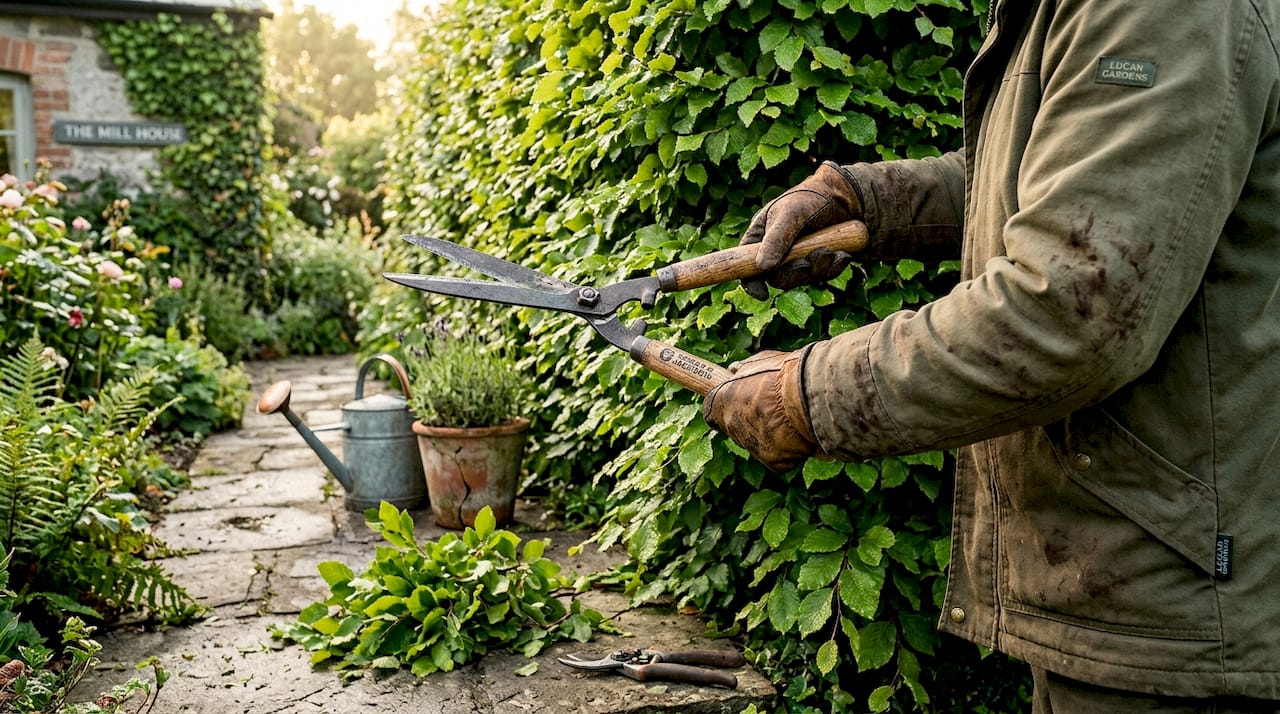
The optimal maintenance period is September to February. Cutting during this open season allows hedges to recover before spring growth begins, reduces stress on the plants, and avoids disturbing wildlife during the nesting and breeding season. For most Lucan garden hedges, this window gives you plenty of time to get the work done properly.
One of the most overlooked practices in hedge management is rotation cutting. Rather than trimming the entire hedge every year, cutting on a two to three year cycle allows sections to flower and fruit. Allowing hedges to flower on a rotation greatly benefits local biodiversity, supporting birds, butterflies, badgers, and pollinating insects. It also reduces the volume of work each season.
Here is a practical maintenance routine to follow:
- Check for nests before any trimming, regardless of the time of year.
- Trim in autumn or early winter (October to December) for the best recovery before spring.
- Feed your hedge in early spring with a balanced slow-release fertiliser to support new growth.
- Water during dry spells, particularly for newly planted hedges in their first two years.
- Control weeds at the base of the hedge to reduce competition for nutrients and moisture.
- Rotate your cutting cycle so that not every section is cut every year, giving wildlife habitat time to develop.
Proper hedge maintenance includes biannual trimming, feeding, watering during dry spells, and weed control. Regular care encourages thick, healthy growth that reduces gaps, improves privacy, and creates better wildlife habitat.
Pro Tip: If your hedge has become very overgrown, avoid cutting it back hard all in one go. Take no more than a third of the growth off in any single season. This prevents stress die-back and keeps the hedge looking full rather than sparse.
Choosing the right hedge species for Lucan gardens
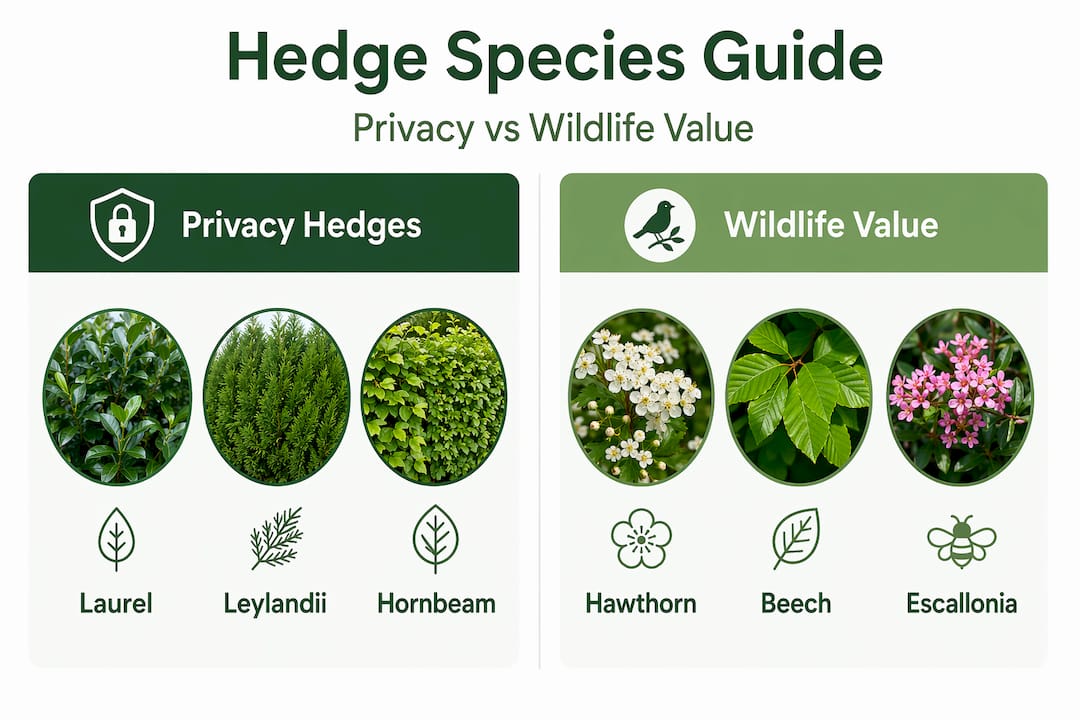
Lucan's climate is mild and relatively wet, which suits a wide range of hedge species. The right choice depends on what you want from your hedge: privacy, aesthetics, low maintenance, or wildlife value. Here is a comparison of the most popular options for Lucan garden hedges.
| Species | Growth rate | Privacy level | Maintenance | Wildlife value | Best for |
|---|---|---|---|---|---|
| Beech (Fagus sylvatica) | Moderate | High (retains leaves in winter) | Low to moderate | Moderate | Formal boundaries |
| Laurel (Prunus laurocerasus) | Fast | Very high | Moderate | Low | Quick privacy screens |
| Whitethorn (Crataegus monogyna) | Moderate | High | Low | Very high | Wildlife-friendly boundaries |
| Bamboo | Very fast | High | High | Low | Modern garden screening |
| Native mix (hazel, hawthorn, blackthorn) | Moderate | High | Low | Very high | Biodiversity and rural feel |
Different hedge species suit various soil and climatic conditions in Ireland, and each brings different maintenance demands and visual results.
A few points to consider when choosing your species:
- Beech holds its russet-brown leaves through winter, giving year-round privacy without being evergreen. It suits formal, structured gardens and is relatively disease-resistant.
- Laurel grows quickly and creates a dense, glossy screen. It is popular for the best hedges for privacy in Lucan, but it does need regular trimming to stay tidy and can become very large if left unchecked.
- Whitethorn (hawthorn) is a native Irish species that provides excellent security due to its thorns, produces beautiful blossom in spring, and offers berries for birds in autumn. It is one of the best choices if biodiversity matters to you.
- Native mixes combine species like hazel, hawthorn, blackthorn, and dog rose. They are the gold standard for wildlife value and suit larger boundaries or more informal garden styles.
For planting, autumn is the best time in Lucan. Bare-root hedging plants establish well in the wetter months and need less watering. Space most species 30 to 60 centimetres apart, depending on the species and how quickly you want a dense screen.
Boundary hedges and neighbour relations
Shared boundary hedges are one of the most common sources of property disputes in Dublin. Getting the basics right avoids a lot of unnecessary tension.
Boundary hedges are generally considered shared property. This means neither you nor your neighbour can make significant changes to the hedge without the other's agreement. You cannot legally trim your neighbour's side of the hedge without their permission. The only exception is branches or roots that cross the boundary onto your property. You may trim those back to the boundary line, but you must offer the cuttings to your neighbour rather than simply disposing of them.
Here are the key principles to follow:
- Discuss any planned trimming with your neighbour before you start, particularly if the hedge is on or near the boundary line.
- Keep a record of agreements, even if it is just a brief text message exchange.
- If roots or branches from a neighbour's hedge are causing damage to your property, raise it in writing before taking any action.
- South Dublin County Council can offer guidance on boundary disputes, though they rarely intervene in private matters unless there is a clear legal issue.
- Timing your trimming to suit both households is a practical courtesy that goes a long way.
Good communication prevents most hedge disputes before they start. A friendly conversation in September about plans for the autumn trim is far easier than a dispute in January.
Finding professional hedge services in Lucan
Not every homeowner has the time, equipment, or confidence to manage hedges properly. Professional hedge trimming in Lucan is widely available, and using a qualified service has real advantages beyond just saving time.
A professional will know the legal cutting windows, check for nesting birds before starting work, and have the right equipment to achieve a clean, even finish without damaging the hedge. They can also advise on species-specific care, identify disease or pest problems early, and handle the disposal of cuttings properly.
When choosing a service provider, look for:
- Clear evidence of local experience in Lucan and the wider Dublin area.
- Willingness to discuss the legal cutting season and bird nesting checks before booking.
- Transparent pricing and a clear scope of work.
- Availability for follow-up maintenance, not just one-off visits.
- Positive reviews from local homeowners or property managers.
For a broader view of what is available locally, the top hedge trimming services in 2026 gives a useful overview of providers operating in the area. Many also offer complementary services like lawn care, which makes it practical to bundle your garden maintenance into a single visit. You can find useful guidance on that in this lawn care guide for Lucan.
My perspective on hedge care in Lucan
I have worked with enough Lucan properties to know that the legal side of hedge management genuinely surprises most homeowners. Not because they are careless, but because nobody tells them. The assumption that your garden is yours to do with as you please is understandable. The reality is a little more layered.
What I have come to appreciate, though, is that the Wildlife Act restrictions are not just bureaucratic red tape. They reflect something real. Hedges in Lucan and across Dublin are genuinely important wildlife corridors. When you allow a section of hedge to flower and fruit rather than cutting it back every year, you see the difference. More birds. More insects. A garden that feels alive rather than just tidy.
The homeowners I have seen get the best results are not the ones who obsess over perfectly manicured edges. They are the ones who understand the rhythm of the year, work within the legal window, and choose species that suit their soil and their goals. A well-chosen native hedge mix planted in October, left to establish, and trimmed sensibly every two years will outperform an over-clipped laurel in almost every way.
My honest advice: stop thinking of your hedge as a maintenance problem and start thinking of it as a long-term asset. Choose the right species, respect the cutting calendar, and get a professional in when the job is beyond your tools or your time. The results speak for themselves.
— gerard
Professional hedge care for your Lucan property
If you want your hedges to look their best while staying legally compliant, Sherrypropertycare offers professional hedge trimming and garden maintenance tailored specifically for properties in Lucan and across Dublin, Ireland.
The team at Sherrypropertycare understands the legal cutting season, checks for nesting birds before starting any work, and delivers a clean, tidy result every time. Whether you need a one-off trim, seasonal maintenance, or advice on the best hedge species for your property, they can help. Send a photo of your garden for a personalised quote and find out how straightforward good hedge care can be.
FAQ
When can I legally cut my hedge in Lucan?
For domestic garden hedges, you can trim at any time of year, but you must not disturb active bird nests. For hedges on uncultivated land, the legal cutting window is 1 September to 28 February, with the ban running from 1 March to 31 August.
What is the best hedge for privacy in a Lucan garden?
Laurel is the fastest-growing option for a dense privacy screen, while beech offers year-round coverage with a more formal appearance. Whitethorn is the best choice if you want privacy combined with high wildlife value.
Can I trim the hedge on my neighbour's side of the boundary?
No. Boundary hedges are shared property, and you need your neighbour's permission before trimming their side. You can trim branches or roots that cross onto your property, but only back to the boundary line.
How often should I trim my garden hedge in Lucan?
Most garden hedges benefit from trimming once or twice a year, with the main cut in autumn. For biodiversity, consider a two to three year rotation on sections of the hedge, allowing them to flower and fruit before cutting.
What happens if I cut a hedge during the banned period?
Cutting vegetation on uncultivated land during the closed season can result in fines exceeding €1,000 and a criminal record. Always check whether the ban applies to your specific hedge type and consult your local authority if you are unsure.