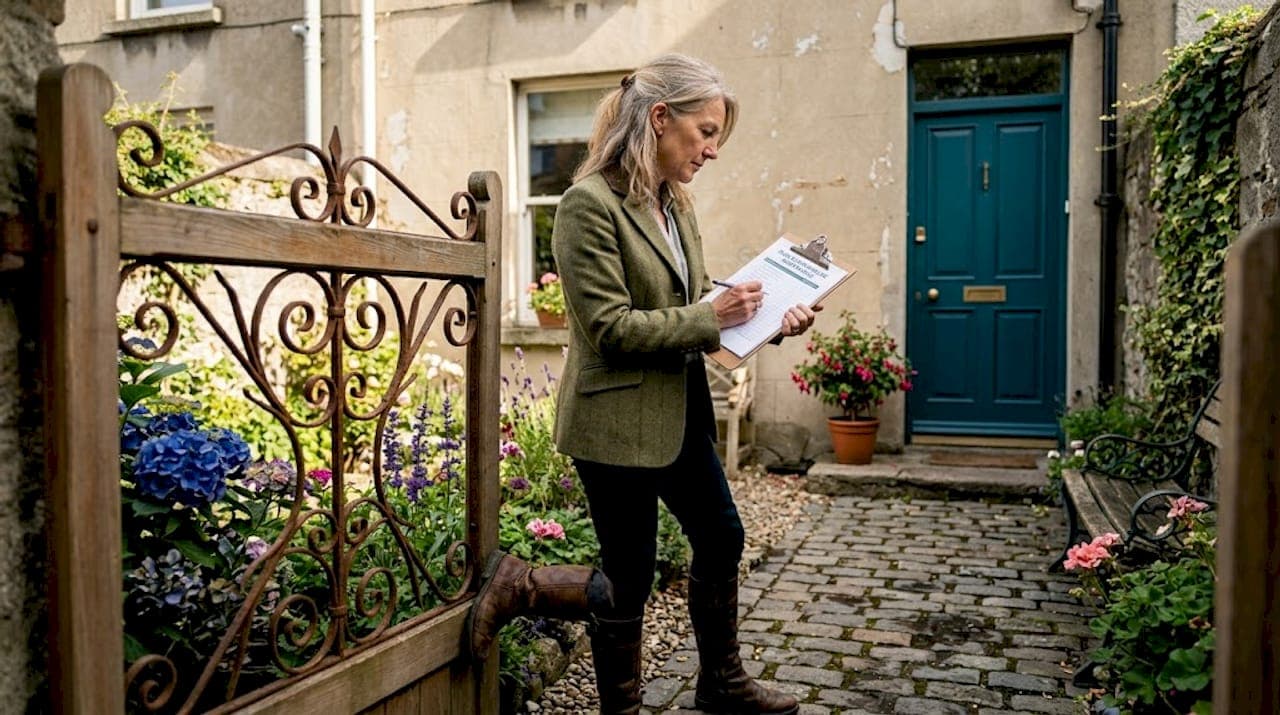
TL;DR:
- Dublin's holiday let market requires strict compliance, tailored management strategies, and ongoing maintenance to maximize earnings. Owners must understand localized regulations, submarket performance, and the importance of preventative care to protect long-term property value. Professional management and exterior care, such as grounds maintenance, play a vital role in attracting guests and ensuring regulatory adherence.
Dublin's holiday let market carries real earning potential, but many property owners are discovering that running a short-term rental involves far more than listing a spare room online. New statutory requirements, submarket performance gaps, and the daily demands of guest management mean that a casual approach simply no longer works. This guide covers everything you need to know: current Dublin regulations, practical management workflows, honest performance benchmarks, and seasonal readiness strategies that protect your property's value over the long term.
Table of Contents
- Understanding holiday home management: What sets Dublin apart
- Essential legal duties for short-term lets in Dublin
- Efficient workflows: What professional management really covers
- Benchmarking performance: Occupancy, revenue, and submarket realities
- Seasonal readiness and risk management: Protecting value through prevention
- Our perspective: Why compliance and customisation outpace generic management
- Take the next step with expert property care in Dublin
- Frequently asked questions
Key Takeaways
| Point | Details |
|---|---|
| Compliance is critical | Failure to register and follow local rules can risk your earnings and asset in Dublin. |
| Management scope matters | Top providers handle guest experience, cleaning, maintenance, and legal duties end to end. |
| Submarket data drives results | Occupancy and revenue vary by area, so always use local benchmarks to set expectations. |
| Seasonal checks sustain value | Regular inspections help prevent costly repairs and boost your property’s reputation. |
Understanding holiday home management: What sets Dublin apart
Holiday home management in Dublin is not the same as running a short-term let in any other Irish city. Dublin's property landscape is shaped by a dense regulatory environment, a highly varied submarket structure, and guests who expect professional, hotel-style standards. Understanding these realities from the outset saves you time, money, and compliance headaches.
One common misconception is that citywide occupancy figures tell the full story. They do not. Occupancy and revenue vary significantly from one Dublin postcode to the next, and a management strategy that works in Dublin City Centre may perform very poorly in South Dublin. We will cover the numbers in detail later, but the core lesson is clear: treat your property as its own business, not as a reflection of a citywide average.
Regulation is the other major factor that sets Dublin apart. Ireland introduced a National Short-Term Let Register covering any property offering stays of 21 nights or fewer. Annual registration and renewal are mandatory, and your unique registration number must appear on every listing across all booking platforms. Missing this step is not a minor oversight. It puts your entire operation at legal risk.
"Compliance is not a one-time task. It is a continuous part of managing any short-term let in Dublin."
The mix of submarkets in Dublin also shapes what good management looks like in practice. Consider how differently these areas perform:
| Area | Average occupancy | Key considerations |
|---|---|---|
| Dublin City Centre | Higher demand, more competitive | Strict planning oversight, RPZ rules apply |
| North Dublin | Moderate demand | Often lower price points, local guest mix |
| South Dublin | Lower occupancy and revenue | Requires tailored pricing and marketing |
| Coastal areas | Seasonal peaks | Grounds care and outdoor appeal matter most |
Keeping up with scheduled maintenance in Dublin is not just about aesthetics. It directly affects your listing reviews and repeat bookings, especially in areas where competition among hosts is fierce.

Essential legal duties for short-term lets in Dublin
Once you understand the landscape, the next priority is getting your legal obligations right. Non-compliance can result in financial penalties, loss of income, and damage to your property's long-term value. Here is a practical checklist to work through:
- Register your property on Ireland's National Short-Term Let Register before taking any bookings for stays of 21 nights or less.
- Renew your registration annually. The register is not a one-off process. You must update it each year to remain compliant.
- Display your registration number clearly on every listing, across every platform you use, including Airbnb, Booking.com, and any direct booking channels.
- Check your planning status. If your property sits within a Rent Pressure Zone (RPZ) and is not your principal private residence (PPR), you may need formal planning permission to operate as a short-term let. Change-of-use requirements in RPZs are strictly applied and enforcement has increased significantly in recent years.
- Understand the 90-day cap. If your property is your PPR, you can let it for up to 90 days per year without planning permission. Exceeding this cap in an RPZ requires a formal change-of-use application.
- Review your insurance cover. Standard home insurance rarely covers short-term commercial letting. Confirm your policy explicitly includes this activity.
Understanding your Dublin landlord obligations is central to running a legally sound operation. Compliance failures are rarely discovered all at once. They tend to surface at the worst possible time, often when you are mid-booking season or trying to sell the property.
Pro Tip: When vetting any management provider, ask directly how they handle registration renewals and what their process is for monitoring your compliance calendar. If they cannot give you a clear, documented answer, look elsewhere.
Efficient workflows: What professional management really covers
Many owners assume that hiring a holiday home manager simply means handing over a key and watching the bookings roll in. In reality, effective management is a detailed, operationally intensive service. Here is what genuine professional management covers:
Cleaning and linen resets. Every guest turnover requires a thorough clean and a fresh linen change. Professional managers operate to hotel-grade cleaning and maintenance standards, using checklists to confirm every item is addressed before the next guest arrives. Missed steps here lead directly to negative reviews.
Contractor coordination. Boilers break, taps leak, and gardens grow. A competent manager maintains a network of vetted tradespeople and handles call-outs on your behalf. This matters particularly for seasonal property upkeep, when demand spikes and any maintenance delay costs real income.
Guest communication. From the moment a booking is confirmed to the moment a guest checks out, professional guest management covers all enquiries, check-in instructions, issue resolution, and review responses. This is not a task you can realistically handle yourself if you have a full-time job or multiple properties.
Performance monitoring. Good managers track your calendar occupancy, review scores, average nightly rate, and response times. They use this data to adjust pricing and availability windows.
Here is a comparison of what a basic versus professional management package typically delivers:
| Task | Basic service | Professional service |
|---|---|---|
| Cleaning | Guest-reported issues only | Structured checklist after every stay |
| Linen | Owner-managed | Full reset with every turnover |
| Maintenance | Reactive only | Scheduled seasonal + reactive |
| Guest communication | Limited hours | 24-hour coverage |
| Performance reporting | None | Monthly reporting with data |
Following indoor maintenance best practices within your management workflow protects your property's condition and keeps guests returning. A well-maintained interior directly influences your review score, which in turn drives booking volume.
Pro Tip: Before signing any management contract, ask for a sample operations checklist. If your provider cannot show you one, their processes likely exist only in someone's head rather than in a documented system.
Benchmarking performance: Occupancy, revenue, and submarket realities
Setting realistic expectations is one of the most important things you can do as a holiday let owner in Dublin. Many owners make costly decisions based on headline averages that do not reflect their property's actual location or type.
According to Dublin-wide market data, the median annual revenue for a short-term let in the city varies widely. City centre and tourist-heavy postcodes outperform significantly. Properties in South Dublin consistently record materially lower occupancy rates and annual revenue compared with citywide averages, which means that an owner in Rathfarnham or Tallaght should not price or plan based on what a property in Temple Bar earns.
| Metric | Dublin overall | South Dublin |
|---|---|---|
| Median occupancy rate | Higher | Notably lower |
| Average annual revenue | Stronger | Below city average |
| Typical nightly rate | Competitive | More price-sensitive |
| Seasonal volatility | Moderate | Higher |
This data has direct implications for how you select and negotiate with a management provider. A provider who quotes you generic Dublin benchmarks without adjusting for your postcode is not doing their job properly. You should be receiving submarket-specific projections and a management fee structure that reflects realistic rather than aspirational revenue.
Your Dublin property value checklist should account for location-specific factors, including neighbourhood foot traffic, proximity to transport links, and the condition of your property's exterior and grounds. These factors affect both your nightly rate ceiling and your occupancy potential.

Understanding your submarket position also shapes your pricing strategy. If your property sits in a lower-demand area, competing on rate alone is not enough. Presentation, review scores, and guest experience need to compensate. This is where professional management and high-quality grounds care make a measurable difference.
Seasonal readiness and risk management: Protecting value through prevention
Running a holiday home is not just about high season. Year-round readiness is what separates properties that hold their value from those that quietly deteriorate between bookings. A structured seasonal management plan should include the following:
Safety and systems checks:
- Smoke and carbon monoxide alarm testing before each season
- Boiler servicing in early autumn before heating demand increases
- Emergency lighting and exit route confirmation
- Fire extinguisher and first-aid kit inspection
Outdoor grounds and kerb appeal:
- Lawn care, hedge trimming, and seasonal garden tidy-ups
- Pathway and driveway condition checks before winter
- Drainage clearing in preparation for heavy rainfall
- Garden furniture storage or weatherproofing in late autumn
Appliances and inventory:
- Full appliance test after any prolonged vacant period
- Linen and towel stock count and replacement planning
- Kitchen and bathroom consumables restocking
Emergency planning. Your property manager should have a documented process for vacation home maintenance emergencies, including burst pipes, heating failures, and guest incidents. This plan should be available to you in writing and reviewed at least once a year.
The link between consistent seasonal readiness and reduced long-term costs is direct. A small leak discovered during a pre-winter check costs a fraction of the damage bill if left until a guest reports it in December. Similarly, grounds that are maintained throughout the year hold their visual appeal far better than those managed reactively.
Boosting your property value is not just about interior upgrades. A well-maintained exterior, clean pathways, and a tidy garden signal to guests that the whole property is cared for.
Pro Tip: Ask your management provider for a written seasonal plan at the start of each year. It should list specific tasks, responsible contractors, and target completion dates. Vague assurances are not good enough.
Our perspective: Why compliance and customisation outpace generic management
We have seen what happens when owners choose a management provider based on low fees and broad promises. The gaps tend to appear slowly. A registration renewal is missed. A planning issue surfaces after the letting cap is exceeded. A negative review goes unanswered for three weeks. These are not isolated failures. They are the predictable result of a generic, hands-off approach applied to a market that demands precision.
The owners who get the most from their Dublin holiday lets share a common approach. They treat compliance as a foundation, not an afterthought. They work with managers who understand submarket performance rather than relying on headline averages. And they invest in the preventative care that protects long-term asset value, not just short-term occupancy.
We believe the return on investment from preventative care is consistently undervalued by property owners. A well-maintained garden, a clean exterior, and a structurally sound property do not just attract better guests. They reduce the risk of costly emergency repairs, support higher nightly rates, and strengthen the asset's resale value.
Generic management templates, however polished they look in a brochure, cannot account for the specific compliance calendar of your postcode, the seasonal character of your submarket, or the particular maintenance needs of your building. Customised, detail-driven management is not a luxury. It is what professional operation of a Dublin holiday let actually requires.
Take the next step with expert property care in Dublin
Managing a Dublin holiday home well means staying on top of compliance, maintaining exceptional standards between every guest stay, and ensuring your property looks its best from kerb to kitchen. These are not small tasks, and doing them inconsistently costs you reviews, bookings, and long-term value.
At Sherry Property Care, we specialise in the grounds maintenance and exterior care that makes a tangible difference to your property's appeal and guest impressions. From meticulous lawn care and hedge trimming to seasonal garden resets, we support Dublin holiday home management solutions that give your property the kerb appeal it deserves. Send us a photo of your grounds and we will provide a tailored quote, quickly and without obligation. Your property works hard. Let us help it look the part.
Frequently asked questions
Do I need to register my Dublin holiday let in 2026?
Yes. All properties offering stays of 21 nights or fewer must be registered annually, and your unique registration number must appear on every listing you publish.
What happens if I exceed the 90-day letting cap on my principal residence?
Letting your principal private residence for more than 90 days per year may trigger a requirement for formal planning permission, particularly if your property is located within a Rent Pressure Zone.
Is it necessary for property managers to handle guest communication directly?
Yes. Established Dublin management services include 24-hour guest communication as a standard component, covering everything from pre-arrival queries to in-stay issue resolution.
Are occupancy rates consistent across all parts of Dublin?
No. South Dublin occupancy and revenue sit materially below citywide averages, making submarket analysis essential for realistic planning and fee negotiation.
What tasks should be included in a seasonal holiday home management plan?
A thorough plan should cover cleaning, safety checks, linen resets, appliance servicing, outdoor grounds maintenance, and documented emergency procedures reviewed at least once a year.