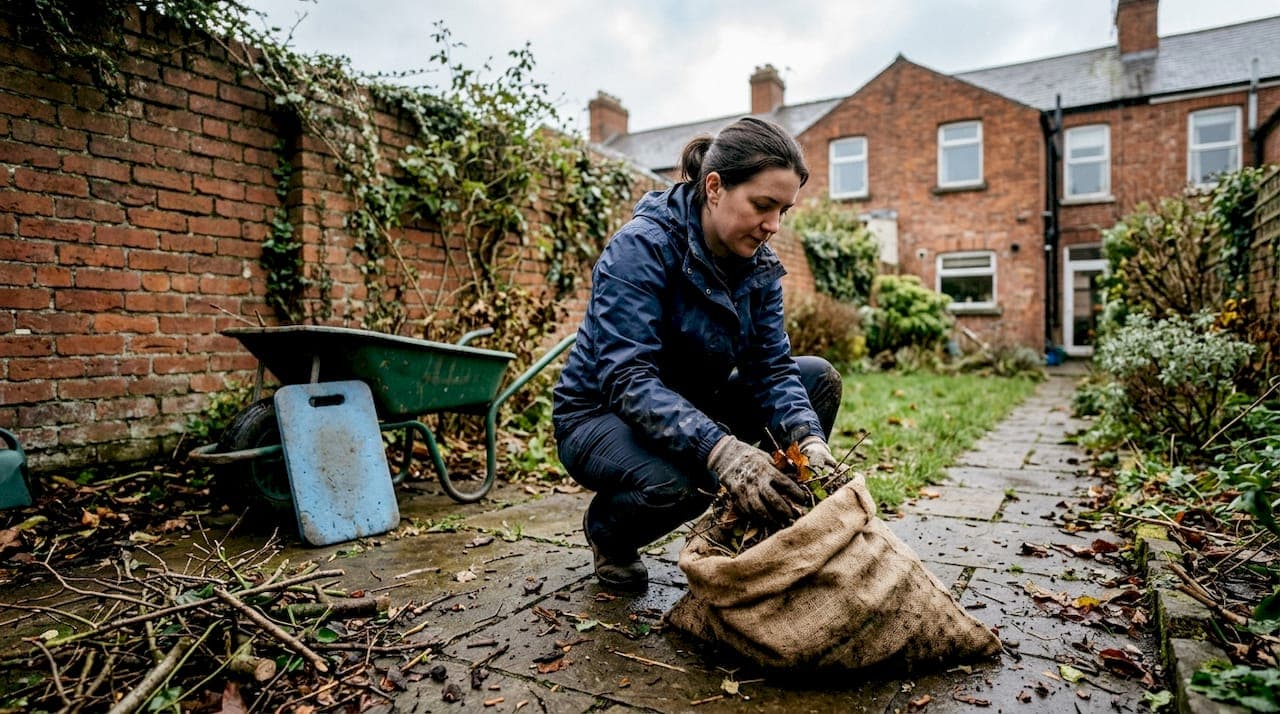
After a busy season of mowing, pruning, and planting, garden waste has a way of piling up fast. Bags of clippings, heaps of hedge trimmings, and stray branches can make even a well-kept Dublin home look neglected. Beyond appearances, leaving waste unmanaged can attract pests and put you at odds with local disposal rules. This guide walks you through exactly what tools you need, how Dublin's bin system works, and how to turn some of that waste into useful compost. Follow these steps and your outdoor space will look sharper and stay compliant.
Table of Contents
- Essential tools and requirements for clearing garden waste
- Step-by-step guide: Sorting and disposing of garden waste in Dublin
- Home composting: Turning garden waste into garden gold
- Troubleshooting, common mistakes, and expert shortcuts
- Our take: Why smart garden waste management pays off long-term
- Get help with garden waste: Professional solutions in Dublin
- Frequently asked questions
Key Takeaways
| Point | Details |
|---|---|
| Sort waste efficiently | Put light waste in bins and bring large items to designated centers. |
| Compost for sustainability | Convert garden waste into compost for healthier soil and reduced landfill. |
| Avoid bin contamination | Keep soil and bulky items out of brown bins to prevent fines and collection issues. |
| Professional help is available | Experts in Dublin can manage bulky or problematic garden waste for you. |
| Routine clearance boosts home appeal | Regular garden waste management keeps property value and curb appeal high. |
Essential tools and requirements for clearing garden waste
Before you start hauling bags around the yard, it pays to get organized. Having the right tools and knowing the local rules saves you time and prevents costly mistakes.
What goes in the brown bin and what doesn't
Dublin's brown bin is your first port of call for everyday garden waste. Light branches, grass clippings leaves, hedge trimmings, and small twigs are all acceptable. Larger branches and tree trunks are not. Soil, large wood chips, and stones are also off the list. For bulky items, you need a civic amenity site or a Dublin Bring Centre.
Tools you need on hand
Getting the right gear together before you start makes the whole job faster and safer.
- Heavy-duty gardening gloves
- Pruning shears and loppers for cutting branches to size
- Biodegradable or council-approved waste bags
- A wheelbarrow for moving heavy loads
- A garden fork or rake for loose material
- Bin liners for separating different waste types
| Tool | Purpose |
|---|---|
| Pruning shears | Cut small branches to bin-friendly sizes |
| Wheelbarrow | Move large volumes without straining your back |
| Waste bags | Keep sorted waste contained and easy to transport |
| Garden rake | Gather leaves and light clippings quickly |
| Gloves | Protect hands from sharp debris and irritants |
Pro Tip: Sort your waste as you go rather than at the end. Keep a brown bin bag and a separate pile for bulky items right in the garden while you work. It takes less effort than sorting a mixed heap afterward, and it helps you streamline garden maintenance across the whole season.
Step-by-step guide: Sorting and disposing of garden waste in Dublin
With your tools ready, let's walk through the actual process of sorting, packing, and removing garden waste the Dublin way.
Step 1: Sort as you clear Separate light green waste (clippings, leaves, small twigs) from heavy or bulky items (thick branches, stumps, large root balls) as you work through the garden.
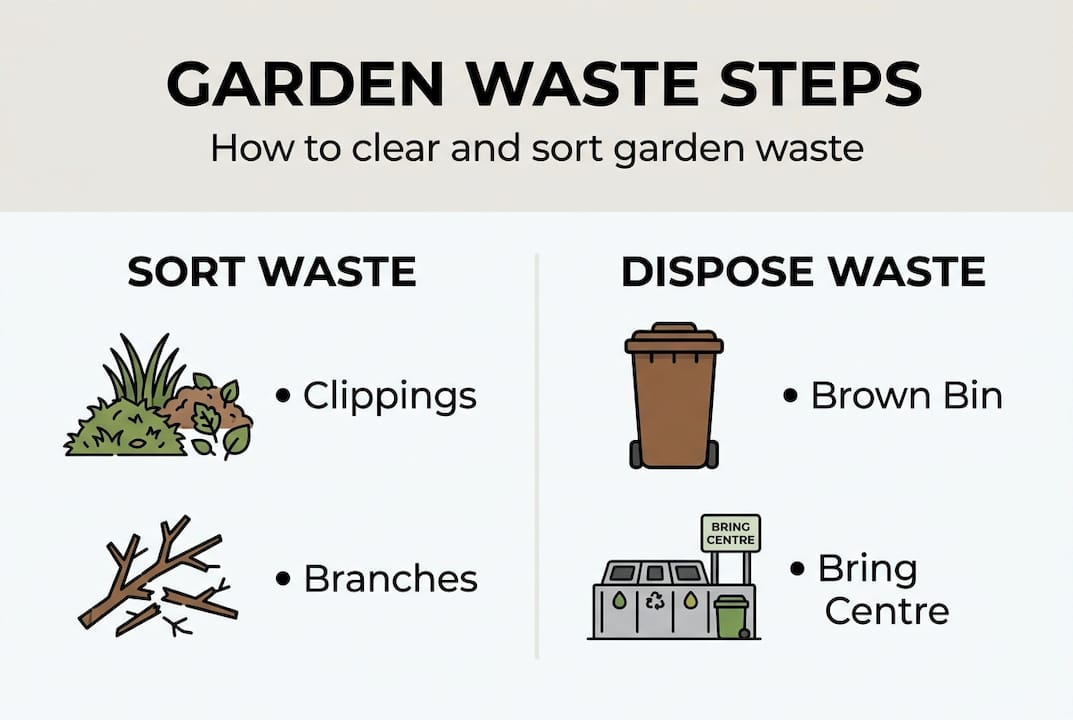
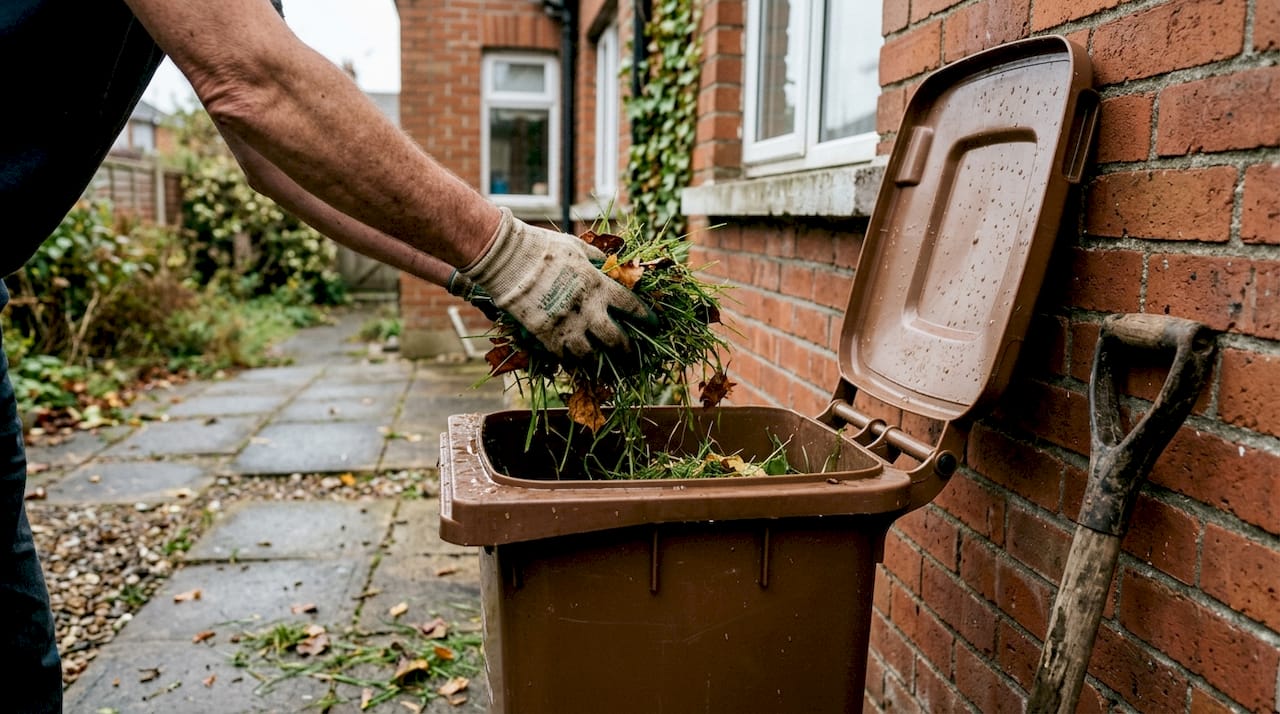
Step 2: Fill the brown bin correctly Pack light green waste loosely into your brown bin. Avoid compressing wet grass too tightly as it can block collection. Keep the bin lid closed to prevent odors.
Step 3: Bag bulky waste for the Bring Centre For heavier material, use large bags and head to a Bring Centre. Dublin City Council Bring Centres accept bagged green waste for €2 per 80L bag or €16 per 1m³ skip bag. Commercial waste is not accepted.
Step 4: Check for hazardous or diseased material Do not compost or bin diseased plant material. Bag it separately and confirm disposal options with your local amenity site.
Step 5: Schedule regular clearances Don't let waste build up between seasons. A monthly clear keeps the garden tidy and prevents the kind of backlog that requires a full-day effort.
| Method | Best for | Cost | Effort |
|---|---|---|---|
| Brown bin | Light clippings, leaves, small twigs | Included in bin charge | Low |
| Bring Centre | Large branches, bulky green waste | From €2 per bag | Medium |
| Professional service | High volumes, hazardous, or heavy items | Varies by job | Very low for you |
For large branches or heavy items, use Bring Centres or hire a professional team. Trying to force oversized material into a standard bin leads to collection refusals and potential fines.
Pro Tip: Before bin collection day, check your bin is not overfilled and that no banned materials have ended up inside. A quick check takes two minutes and helps you boost property curb appeal without the headache of a missed collection.
Home composting: Turning garden waste into garden gold
Not all garden waste needs to be thrown away. A good portion of what you pull from the yard can go straight into a compost bin and come back as rich, usable soil improver.
Getting the balance right
Composting works on a simple principle: balance greens and browns. Greens are nitrogen-rich materials like fresh grass clippings, plant trimmings, and vegetable peelings. Browns are carbon-rich materials like dry leaves, cardboard, and small twigs. Aim for roughly equal parts of each.
Home composting works best when you turn the pile every two to three weeks, keep it moist but not waterlogged, and your compost will be ready in three to nine months.
What to put in and what to leave out
- Include: Grass clippings, leaves, plant trimmings, vegetable scraps, cardboard
- Avoid: Meat, dairy, diseased plants, large sticks, and anything treated with pesticides
Dublin's damp climate actually helps composting along, but it can also tip into waterlogging. Cover your pile during heavy rain to keep the moisture level manageable.
Good to know: Finished compost improves soil structure, feeds plants naturally, and reduces how much you spend on store-bought fertilizer. It's one of the most practical returns you can get from garden waste.
Pro Tip: Add a compost accelerator (available at most garden centers) to speed up the breakdown process. This is especially useful in autumn when temperatures drop and decomposition slows. Pair this habit with a regular lawn care routine and your soil quality will improve noticeably over one season.
Troubleshooting your compost pile
If your pile smells bad, it's likely too wet or has too many greens. Add dry browns and turn it. If it's not breaking down, it may be too dry. Add water and fresh green material. These fixes take minutes and get things back on track fast.
Troubleshooting, common mistakes, and expert shortcuts
Even with good planning, mistakes happen. Here's how to avoid the most common problems and fix them quickly when they do come up.
The most common mistakes Dublin homeowners make
- Bin contamination: Putting soil, large branches, or non-garden waste in the brown bin. This leads to collection refusals. Avoid overloading bins and always check what's accepted before filling up.
- Oversized items: Trying to fit thick branches into bags or bins. Cut everything down to manageable lengths before bagging.
- Leaving it too long: Waiting until waste has built up over multiple seasons makes the job far harder and may require professional help to clear safely.
- Skipping gloves: Sharp debris, thorns, and hidden glass are common in garden waste. Always wear heavy-duty gloves.
- Mixing diseased plants with healthy waste: This spreads problems through your compost or bin. Bag diseased material separately.
Expert shortcuts that save real time
- Pre-bag waste in the garden as you cut, not afterward
- Use a garden vacuum or leaf blower to gather loose material faster
- Schedule bin clearances the day before collection to avoid last-minute rushes
- Keep a dedicated waste corner in the garden during active maintenance periods
Worth remembering: A tidy garden isn't just about looks. It signals to buyers, neighbors, and visitors that the property is well cared for. Consistent clearance is one of the simplest ways to enhance property value without spending much.
When volume gets too high or items are too heavy to manage safely, calling in a professional is the smart move. It protects your back, keeps you compliant, and gets the job done in a fraction of the time. For ongoing maintenance, pairing regular clearances with exterior maintenance habits keeps your property looking its best year-round.
Our take: Why smart garden waste management pays off long-term
Most homeowners think of garden waste clearance as a chore to get through. We see it differently. Consistent waste management is one of the lowest-cost, highest-return habits a Dublin homeowner can build.
The properties that look best year-round aren't the ones with the biggest budgets. They're the ones where small, regular tasks happen on schedule. Clearing waste monthly prevents the kind of buildup that turns a half-day job into a full weekend project.
Composting adds another layer of value. It's not just an environmentally responsible choice. It actively improves your soil, reduces your spending on fertilizers, and feeds back into a healthier garden. That's a practical return, not just a feel-good one.
From a real estate perspective, curb appeal is one of the first things buyers and valuers notice. A garden that's clearly maintained signals that the whole property is looked after. That impression has real monetary value. Treating waste clearance as an investment rather than a chore changes how consistently you do it, and consistency is what produces results.
Get help with garden waste: Professional solutions in Dublin
Sometimes the volume is too high, the items are too heavy, or you simply don't have the time to manage it all yourself. That's where a professional team makes a real difference.

At Sherry Property Care, we handle garden waste clearance for Dublin homeowners who want the job done properly without the hassle. Our team manages bulky items, high-volume clearances, and ongoing maintenance schedules so your garden stays tidy and compliant all year. We know Dublin's disposal rules, we bring the right equipment, and we work efficiently so your outdoor space looks sharp with minimal disruption to your day. Get in touch for a free quote and let us take care of the hard part.
Frequently asked questions
What garden waste can I put in the brown bin in Dublin?
You can put light branches and small twigs, grass clippings, leaves, and hedge trimmings in the brown bin. Soil, large branches, and stones are not accepted.
Where do I take large garden waste like branches or tree trunks in Dublin?
Bring large branches or tree trunks to a Dublin City Council Bring Centre or a civic amenity site. These items are not suitable for the standard brown bin.
How long does home composting garden waste take in Dublin?
Compost is ready in three to nine months when you maintain the right balance of greens and browns, turn it regularly, and keep it moist.
What should I avoid when composting garden waste?
Avoid adding meat and diseased plants to your compost pile. Also leave out large sticks, dairy products, and anything treated with chemicals.