
TL;DR:
- Regular gutter maintenance protects homes from water damage caused by blockages or damage, requiring inspections, cleaning, and repairs. The process involves safely removing debris, flushing with a hose, and checking for issues like sagging, rust, or cracks during biannual or seasonal cleanings. Professional help is advisable for high or awkward gutters, while homeowners should focus on consistent inspections, proper tools, and avoiding common mistakes.
Gutters do one job, but they do it constantly. They channel rainwater away from your roof, walls, and foundation, protecting your home from serious water damage. When they block up or break down, that water has nowhere to go. Clogged gutters are a leading cause of water damage to roofs, siding, and foundations, and repairs can run into thousands. Knowing how to maintain gutters properly is one of the most cost-effective things you can do as a homeowner. This guide walks you through the tools, the cleaning process, what to look for during inspection, and how to keep gutters in good shape all year round.
Table of Contents
- Key takeaways
- What you need before starting gutter maintenance
- How to clean gutters step by step
- Inspecting gutters for damage
- Long-term gutter care by season
- Common mistakes and how to verify the job is done
- My honest view on gutter maintenance
- Let Sherrypropertycare take care of it for you
- FAQ
Key takeaways
| Point | Details |
|---|---|
| Clean twice a year minimum | Spring and autumn cleaning prevents blockages and protects against water damage year-round. |
| Use the right tools safely | A plastic scoop, garden hose, sturdy ladder, and safety gear are all you need for effective DIY cleaning. |
| Inspect while you clean | Check for sagging, loose hangers, rust, and fascia damage every time you clear debris. |
| Downspouts need attention too | Water should discharge at least 4 to 6 feet from your foundation to prevent soil saturation. |
| Gutter guards are not maintenance-free | Even with guards fitted, annual inspection and some cleaning remains necessary. |
What you need before starting gutter maintenance
Gutter maintenance, known in the trade as gutter upkeep, is a straightforward DIY task when you approach it properly. Having the right tools and safety gear ready before you climb that ladder makes the whole job faster and safer.
Tools and equipment
Here is what to gather before you start:
- Extension ladder (aluminium or fibreglass, tall enough to reach your gutters safely)
- Ladder stabiliser (a standoff arm that sits against the wall, not the gutter)
- Thick rubber or gardening gloves
- Plastic gutter scoop (plastic protects aluminium gutters from scratches)
- Garden hose with a pistol-grip nozzle
- Bucket or garden waste bag
- Safety glasses
- Non-slip work boots
Ladder safety first
Falls from ladders cause serious injuries every year. The 4:1 ladder rule is the one to follow: for every 4 feet of height, the base of the ladder should sit 1 foot away from the wall. Use a ladder stabiliser to spread the weight against the wall rather than the gutter itself, which can bend or pull free under pressure. Always maintain three points of contact when climbing, meaning two feet and one hand, or two hands and one foot at all times.
Pick a dry, calm day for the job. Wet gutters and wet rungs are a hazardous combination. If possible, have someone at the base of the ladder while you work. It sounds like overkill until it is not.
Pro Tip: Never lean or overreach from a ladder. Move the ladder along as you work, even if it feels like extra effort. Repositioning takes 30 seconds; a fall takes much longer to recover from.
| Item | Purpose |
|---|---|
| Plastic gutter scoop | Removes bulk debris without scratching gutters |
| Ladder stabiliser | Keeps ladder off the gutter and improves stability |
| Pistol-grip hose nozzle | Controls water pressure for flushing |
| Safety glasses | Protects eyes from debris and dirty water |
| Bucket with hook | Hangs on ladder for hands-free debris collection |
How to clean gutters step by step
Once you are set up safely, the actual cleaning process is straightforward. The key is working in the right direction and not rushing.
-
Start near the downspout. Position your ladder close to the downspout opening. This is where you will finish flushing, not where you dump debris.
-
Scoop debris toward the open gutter end. Work along the gutter away from the downspout, scooping leaves, moss, and muck into your bucket. Use a plastic scoop to avoid scratching aluminium gutters, and work in short sections, repositioning the ladder as you go rather than stretching.
-
Bag and remove debris. Do not push debris down the downspout. That is one of the most common mistakes and a reliable way to create a stubborn blockage lower in the pipe.
-
Flush with a hose from the far end. Once the bulk is out, move to the end of the gutter furthest from the downspout. Flush water toward the downspout. Standing water above the downspout entry signals a blockage or a slope issue. Water should flow freely and exit cleanly at the bottom of the downspout.
-
Check the downspout. Run the hose directly down the downspout. If water backs up, you have a blockage. A plumber's snake or a pressure burst from the hose will usually clear it. Work from the top down.
-
Observe the outflow. Watch where the water exits at the base of the downspout. It should discharge at least 4 to 6 feet from your foundation using a splash block or downspout extension. Anything shorter risks saturating the soil next to your walls.
Pro Tip: Take a photo or short video after flushing while water is still flowing. It gives you a clear record of how gutters are draining and makes it easier to spot changes during the next clean.
Inspecting gutters for damage
Cleaning and inspecting go hand in hand. While you are up on the ladder, take the time to look carefully at the state of the gutters and the surrounding structures. Catching small problems early prevents them from becoming expensive repairs.
Check for the following during every clean:
- Sagging sections. Gutters should run in a slight downward slope toward the downspout. A visible sag suggests a hanger has pulled loose or the gutter is full of standing water that has warped it over time.
- Loose or missing hangers. These are the brackets fixing the gutter to the fascia. A loose hanger means the gutter can shift and eventually pull away from the roofline.
- Peeling paint or rust. Either is a sign of water sitting where it should not. Rust on steel gutters needs treating quickly. Peeling paint on the fascia below the gutter usually means water has been overflowing for a while.
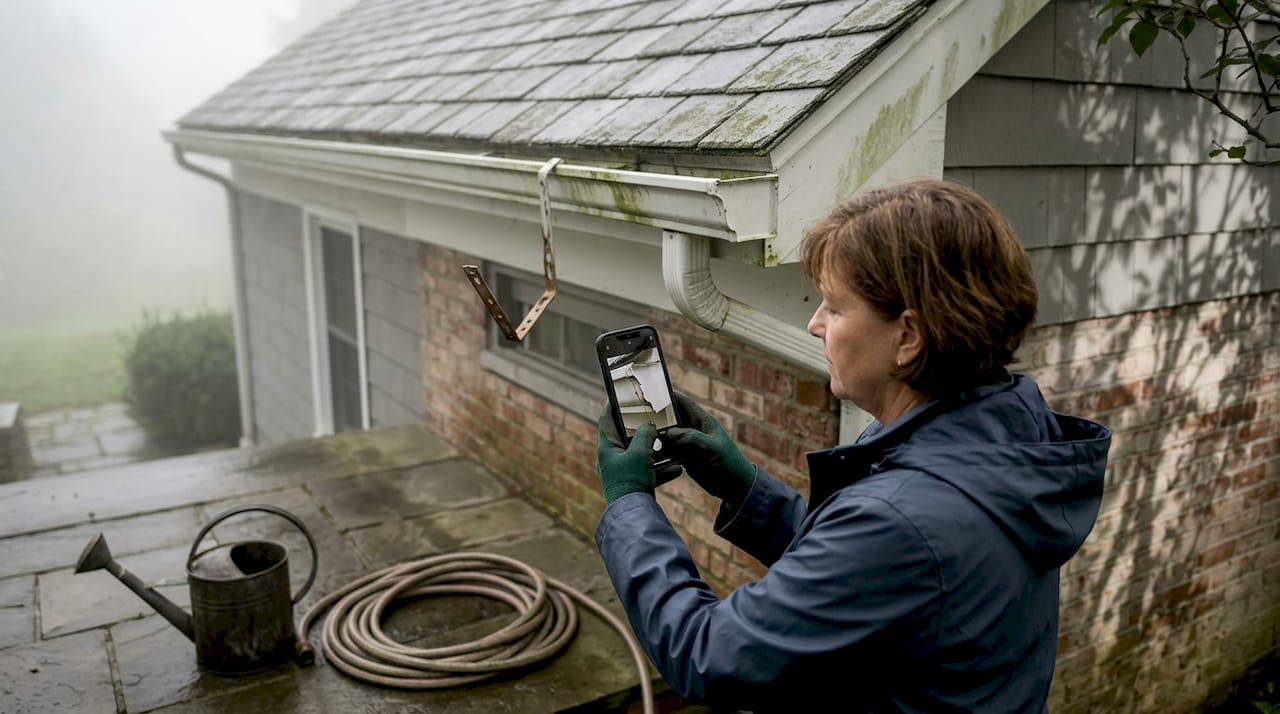
- Cracks, holes, and open joints. Run a gloved hand along the inside of the gutter. Small cracks can be sealed with gutter sealant. Larger holes or open joints may need a patch or a new section.
- Fascia and soffit condition. The wooden boards behind and underneath the gutter are vulnerable to water ingress. Press gently on the fascia. Any softness or sponginess indicates rot, which needs prompt attention before it spreads.
- Gutter slope. Use your hose to confirm water flows toward the downspout without pooling. A well-sloped gutter drops roughly 1 centimetre for every 60 centimetres of run.
Document anything you find. A quick note on your phone or a photograph is enough. It helps you track whether a problem is worsening and makes conversations with a professional far more productive if you need one.
Long-term gutter care by season
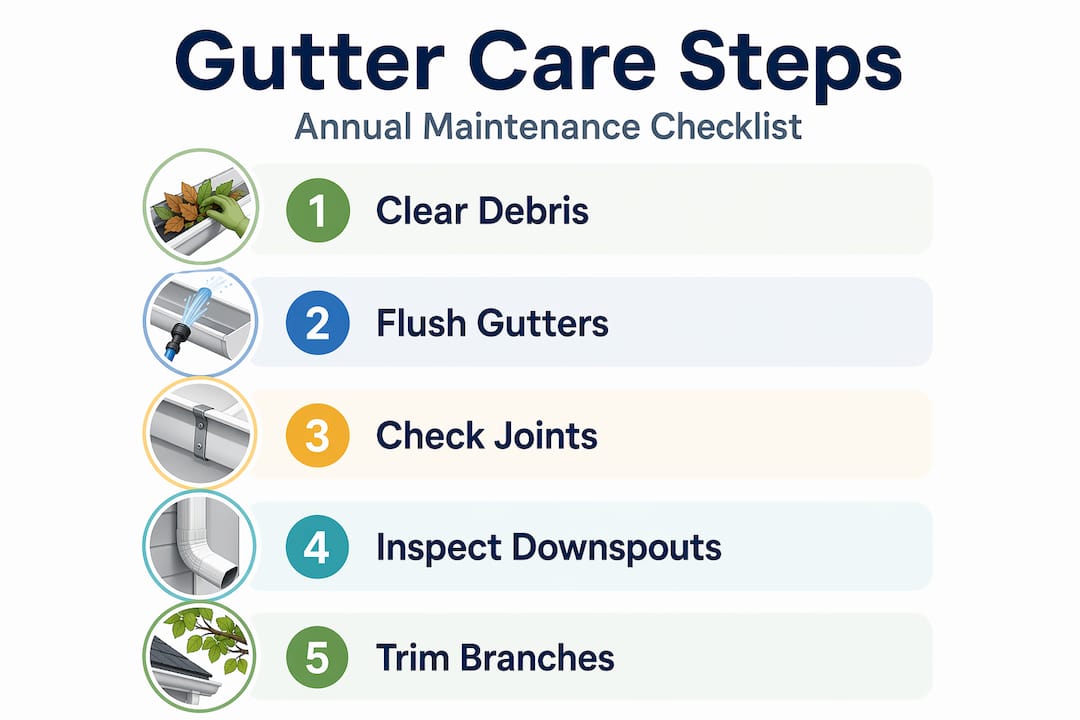
One clean a year is not enough for most Irish homes. Clean gutters at least twice a year, in spring and in autumn. Properties with heavy tree coverage, particularly those near oak, maple, or pine, often need quarterly cleaning to prevent rapid blockage and premature gutter failure.
Seasonal care in Dublin and across Ireland tends to follow a clear pattern. Spring brings pollen, seed pods, and winter debris that has accumulated over the colder months. Autumn delivers the heavy leaf fall that most homeowners think of first. Winter adds the risk of ice building up in gutters that are not fully draining, which adds weight and can pull fixings loose. Each season calls for a slightly different focus.
| Season | Main debris type | Priority task |
|---|---|---|
| Spring | Pollen, seed pods, winter grit | Full clean and slope check |
| Summer | Occasional light debris | Visual inspection only |
| Autumn | Leaves, twigs, seed cases | Full clean after leaf fall |
| Winter | Ice, standing water risk | Check flow and hanger integrity |
For Dublin homeowners in particular, seasonal property maintenance is worth planning as a whole rather than reacting to each problem as it arises.
On gutter guards: Many homeowners invest in gutter guards hoping to eliminate cleaning altogether. They do reduce how much debris gets in, but no gutter guard is maintenance-free. Mesh guards can clog with fine debris like pine needles. Some debris still gets through, and annual inspection and cleaning remains necessary regardless of which system you install.
Trimming back tree branches that overhang or touch the roofline is one of the highest-impact things you can do to reduce your cleaning workload. Less debris in means less debris to remove. It also lowers the risk of branch damage during storms.
Common mistakes and how to verify the job is done
Even experienced DIYers make predictable mistakes when cleaning out gutters. Here are the ones worth avoiding:
- Pushing debris toward the downspout. Always scoop away from the downspout. Pushing debris down creates the very blockage you are trying to prevent.
- Overreaching from the ladder. Repositioning the ladder takes minutes. A fall can be far worse. Move it.
- Skipping the flush test. Removing visible debris does not confirm the gutter is clear. Flushing with a hose is the only way to verify free water flow and catch slope or blockage issues.
- Ignoring downspout discharge. A clean gutter that dumps water at the base of your wall is not doing its job. Check where the water ends up.
After the job, observe the gutters during the next significant rainfall. If water overflows over the front edge, the gutter is either blocked, sagging, or undersized. If water seeps behind the gutter, a joint or seal has failed. Both are worth addressing before winter.
Pro Tip: Stand back and watch your gutters during heavy rain once a year. You will spot problems that are impossible to see from a ladder, particularly overflow points and areas where water is tracking back toward the fascia.
My honest view on gutter maintenance
I have seen homeowners spend thousands sorting out water damage to fascia boards, soffit panels, and even internal walls, all from gutters that had not been touched in three or four years. The damage was not dramatic when it started. It never is. It was a sagging section here, a cracked joint there, quietly letting water in every time it rained.
The truth about DIY gutter maintenance is that the cleaning itself is manageable for most people. The risky part is the ladder work, especially on two-storey properties or awkward rooflines. If you are not confident on a ladder, or if your gutters are above 5 or 6 metres, this is genuinely a job to hand over to a professional. It is not about skill. It is about not putting yourself at unnecessary risk for a task that a trained person can complete in an hour.
What I would push back on is the idea that gutters are a once-a-year job and nothing more. The inspection piece matters just as much as the cleaning. Slope adjustments, loose hangers, early signs of fascia rot. These are the details that separate a home that weathers Irish winters well from one that slowly accumulates hidden damage. Treat gutter upkeep as a twice-yearly check-in on the whole front line of your property.
— gerard
Let Sherrypropertycare take care of it for you
If you would rather have a professional handle the job safely and thoroughly, Sherrypropertycare offers property maintenance services for homeowners and property managers across Dublin, Ireland. We clear debris, flush downspouts, inspect for damage, and flag anything that needs attention before it becomes a bigger problem.

We also cover home exterior upkeep including groundskeeping, hedge trimming, and lawn care, so your whole property stays in good condition through every season. Need a quote? Send us a photo of your property and we will get back to you with a tailored price. No fuss, no obligation.
FAQ
How often should gutters be cleaned?
Clean gutters at least twice a year, in spring and autumn. Properties with heavy tree coverage may need cleaning every three months to prevent blockages.
What are the signs you need gutter repair?
Look for sagging sections, peeling paint on the fascia, rust, visible holes or cracks, and water pooling near your foundation. These signs indicate damage that needs addressing promptly.
Do gutter guards remove the need for cleaning?
No. Gutter guards reduce debris intake but do not eliminate maintenance. Annual inspection and some cleaning are still required to keep them functioning properly.
How do I know if my downspout is blocked?
Run a hose directly into the downspout from the top. If water backs up instead of flowing through, you have a blockage. A plumber's snake or repeated hose pressure bursts will usually clear it.
How far should downspouts discharge water from the house?
Downspouts should direct water at least 4 to 6 feet from your foundation using splash blocks or extensions to prevent soil saturation and basement damp.