
Aerating your lawn relieves compaction and immediately improves drainage and nutrient access, giving roots room to grow deeper and stronger. Clay soils, waterlogged patches and lawns that see heavy foot traffic gain the most. If a screwdriver won't push easily into your turf, or water pools after rain, autumn is your best window to act.
TL;DR:
- Aeration provides long-term improvements for clay soils or heavily trafficked lawns by creating lasting channels that enhance drainage and root growth.
- The best time to aerate is in early autumn, especially if your soil shows signs of compaction, slow drainage, or thick thatch over 1 centimeter.
- Use hollow-tine methods for compacted or clay soils, while lighter soils and routine aeration may only require solid-tine or fork techniques.
- Follow up aeration immediately with overseeding, topdressing, and light fertilization to maximize turf recovery and growth.
- Avoid aerating during drought, waterlogged, or frozen conditions, as these can hinder recovery and reduce the effectiveness of treatment.
Table of Contents
- What are the benefits of lawn aeration?
- How does lawn aeration actually work?
- When should you aerate your lawn?
- Which aeration method suits your lawn?
- How often should you aerate a lawn?
- What should you do after aerating your lawn?
- What are the downsides of aerating a lawn?
- Local practical recommendations from Sherrypropertycare
- When is aeration actually worth it?
- Get your lawn aerated properly in Dublin
- Sources
- FAQ
What are the benefits of lawn aeration?
Aeration solves a problem you can't always see but can definitely feel underfoot: compacted soil. When soil particles get squeezed together, air pockets disappear, and that's when a lawn stops thriving no matter how much you feed or water it.
The practical payoff shows up fast. Water stops pooling on the surface and soaks down to where roots can use it. Fertiliser reaches the root zone instead of sitting on top or washing away. Roots themselves grow deeper, which means your lawn copes far better with a dry August. Moss retreats, because moss loves the wet, airless conditions compaction creates, and worn patches from kids, dogs or garden furniture recover faster once air and water can move freely again.
Here's what changes after aeration:
- Rainfall drains through instead of sitting in puddles
- Fertiliser and water reach the roots rather than the surface
- Root systems grow deeper, improving drought resistance
- Moss growth slows as airflow to the soil improves
- Worn or bald patches recover more quickly
Aeration improves surface drainage, soil structure and overall lawn health by allowing air, water and nutrients to penetrate to the grass roots. None of this happens overnight. The visible difference tends to build year on year, with the most noticeable improvement in sward quality and drainage showing after two to three consecutive autumns of treatment, according to guidance from Umber Garden Design. Think of it less as a one-off fix and more as an annual habit that compounds.
How does lawn aeration actually work?
Compaction happens when soil gets squeezed. Foot traffic, mowers, heavy rain and clay content all push particles together, squeezing out the air pockets roots and soil microbes depend on. Without those gaps, water runs off instead of soaking in, and roots stay shallow because they can't push through dense ground.
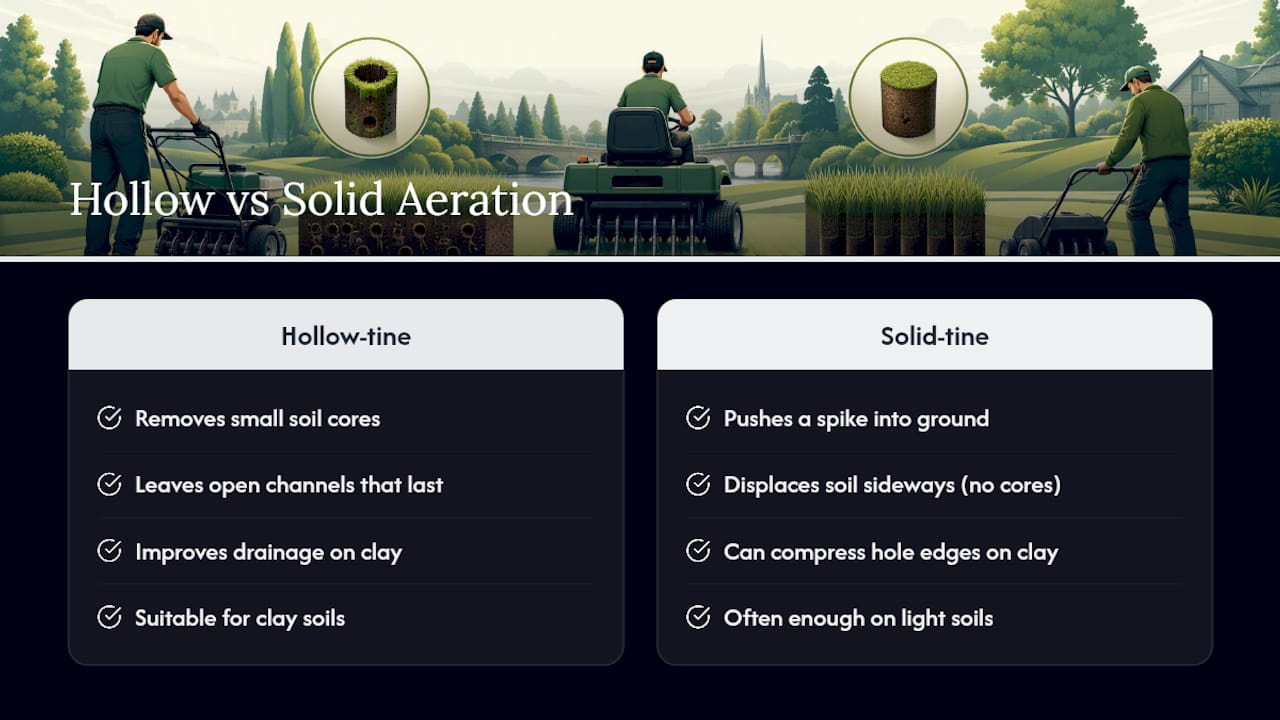
Aeration creates space again, but not all methods do it the same way. Hollow-tine aeration physically removes small plugs of soil, called cores, leaving open channels that last. Solid-tine or spike aeration simply pushes a spike into the ground, displacing soil sideways rather than removing it. On light soil that's often enough. On clay, it can compress the hole edges and offer weaker long-term drainage than hollow-tining, according to Rolawn.
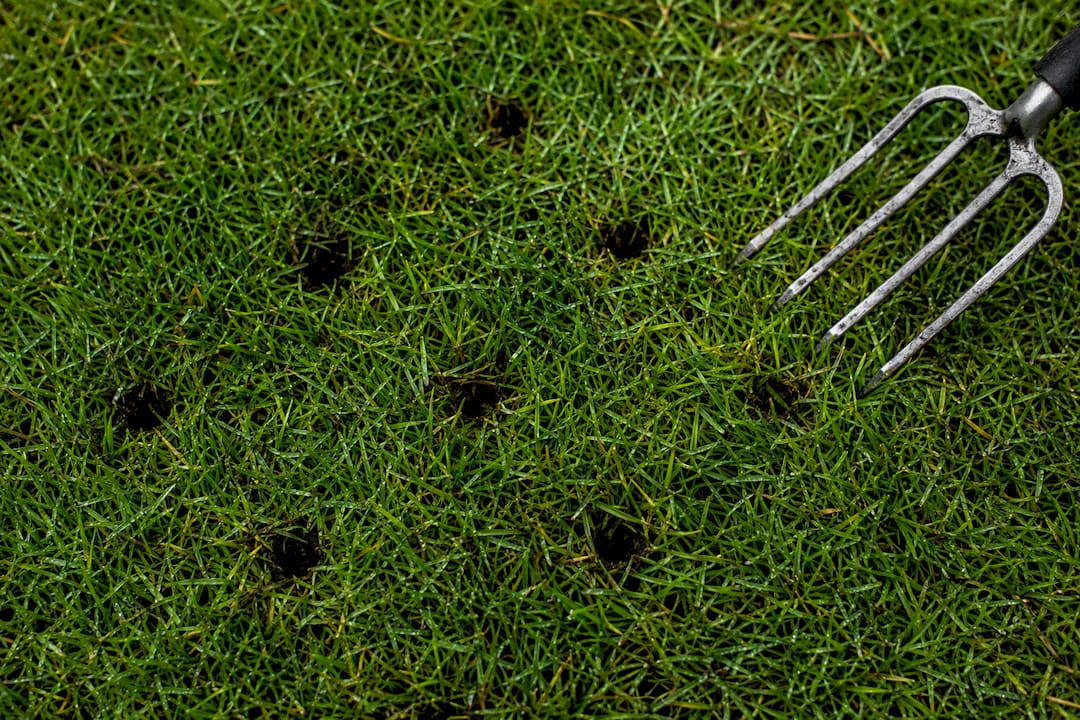
Once air returns to the soil, microbial activity picks up, breaking down thatch and organic matter faster. Roots follow the new channels downward. None of this works well if the soil is bone dry or waterlogged. Moist, workable soil is what allows tines to penetrate cleanly and holes to stay open long enough to do their job.
When should you aerate your lawn?
Early autumn is the prime window. Soil is still warm from summer, rainfall is more reliable, and grass has enough growing seasons left to recover before winter. Spring is a solid second option, particularly if you missed the autumn slot, though Ideal Home's guidance notes aeration works best whenever grass is actively growing and soil is moist but not sodden.
You don't have to guess. Three simple checks tell you whether your lawn needs it now:
- The screwdriver test. Push a screwdriver into the turf. If it won't go in 5cm without real force, the soil is compacted and aeration is recommended.
- Watch for pooling. If rain sits on the surface for more than an hour rather than soaking away, that's compaction talking.
- Check thatch depth. Push your fingers into the grass at the base. Thatch thicker than 1cm is choking the surface and blocking water and air.
Hold off if the ground is frozen solid, if you're in the middle of a drought, or if it's been tipping down for days and the soil is waterlogged. None of those conditions let the lawn recover properly.
Which aeration method suits your lawn?
The right tool depends on soil type, lawn size and how much disruption you're willing to tolerate for a few weeks.
- Hollow-tine aeration removes cores of soil and is the preferred method for clay or heavily compacted lawns because it creates lasting channels rather than just compressing soil sideways. Most homeowners hire a machine or a professional for this, since manual hollow-tine tools are slow going on anything beyond a small patch.
- Solid-tine or garden fork aeration is cheaper and quicker, and it's a reasonable choice for lighter, sandier soils or for routine maintenance between bigger renovations.
- Aerator shoes and small powered machines suit compact lawns or a casual seasonal refresh, though they're not a substitute for hollow-tining on genuinely compacted clay.
A small lawn with light compaction often does fine with a fork or aerator shoes. A larger lawn, a clay-heavy garden, or a high-traffic area used daily by kids or pets generally justifies hiring proper hollow-tine equipment.
How often should you aerate a lawn?
Clay soils and lawns under heavy use benefit from aeration once a year, sometimes twice if compaction is severe. Lighter, sandier soils can usually go two to three years between treatments without losing ground.
Pair the job with your broader autumn lawn renovation for the best results rather than treating it as an isolated task. If puddles reappear within weeks of your last aeration, or the screwdriver test fails again after only a few months, that's a sign to repeat the process sooner than planned.
What should you do after aerating your lawn?
Aeration on its own helps, but the gains multiply when you follow up the same day. The holes you've just created are a direct route to the root zone, and that window closes fast as soil settles back.
- Overseed immediately. Fresh seed makes direct contact with soil through the open holes, giving it far better germination odds than seed scattered onto undisturbed turf.
- Topdress with a sharp sand and compost mix, worked into the holes with a stiff brush or the back of a rake, to improve soil structure exactly where it matters.
- Feed with a suitable autumn fertiliser, avoiding high-nitrogen formulas that push soft leaf growth right before winter.
- Water lightly for the first fortnight if rain doesn't do the job for you, and keep foot traffic off the lawn while it settles.
Combining aeration with scarifying, overseeding and topdressing in the same autumn session produces the greatest year-on-year improvement, rather than spacing these jobs out across separate weekends.
Pro Tip: Aerate first, then overseed and topdress on the same afternoon. Waiting even a week lets the holes start closing, which cuts down how much seed and topdressing actually reaches the root zone.
What are the downsides of aerating a lawn?
Aerating in drought or on frozen ground risks real damage, since stressed grass can't recover from the disturbance. It's worth watering the lawn before aerating if you've had a dry spell.
Expect a couple of weeks of cosmetic disruption, cores scattered across the surface, and the lawn looking rougher before it looks better. Aeration also won't fix serious drainage problems caused by poor subsurface structure or a high water table; that's a job for proper drainage work, not a seasonal maintenance task.
Local practical recommendations from Sherrypropertycare
Getting the timing right matters, but so does what you do around it. Sherrypropertycare recommends feeding Irish lawns roughly every ten weeks and keeping grass cut to around 30 to 40mm, both of which support faster recovery after aeration.
For smaller gardens with mild compaction, a fork and a bit of elbow grease will get you there. Larger lawns, heavy clay soil, or a patch that stays waterlogged no matter what you try are usually better handled by a professional with proper hollow-tine equipment and the experience to judge soil moisture correctly on the day.
When is aeration actually worth it?
A modest yearly investment in aeration pays back in drainage, root depth and fewer bald patches, and the evidence for that is consistent across every source worth trusting. Where homeowners go wrong isn't the concept, it's treating aeration as a stand-alone fix rather than the opening move in a proper autumn programme.
Book a professional if your lawn is large or heavy clay. Otherwise, a fork, a free Saturday, and some overseed will get you most of the way there.
— gerard
Get your lawn aerated properly in Dublin
Sherrypropertycare is the practical alternative to renting equipment and guessing at soil conditions yourself. We handle aeration, overseeding, topdressing and feeding as part of one grounds maintenance visit for properties across Dublin, so you get a professional finish without juggling separate jobs or separate weekends.

If your lawn is large, heavy clay, or has stayed stubbornly waterlogged no matter what you've tried, that's exactly the kind of job a proper hollow-tine machine and an experienced hand make short work of. Customised quotes for landscaping, lawn care, hedge trimming and grounds upkeep are offered for residential and commercial properties throughout Dublin. For seasonal timing advice beyond aeration, our winter lawn care guidance for Irish lawns covers what to tackle next. Property managers juggling multiple sites might also find value in seasonal home maintenance timing advice for planning ahead.
Send us a few photos of your lawn through our quote request page and we'll put together a tailored plan for your garden.
Sources
For step-by-step timing and method detail, see Homebuilding's aeration guide, Lawnscience's compaction signs, and The Garden Patch's full renovation guide.
- How to aerate a lawn – our step-by-step guide will help you achieve top results when completing this task
- When to Aerate Your Lawn: 2026 Signs & Timing Guide - Lawnscience
- How to aerate a lawn – hollow tine vs solid tine guide
FAQ
What are the disadvantages of aerating a lawn?
The main risks are aerating during drought or on frozen ground, both of which can damage stressed grass instead of helping it. Expect two to three weeks of cosmetic disruption from soil cores on the surface, and note that aeration won't resolve serious subsurface drainage faults on its own.
When should you aerate your lawn?
Early autumn is the prime window because soil is warm, rainfall is reliable and grass has time to recover before winter. Spring works as a secondary option whenever the grass is actively growing and the soil is moist but not waterlogged.
Do you need to do anything after aerating your lawn?
Yes. Overseeding and topdressing with a sand and compost mix immediately after aeration make a significant difference, since the open holes give seed and material direct contact with the soil. Feeding with a suitable autumn fertiliser and keeping foot traffic light for the first fortnight also helps recovery.
When should you avoid aerating your lawn?
Skip aeration during drought, on frozen ground, or straight after heavy rain has left the soil waterlogged, since the lawn won't recover properly under any of those conditions. Wait for moist, workable soil and mild, settled weather instead.
Does lawn aeration actually work?
Yes, aeration reliably improves drainage, root depth and nutrient uptake, particularly on clay or heavily used lawns, though the full benefit builds over two to three consecutive years of annual treatment rather than appearing after a single session.