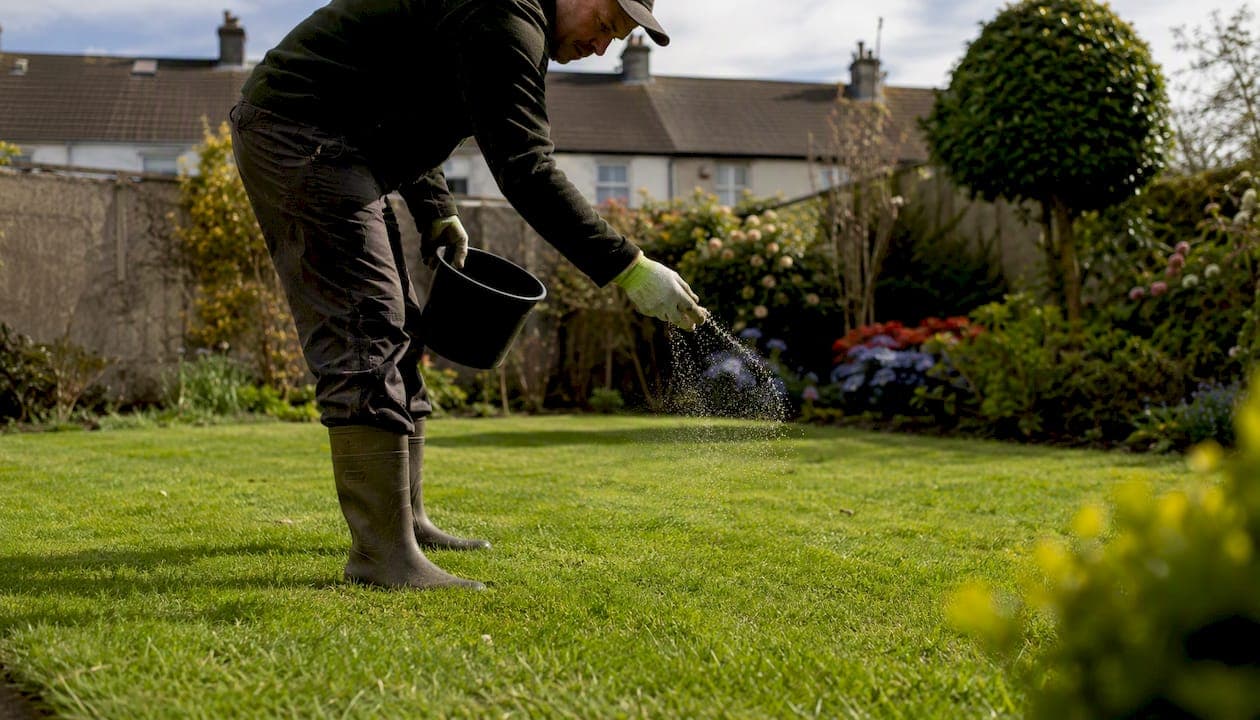
Feed your Irish lawn every 10 weeks during the growing season: a high-nitrogen spring feed from mid–late March, a balanced mid-season feed around June, and a high-potassium autumn feed in September–October. That rhythm, recommended across UK and Irish lawn care guides, gives most Irish lawns 3–4 feeds per year and covers the full seasonal cycle.
Before your first feed of the year:
- Soil pH test — Irish soils often run acidic; a pH below 6.0 blocks nutrient uptake regardless of how much fertiliser you apply.
- Check for active growth — start feeding when grass is visibly growing, not by a fixed date. In much of Ireland that means mid–late March, but a cold spring can push it to April.
- Mowing height — set blades to 30–40mm before the first feed; scalping stresses grass and wastes product.
- Stop feeding November–February — nutrients are wasted on dormant grass and can trigger soft, frost-vulnerable growth.
Seaweed extract works well year-round as a gentle tonic. Iron sulphate is useful in spring and autumn for colour and moss control.
Key takeaways
A consistent 10-week feeding rhythm, timed to active grass growth rather than a fixed calendar date, is the single most effective approach to lawn fertilisation in Ireland.
| Point | Details |
|---|---|
| Core feeding rhythm | Feed every 10 weeks during the growing season: spring, mid-summer, and autumn. |
| Regional start timing | Begin in mid–late March when grass shows active growth; delay if spring is cold. |
| Seasonal feed types | Spring: high-nitrogen. Summer: balanced. Autumn: high-potassium to harden roots. |
| Winter rest period | Stop feeding November–February; nutrients are wasted on dormant or slow-growing grass. |
| Sherrypropertycare | Dublin homeowners can get soil testing, feed application, and aeration from Sherrypropertycare with a personalised quote. |
Table of Contents
- A local groundskeeper's take on Irish lawn feeding
- Professional lawn care in Dublin from Sherrypropertycare
- Sources
- FAQ
A local groundskeeper's take on Irish lawn feeding
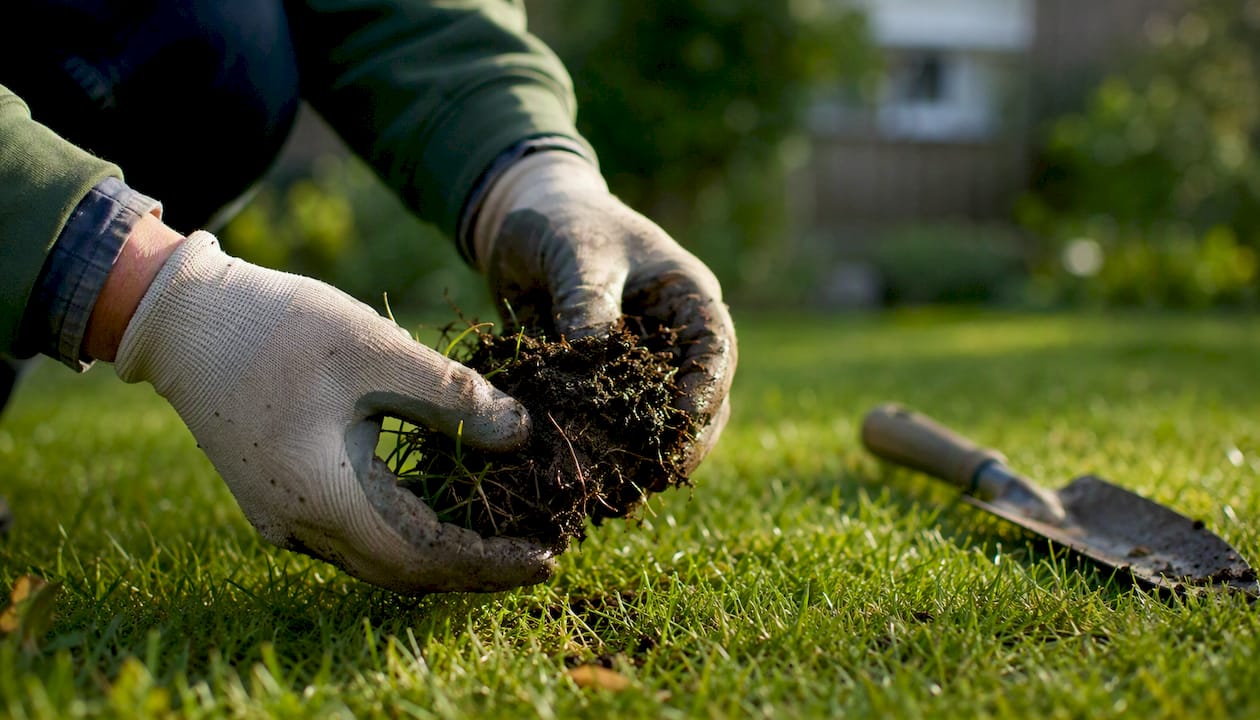
Three things I check before any feed goes down: soil condition, drainage, and whether the grass is actually growing. Ireland's maritime climate means the soil stays wetter for longer than in drier parts of the UK, so compaction is a real issue. Feeding a compacted, waterlogged lawn achieves very little.
Ireland's frequent rainfall is genuinely useful for granular feeds. Apply fertiliser when light rain is forecast to wash granules into the rootzone without irrigation. Avoid feeding immediately before a heavy downpour, though — washout wastes product and risks run-off.
On product choice: organic feeds such as seaweed meal or chicken pellets release nutrients slowly and suit Irish conditions well, particularly on free-draining sandy soils that lose nutrients quickly. Synthetic granular feeds act faster and are better when you need a quick green-up in spring. Either way, timing matters more than product choice — a well-timed organic feed outperforms a poorly timed synthetic one every time.
Professional lawn care in Dublin from Sherrypropertycare
Knowing the schedule is one thing. Executing it correctly — calibrated spreader, right product weight, soil tested, aeration done at the right moment — is where most Dublin lawns fall short.

Sherrypropertycare handles the full annual cycle for residential and commercial properties across Dublin: soil testing, granular and liquid feed application, scarifying, hollow-tine aeration, and overseeding. Annual costs vary by lawn size, soil condition, and renovation needs; a personalised quote gives you a clear figure before any work begins. For a rough idea of what professional lawn care costs locally, lawn service pricing guides can help you benchmark.
Get in touch with Sherrypropertycare for a bespoke quote tailored to your property.
Sources
For soil testing, contact your local Teagasc office or a garden centre stocking pH test kits. Many Irish garden centres stock granular spring, summer, and autumn feeds suited to local conditions.
FAQ
When should I start feeding my lawn in Ireland?
Start feeding when grass is actively growing, typically mid–late March in most of Ireland. A cold spring can push this into April — growth, not the calendar, is the trigger.
How often should I fertilise my lawn in Ireland?
Feed every 10 weeks during the growing season, which gives most Irish lawns 3–4 feeds per year. Stop feeding from November to February.

What is the best autumn lawn feed for Irish conditions?
A high-potassium feed applied in September–October strengthens roots and hardens grass before winter. Avoid high-nitrogen products in autumn as they encourage soft growth vulnerable to frost.
Can I use organic fertiliser on an Irish lawn?
Yes. Seaweed meal and chicken pellet feeds suit Irish soils well, particularly free-draining types. They release nutrients slowly, which reduces the risk of run-off during Ireland's frequent rainfall.
Should I scarify before or after feeding in autumn?
Scarify first, then aerate, then overseed, then feed. April and September are the best months for scarifying in Ireland, with hollow-tine aeration and overseeding done in early autumn while soil temperatures remain warm.