
If your lawn thatch measures over 12mm on a soil plug test, scarify it in the next safe weather window; anything under 6mm is normal and worth leaving alone. Between those two figures, keep an eye on it rather than acting. Before you decide on a method, dig a small soil plug to confirm the depth. Spring, typically when the soil is consistently warm enough for grass to grow actively, and early autumn are generally the recommended times to scarify a lawn.
TL;DR:
- Thatch thicker than 12mm requires removal, while under 6mm can benefit the lawn by providing cushioning and moisture retention.
- Timing for scarifying should be in spring after soil warms above 10°C or in early autumn, avoiding drought, frost, or summer heat.
- Small lawns with thatch over 12mm can be managed with hand raking, but larger or heavier thatch areas benefit from powered scarifiers or professional help.
- Aftercare involves clearing debris, overseeding immediately, and ensuring proper watering and feeding to aid recovery.
- Regular annual or biennial scarifying, timed correctly, manages thatch effectively without harming lawn health.
Table of Contents
- What is lawn thatch and how does it build up?
- How do you check and measure lawn thatch?
- When is the right time to scarify a lawn?
- Which thatch removal technique should you use?
- What aftercare does a scarified lawn need?
- What do local practitioners recommend for Irish lawns?
- Why annual scarifying beats frequent aggressive passes
- Get a lawn scarification quote from Sherry Property Care in Dublin
- Sources
- FAQ
What is lawn thatch and how does it build up?
Thatch is the layer of dead grass stems, roots, and moss that sits between the green blades and the soil surface. It builds up faster than it breaks down when the lawn's biology can't keep pace, and several things push that balance the wrong way.
- Overfertilising, especially with quick-release nitrogen, produces more growth than the soil can process.
- Certain grass varieties, including some fine fescues and creeping bentgrass, naturally shed more thatch than others.
- Low soil biological activity, often from compacted or waterlogged ground, slows the breakdown of dead material.
- Compaction itself starves the soil of the air and worm activity that would otherwise recycle organic matter.
A thin layer of thatch, under about 6mm, actually helps. It cushions the soil, retains moisture, and buffers the crown of the grass plant against temperature swings. Problems start once that layer thickens: water struggles to reach the roots, air exchange drops, and the lawn starts behaving like it's sitting on a mat rather than growing from soil.
How do you check and measure lawn thatch?
Before reaching for a rake or a scarifier, run through three quick checks, then confirm with a measurement.
- Bounce test. Walk across the lawn. A spongy, trampoline-like give underfoot often points to thatch, though it can also mean compaction or waterlogging, so treat this as a signal rather than proof on its own.
- Water test. Run a hose over a section for a minute or two. If water pools on the surface instead of soaking in, thatch or compaction is likely blocking it.
- Moss check. Patches of moss, particularly in shaded or damp corners, usually mean the surface has stayed wet and airless for too long.
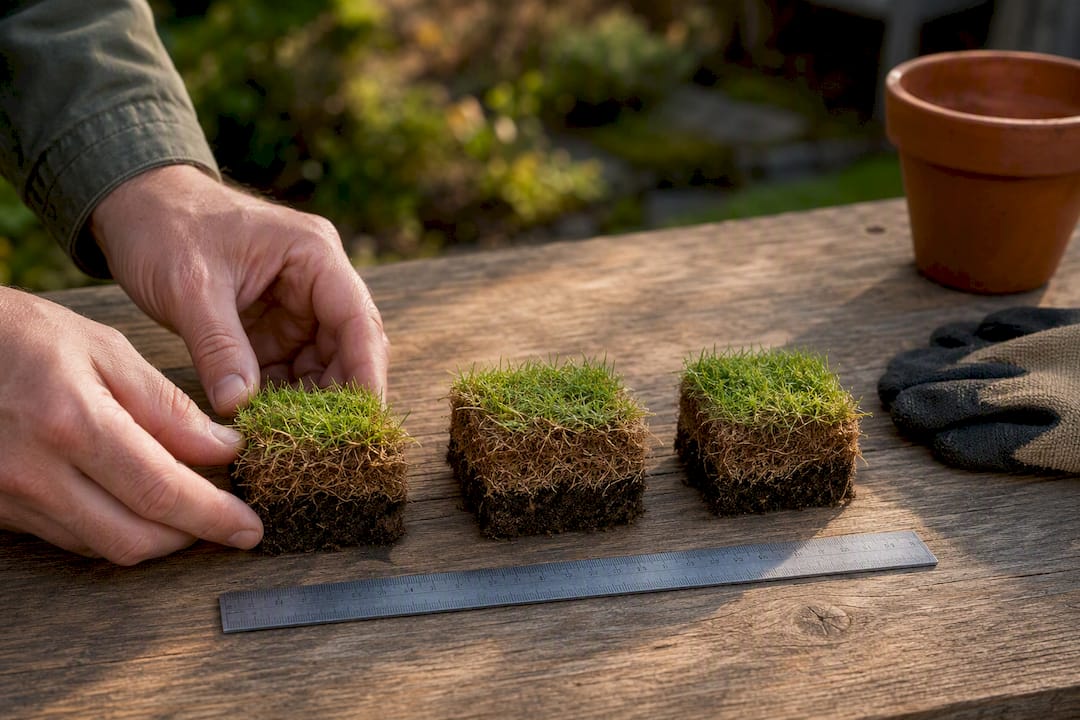
Once you've spotted one or more of these signs, dig a soil plug. Use a trowel or a bulb planter to lift a wedge of turf about 10cm deep, then measure the brown fibrous band sitting above the soil with a ruler.
Pro Tip: Take three or four plugs from different parts of the lawn, not just one. Thatch rarely builds evenly, and a single sample near a shady fence line can give a misleading picture of the whole garden.
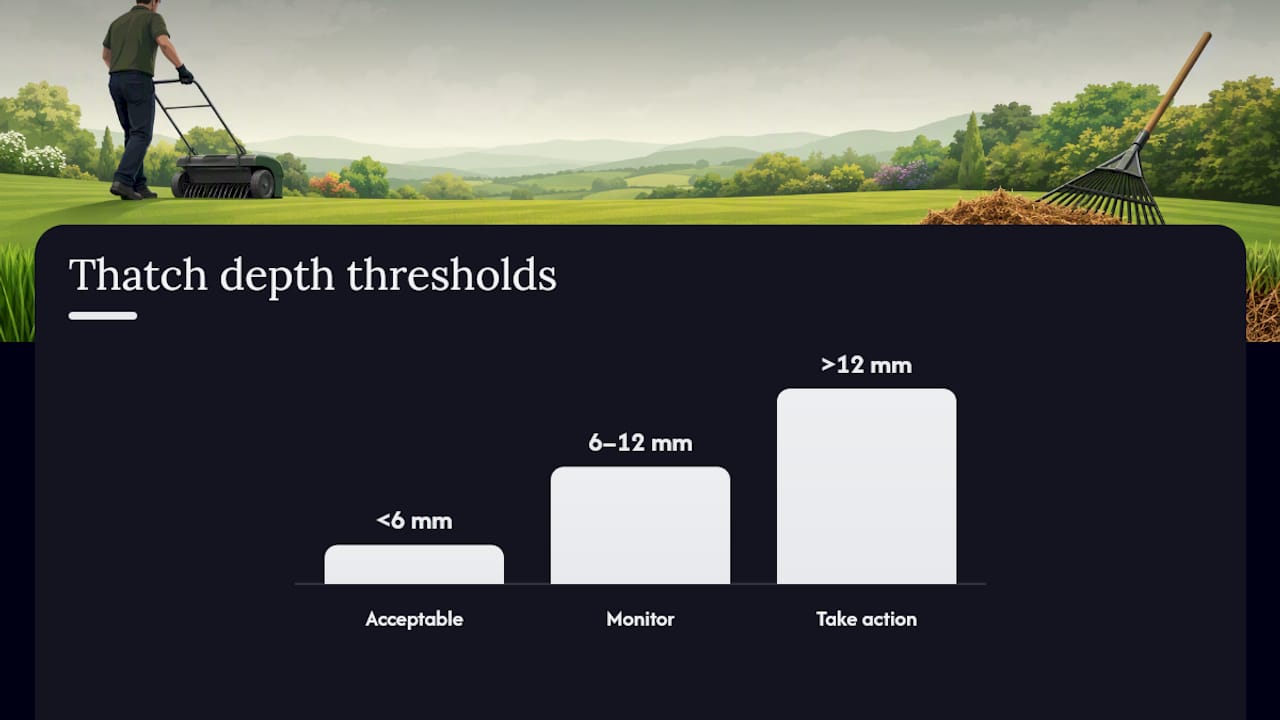
Under 6mm is fine. Between 6mm and 12mm, monitor it and recheck in a few months. Beyond 12mm, it's time to act. If the numbers seem inconsistent across the lawn, check for grub activity or heavy compaction before assuming thatch is the only culprit.
When is the right time to scarify a lawn?
Timing decides whether scarifying helps your lawn or sets it back a season. There are two dependable windows.
- Spring, once soil temperature is consistently above 10°C, usually April or May. Grass is actively growing and can recover quickly.
- Early autumn, around September, when soil is still warm but summer stress has passed. Many lawn professionals treat this as the single best month if you only scarify once a year, since it pairs well with overseeding and aeration before winter.
Outside those windows, hold off.
- Skip scarifying during drought. Removing thatch strips away moisture-holding cover exactly when the lawn needs it most.
- Avoid frosty ground. Raking or machine work on frozen turf tears roots rather than clearing debris.
- Steer clear of peak summer heat, when stressed grass has little energy left to recover.
- Leave newly established turf alone until it has had at least one full growing season to root properly.
If you suspect pests or disease, deal with those first. Scarifying a lawn with active grub activity exposes roots at the worst possible moment and tends to accelerate the damage rather than fix it.
Which thatch removal technique should you use?
The right method depends on the size of the lawn, how thick the thatch is, and how much time and equipment you have to hand.
Hand raking with a spring-tined rake works for small lawns or thin thatch, generally under a few hundred square metres. Drag the rake through the grass in overlapping strokes, pulling dead material to the surface. It's cheap and gives you full control, but it's slow and physically demanding, and it struggles once thatch passes about 10mm across a whole garden.
Powered scarifiers, whether a dedicated machine or a scarifying cartridge fitted to a mower, cover ground far faster and reach a consistent depth. Blade types vary from flexible spring tines to fixed steel blades, and depth control matters more than most people expect: going too deep risks cutting into the soil and damaging roots rather than just lifting thatch. Start shallow and increase depth only if the first pass isn't pulling up enough material.
Verticutting uses vertical blades to slice through the thatch layer and surface runners rather than raking material out sideways. It's less aggressive than scarifying and suits lawns with moderate thatch where you want to tidy growth and improve air movement without a full strip-back.
- For lawns under roughly 100m² with thatch close to the 12mm threshold, hand raking is often enough.
- For larger areas, heavier thatch, or where you want overseeding and aeration done in the same visit, a powered scarifier or professional visit makes more sense.
- If the lawn hasn't been scarified in several years, expect the first pass to look drastic. That's normal, not a sign something's gone wrong.
Once a lawn passes a few hundred square metres, or the thatch is consistently over 12mm across the whole area, the labour and machine cost of doing it properly tends to tip the balance towards booking a professional rather than hiring equipment for a single weekend.
What aftercare does a scarified lawn need?
Scarifying pulls up a surprising amount of material, and what you do in the following days matters as much as the scarifying itself.
- Clear the debris straight away. Rake or blow off the loosened thatch before it smothers the grass underneath. It composts well if mixed with drier garden waste, though check your local green bin rules before bagging large volumes.
- Overseed immediately. Scarifying opens up bare patches, and seeding right after gives new grass the best chance to establish before moss or weeds move in. Choose a seed mix suited to the lawn's use, shade level, and existing grass type.
- Aerate if the soil is compacted. Hollow-tine or spiked aeration relieves compaction and complements scarifying particularly well when done in the same season.
- Water and feed on a schedule. Keep newly seeded areas consistently moist without waterlogging them, and apply an autumn or spring feed appropriate to the season.
Expect the lawn to look worse before it looks better. Visible improvement usually shows within two to six weeks, though a heavily thatched lawn may need a full season to reach its proper density.
What do local practitioners recommend for Irish lawns?
Dublin gardens deal with heavier rainfall and slower soil warming than much of the UK, which pushes the safe scarifying window later into spring than many general guides suggest. Checking soil temperature before committing to a date matters more here than the calendar does.
Sherry Property Care's own guidance on soil temperature and moss points out that moss regrowth is often the first sign a lawn's drainage or thatch problem hasn't actually been solved, just tidied.
If you're arranging a professional visit, send clear photos of the affected areas, including a close-up of the soil plug if you've already taken one. That's usually enough for a bespoke quote covering scarification, overseeding, and any drainage work the lawn needs.
Why annual scarifying beats frequent aggressive passes
Scarifying too often, chasing a perfect lawn every few months, does more harm than good. Grass needs a full growing window to recover before it's stripped back again. An annual or biennial pass, timed to spring or September and followed properly through aftercare, keeps thatch under control without constantly setting the lawn back.
DIY suits small, straightforward lawns where the plug test shows thatch just over the 12mm line. Once size, compaction, or drainage problems stack up, a professional visit tends to deliver better long-term value for the effort involved. Either way, the plug test is where every decision should start, not a guess based on how the grass feels underfoot.
— gerard
Get a lawn scarification quote from Sherry Property Care in Dublin
Hiring equipment for a weekend costs money whether the job takes an hour or all afternoon. There are alternatives to hiring equipment for lawn thatch removal in Dublin: one visit can cover scarification, overseeding, and aeration together, timed properly, without needing to store or return a hired machine.

If your soil plug came back over 12mm, or you'd rather skip the guesswork entirely, Sherry Property Care offers customised quotes for scarification and follow-up lawn care across Dublin. Send a few photos of the lawn, including the thatch depth if you've measured it, and you'll get a quote back suited to the size and condition of the job. Professional visits suit larger lawns, heavier thatch, or gardens where drainage and moss have become part of the problem; smaller, lighter jobs are often fine to tackle yourself with a spring-tined rake. Either way, getting the timing right matters more than the tool.
Want a quote for scarification, overseeding, or a full lawn recovery plan? Send your photos through the Sherry Property Care website and get a tailored price back.
Sources
- Lawn Thatch Problems | Lawnscience
- Lawn care in autumn | RHS advice
- How to manage thatch in lawns | Husqvarna
FAQ
What is the best way to remove thatch from a lawn?
For small lawns with thin thatch, hand raking with a spring-tined rake works well. Larger areas or thatch over 12mm generally need a powered scarifier for consistent results.
What month should you dethatch a lawn?
The two safe windows are spring, once soil is above 10°C, and September. September is often preferred as the single best month if you're only scarifying once a year.
What does a lawn with too much thatch look like?
It feels spongy or bouncy underfoot, water sits on the surface instead of soaking in, and moss patches tend to spread across shaded or damp areas.
Is it good to remove thatch from a lawn?
Yes, once the layer exceeds roughly 12mm, since it's blocking water and air from reaching the roots. Under 6mm, thatch is beneficial and should be left alone.