
TL;DR:
- Prompt maintenance and clear communication are essential for tenant retention and legal compliance in rental properties. Regular inspections, trusted contractors, and proactive upkeep prevent costly repairs and increase tenant loyalty over time. Effective responsiveness and transparency also foster trust, reducing tenant turnover and void periods.
Maintenance is the single most direct driver of tenant retention in the private rental sector. 52% of UK tenants name prompt repairs as their most important improvement need, and 46% report frustration with slow maintenance responses. The role of maintenance in tenant retention goes well beyond fixing broken boilers. Legislation such as the Renters' Rights Act and Awaab's Law now ties landlord compliance directly to physical property standards, raising the financial and legal stakes for every landlord in 2026. UK landlords spend an average of £3,832 per property annually on maintenance. Spent wisely, that budget keeps tenants in place and void periods short.
How does prompt maintenance improve tenant loyalty?
Tenant loyalty is built on trust, and trust is built on responsiveness. When a tenant reports a fault and receives a fast, clear response, they feel valued. When they hear nothing for days, they start looking at other properties.
The relationship between maintenance responsiveness and tenant loyalty is well established. Long-term tenancies increase when landlords prioritise fast maintenance and clear communication, which directly lowers void periods and turnover costs. A void period costs a landlord not just lost rent but also re-letting fees, cleaning, and often minor refurbishment. Keeping one good tenant is almost always cheaper than finding a new one.
The most common complaint driving tenant dissatisfaction is damp and mould, which accounts for a significant share of repair disputes. Slow handling of damp reports is not just a retention risk. Under Awaab's Law, failure to meet standards now carries real regulatory consequences for landlords. The importance of property maintenance has shifted from a courtesy to a legal obligation.
Key behaviours that build tenant loyalty through maintenance:
- Acknowledge every repair request within 24 hours, even if the fix takes longer.
- Give tenants a realistic timeline and update them if it changes.
- Follow up after a repair is completed to confirm the tenant is satisfied.
- Log all requests and responses to create a clear record.
- Treat recurring issues as systemic problems, not one-off fixes.
Pro Tip: Set up a simple WhatsApp group or shared inbox for repair requests. Tenants who can report issues easily report them earlier, which means smaller problems and lower repair bills.
What are the costs of reactive versus proactive maintenance?
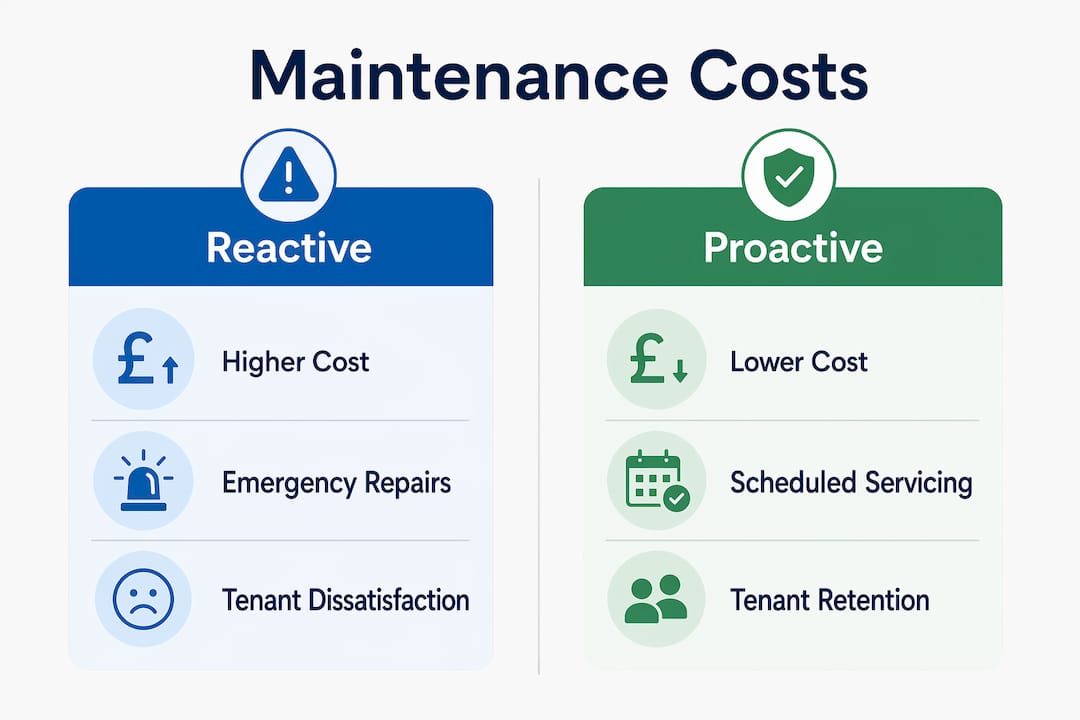
Reactive maintenance costs more than most landlords realise. The median reactive repair job costs around £180, and the average rental property generates nearly five repair issues per year. That adds up quickly, and it does not account for the tenant dissatisfaction that accumulates alongside each unresolved fault.

Proactive maintenance, by contrast, catches problems before they become expensive. Scheduled boiler servicing, annual gutter clearing, and regular checks on seals and grout prevent the kind of water ingress that turns a £50 fix into a £500 one. Proactive upkeep is more cost-effective than recurring reactive repairs, and it reduces tenant dissatisfaction at the same time.
| Approach | Typical trigger | Cost pattern | Tenant impact |
|---|---|---|---|
| Reactive maintenance | Fault reported by tenant | High per job, unpredictable | Frustration, distrust |
| Proactive maintenance | Scheduled inspection or service | Lower per visit, predictable | Confidence, loyalty |
Furniture lifecycle management is one area landlords frequently overlook. Poor quality furnishings fail within 18 months, generating complaints and replacement costs that a planned refresh schedule would avoid. The Decent Homes Standard sets a baseline for property condition, and proactive upkeep is the most reliable way to stay comfortably above it.
Pro Tip: Build a simple annual maintenance calendar. Schedule boiler service in september, gutter clearing in october, and a full property inspection in march. Predictable costs are manageable costs.
Which maintenance practices best support long-term tenant retention?
Practical maintenance strategies are what separate landlords with stable, long-term tenancies from those constantly re-letting. The following practices make a measurable difference.
-
Conduct regular property inspections. Inspect the property every six months. Look for early signs of damp, worn seals, guttering issues, and any wear that tenants may not have reported. Catching problems early keeps repair costs low and shows tenants you are attentive.
-
Set clear expectations in the tenancy agreement. Specify which maintenance tasks belong to the tenant, such as garden upkeep and minor cleaning, and which belong to you. Clear tenancy agreement expectations about exterior upkeep reduce disputes and dissatisfaction. Dublin landlords should align these clauses with Irish tenancy legislation.
-
Use trusted local contractors. A reliable plumber or electrician who knows your property responds faster and charges less than an emergency call-out from an unknown firm. Build a small network of vetted tradespeople in Dublin and keep their contact details current.
-
Make repair reporting easy. Tenants who find it difficult to report faults simply stop reporting them until the problem is serious. A simple app, a shared inbox, or a dedicated phone number removes friction from the process.
-
Stay current with safety certificates. Gas safety certificates, electrical installation condition reports, and smoke alarm checks are legal requirements. Keeping these up to date protects you legally and signals professionalism to tenants.
-
Invest in energy efficiency improvements. Draught-proofing, better insulation, and efficient heating controls reduce tenant energy bills and increase comfort. Tenants in well-specified properties generate fewer maintenance calls, which reduces your admin burden and improves overall efficiency.
For Dublin landlords specifically, grounds maintenance is a visible signal of property quality. A well-kept garden or tidy exterior sets expectations before a tenant even walks through the door. Sherrypropertycare provides professional grounds upkeep for Dublin landlords who want that standard maintained year-round.
You can also find detailed guidance on landlord responsibilities in Dublin to make sure your maintenance approach meets local requirements.
How does communication shape tenant retention?
Tenants often leave good properties because of poor communication, not poor maintenance. Delayed maintenance communication drives tenants to leave even when repairs are eventually completed. The perception of being ignored is more damaging than the fault itself.
Transparency is the fix. When a landlord explains what the problem is, what the plan is, and when the work will happen, tenants feel respected. That feeling translates directly into lease renewals. Tenants renew relationships, not just leases, and regular, honest communication is what builds those relationships.
Communication practices that support tenant retention:
- Send an acknowledgement message within 24 hours of every repair request.
- Provide a named contact for maintenance queries so tenants know who to speak to.
- Update tenants proactively if a repair is delayed, rather than waiting for them to chase.
- After completing a repair, ask the tenant to confirm the issue is resolved.
- Share seasonal maintenance reminders, such as frost pipe warnings in winter, to show ongoing care.
Maintenance issues drive tenant decisions more through poor communication and perceived urgency than through the problems themselves. A landlord who communicates well during a difficult repair often retains the tenant. A landlord who goes silent loses them. Making repair reporting easy and communicating regularly maintains tenant trust far more effectively than speed alone.
Attracting and retaining good tenants also starts before they move in. Clear, high-quality rental property presentation sets the right expectations from the first viewing and reduces the likelihood of mismatched tenancies.
Key takeaways
Proactive maintenance combined with clear communication is the most reliable way to retain tenants and protect rental income long term.
| Point | Details |
|---|---|
| Prompt repairs build loyalty | 52% of tenants rate fast repairs as their top priority; slow responses drive tenant loss. |
| Proactive beats reactive | Scheduled maintenance costs less per visit and prevents the expensive faults that frustrate tenants. |
| Communication matters as much as repairs | Tenants leave over silence, not just unresolved issues; regular updates build trust. |
| Legal standards are rising | The Renters' Rights Act and Awaab's Law make maintenance compliance a financial and legal priority in 2026. |
| Grounds and exterior upkeep count | A well-maintained exterior signals quality and reduces tenant complaints before they start. |
Why I think most landlords underestimate maintenance as a retention tool
Most landlords treat maintenance as a cost to minimise. That is the wrong frame entirely. After years of working with property owners across Dublin, I have seen the same pattern repeat: landlords who invest consistently in upkeep and communication keep tenants for years. Landlords who cut corners spend far more on re-letting, repairs, and regulatory compliance.
The shift in UK and Irish legislation makes this even clearer. Low-investment landlord models are unsustainable under the current regulatory environment. Awaab's Law and the Renters' Rights Act are not abstract threats. They are live obligations that carry financial penalties for non-compliance.
What I find most landlords miss is the compounding effect of good maintenance. A tenant who stays for four years instead of two does not just save you two re-letting cycles. They also tend to care more for the property, report issues earlier, and recommend the property to others. The impact of repairs on retention is not linear. It compounds.
My practical advice: treat your maintenance budget as a relationship investment. Build a calendar, hire trusted local contractors, and communicate with your tenants like a professional. The returns show up in your void rate within twelve months.
— gerard
Sherrypropertycare: grounds maintenance for Dublin landlords
Landlords in Dublin know that a well-presented property attracts better tenants and keeps them longer. Sherrypropertycare provides professional gardening and grounds maintenance tailored to residential and commercial properties across Dublin, helping landlords maintain the exterior standards that tenants notice.
From lawn care and hedge trimming to seasonal grounds upkeep, Sherrypropertycare handles the exterior work that protects your property's appeal and value. Every job is quoted individually based on your property's specific needs. Send a photo of your grounds and get a customised maintenance quote from a team that knows Dublin properties. Reliable, meticulous, and local.
FAQ
How does maintenance affect tenant retention?
Maintenance directly determines whether tenants renew or leave. 52% of UK tenants rate prompt repairs as their top priority, and slow responses are a leading cause of tenant loss.
What is the average landlord maintenance spend per year?
UK landlords spend an average of £3,832 per property annually on maintenance, with the median reactive job costing around £180.
Is proactive maintenance worth the cost?
Proactive maintenance reduces emergency repair frequency and tenant dissatisfaction. Scheduled servicing and regular inspections cost less per visit than reactive call-outs and prevent the larger faults that drive tenants to leave.
What legal obligations do landlords have for maintenance in 2026?
The Renters' Rights Act and Awaab's Law require landlords to meet defined physical property standards. Failure to comply carries regulatory and financial consequences, making consistent maintenance a legal priority, not just a best practice.
How can landlords in Dublin improve tenant communication around repairs?
Acknowledge every repair request within 24 hours, provide realistic timelines, and update tenants if work is delayed. Simple tools such as a shared inbox or messaging app make reporting easy and keep tenants informed throughout the process.