TL;DR:
- Maintenance restores a property's existing condition, while renovation improves, upgrades, or adds value to it. Proper classification affects costs, timelines, legal permits, and tax treatment, making accurate assessment essential for Dublin homeowners and landlords. Building a proactive maintenance schedule ensures long-term property preservation and maximizes renovation return on investment.
The difference between maintenance and renovation is defined by purpose: maintenance preserves a property's existing condition and function, while renovation improves, refreshes, or adds value by upgrading aspects of the property. This distinction shapes every major property decision you make, from annual budgets to legal compliance. Get it wrong and you risk overspending, missing permits, or filing taxes incorrectly. Get it right and your Dublin property stays in good condition, holds its value, and avoids expensive surprises.
What is the difference between maintenance and renovation?
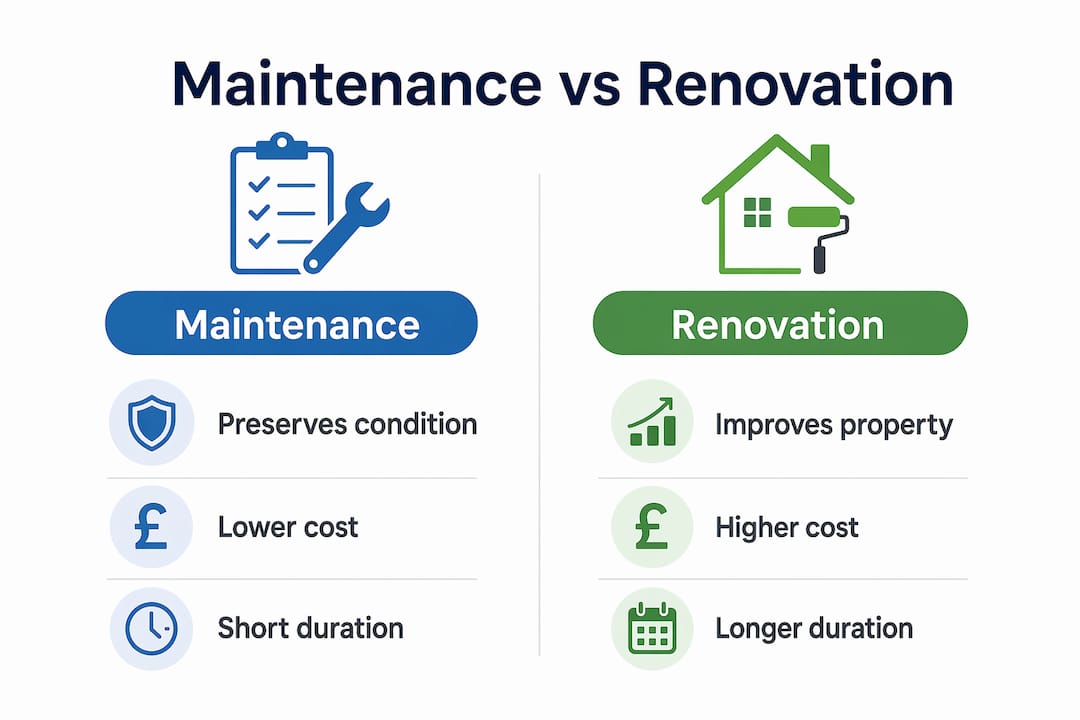
Maintenance restores a property to its prior condition without adding value, while renovation improves and upgrades property components, often increasing market worth. That single distinction drives every downstream decision about cost, scheduling, and legal compliance. Think of maintenance as keeping what you have working properly. Think of renovation as making what you have better.
Renovation refreshes aesthetics and updates spaces without changing layout, while remodelling changes structure and function entirely. This is a distinction many Dublin homeowners miss. Fitting a new kitchen in the same footprint is a renovation. Knocking down a wall to expand it is a remodel. Both differ from maintenance, which would simply mean repairing a broken cabinet hinge or resealing a worktop.
Understanding property upkeep vs renovation also matters for how you talk to contractors, insurers, and the Revenue Commissioners. Using the wrong term can lead to misclassified expenses, denied claims, or work carried out without the correct permits.
What tasks count as maintenance vs renovation?
The clearest way to separate the two is by asking one question: does this work restore what exists, or does it improve upon it?
Common maintenance tasks include:
- Fixing leaking pipes or dripping taps
- Repainting walls to restore their original appearance
- Servicing your boiler or HVAC system twice a year
- Cleaning gutters twice annually to prevent water damage
- Replacing broken roof tiles
- Resealing windows and doors against draughts
Common renovation tasks include:
- Replacing a dated bathroom suite with a modern one
- Fitting new kitchen units or worktops
- Upgrading flooring throughout a room
- Installing new lighting fixtures or electrical sockets
- Redecorating with a new colour scheme and updated finishes
The line between the two can blur. Replacing a single cracked floor tile is maintenance. Replacing all the tiles in a bathroom to update the look is a renovation. Context and intent both matter.
Pro Tip: Keep a simple property log noting the date, description, and cost of every job carried out. This record protects you at tax time and makes it easier to spot when maintenance is no longer enough and renovation becomes the better choice.
In Dublin homes, damp is a recurring issue due to the Irish climate. Treating rising damp or repointing brickwork to stop water ingress is maintenance. Replacing an entire external wall finish with a new render system to improve insulation and appearance crosses into renovation territory.
Typical maintenance jobs in Dublin take a few days and cost a few hundred to £1,000. Standard renovations run from 2–4 weeks or more, with budgets to match. Knowing which category your planned work falls into helps you plan realistically from the start.
How do costs, timelines, and scheduling differ?
Routine maintenance tasks typically take a few days and cost a few hundred to £1,000, while standard renovations range from 2–4 weeks or more. That gap in time and money is significant. It affects how you save, when you book tradespeople, and how long you may need to vacate part of your home.

| Factor | Maintenance | Renovation |
|---|---|---|
| Typical duration | Hours to a few days | 2–4 weeks or longer |
| Typical cost | £100s to £1,000+ | £1,000s to £10,000s+ |
| Planning required | Minimal to moderate | Significant lead time |
| Disruption to home | Low | Moderate to high |
| Permits usually needed | No | Often yes |
Scheduling matters as much as budget. Seasonal maintenance such as gutter cleaning twice annually and HVAC servicing every six months prevents costly damage and system failures. In Dublin, the autumn and spring are the most practical windows for outdoor maintenance work, given the unpredictable Irish weather. Scheduling gutter cleans before the heavy winter rains and boiler servicing before the cold months arrive is simply good property management.
Renovations require longer lead times. You need to source materials, obtain quotes from multiple contractors, and in some cases apply for planning permission. Rushing a renovation to save time almost always costs more in the long run.
Pro Tip: Set aside a dedicated maintenance fund each year. Experienced property managers budget 1–2% of property value annually for upkeep, adjusting upward for older homes or properties exposed to harsh conditions like coastal Dublin locations.
Financial and tax differences for homeowners and landlords
Maintenance is treated as an operational expense, deductible in the year it is incurred, while renovations are categorised as capital improvements and must be depreciated over time. This distinction is not just accounting detail. It directly affects your tax liability each year and how you report costs to Revenue in Ireland.
For landlords in Dublin, this classification is particularly important:
- Maintenance costs such as boiler repairs, repainting, and gutter cleaning are deductible against rental income in the year you pay for them.
- Renovation costs such as a new bathroom installation or kitchen upgrade are capital improvements. These are added to the property's cost base and may be depreciated or offset against capital gains when you sell.
- Misclassifying a renovation as maintenance can trigger a Revenue audit and result in penalties if the error is discovered.
- Keeping clear records with invoices, photos, and descriptions of each job is the most reliable way to defend your classification if questioned.
The practical advice here is straightforward. Before any significant work begins, decide whether the job restores existing function or improves upon it. If you are unsure, consult a tax adviser or accountant familiar with Irish property law. The cost of that advice is almost always less than the cost of getting it wrong.
One common mistake Dublin landlords make is treating a full redecoration between tenancies as maintenance. If the property is being returned to its original standard after tenant wear and tear, it qualifies as maintenance. If you are upgrading finishes beyond the original standard, that portion becomes a capital improvement.
When does maintenance require permits or become a renovation?
Misclassification of renovations as maintenance can trigger legal issues including requirements for permits and inspections, especially for structural or system work. Dublin City Council and local authorities in the greater Dublin area follow building regulations that distinguish clearly between ordinary maintenance and alterations.
Here is how to identify when work crosses the line and requires a permit:
- Structural changes such as removing or altering load-bearing walls always require planning permission and building control notification.
- Replacing a complete system such as full electrical rewiring or a new central heating installation requires certification and inspection.
- Extensions or conversions including attic conversions or garage conversions require planning permission in most Dublin cases.
- Changes to external appearance such as new windows in a protected structure or a change to roof materials may require consent.
- Work on protected structures listed by Dublin City Council requires specific consent regardless of scale.
Misclassifying structural work as routine maintenance can result in stop-work orders, denied insurance claims, and complications when you sell the property. Buyers' solicitors routinely check for compliance certificates, and missing documentation can delay or collapse a sale.
Pro Tip: Before starting any work that involves changing a system or altering a structure, contact your local Dublin authority or a registered building professional to confirm whether a Commencement Notice or planning application is needed. This takes a phone call and can save you months of problems later.
How to balance maintenance and renovation for long-term property value
Treating maintenance as a financial strategy rather than a checklist prevents small tasks from becoming costly repairs. This reframing is the single most useful shift Dublin property owners can make. A blocked gutter ignored through winter becomes a damp wall in spring. A damp wall ignored becomes structural damage by the following year.
The importance of maintenance to property value in Ireland is well documented. Properties with consistent upkeep records attract stronger buyer interest and command better prices. Properties with visible deferred maintenance signal risk to buyers and surveyors alike.
Renovation, on the other hand, is most effective when it targets areas that directly affect market appeal or rental yield. In Dublin's competitive property market, kitchen and bathroom upgrades consistently deliver the strongest return on investment. Updating these spaces without changing their layout is a renovation that adds measurable value without the complexity of a full remodel.
Practical balance points for Dublin homeowners:
- Carry out seasonal maintenance in Dublin every spring and autumn to address weather-related wear before it escalates.
- Schedule a full property inspection every two to three years to identify areas where maintenance is no longer sufficient and renovation becomes the better option.
- Prioritise renovation when the cost of repeated maintenance on a failing component exceeds the cost of replacement and upgrade.
- Deferred HVAC maintenance can lead to system replacements costing £5,000–£15,000. Servicing twice a year costs a fraction of that.
The Irish climate adds specific pressure to outdoor maintenance. Lawns, hedges, and grounds require consistent attention through the growing season to prevent overgrowth that becomes expensive to correct. Grounds maintenance is not cosmetic. It protects drainage, prevents pest ingress, and keeps boundary structures in good repair.
Key takeaways
Maintenance preserves what you have, renovation improves upon it, and confusing the two costs Dublin homeowners money, time, and legal standing.
| Point | Details |
|---|---|
| Core distinction | Maintenance restores existing condition; renovation upgrades or adds value to a property. |
| Cost and time gap | Maintenance takes days and costs hundreds; renovations run weeks and cost thousands. |
| Tax classification | Maintenance is a deductible operational expense; renovation is a capital improvement depreciated over time. |
| Legal compliance | Structural or system renovations require permits; misclassifying them as maintenance risks insurance and legal issues. |
| Strategic balance | Seasonal maintenance prevents costly failures; targeted renovation boosts market value where it matters most. |
Why dublin homeowners get this wrong more often than they should
I have spoken with dozens of Dublin property owners over the years who were genuinely surprised to learn that the bathroom upgrade they expensed as a repair was actually a capital improvement. The confusion is understandable. The line between restoring something and improving it can feel thin when you are standing in a dated bathroom deciding whether to fix the existing suite or replace it entirely.
What I have found is that most people underestimate maintenance and overestimate renovation. They skip the boiler service because it seems fine, then face a full replacement in January. They invest in a kitchen renovation without addressing the damp behind the units, which means the new kitchen deteriorates faster than it should. The sequence matters as much as the decision itself.
Dublin's damp climate makes this especially relevant. Outdoor maintenance, roofing, and drainage are not optional extras. They are the foundation that everything else sits on. Roofing maintenance in particular is one of the most overlooked areas in Irish property upkeep, yet a failing roof undermines every renovation you carry out inside the building.
My honest advice is this: build a maintenance schedule first, fund it properly, and only plan renovations once your property's core systems are in good order. Renovation on top of deferred maintenance is money spent on a shaky foundation. Get the basics right, keep records of everything, and treat your property as the long-term asset it is.
— gerard
Keep your dublin property in good order with Sherrypropertycare
Whether you are managing a family home in Ranelagh or a rental property in Clontarf, staying on top of grounds maintenance is one of the most practical things you can do to protect your investment.

Sherrypropertycare provides professional gardening and grounds maintenance across Dublin, covering lawn care, hedge trimming, and full grounds upkeep for residential and commercial properties. The team works to a high standard and offers customised quotes tailored to your property's specific needs. Send a photo of your grounds and get a quote that reflects exactly what your property requires. Reliable, local, and detail-focused, Sherrypropertycare is the straightforward choice for Dublin property owners who want their grounds kept properly year-round.
FAQ
What is the main difference between maintenance and renovation?
Maintenance restores a property to its existing condition without adding value, while renovation improves or upgrades a property component to increase its appeal or worth. The distinction affects budgeting, tax treatment, and legal compliance.
Is repainting a house maintenance or renovation?
Repainting to restore the original appearance is maintenance. Repainting as part of a wider decorative upgrade beyond the original standard may be classified as a renovation or capital improvement for tax purposes.
Do renovations in dublin require planning permission?
Structural changes, system replacements, and extensions typically require planning permission or a Commencement Notice under Irish building regulations. Routine maintenance such as repairs and repainting generally does not require permits.
How much should i budget for property maintenance each year?
Property managers typically budget 1–2% of property value annually for maintenance, with older properties or those in exposed Dublin locations requiring the higher end of that range.
When is renovation more cost-effective than continued maintenance?
Renovation becomes the better option when the cumulative cost of repeated repairs on a failing component exceeds the cost of replacement and upgrade. A boiler requiring annual repairs costing hundreds each time is a clear example where replacement and upgrade makes stronger financial sense.