
TL;DR:
- Regular cleaning and risk assessments are essential for reducing workplace illness and maintaining compliance. Implementing scheduled hygiene routines and proactive maintenance improves employee health, safety, and overall productivity.
Office maintenance tips are defined as the structured practices that keep workspaces clean, safe, and fully operational, directly reducing employee sick leave and improving daily productivity. UK organisations with comprehensive workplace hygiene report a 39% reduction in sickness absence and a 38% performance improvement. Those figures make a compelling case for treating maintenance not as a reactive chore, but as a planned, ongoing discipline. The Workplace (Health, Safety and Welfare) Regulations 1992 set the legal baseline, and this guide gives you the practical steps to meet and exceed it.
1. How can regular cleaning and hygiene routines reduce illness and boost productivity?
Consistent cleaning is the single most direct lever office managers have over employee health. Daily disinfection of high-touch points such as lift buttons, door handles, light switches, and shared keyboards prevents the slow drift in standards that leads to seasonal illness spikes. When cleaning is left to chance, infection risk rises quietly until absence rates make the problem visible.
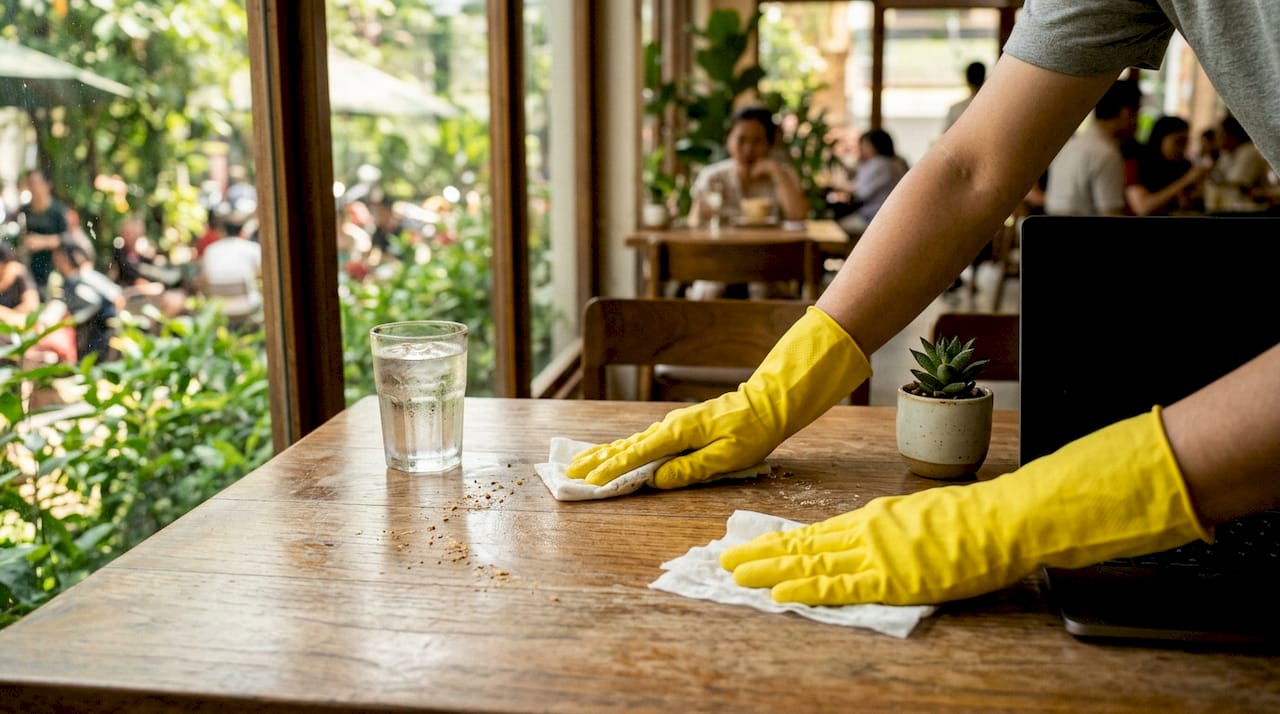
A structured office cleaning strategy separates reactive scrubbing from planned hygiene. Daily tasks cover bins, surfaces, and toilets. Weekly tasks address desks, partitions, and communal kitchen areas. Monthly and quarterly tasks include carpet cleaning, window interiors, and air vent covers.
COSHH-compliant colour-coded cleaning systems and HEPA-filtered vacuums are not optional extras. They are the difference between superficial cleaning and genuine pathogen control. Red cloths for toilets, blue for general areas, and green for kitchens prevent cross-contamination between zones.
The Workplace (Health, Safety and Welfare) Regulations 1992 require offices to be kept clean, with surfaces and floors cleaned at suitable intervals. Compliance is not just about avoiding enforcement notices. It protects your staff and your reputation.
Pro Tip: Schedule a deep clean every six to twelve months, or immediately after a significant office change such as a refurbishment or a large increase in headcount. Cleaning arrangements reviewed at this frequency stay aligned with actual occupancy patterns.
2. What are the key components of an effective office risk assessment?
An office risk assessment is a legal requirement under the Management of Health and Safety at Work Regulations 1999. It is also the foundation of every other maintenance decision you make. A vague assessment fails audits. A specific one protects you.
Follow this stepwise approach:
- Identify hazards. Walk the office and note physical risks such as trailing cables, poor lighting, blocked fire exits, and faulty equipment.
- Assess who is at risk. Consider all staff, including part-time workers, contractors, and visitors.
- Assign control measures. State exactly what action removes or reduces each hazard, and name the person responsible.
- Record and communicate findings. Broad risk assessment statements fail audits. Document who performs each check, how often, and what the outcome was.
- Review regularly. Treat the assessment as a living document. Update it after any change in staff numbers, office layout, equipment, or relevant legislation.
Hybrid working adds a layer of complexity most assessments still miss. Risk assessments must cover home display screen equipment (DSE) setups, electrical safety, lone working risks, and mental health factors for staff who split time between home and office. The Health and Safety (Display Screen Equipment) Regulations require employers to assess workstations used by regular DSE users, whether those workstations are in the office or at home.
3. Which maintenance checks should office managers prioritise?
Planned preventative maintenance (PPM) is the industry term for scheduled, proactive upkeep. It replaces the reactive model of fixing things after they break, which is always more expensive and often more disruptive. A solid maintenance checklist for offices covers four core categories.
Equipment and electrical systems
Portable appliance testing (PAT) must be carried out at intervals appropriate to the equipment type and environment. Fixed electrical installations require inspection and testing every five years for commercial premises. Lifts need six-monthly thorough examinations under the Lifting Operations and Lifting Equipment Regulations 1998.
Heating, ventilation, and air conditioning
The Workplace (Health, Safety and Welfare) Regulations 1992 set a minimum office temperature of 16°C for sedentary or light work. That figure is a legal floor, not a comfort target. HVAC systems need filter changes, coil cleaning, and airflow checks on a schedule matched to manufacturer guidance and occupancy levels. Scheduling HVAC cleaning at regular intervals directly improves indoor air quality and reduces energy costs.
Windows and building fabric
Clean windows affect both light levels and the professional appearance of your premises. Commercial window maintenance carried out on a planned schedule prevents deterioration of frames and seals, which can lead to damp and heat loss if left unchecked.
Documentation and auditing
Mapping maintenance tasks to SFG20 standards ensures your schedule updates automatically when legislation changes. SFG20 links each task directly to its legislative source, so you are not relying on memory or outdated spreadsheets to stay compliant.
Pro Tip: Use a Computerised Maintenance Management System (CMMS) to track inspections, log outcomes, and generate audit trails. CMMS software reduces missed inspections and provides the documented evidence needed to satisfy insurers and enforcement officers.
4. How to maintain office organisation and workspace ergonomics
A tidy workspace is not about aesthetics. Clutter increases the risk of trips and falls, makes fire evacuation harder, and reduces the time staff spend on productive work. Workplace upkeep advice on organisation starts with storage, not tidying.
Good office organisation tips include:
- Assign dedicated storage for every category of item. If something does not have a home, it becomes clutter.
- Conduct a desk audit quarterly. Remove redundant equipment, outdated paperwork, and unused peripherals.
- Label storage clearly. Shared spaces deteriorate fastest when staff cannot quickly identify where things belong.
- Maintain clear walkways. Fire safety regulations require unobstructed routes to all exits at all times.
- Assess workstations for ergonomics. Chair height, monitor position, and keyboard placement all affect musculoskeletal health. The HSE recommends regular workstation assessments for all DSE users.
Ergonomic furniture reduces long-term injury claims and sick leave. Adjustable desks, lumbar-support chairs, and monitor arms are not luxury items. They are cost-effective investments when measured against the cost of a musculoskeletal absence claim.
Supporting hybrid workers requires the same rigour. Send home workers a self-assessment checklist covering chair height, screen distance, lighting, and cable management. Follow up with a manager review for anyone flagging discomfort.
Training staff on manual handling is a legal requirement under the Manual Handling Operations Regulations 1992. Brief, practical training delivered at induction and refreshed annually is far cheaper than a handling injury.
Welfare facilities also fall under the maintenance checklist for offices. Toilets, washbasins, drinking water, rest areas, and accessible features must all be kept in working order and inspected regularly. These are not optional. They are statutory requirements under the Workplace (Health, Safety and Welfare) Regulations 1992.
For a broader view of how cleaning fits into the full maintenance picture, the role of cleaning in maintenance guide from Sherrypropertycare covers recommended frequencies and how to keep hygiene plans current.
Key takeaways
Effective office maintenance combines daily hygiene routines, documented risk assessments, planned preventative maintenance, and organised workspaces to meet UK legal standards and protect employee health.
| Point | Details |
|---|---|
| Hygiene drives performance | UK workplaces with strong hygiene report a 39% drop in absence and a 38% performance gain. |
| Risk assessments must be specific | Name responsible persons, check frequencies, and update after any change to remain audit-ready. |
| PPM beats reactive repairs | Planned preventative maintenance aligned with SFG20 standards keeps inspections legal and costs predictable. |
| Ergonomics reduce injury costs | Regular workstation assessments and adjustable furniture cut musculoskeletal absence claims significantly. |
| Hybrid work needs coverage | Risk assessments must include home DSE setups, electrical safety, and lone working factors. |
What I have learned from years of watching offices neglect the basics
Most office managers I speak to treat maintenance as something that happens when something breaks. That mindset is the root cause of most compliance failures I see. The offices that run well are the ones where the manager treats the maintenance checklist as a live document, not a folder that gets opened once a year before an audit.
The detail that surprises people most is the inspection frequency question. Fixed annual intervals are a common misconception. Compliance inspection frequency is risk-profile dependent. A busy open-plan office with high footfall needs more frequent checks than a small back-office suite. CMMS software makes this distinction manageable. Without it, you are guessing.
Record-keeping is where most offices fall down. Vague entries like "checked and OK" are useless in an audit. Effective records name the person, the specific action taken, the date, and the outcome. That level of detail is what passes an enforcement inspection and satisfies an insurer after an incident.
The other thing I would say plainly: do not treat the outdoor areas of your office building as someone else's problem. The grounds, car park, and entrance paths are part of your duty of care. A poorly maintained exterior creates slip hazards, deters clients, and signals to staff that standards do not matter. The commercial property maintenance guide for Dublin covers this well for anyone managing premises in the city.
— gerard
Professional property maintenance support in Dublin
Office managers in Dublin looking for reliable grounds and exterior maintenance have a straightforward option.
Sherrypropertycare provides professional grounds maintenance for commercial properties across Dublin, covering lawn care, hedge trimming, landscaping, and general exterior upkeep. A well-maintained exterior supports your internal maintenance standards and creates the right first impression for clients and staff. Every quote is tailored to the specific property, so you pay for what you actually need. Send a photo of your grounds and get a customised maintenance quote from Sherrypropertycare today.
FAQ
What does office maintenance include?
Office maintenance covers cleaning, equipment inspections, HVAC servicing, risk assessments, ergonomic checks, and welfare facility upkeep. It also includes grounds and exterior areas as part of the overall duty of care.
How often should an office risk assessment be reviewed?
Office risk assessments must be reviewed after any significant change to staff numbers, layout, equipment, or legislation, and at regular intervals regardless of change.
What is the legal minimum temperature for an office in the UK?
The Workplace (Health, Safety and Welfare) Regulations 1992 set a minimum of 16°C for sedentary or light work. This is a legal requirement, not a guideline.
What is planned preventative maintenance (PPM)?
PPM is a scheduled approach to maintenance that addresses equipment and infrastructure before faults occur. Aligning PPM schedules with SFG20 standards keeps tasks legally compliant and automatically updated when legislation changes.
How can I improve office hygiene quickly?
Start with daily disinfection of high-touch points such as door handles, lift buttons, and shared equipment. Introduce a COSHH-compliant colour-coded cleaning system to prevent cross-contamination between zones.