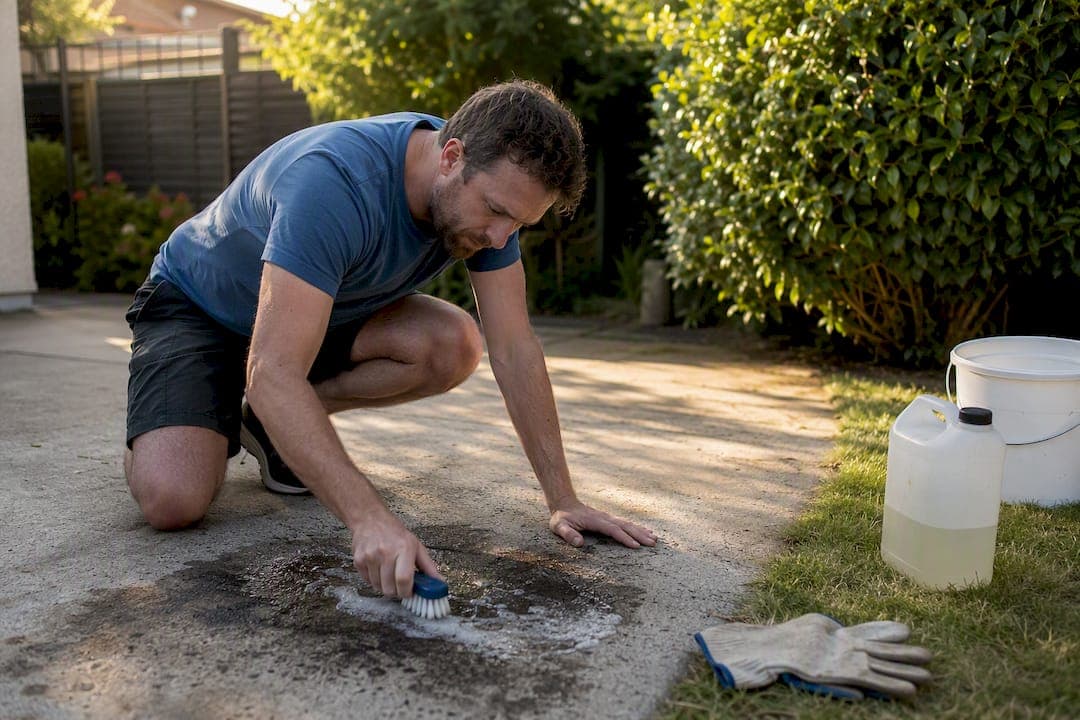
The routine that works on most oil stains is simple: absorb, degrease and scrub, then rinse. For deep-set or ancient marks, a poultice or professional steam cleaning often gets better results than scrubbing alone. Before you start, check two things: what your driveway is made of, and how old the stain is. Resin-bound surfaces and stains that have sat for months often need a proper survey rather than a bottle of degreaser from under the sink.
Get those two checks wrong and you can turn a manageable mark into a permanent one.
Do:
- Use an absorbent material the moment you spot fresh oil
- Test any cleaning product on a hidden patch first
- Work in gentle, repeated cycles rather than one aggressive attempt
Don't:
- Pressure-wash a fresh spill (it drives oil deeper into the surface)
- Use harsh solvents on resin-bound or natural stone driveways
- Assume an old, dark stain will lift in a single session
Key Takeaways
Fresh oil responds to absorb, degrease, and rinse, but ancient or resin-bound stains usually need a poultice or professional steam cleaning to fully lift.
| Point | Details |
|---|---|
| Act fast on fresh spills | Cover oil with clay-based cat litter or sawdust within minutes to stop it soaking deeper. |
| Match method to stain age | Use detergent scrubs for light marks, degreaser paste for medium ones, and a poultice for set-in stains. |
| Know your surface limits | Avoid solvents and high pressure on resin-bound drives, tarmac, and natural stone. |
| Patch-test every product | Check an inconspicuous area for colour change before treating the full stain. |
| Dispose of waste properly | Bag oil-soaked litter or rags as hazardous waste rather than binning or rinsing them away. |
| Call in help when DIY stalls | Sherrypropertycare offers industrial steam cleaning and customised quotes for delicate or stubborn Dublin driveway stains. |
Table of Contents
- Emergency steps for oil stain driveway removal on fresh spills
- Which method suits light, medium and set-in stains?
- Surface-specific cautions for concrete, tarmac, block paving and resin
- Are household products safe for cleaning oil stains?
- When to call professionals for oil stain treatment on your driveway
- Preventing future stains and sealing your driveway
- Disposing of oil-soaked cleaning materials responsibly
- A note from Gerard on realistic expectations
- Get a professional quote for stubborn driveway stains
- Sources
- FAQ
Emergency steps for oil stain driveway removal on fresh spills
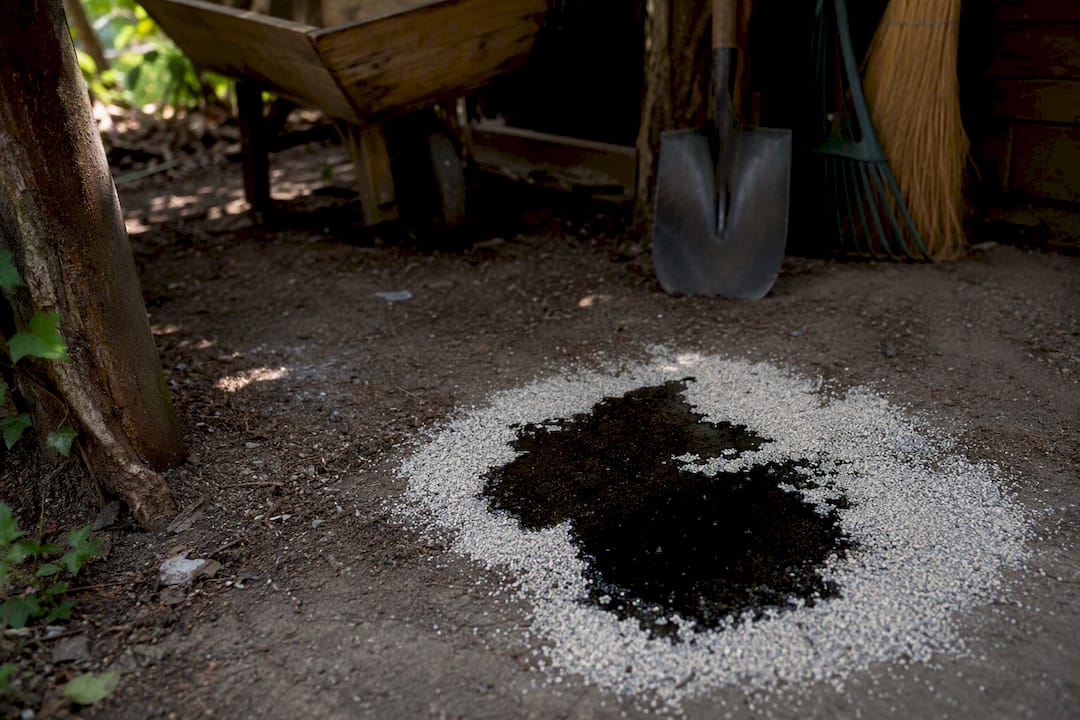
The first hour after a spill matters more than anything you do afterwards. Oil is porous-surface enemy number one: the longer it sits, the further it migrates into concrete, tarmac, or block paving, and the harder extraction becomes later.
- Cover the spill immediately with a clay-based, non-clumping cat litter, diatomaceous earth, or plain sawdust. Clumping litters absorb poorly and can leave a residue of their own, so avoid them if you have a choice.
- Leave it to work. Give the absorbent at least 20 to 30 minutes, longer for a larger spill, so it has time to draw oil out of the surface.
- Sweep up the saturated material and dispose of it properly (more on that later).
- Wash the patch gently with warm water and a squirt of washing-up liquid, using a stiff brush in small circles rather than one long scrub.
Don't reach for the pressure washer yet. High-pressure water on an untreated fresh stain forces oil into the pores rather than lifting it out, a mistake Driveways Plus flags as one of the most common DIY errors.
Pro Tip: Keep a bag of cat litter in the garage or boot of your car. A five-minute response to a fresh oil spill can save you hours of scrubbing next weekend.
Which method suits light, medium and set-in stains?
Not every oil mark needs the same firepower. Matching your method to the stain's age saves time and stops you damaging a surface that only needed a gentle wash.
Light stains (a few days old):
- A washing-up liquid scrub, repeated two or three times over consecutive days, usually lifts these completely.
- Dwell time of 10 to 15 minutes before rinsing gives the detergent a chance to break down the oil.
Medium stains (several weeks old):
- Make a paste from biological washing powder and water, or use a proper concrete degreaser like HG's oil and grease absorber, diluted up to 1:5 for lighter soiling.
- Apply, leave, then agitate with a stiff brush. Expect to repeat this cycle three or four times before the mark noticeably fades.
Set-in and ancient stains (months or years old):
- This is where a poultice earns its keep. Mix an absorbent powder with a degreaser into a thick paste, spread it over the stain, and seal it under plastic sheeting for 24 to 48 hours. This method, recommended by Pureseal Services, is ideal for exactly this kind of deep-set contamination.
- The paste works by capillary action, drawing oil up out of the pores rather than just scrubbing the surface. Multiple applications are often needed.
If you've run through two or three poultice cycles with no real change, that's your signal to stop. At that point, Allstate's guidance is blunt: older, stubborn stains often need commercial-grade cleaners or a professional, not another trip to the hardware shop.
Surface-specific cautions for concrete, tarmac, block paving and resin
Treating every driveway the same way is how good surfaces get ruined. Each material has its own tolerance for chemicals and pressure.
- Concrete: Handles degreasers well and responds to pressure washing in the region of 2,500 to 3,000 PSI as a finishing step, according to pressure-washing guidance for concrete driveways. Repeated lower-intensity passes often beat one aggressive blast.
- Tarmac: More delicate than it looks. Skip harsh chemicals and high pressure; a mild detergent and soft-bristled brush, worked in gently, avoids softening the binder.
- Block paving: Treat individual blocks and the joints between them separately, since sand-filled joints trap oil differently to the blocks themselves. Deep-set marks respond well to the poultice method described above.
- Resin-bound surfaces: Stick to mild detergent only. Solvents and high pressure can break down the resin matrix permanently, so if a mild wash doesn't shift the stain, call a professional early rather than experimenting further.
- Gravel: Sometimes the contaminated stones simply need lifting out and replacing with fresh aggregate. It's often faster and cheaper than trying to clean oil out of loose stone.
Our guide to power washing a patio safely covers pressure ranges and patch-testing in more detail if you're working across mixed surfaces on the same property.
Are household products safe for cleaning oil stains?
Not every product on your shelf belongs on your driveway. Here's how the main categories stack up.
- Washing-up liquid: Gentle, safe on almost every surface, but weak on anything beyond a light stain.
- Biological washing powder: A step up in cleaning power for medium-age marks; make a thick paste rather than a thin solution.
- Concrete degreasers like HG's product: Formulated specifically for masonry, brick, and paving, with clear dilution ratios for different soiling levels.
- Solvents: Effective but risky. They can discolour porous stone and resin, and they're the category most likely to cause permanent damage if used without testing.
Always patch-test on an inconspicuous corner first. Apply, wait the time stated on the label, then check for colour change before treating the visible stain. Wear gloves and eye protection, and never let runoff head straight for a drain or flower bed, follow your local rules on disposing of chemical waste.
Popular "hacks" like cola or oven cleaner have a mixed record. Driveways Plus notes these can produce inconsistent results and sometimes attract more dirt or damage the surface finish.
Pro Tip: If a product changes the colour of your patch-test area within a few minutes, stop. That reaction will only be worse across the full stain.
When to call professionals for oil stain treatment on your driveway
Some stains simply outlast a domestic scrubbing brush. Industrial steam cleaning combined with specialised emulsifying degreasers extracts oil from far deeper in the substrate than a bucket and brush ever will, and it does so without the surface damage that comes from over-aggressive DIY pressure washing.
Call a professional when:
- The driveway is resin-bound, natural stone, or another delicate surface
- The stain covers a large area rather than a single patch
- You've tried two or three DIY cycles with no visible improvement
- You're worried that further scrubbing or pressure washing might damage the surface itself
When you're ready to get a quote, send clear photos of the stain, note the surface type, roughly how long the mark has been there, and the approximate area affected as explained in the benefits of professional pressure washing for driveways and patios. That's usually enough for a specialist to give you a realistic estimate before they even visit, something our piece on professional driveway cleaning services explains in more depth.
Preventing future stains and sealing your driveway
Sealing is the single best long-term move you can make. A quality sealant reduces the porosity of concrete, block paving, or resin, meaning oil sits on the surface for longer before it has a chance to soak in, giving you a real window to clean it up before it stains.
- Reseal roughly every one to three years, depending on the sealant and how much traffic the surface gets.
- Check vehicles regularly for leaks, and use a simple drip tray under any car you know has a slow leak.
- Clean spills the moment you see them; the whole point of sealing is to buy you time, not to make oil harmless.
Regular cleaning also extends the life of the seal itself, so the two habits reinforce each other. Our driveway maintenance guide walks through a sensible inspection schedule if you want a routine to follow rather than reacting stain by stain.
Disposing of oil-soaked cleaning materials responsibly
Used cat litter, sawdust, or degreaser-soaked rags are hazardous waste once they've absorbed oil, not ordinary household rubbish. Tipping them into a general bin, or worse, down a drain, risks contaminating soil and waterways, and in most areas it's against local waste regulations.
Once you've swept up saturated absorbent material, bag it securely in a heavy-duty plastic bag and seal it. Many local authorities and recycling centres accept oil-contaminated absorbents at a household hazardous waste point, separate from your normal bin collection. Check with your local council before your next collection day, since rules and drop-off points vary between areas.
Leftover degreaser or solvent should never go down a household drain or soak away into a garden bed. These chemicals are designed to break down oil efficiently, which is exactly why they're harmful to soil microorganisms and aquatic life if they reach a watercourse. Pour any unused concentrate back into its original container and take it to a hazardous waste facility rather than diluting it and washing it away.
If you've used a poultice, the used paste is also oil-contaminated and needs the same careful disposal as saturated litter. Rinse water from the final wash stage is generally fine to go into a drain connected to the foul sewer, but never into a surface water drain that leads straight to a river or stream. If you're unsure which type of drain serves your driveway, that's worth checking before you start rather than after.
A note from Gerard on realistic expectations
Most oil marks respond to patient DIY work, but I've seen enough resin-bound drives and decades-old stains to know when scrubbing harder just makes things worse. If you've tried the poultice method twice without progress, or you're dealing with a large or delicate surface, a site survey costs you little and saves a lot of guesswork.
Get a professional quote for stubborn driveway stains
If you've worked through the absorb, degrease, and rinse routine and the stain is still staring back at you, that's exactly the point where Sherrypropertycare picks up the job. Rather than guessing at dilution ratios or risking a resin-bound surface with the wrong chemical, you get a customised quote based on your actual driveway, no generic call-out fee, no one-size-fits-all package.

Sherrypropertycare covers power washing, steam cleaning, and surface restoration for driveways and patios across Dublin, handling the deep-set and delicate cases that household products can't touch. Our approach to outdoor deep cleaning is built around getting it right the first time on surfaces like resin and natural stone, where a wrong move is expensive to fix. Send a few photos of the stain, note the surface type and roughly how long the mark has been there, and you'll get a fair, tailored quote back. Visit Sherrypropertycare to send your photos and request a quote today.
Sources
- How to remove oil stains from a driveway - HG
- Removing oil from concrete & driveways | Allstate
- How to clean a concrete driveway | guide
- How to remove oil stains from driveways - Pureseal Services
FAQ
How do you get heavy oil stains off a driveway?
Apply a poultice, an absorbent mixed with degreaser, sealed under plastic for 24 to 48 hours, and repeat if needed. For resin-bound or natural stone surfaces, professional steam cleaning is often safer and more effective.
How do you get rid of old oil stains on a driveway?
Old, set-in stains usually need multiple poultice applications rather than a single scrub. If two or three cycles show no improvement, that's the point to call a professional rather than risk the surface.
Does WD-40 remove oil stains from a driveway?
WD-40 and similar household hacks produce inconsistent results and can sometimes attract more dirt or leave discolouration. A purpose-made degreaser or detergent scrub is a more reliable first step.
Are oil stains on a driveway permanent?
Not usually, but the longer oil sits, the deeper it penetrates a porous surface and the harder it becomes to shift. Fresh stains respond well to absorbents and detergent; ancient stains may need a poultice or professional extraction to fully clear.