
Reactive repairs might seem cheaper upfront, but they often cost property managers in Dublin two to three times more than scheduled preventive maintenance. Many owners believe waiting for breakdowns saves money, yet unplanned failures trigger emergency callouts, tenant disruptions, and compounding damage that inflate expenses. Effective maintenance scheduling transforms this cycle by addressing wear before it escalates, reducing costs while improving tenant satisfaction and asset longevity. This guide explains proven strategies to implement preventive maintenance scheduling tailored for Dublin properties, helping you minimize emergencies and maximize value.
Table of Contents
- Key Takeaways
- Understanding preventive maintenance scheduling
- The cost impact of maintenance scheduling on property management
- Common challenges and misconceptions about maintenance scheduling
- Implementing an effective maintenance scheduling strategy
- Discover professional maintenance scheduling solutions in Dublin
- Frequently asked questions about maintenance scheduling
Key Takeaways
| Point | Details |
|---|---|
| Cost savings from preventive | Reactive repairs cost more due to emergency premiums and cascading damages, so preventive maintenance lowers total expenses. |
| Tenant satisfaction and longevity | Regular preventive maintenance minimizes disruptions, extends asset life, and improves tenant trust and retention. |
| Preventive vs reactive | Understanding the difference between preventive and reactive maintenance helps managers choose proactive approaches. |
| Prioritization and planning | Effective scheduling requires prioritizing high impact systems and outlining recurring tasks to prevent failures. |
| Data driven benchmarks | Using benchmarks helps compare performance, predict costs, and guide maintenance decisions. |
Understanding preventive maintenance scheduling
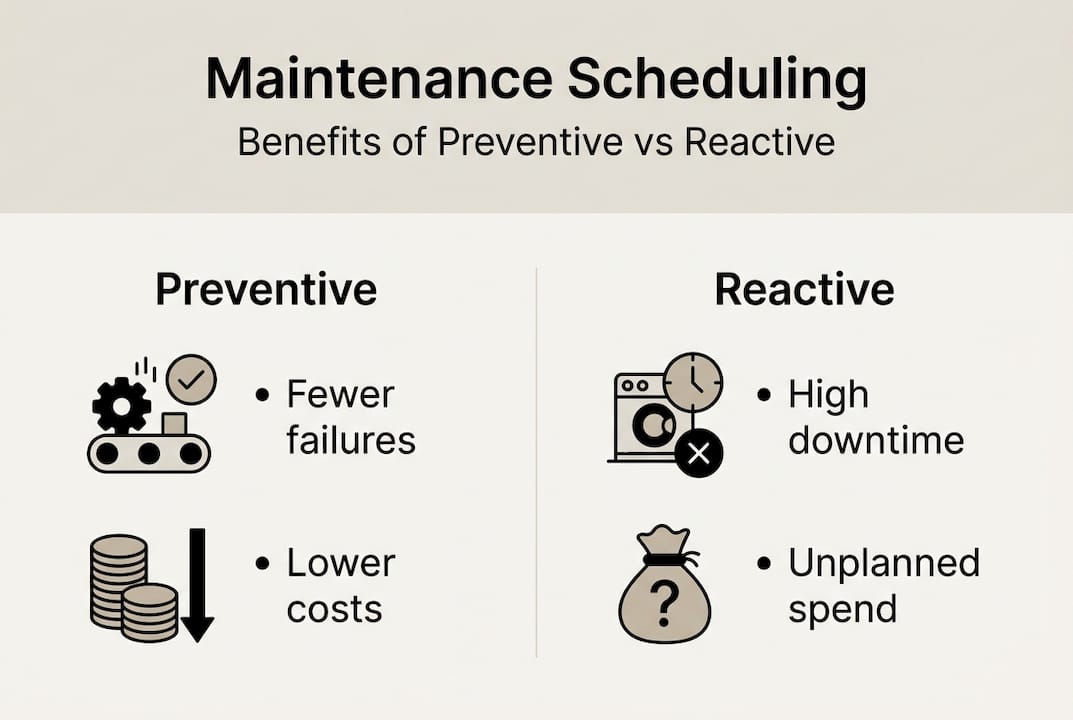
Preventive maintenance scheduling involves planning recurring tasks to address wear and tear before equipment or systems fail. Instead of waiting for a boiler to break down in January, you service it in October. This proactive approach contrasts sharply with reactive maintenance, which fixes problems only after they occur. Reactive strategies may seem convenient, but they leave you vulnerable to costly emergencies and tenant complaints.
Common preventive tasks include HVAC servicing, filter replacements, gutter cleaning, and routine inspections of plumbing and electrical systems. By scheduling these activities regularly, you catch minor issues early. A small leak detected during inspection costs far less than water damage requiring structural repairs. Preventive maintenance scheduling reduces emergency repairs, lowers costs, and improves tenant satisfaction by minimizing disruptions.
The benefits extend beyond immediate savings. Preventive scheduling prolongs asset lifespan by reducing stress on systems. A well-maintained heating system operates efficiently for years longer than a neglected one. Tenants notice the difference too. Reliable heating, clean common areas, and prompt attention to minor concerns build trust and reduce turnover. Lower vacancy rates directly impact your bottom line.
Pro Tip: Start with high-impact systems like heating, plumbing, and security. These areas generate the most tenant complaints when they fail, so prioritizing them delivers immediate improvements in satisfaction and cost control.
- Schedule HVAC servicing twice yearly to maintain efficiency and prevent winter breakdowns
- Inspect roofs and gutters seasonally to catch leaks before they cause interior damage
- Replace filters and test alarms monthly to ensure safety and system performance
- Document every task completion to build a maintenance history that informs future planning
The cost impact of maintenance scheduling on property management
Financial data reveals the true value of maintenance scheduling. Global benchmarks show that downtime costs reach $253 million annually per large industrial plant, underscoring how unplanned failures drain budgets. While Dublin residential properties operate at a smaller scale, the principle remains identical. Reactive repairs cost more due to emergency service premiums, rushed parts procurement, and secondary damage from delays.
Planned maintenance supports budget predictability. When you schedule tasks quarterly or annually, you control timing and negotiate better rates with contractors. Emergency callouts command premium pricing, often 50% to 100% higher than scheduled work. Spreading costs across the year also eases cash flow management compared to absorbing sudden large expenses.
"Standardized preventive maintenance programs significantly reduce downtime costs and improve operational continuity across facilities worldwide."
The table below compares reactive versus preventive approaches across key metrics relevant to Dublin property managers.
| Metric | Reactive Maintenance | Preventive Maintenance |
|---|---|---|
| Average repair cost | €800-€1,200 per incident | €300-€500 per scheduled task |
| Annual downtime hours | 40-60 hours | 8-15 hours |
| Emergency callout frequency | 12-18 per year | 2-4 per year |
| Tenant complaint rate | High (frequent disruptions) | Low (minimal interruptions) |
| Asset replacement cycle | 8-10 years | 12-15 years |
Operational continuity matters just as much as direct costs. When heating fails in winter, tenants suffer discomfort and you face potential liability. Scheduled servicing eliminates most of these scenarios. Even when issues arise, you detect them during inspections rather than through tenant complaints, giving you time to address problems without urgency premiums.
Budget predictability transforms financial planning. Knowing your annual maintenance spend allows accurate forecasting and better investment decisions. You can allocate funds strategically rather than scrambling to cover unexpected repairs. This stability also improves relationships with lenders and investors who value transparent, well-managed properties.
Common challenges and misconceptions about maintenance scheduling
Many property managers hesitate to adopt preventive scheduling due to perceived barriers. Understanding these obstacles helps you overcome them and unlock the benefits of proactive maintenance.
Common challenges include limited time for planning, tight budgets that prioritize immediate needs, difficulty calculating return on investment, and resistance to changing established routines. These concerns feel valid but often stem from misconceptions. Preventive maintenance requires upfront investment, yet it delivers substantial long-term savings by avoiding expensive emergencies and extending asset life.
Another myth suggests that scheduling adds complexity without clear benefits. In reality, preventive maintenance programs require consistent planning and prioritization to deliver results, but digital tools simplify tracking and reminders. Modern software automates scheduling, sends alerts before tasks are due, and maintains comprehensive records without manual effort.
Tenant benefits often get overlooked in scheduling decisions. Property managers focus on costs and compliance, missing how preventive maintenance improves resident experience. Reliable systems, clean facilities, and proactive communication about scheduled work build tenant loyalty. Happy tenants renew leases, reducing turnover costs that easily exceed maintenance expenses.
Pro Tip: Start small by scheduling just three high-priority tasks for the next quarter. Track time spent and costs saved compared to reactive repairs. This pilot approach builds confidence and demonstrates value to stakeholders who question preventive strategies.
- Budget constraints feel limiting, but preventive tasks cost less than emergency repairs over time
- Time scarcity improves when scheduling reduces urgent interruptions and crisis management
- ROI becomes clear when you compare scheduled task costs against emergency repair invoices
- Resistance fades as teams experience fewer stressful callouts and more predictable workdays
- Digital tools eliminate manual tracking burdens, making scheduling easier than reactive approaches
Implementing an effective maintenance scheduling strategy
Creating a sustainable maintenance schedule requires systematic planning and ongoing refinement. Follow these steps to build a program tailored to your Dublin properties.
- Assess your property assets by listing all systems and equipment requiring regular attention, including HVAC, plumbing, electrical, roofing, and common areas.
- Research manufacturer recommendations and industry standards to determine appropriate service intervals for each asset type.
- Prioritize tasks based on tenant impact, safety requirements, and cost of failure, focusing first on heating, water, and security systems.
- Create a master calendar that distributes tasks evenly throughout the year, avoiding seasonal bottlenecks while aligning work with weather patterns.
- Assign responsibilities clearly, whether using in-house staff or contractors, and establish accountability for task completion and documentation.
- Review performance quarterly by analyzing completed tasks, costs, and any emergency repairs that occurred despite scheduling.
The comparison table below helps you categorize common maintenance tasks by frequency and priority level.
| Task Type | Frequency | Priority Level | Typical Cost Range |
|---|---|---|---|
| HVAC servicing | Twice yearly | High | €200-€400 per visit |
| Gutter cleaning | Quarterly | Medium | €80-€150 per visit |
| Fire alarm testing | Monthly | High | €50-€100 per visit |
| Exterior painting | Every 3-5 years | Low | €2,000-€5,000 per project |
| Plumbing inspection | Annually | High | €150-€300 per visit |
| Landscaping | Monthly (seasonal) | Medium | €100-€250 per visit |
Seasonal property maintenance calendars support efficient scheduling and consistent execution by aligning tasks with weather and usage patterns. Spring focuses on exterior prep after winter, summer tackles painting and outdoor projects, autumn emphasizes heating system readiness, and winter prioritizes snow removal and indoor comfort.
Pro Tip: Balance urgent repairs with scheduled preventive tasks by allocating 70% of your maintenance budget to planned activities and reserving 30% for unexpected issues. This ratio provides flexibility while maintaining proactive focus.
Record keeping drives continuous improvement. Document every completed task, including date, contractor, cost, and any observations about equipment condition. This history reveals patterns, helps predict future needs, and justifies budget requests with concrete data. Over time, you will refine schedules based on actual performance rather than generic recommendations.
Discover professional maintenance scheduling solutions in Dublin
Implementing these strategies delivers results, but partnering with experienced professionals can accelerate your success. Sherry Property Maintenance Limited specializes in comprehensive property care tailored to Dublin's unique climate and building stock. Our team handles everything from emergency repairs to planned preventive programs, giving you a single point of contact for all maintenance needs.

Professional scheduling services eliminate the complexity of coordinating multiple contractors and tracking numerous tasks. We create customized maintenance plans based on your property type, tenant profile, and budget priorities. Our experienced technicians complete work efficiently, reducing disruption while maintaining high quality standards. Cost savings emerge from our established vendor relationships, bulk purchasing power, and preventive focus that catches issues early. Explore how Sherry Property Care services can simplify your maintenance operations while improving outcomes for your Dublin properties.
Frequently asked questions about maintenance scheduling
What is the difference between preventive and reactive maintenance?
Preventive maintenance involves scheduled tasks performed before equipment fails, such as annual boiler servicing or quarterly gutter cleaning. Reactive maintenance addresses problems only after they occur, like fixing a burst pipe or replacing a failed heating element. Preventive approaches cost less overall and cause fewer disruptions, while reactive strategies often require emergency service premiums and tolerate tenant inconvenience.
How often should I schedule maintenance tasks for my property?
Frequency depends on the specific system and manufacturer recommendations. HVAC systems typically need servicing twice yearly, plumbing inspections annually, and fire alarms monthly. High-use equipment requires more frequent attention than rarely used systems. Start with manufacturer guidelines, then adjust based on your property's actual performance and any recurring issues you observe.
Can maintenance scheduling reduce tenant complaints?
Absolutely. Scheduled maintenance prevents most system failures that generate complaints, such as heating breakdowns or water leaks. Tenants appreciate proactive communication about planned work and notice when facilities remain clean and functional. Fewer emergency repairs mean less disruption to their daily lives, building satisfaction and loyalty that reduces turnover.
What digital tools can help with maintenance scheduling?
Property management software like Buildium, AppFolio, or specialized CMMS platforms automate scheduling, send task reminders, track completion, and maintain comprehensive maintenance records. These tools integrate with calendars, generate reports for budgeting, and provide mobile access for field teams. Even simple spreadsheet templates improve tracking compared to paper-based or memory-dependent systems.
How do I prioritize which maintenance tasks to schedule first?
Focus on systems that impact tenant safety and comfort, such as heating, water, and security. Next, address tasks that prevent expensive secondary damage, like roof and gutter maintenance that protects against water intrusion. Finally, schedule cosmetic and enhancement work that improves property appeal. Use a simple high-medium-low priority framework based on tenant impact, safety requirements, and cost of failure to guide your decisions.