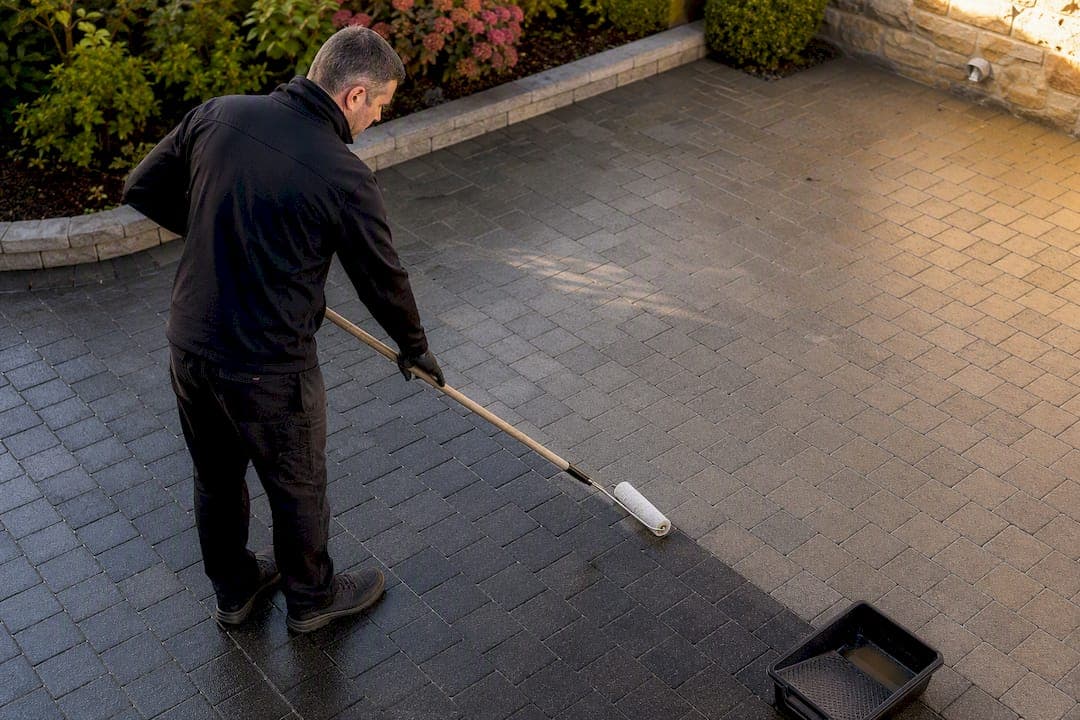
Sealing is worth it for stain-prone concrete or block paving, or for any patio that gets heavy entertaining use and needs colour brought back. It's not worth it, and can even cause problems, on permeable SuDS paving, patios that stay damp and shaded most of the year, or paving still curing after a recent lay. In Irish conditions, penetrating or matt acrylic sealers tend to perform best, with resealing generally needed every few years. If you're unsure which category your patio falls into, Sherry Property Care can assess it for you.
TL;DR:
- Sealers need reapplication every two to five years, with water-based acrylics typically requiring more frequent renewals in damp Irish conditions.
- Proper surface preparation, including cleaning, re-sanding joints, and ensuring the surface is fully dry, is crucial to achieving long-lasting sealing results.
- Natural stone surfaces respond best to breathable, penetrating sealers, while porcelain and similar low-porosity materials usually do not require sealing.
- Sealing is beneficial for concrete and block paving used for entertaining or showing signs of fading but should be avoided on permeable or shaded patios that stay damp.
- DIY sealing is suitable for confident homeowners using acrylic film-formers on easy materials, but professionals are recommended for complex surfaces or drainage concerns.
Table of Contents
- What are the real benefits and drawbacks of patio sealing?
- Which patio materials in Ireland should be sealed?
- How do you prepare a patio for sealing in Ireland?
- Which sealer should you choose for an Irish patio?
- How do you apply patio sealer correctly?
- How often should you reseal a patio in Ireland?
- A Dublin grounds-care perspective on patio sealing
- If you'd rather not DIY: professional patio sealing in Dublin
- Sources
- FAQ
What are the real benefits and drawbacks of patio sealing?
Sealing does three things well: it deepens colour on faded concrete or block paving, resists oil and organic staining, and locks sand into the joints so weeds and ants have a harder time moving in. On a patio that hosts barbecues and garden parties, that combination noticeably extends the gap between deep cleans.
The trade-offs are real, though. A sealed surface needs more careful upkeep than an unsealed one, since sealer traps whatever sits on top of it, and gloss finishes can turn slick when wet. In a climate as damp as Ireland's, the biggest risk isn't the sealer failing to bond. It's moisture getting trapped underneath before it fully cures, which shows up later as whitening, hazing, or patches of peeling.
Who benefits most:
- Concrete patios with visible staining, blotching, or years of grime baked in
- Block paving used for entertaining, where joint sand keeps washing out
- Anyone wanting a colour lift on tired, faded paving
Who should probably skip it:
- Patios in constant shade that rarely dry out fully
- Anyone unwilling to reseal every few years as part of routine upkeep
Which patio materials in Ireland should be sealed?
Not every surface responds the same way, and getting this wrong wastes both time and product.
Concrete slabs and block paving are the classic candidates. Both take well to acrylic film-forming sealers or penetrating silane and siloxane products, depending on whether you want a colour boost or a more natural, breathable finish. Block paving in particular benefits because sealing helps hold joint sand in place through wet winters.
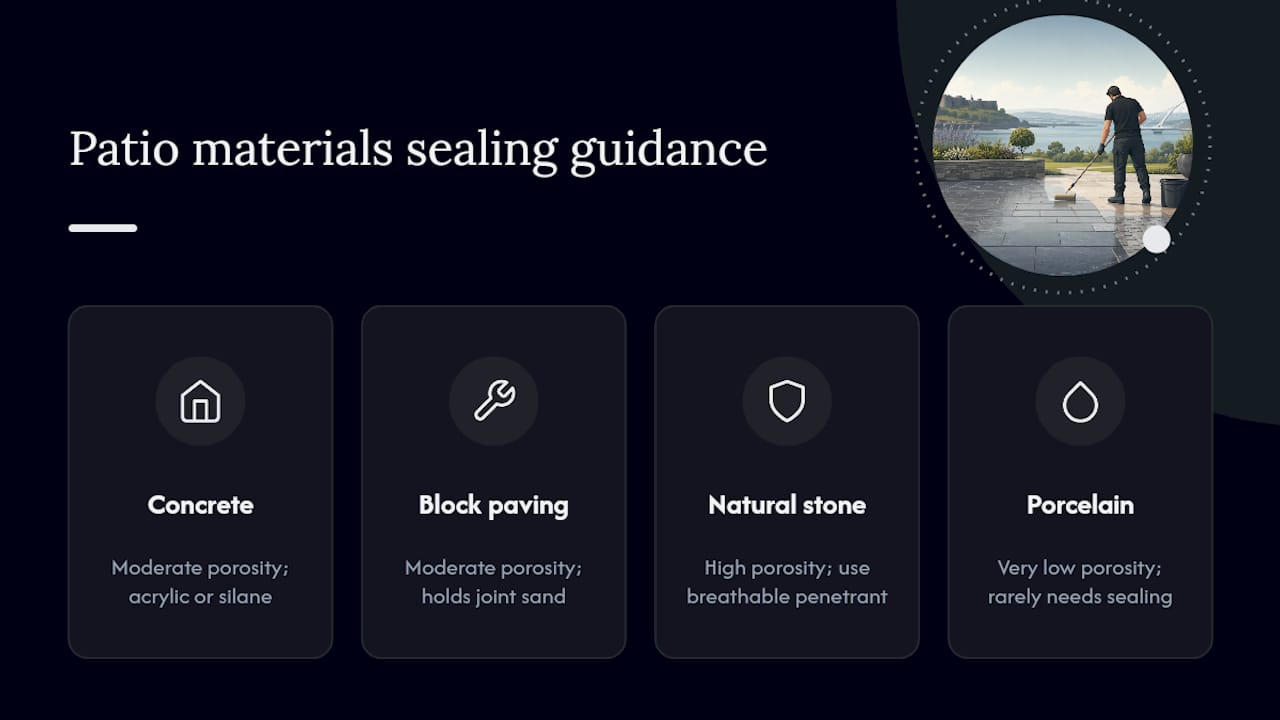
Natural stone, such as sandstone or limestone, needs more care. Breathable, penetrating sealers work far better than film-forming acrylics here, since trapping moisture inside porous stone invites frost damage. Acid-based cleaners should be avoided on limestone entirely, as they etch the surface.
Porcelain and other very low-porosity paving rarely needs sealing at all. The material barely absorbs anything, so a standard sealer sits on the surface without penetrating, adding cost for little benefit unless you're using a specialist nano-coating for slip resistance.
Permeable or SuDS-compliant paving is a different case altogether. Sealing these can block the drainage function they're designed for, so speak to whoever installed the system before touching it with any product.
How do you prepare a patio for sealing in Ireland?
Preparation decides whether your sealer lasts five years or fails within five months. Contractors who specialise in sanding and sealing processes treat this stage, not the sealer brand, as the real determinant of longevity.
- Clear the area completely and inspect for oil, grease, moss, or the white powdery bloom known as efflorescence. Grease responds to alkaline degreasers, while efflorescence needs a mild acid cleaner used cautiously, since acid can dull certain stone finishes.
- Pressure wash within safe limits. Keep the nozzle moving and avoid overly narrow jets that can gouge joints or blast out sand entirely. A proper power washing technique protects the surface while still lifting embedded dirt.
- Treat stubborn black spots separately. Algae and black organic staining usually need a longer dwell time with a targeted treatment before rinsing, rather than relying on the pressure washer alone.
- Re-sand the joints. Polymeric sand binds better against wash-out than plain kiln-dried sand, particularly on block paving. Local re-sanding guidance covers the correct compaction technique.
- Let it dry properly. Aim for a minimum of 24 to 48 hours in settled weather, extending to 48 hours or more when conditions are uncertain. Press a strip of dark tape to the surface overnight; condensation underneath means it's still too wet.
Pro Tip: If a previous sealer has already flaked or gone milky, stop and get it professionally assessed before reapplying anything. Sealing over a failed coating almost always makes the peeling worse, not better.
Which sealer should you choose for an Irish patio?
The right sealer depends far more on your material and finish preference than on brand loyalty.
- Water-based acrylic film-formers enhance colour well and are the easiest option for a confident DIYer, but they typically need refreshing every two to three years in this climate.
- Solvent-based acrylics give a deeper, richer finish and slightly longer durability, though they demand better ventilation and more careful application.
- Penetrating silane or siloxane sealers soak into the surface rather than sitting on top, leaving a natural, breathable finish that suits natural stone and anyone wanting invisible protection rather than gloss.
- Polyurethane (PU) systems cost more upfront but hold up longest under heavy foot traffic, making them worth considering for patios that double as an outdoor living room all summer.
On the question of slip risk, glossier film-forming finishes get noticeably more slippery when wet than matte or penetrating options. If your patio surrounds a pool, sits under a shaded canopy, or gets constant family traffic, add a non-slip aggregate to the sealer or choose a matte product outright. Typical sealer lifespans in UK conditions run two to five years, with water-based acrylics at the shorter end and PU systems stretching well beyond that.
How do you apply patio sealer correctly?
Application mistakes are where most DIY jobs go wrong, and nearly all of them come down to rushing the coats or ignoring the weather forecast.
What you need: a low-pressure pump sprayer, a medium-nap roller for back-rolling, a soft broom to work sealer into joints, and masking tape to keep clean edges where the patio meets grass or a wall.
- Check the forecast first. Avoid any application if rain is expected within the cure window, and favour a late spring or early autumn weather window when Irish weather tends to hold steadier for longer stretches.
- Apply the first coat evenly, working in manageable sections rather than the whole patio at once.
- Back-roll immediately to even out any pooling and avoid visible lap marks once it dries.
- Apply the second coat perpendicular to the first. This crossing pattern, used in professional sealing processes, gives far more even coverage than two coats applied in the same direction.
- Respect the cure times. Light foot traffic is usually fine after 24 hours; heavy furniture or planters should stay off for several days, and definitely not until the sealer has fully hardened.
Pro Tip: Always test a small, hidden corner first and leave it 24 hours before committing the whole patio. It's the fastest way to catch a wrong sealer choice before it's covering your entire garden.
How often should you reseal a patio in Ireland?
Routine care is simple: sweep debris regularly, wash gently rather than blasting at full pressure, and spot-clean spills before they set in. To check whether protection is still working, splash water onto the surface. If it beads and rolls off, the sealer's doing its job. If it soaks straight in, it's time to think about resealing.
- Water-based acrylics: roughly two to three years before performance drops noticeably
- Solvent-based acrylics and penetrating sealers: closer to three to five years
- PU systems: longest lifespan, but at a higher upfront cost
Shade, frost, and heavy foot traffic all shorten these windows. A patio under trees or against a north-facing wall will need resealing sooner than one that gets full sun most days.
Troubleshooting: whitening or hazing usually points to trapped moisture or a coat applied too thick. Peeling almost always means an old, incompatible sealer underneath. Either problem generally means stripping back to bare surface before reapplying, rather than layering a new coat on top of the fault.
A Dublin grounds-care perspective on patio sealing
A local grounds maintenance company in Dublin has observed predictable patterns with patio care in the area. Weather windows are shorter than most guides assume. Dublin's damp autumns and unpredictable spring showers mean a job planned for "next weekend" can slip by ten days waiting for a dry enough stretch, which is exactly why realistic scheduling matters more than optimistic scheduling.
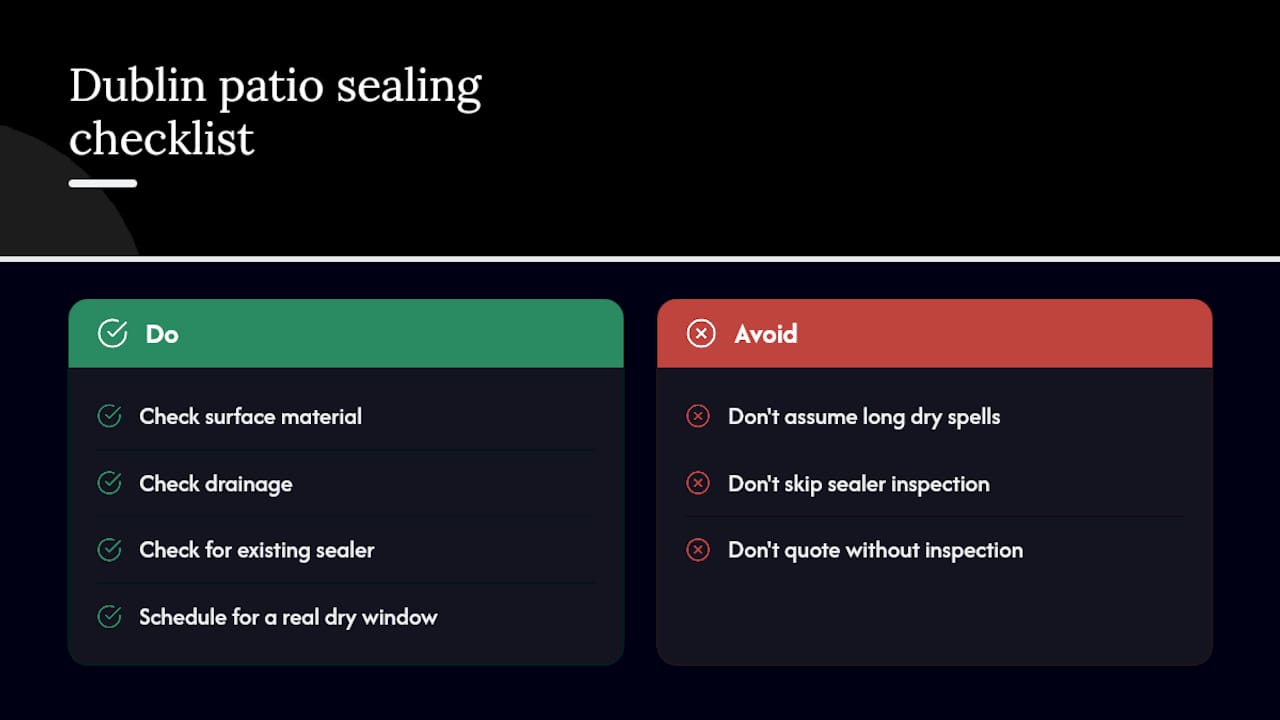
Before quoting any patio job, the team checks three things: what the surface actually is, how well it drains, and whether a previous sealer or coating is already present and failing. That last check alone avoids most of the whitening and peeling problems homeowners run into later.
For readers who want more detail before booking anything, Sherry Property Care's outdoor deep cleaning guidance covers what a professional visit typically involves from first inspection to finished result.
— gerard
If you'd rather not DIY: professional patio sealing in Dublin
Sealing a patio properly takes a dry week, the right products for your surface, and patience through two coats. If that's more than you want to take on, professional services can handle the whole process for homeowners: power washing, stain and black-spot treatment, joint re-sanding, and the sealing itself.

Getting a quote is straightforward. Send a few photos of the patio, note its approximate size and surface type, and mention any previous sealer or coating you're aware of. From there, enquiries typically proceed to a site visit to confirm drainage, surface condition, and appropriate sealer before pricing. If your garden needs broader attention alongside the patio, garden maintenance services across Ireland are worth comparing for seasonal upkeep costs too.
Ready to stop guessing whether your patio needs sealing? Request your personalised quote from Sherry Property Care and get a straight answer based on what's actually on the ground.
Sources
- Sealing a concrete patio — ConcreteNetwork
- Should you seal your pavers? — Pure Seal Services (UK guide)
- The FCPE sanding & sealing process — First Coast Property Experts
FAQ
Is patio sealing worth it in Ireland?
Yes, for stain-prone concrete, block paving used for entertaining, or any patio that's faded and needs a colour lift. It's not worth it for permeable SuDS paving or patios that stay damp and shaded most of the year.
How long does patio sealer last in Irish weather?
Most sealers last two to five years, with water-based acrylics needing refreshing sooner and PU systems lasting toward the longer end.
Should I seal my patio myself or hire a professional?
Straightforward acrylic sealing on concrete or block paving suits confident DIYers who can dedicate a dry weekend. Natural stone, previously failed coatings, or drainage concerns are better handled by a professional, and Sherry Property Care offers assessment and full sealing services across Dublin.
How soon after cleaning can I seal a patio?
Allow at least 24 to 48 hours drying time, extending further in uncertain weather, and confirm the surface is fully dry before applying any sealer.
Does sealing make a patio slippery?
Glossy film-forming acrylics can increase slip risk when wet. Choosing a matte or penetrating sealer, or adding a non-slip aggregate, keeps traction closer to the unsealed surface.