Most Dublin homeowners and property managers use the words "maintenance" and "repairs" interchangeably. That single mix-up can quietly drain your budget. Reactive work costs 25-30% more than planned preventive maintenance, meaning every time you wait for something to break before acting, you pay a premium. This article breaks down exactly what separates maintenance from repairs, what Irish law says about each, and how a smarter approach to your Dublin property can protect your investment and keep costs predictable.
Table of Contents
- What is property maintenance?
- How repairs differ from maintenance
- Side-by-side comparison: property maintenance vs repairs
- Legal and financial responsibilities for landlords and tenants
- Cost savings, ROI, and value boost from proactive maintenance
- Practical tips for Dublin homeowners and property managers
- Professional maintenance support for Dublin properties
- Frequently asked questions
Key Takeaways
| Point | Details |
|---|---|
| Maintenance prevents costly repairs | Routine care like gardening and cleaning keeps issues from becoming expensive emergencies. |
| Repairs are riskier and more expensive | Waiting until things break often leads to higher bills and legal stress for property owners. |
| Dublin laws matter | Know who is legally responsible for upkeep and repairs to stay compliant and avoid disputes. |
| Proactivity boosts value | Well-maintained properties have higher curb appeal and rental or sale value. |
| Professional help saves time | Trusted maintenance services handle schedules, compliance, and quality for complete peace of mind. |
What is property maintenance?
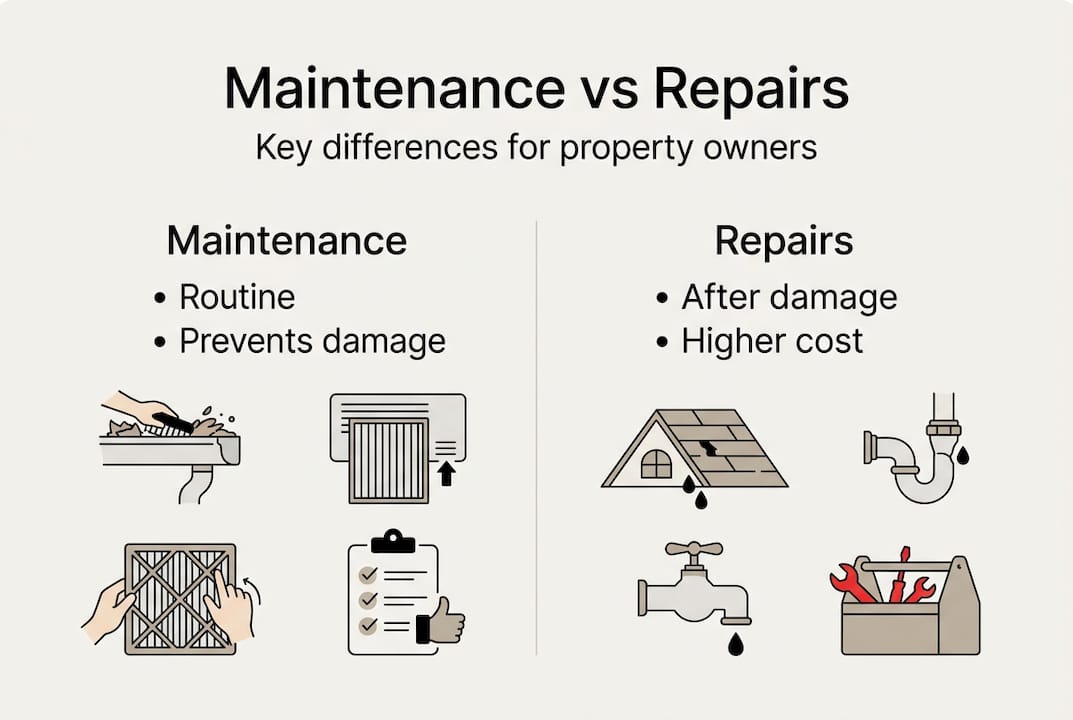
Property maintenance is everything you do before something goes wrong. It is scheduled, intentional, and designed to keep your property looking good and functioning properly. Think of it as the regular care that stops small issues from becoming expensive headaches.
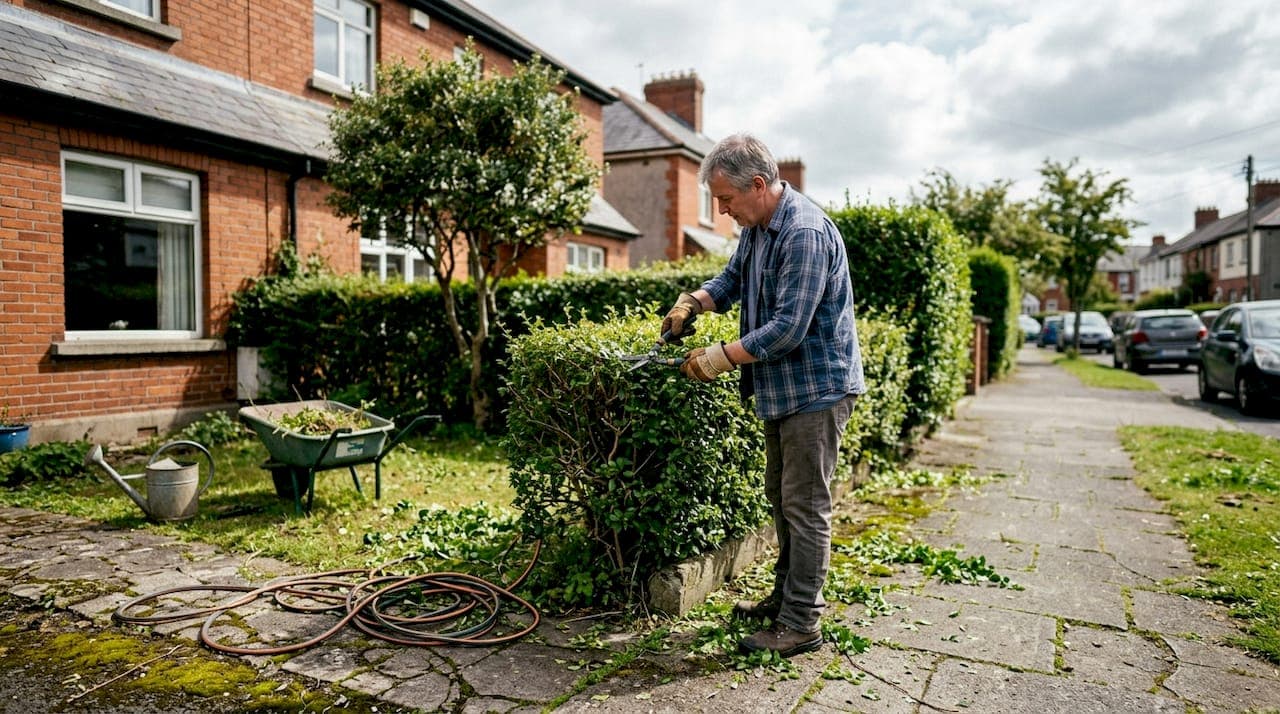
Maintenance covers proactive, scheduled activities like inspections, cleaning, and gardening tasks such as lawn mowing and hedge trimming. For Dublin properties, this translates into a predictable calendar of work that protects both aesthetics and structure.
Typical property maintenance tasks include:
- Lawn mowing on a regular schedule to keep grass healthy and tidy
- Hedge trimming to maintain boundaries and improve curb appeal
- Debris clearance after storms or seasonal leaf fall
- Power washing driveways, patios, and exterior surfaces
- Seasonal garden planting to keep grounds looking fresh year-round
- Gutter cleaning and minor exterior checks to prevent water damage
The benefits go beyond looks. Regular maintenance extends the life of surfaces and garden features, keeps your property compliant with rental standards, and makes budgeting far easier. You know roughly what you will spend each month rather than facing surprise invoices.
Pro Tip: Booking a maintenance scheduling strategy at the start of each year helps you lock in service dates before providers fill up, especially in spring when demand spikes across Dublin.
For homeowners focused on curb appeal and property value, consistent maintenance is the single most reliable tool available.
How repairs differ from maintenance
Repairs are reactive. They happen after something has already failed or been damaged. A gate blown off its hinges in a winter storm, a cracked driveway slab, a garden wall that has started to lean, or a lawn that has been neglected to the point of needing full restoration. These are all repair scenarios.
Repairs are reactive fixes after failure or damage, such as fixing leaks or replacing broken components. The key difference from maintenance is the trigger: repairs are event-driven, not calendar-driven.
Common repair triggers for Dublin properties include:
- Storm or wind damage to fences, gates, or garden structures
- Cracked or sunken paving on driveways and paths
- Broken boundary walls from vehicle impact or ground movement
- Overgrown or dead landscaping that requires full removal and replanting
- Surface staining or damage that basic cleaning cannot fix
The financial sting of repairs goes beyond the job itself. Emergency call-outs often carry after-hours premiums. Contractors may charge more when work is urgent. And if one problem has been left long enough to cause secondary damage, the scope of work grows fast.
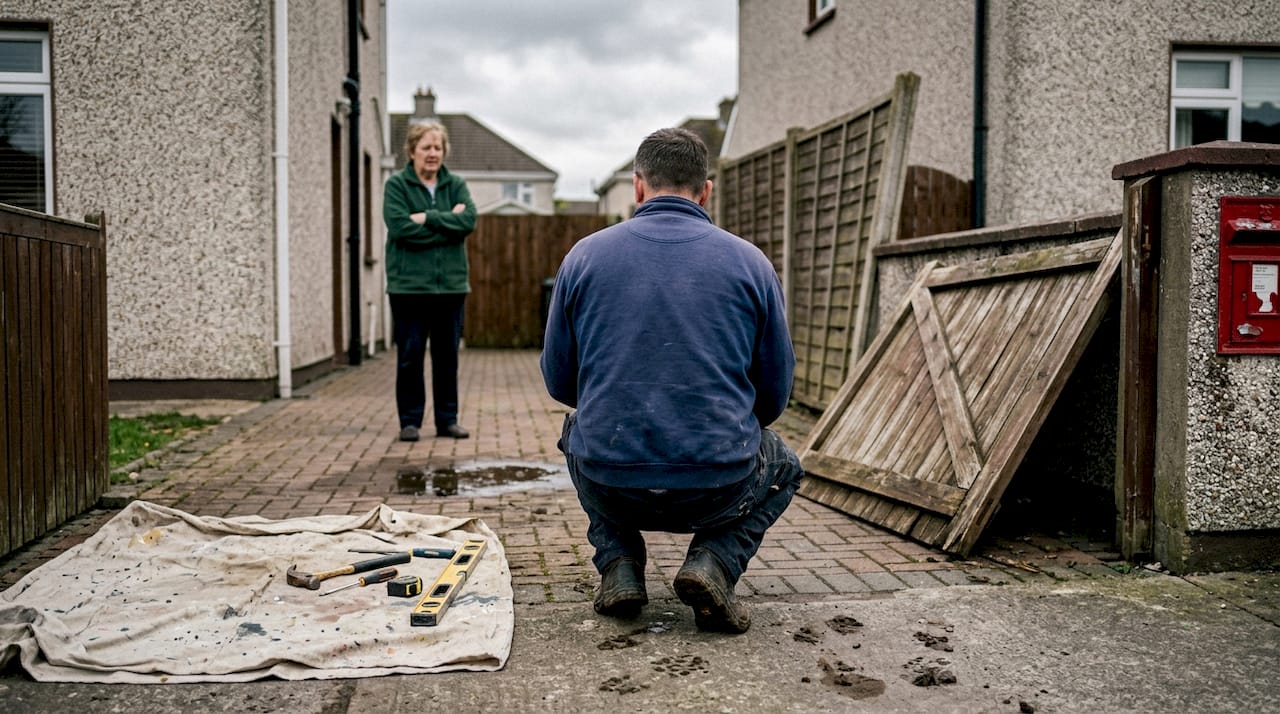
Delaying maintenance to save money in the short term is one of the most common and costly mistakes property owners make. A hedge that costs €150 to trim twice a year can cost €600 or more to remove and replant if left for three years.
Pro Tip: Walk your property after every significant storm. Catching minor damage early, like a loose fence post or a cracked path edge, lets you address it as a small exterior maintenance fix rather than a full repair job.
Side-by-side comparison: property maintenance vs repairs
Seeing both concepts together makes the distinction impossible to miss. Here is a direct comparison using real Dublin cost benchmarks.
| Factor | Maintenance | Repairs |
|---|---|---|
| Trigger | Scheduled, calendar-based | Reactive, after failure or damage |
| Timing | Planned in advance | Unplanned, often urgent |
| Examples | Lawn mowing, hedge trimming, power washing | Broken wall, cracked driveway, dead lawn restoration |
| Typical Dublin cost | Mowing €30-75/visit, hedging €100-200 | Reactive fixes vary widely, often 25-30% higher per task |
| Annual spend | €600-1,400 for routine garden care | Unpredictable, can spike sharply after one event |
| Budget impact | Predictable, easy to plan | Unpredictable, can disrupt cash flow |
| Property value effect | Steady improvement over time | Neutral at best, negative if delayed |
The numbers tell a clear story. Routine garden maintenance across a full year costs roughly the same as a single mid-range repair job. And that is before factoring in the visual and legal benefits of keeping your property in good order.
For property managers handling multiple units, streamlining your garden maintenance workflow across sites can reduce per-property costs significantly while keeping standards consistent.
Legal and financial responsibilities for landlords and tenants
Knowing what to do is vital, but understanding legal obligations keeps you compliant and protected. Irish law draws a clear line between what landlords must handle and what falls to tenants.
In Ireland, landlords are legally responsible for structural repairs, maintaining plumbing, electrical, and heating systems, and ensuring the property meets minimum rental standards. Tenants are responsible for minor upkeep and for any damage they cause beyond normal wear and tear.
Here is a breakdown of typical responsibilities:
- Landlord: structural repairs including roofs, walls, windows, and external doors
- Landlord: system maintenance covering heating, plumbing, and electrical safety
- Landlord: grounds and exterior in most tenancy agreements, especially for managed properties
- Tenant: routine cleanliness and minor upkeep inside the property
- Tenant: reporting damage promptly to avoid liability for secondary issues
- Tenant: excess damage beyond what normal use would cause
One of the most common disputes between landlords and tenants involves the line between wear and tear and actual damage. Wear and tear depends on tenancy length and occupant numbers, and the RTB (Residential Tenancies Board) provides guidance on how to assess it fairly.
"A repair is not an improvement or renewal unless that is the only reasonable option. The distinction between wear and tear and excess damage depends on the length of the tenancy and the number of occupants." — RTB Guidance
Documentation is your best protection. Photograph the property at the start and end of every tenancy. Keep records of every maintenance visit and repair job. This protects both parties and makes any RTB dispute far easier to resolve.
For a deeper look at who handles what outdoors, the groundskeeping responsibilities guide covers common scenarios for Dublin landlords and homeowners.
Cost savings, ROI, and value boost from proactive maintenance
The financial case for prioritizing maintenance over repairs is strong. Industry benchmarks suggest that an 80/20 preventive-to-reactive ratio delivers up to 400% ROI and saves 12-18% on operating costs annually.
For Dublin landlords and homeowners, proactive maintenance boosts property value and aesthetics through better curb appeal, prevents costly reactive repairs, and keeps properties compliant with RTB standards.
Here is how the numbers stack up in a typical Dublin residential scenario:
| Approach | Annual spend estimate | Likely outcome |
|---|---|---|
| Proactive maintenance | €800-1,400 | Stable property value, predictable costs, strong curb appeal |
| Reactive repairs only | €1,200-3,000+ | Unpredictable spikes, potential value loss, tenant complaints |
| Mixed (80/20 ratio) | €900-1,500 | Best balance of cost control and property condition |
Beyond the numbers, a well-maintained garden and clean exterior surfaces directly influence how buyers and tenants perceive your property. First impressions form in seconds. A tidy lawn and clean driveway signal that the whole property is cared for.
Investing in expert landscaping can add measurable value at sale or letting time. And maintaining a healthy, green lawn year-round is far cheaper than restoring a neglected one.
Practical tips for Dublin homeowners and property managers
Ready to put this into practice? These field-tested steps will help you stay ahead of problems and keep your property in top shape.
- Inventory your property needs. Walk every area, inside and out, and list what needs regular attention. Garden, driveway, paths, fences, exterior walls, and surfaces all belong on the list.
- Set a maintenance schedule. Assign tasks to months or seasons. Lawn mowing from March to October, hedge trimming in spring and late summer, power washing in autumn before the wet season.
- Track your costs. Keep a simple spreadsheet of every maintenance and repair spend. Patterns will emerge quickly, and you will see exactly where reactive costs are eating into your budget.
- Hire vetted professionals for specialist tasks. DIY works for basic tidying, but hedging, surface preparation, and power washing done poorly can cause damage that costs more to fix.
- Document everything. Photos, invoices, and service records protect you legally and help you plan future budgets accurately.
The industry benchmark of 70-80% planned maintenance versus reactive work is a practical target for Dublin landlords who want to save thousands each year.
Pro Tip: Use a shared calendar or property management app to track service dates. A streamlined maintenance workflow means nothing gets missed, and you always have a paper trail if a dispute arises.
Watch for early warning signs too. Moss creeping across a path, a hedge growing unevenly, or a gate that sticks slightly are all signals that a small maintenance job is overdue. Catch them now and you avoid a repair bill later.
Professional maintenance support for Dublin properties
Understanding the difference between maintenance and repairs is the first step. Acting on it consistently is where most property owners struggle, especially when life gets busy or the Dublin weather makes outdoor work unpredictable.

At Sherry Property Care, we handle the full range of scheduled gardening and surface maintenance that keeps Dublin properties looking their best and running smoothly. From regular lawn mowing and hedge trimming to power washing driveways and preparing surfaces, our team works to a plan so you never have to react to an avoidable problem. We work with homeowners, landlords, and property managers across Dublin, and every service is designed to protect your investment and keep your property compliant. Explore our property maintenance services in Dublin and get a free quote today.
Frequently asked questions
What's the main difference between maintenance and repairs?
Maintenance is proactive and scheduled, while repairs are reactive fixes that happen after a problem has already occurred. One prevents issues; the other resolves them.
Is preventive maintenance really cheaper than repairs?
Yes. Reactive maintenance costs 25-30% more than planned preventive work, and emergency call-outs often add further premiums on top of the base repair cost.
Who is responsible for repairs in a rental property in Dublin?
Landlords handle structural repairs and major systems like plumbing and heating, while tenants are responsible for minor upkeep and any damage they cause beyond normal wear and tear.
How often should property maintenance be scheduled?
Gardening and surface maintenance typically run monthly or seasonally, but annual inspections are recommended for Dublin properties to catch issues before they become costly repairs.