
TL;DR:
- Effective property upkeep in 2026 combines proactive maintenance, legal compliance, and technology to protect asset value. Dublin landlords should schedule regular inspections, use digital tools for compliance, and maintain outdoor spaces to reduce costs and prevent disputes. Proper records and smart planning ensure legal safety, tenant satisfaction, and long-term property performance.
Property upkeep best practices are defined as the proactive, scheduled, and legally compliant maintenance routines that preserve and enhance the value of residential and commercial properties. For homeowners and property managers in Dublin, 2026 brings sharper regulatory demands and rising costs. Repairs and maintenance now represent 20.4% of total budgeted service charge costs for managed properties. That figure signals how central upkeep has become to financial performance. The UK property and facilities management sector is forecast to reach £38.3 billion in revenue in 2026, reflecting growing complexity in property operations. Sherrypropertycare works with Dublin property owners to deliver the kind of meticulous grounds care that sits at the heart of any sound upkeep programme.
What are the core components of effective property upkeep in 2026?
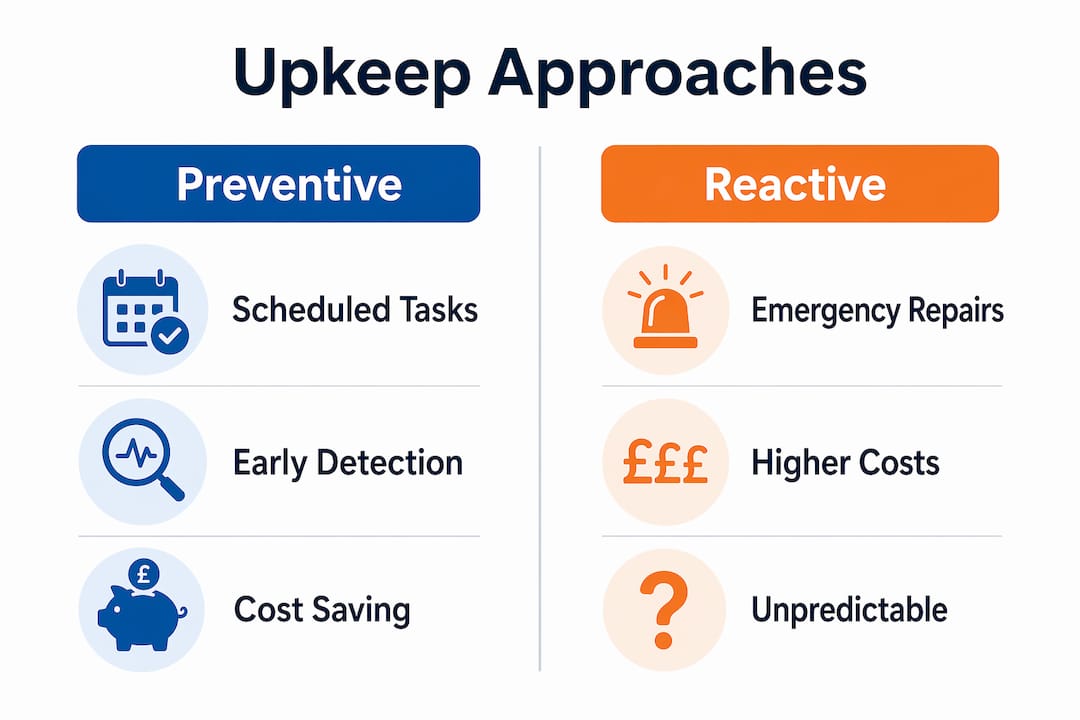
Effective property upkeep programmes divide maintenance into two clear categories: preventive and reactive. Preventive maintenance runs on a fixed schedule regardless of visible problems. Reactive maintenance responds to faults after they appear. The evidence strongly favours preventive approaches. Twice-yearly inspections and digital tenant reporting channels prevent small defects from escalating into expensive structural repairs or damp issues. That means a spring and autumn inspection cycle is the minimum standard for any Dublin property in 2026.
The table below shows the most common upkeep tasks, their recommended frequency, and their priority level.
| Task | Frequency | Priority |
|---|---|---|
| Gutter clearance and inspection | Twice yearly | High |
| Roof and chimney check | Annually | High |
| Boiler and heating service | Annually | High |
| External grounds and hedge trimming | Quarterly | Medium |
| Plumbing and drainage inspection | Annually | High |
| Smoke and CO alarm testing | Monthly | High |
| Window and door seal check | Annually | Medium |
| Electrical visual check | Annually | High |
Technology is changing how property managers track these tasks. Computerised maintenance management systems, known as CMMS, centralise work orders, contractor records, and inspection logs in one place. IoT sensors and CMMS software improve asset lifecycles and energy efficiency, driven by tighter compliance and Net Zero goals. For Dublin landlords managing multiple properties, CMMS platforms reduce the risk of missed inspections and the costly repairs that follow.

Pro Tip: Set calendar reminders for every scheduled task at the start of the year. Pair each reminder with a named contractor so you are never scrambling when the date arrives.
Which legal requirements must Dublin property managers meet in 2026?
Compliance is not optional. Landlords must conduct annual gas safety inspections (CP12), five-yearly Electrical Installation Condition Reports (EICR), and ensure working smoke and carbon monoxide alarms on every floor. These are baseline obligations, not aspirational targets. Missing any one of them exposes you to enforcement action and potential liability.
The key legal obligations for Dublin homeowners and property managers in 2026 include:
- Annual CP12 gas safety certificate: A Gas Safe registered engineer must inspect all gas appliances and flues every 12 months.
- Five-yearly EICR: An approved electrician must assess the full electrical installation and issue a condition report.
- Smoke alarms: Fit a working alarm on every storey of the property.
- Carbon monoxide alarms: Required in any room containing a solid fuel appliance; strongly recommended wherever gas appliances are present.
- Legionella risk assessment: Landlords must assess and control the risk of Legionella bacteria in water systems, particularly in properties with stored water tanks.
- Fitness for habitation: Properties must meet minimum habitability standards throughout the tenancy.
The Housing Health and Safety Rating System (HHSRS) underpins enforcement in this area. Well-managed and promptly repaired homes reduce enforcement action risk and lower long-term costs. Properties that fail HHSRS standards risk formal notices, financial penalties, and reputational damage. You can find a detailed breakdown of these obligations in this Dublin landlord compliance guide.
Pro Tip: Create a centralised digital compliance folder for each property. Store every certificate, inspection report, and correspondence in one place. Digital compliance folders make evidence provision straightforward for legal inspections, sales processes, and audit readiness.
How can technology improve property maintenance efficiency?
Technology does not replace good maintenance habits. It makes them easier to sustain. The most practical tools for Dublin property managers in 2026 fall into four categories:
- CMMS platforms: Track work orders, schedule inspections, and store contractor records. Entry-level field apps suit single-property owners; enterprise platforms handle portfolios of 20 or more units.
- IoT sensors: Monitor HVAC performance, detect water leaks, and track energy consumption in real time. A leak sensor in a bathroom ceiling can flag a slow drip before it becomes a £3,000 ceiling replacement.
- Digital certificate management: Purpose-built software sends automatic renewal alerts for CP12, EICR, and other certificates. This removes the risk of a certificate lapsing unnoticed.
- Tenant reporting portals: Online or app-based channels let tenants log maintenance requests with photos. Faster reporting means faster repairs and fewer disputes.
Predictive maintenance takes this further. Rather than servicing a boiler on a fixed annual date, predictive systems use sensor data to flag when performance drops below a threshold. That approach extends asset life and reduces unnecessary service visits. The caution here is cost. IoT infrastructure requires upfront investment and staff training. For smaller Dublin landlords, a well-maintained spreadsheet and a reliable CMMS app deliver most of the benefit at a fraction of the price.
What are the most common maintenance challenges for Dublin properties?
Dublin's housing stock includes a significant proportion of older buildings. Ageing infrastructure creates specific risks that newer builds do not face. Roofing felt degrades, brickwork develops cracks, and older wiring may not meet current standards. Each of these issues is manageable when caught early and expensive when ignored.
The most frequent problem areas include:
- Roofing and gutters: Blocked gutters cause damp penetration, which is one of the most common and costly defects in Dublin properties.
- Kitchens and bathrooms: High-use areas where grout, sealant, and fixtures deteriorate faster than elsewhere. Early replacement of sealant costs very little. Water damage behind tiles costs a great deal.
- External grounds: Overgrown hedges, blocked drains, and deteriorating paving create both safety hazards and disputes. Disputes often arise over outdoor spaces; landlords should clarify responsibilities for grounds upkeep in writing to avoid tenancy-end conflicts.
- Electrical systems: Older properties may have outdated consumer units or aluminium wiring. An EICR will identify these, but only if you commission one on schedule.
Setting clear tenancy agreements is the most underused tool in property management. A well-drafted agreement specifies who is responsible for lawn mowing, hedge trimming, and bin area maintenance. That clarity prevents disputes and protects both parties. For professional grounds maintenance across Dublin, Sherrypropertycare provides lawn and hedge care services that keep external spaces compliant and presentable year-round.
Pro Tip: When selecting local tradespeople, ask for references from other Dublin landlords specifically. A plumber who works well in new builds may not have experience with older Dublin terraces and their particular quirks.
Rental property value also benefits from thoughtful interior upgrades. Fitted wardrobes and quality storage in rental properties improve tenant satisfaction and reduce void periods, which directly supports long-term returns.
How does scheduled maintenance reduce costs and improve property value?
Proactive maintenance delivers measurable financial benefits. Construction price inflation for building maintenance rose by 3.3% in 2026. That means delaying a repair today costs more than doing it now. The financial case for scheduled upkeep is straightforward.
| Factor | Reactive approach | Proactive approach |
|---|---|---|
| Repair cost | High (emergency rates) | Low (planned rates) |
| Tenant disruption | Frequent | Minimal |
| Insurance risk | Higher premiums | Lower premiums |
| Property valuation | Depressed by defects | Supported by condition |
| Regulatory risk | Elevated | Managed |
Proactive upgrades like improved insulation, modern windows, and EV charging points are vital in 2026 to command better rents and mitigate regulatory risks. These are not luxury additions. They are the features that determine whether a Dublin property attracts and retains quality tenants. Tenants who feel their property is well maintained stay longer. Longer tenancies mean fewer void periods and lower re-letting costs.
Insurance is another area where maintenance pays directly. Insurers assess the condition of a property when calculating premiums and settling claims. A property with documented maintenance records and current certificates presents a lower risk profile. That translates to better terms and fewer disputes when a claim arises. You can explore the cost benefits of maintenance versus repairs in more detail to build a stronger financial case for your upkeep budget.
Pro Tip: Review your maintenance budget annually against current construction inflation rates. A budget set in 2024 will not cover the same scope of work in 2026 without adjustment.
Key takeaways
Proactive, scheduled maintenance is the single most cost-effective approach to property upkeep in Dublin in 2026, combining legal compliance, financial savings, and asset value protection.
| Point | Details |
|---|---|
| Preventive beats reactive | Scheduled inspections catch defects early and cost far less than emergency repairs. |
| Compliance is non-negotiable | CP12, EICR, and alarm regulations carry legal weight; missing them creates serious liability. |
| Technology supports consistency | CMMS and IoT tools reduce missed tasks and improve maintenance records across portfolios. |
| Outdoor spaces need written agreements | Clarifying grounds responsibilities in tenancy agreements prevents the most common disputes. |
| Maintenance protects value | Documented upkeep supports property valuations, insurance terms, and tenant retention. |
What I have learned managing Dublin properties over the years
The biggest mistake I see property owners make is treating maintenance as a cost rather than an investment. They delay the gutter clearance, skip the boiler service, and then wonder why they are facing a £4,000 damp remediation bill in january. The maths is not complicated. Small, regular expenditure prevents large, unpredictable expenditure.
What surprises most people is how much of property management comes down to paperwork. The physical maintenance matters, but the records matter just as much. A landlord who can produce a full compliance folder at 24 hours' notice is in a completely different legal position to one who cannot. I have seen properties lose buyers and tenants simply because the owner could not demonstrate that the basics had been done.
Technology is genuinely useful, but only if you actually use it. I have seen landlords invest in CMMS platforms and then continue managing everything by memory and text message. The tool is only as good as the habit behind it. Start with a simple digital calendar and a shared folder. Build from there.
The regulatory environment in Dublin and across Ireland is tightening. That is not going to reverse. The property managers who will thrive are those who treat compliance as a permanent operating standard, not a box to tick before a sale. Get ahead of the requirements now. The cost of doing so is always lower than the cost of catching up under pressure.
— gerard
How Sherrypropertycare helps Dublin property owners stay on top of upkeep
Maintaining a property in Dublin takes consistent effort, particularly when it comes to external grounds and outdoor presentation.
Sherrypropertycare specialises in professional gardening and grounds maintenance for residential and commercial properties across Dublin. From lawn care and hedge trimming to full grounds upkeep, the team delivers meticulous, reliable service tailored to each property. Whether you manage a single home or a portfolio of rental units, Sherrypropertycare offers customised grounds maintenance with quotes based on your specific property. Send a photo of your grounds and get a personalised quote quickly. Good upkeep starts outside. Let Sherrypropertycare handle that part for you.
FAQ
What does property upkeep best practice mean in 2026?
Property upkeep best practice in 2026 means combining proactive scheduled maintenance with full legal compliance, including annual CP12 inspections, five-yearly EICRs, and regular grounds care. The goal is to prevent defects, protect asset value, and meet regulatory standards before enforcement becomes necessary.
How often should Dublin landlords inspect their properties?
Twice-yearly inspections are the recommended minimum, with tenants given at least 24 hours' notice. Quarterly checks are preferable for older properties or those with a history of maintenance issues.
What is the HHSRS and why does it matter?
The Housing Health and Safety Rating System (HHSRS) is the framework used to assess hazards in residential properties. Properties that fail its standards face enforcement action, which increases long-term costs and creates legal liability for landlords.
How can I keep track of compliance certificates digitally?
Create a centralised digital compliance folder for each property and store all certificates, inspection reports, and correspondence there. Digital certificate tracking makes audit readiness straightforward and reduces the risk of a certificate lapsing unnoticed.
Does outdoor maintenance affect property value in Dublin?
Yes. Well-maintained external grounds improve kerb appeal, support property valuations, and reduce tenant disputes over upkeep responsibilities. Clarifying grounds maintenance duties in the tenancy agreement is the most effective way to prevent conflict at the end of a tenancy.