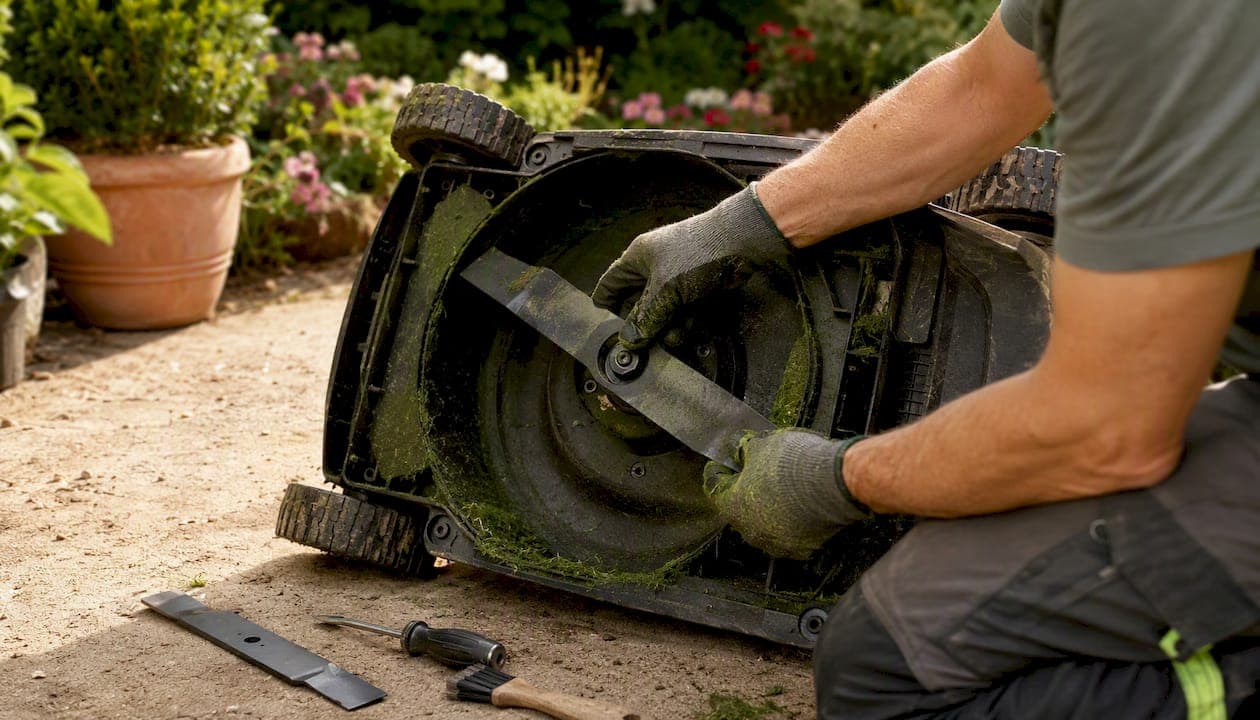
A contractor worth hiring for Dublin grounds maintenance will carry commercial-grade mowers, hedge trimmers, high-CFM backpack blowers, pressure washers, edgers, and hand tools. Three checks tell you more than any brochure: ask to see their fleet in person, request recent service records, and confirm PUWER compliance and PAT testing evidence before signing anything.
Quick hiring verdict:
- A contractor with commercial-grade kit, a documented preventive maintenance routine and PUWER/PAT evidence is the safer hire for Dublin properties.
- Ask during the first call: "Can you show me examples of your fleet, your last service logs, and your insurance and PUWER documentation?"
- If they hesitate on any of those three, keep looking.
Table of Contents
- What does a professional grounds team actually carry?
- How to match kit to your property size and terrain
- Petrol, battery or corded electric: what should you ask a contractor?
- Safety, UK regulations and the maintenance standard you should expect
- How to spot quality operators and well-kept kit on site
- One-page checklist: questions to ask before you hire
- Key takeaways
- Why kit, servicing and compliance matter for Dublin properties
- Sherrypropertycare: get an accurate quote for your Dublin property
- Useful sources
- FAQ
What does a professional grounds team actually carry?
The right kit mix for commercial properties covers more ground than most landlords expect. Here is what each category does and why it matters when you are evaluating a quote:
- Commercial rotary and wide-deck mowers: — Walk-behind models for tight spaces; ride-on or stand-on machines for larger lawns. Husqvarna offers a range including robotic, ride-on and walk-behind mowers with battery-powered options intended to lower noise and emissions.
- Pressure washers: Sized by both PSI and GPM. For multi-unit apartment grounds, balancing PSI and GPM protects finishes; foam pre-wash and 25–40° nozzles are standard practice to avoid surface damage.
Professionals balance capacity with manoeuvrability rather than defaulting to the most powerful machine available. A wide-deck ride-on is useless in a courtyard with a 90 cm gate.
Pro Tip: Ask whether the contractor commits to a single battery platform across their fleet. Battery platform consistency is the single most important decision for cordless fleets because batteries are not interchangeable across brands. A crew running three different battery ecosystems will have charging and inventory problems that slow your job down. Commercial crews also follow the "one is none, two is one" rule, carrying spare blades, trimmer line and a backup machine is common to prevent a single failure from stopping the day's work.
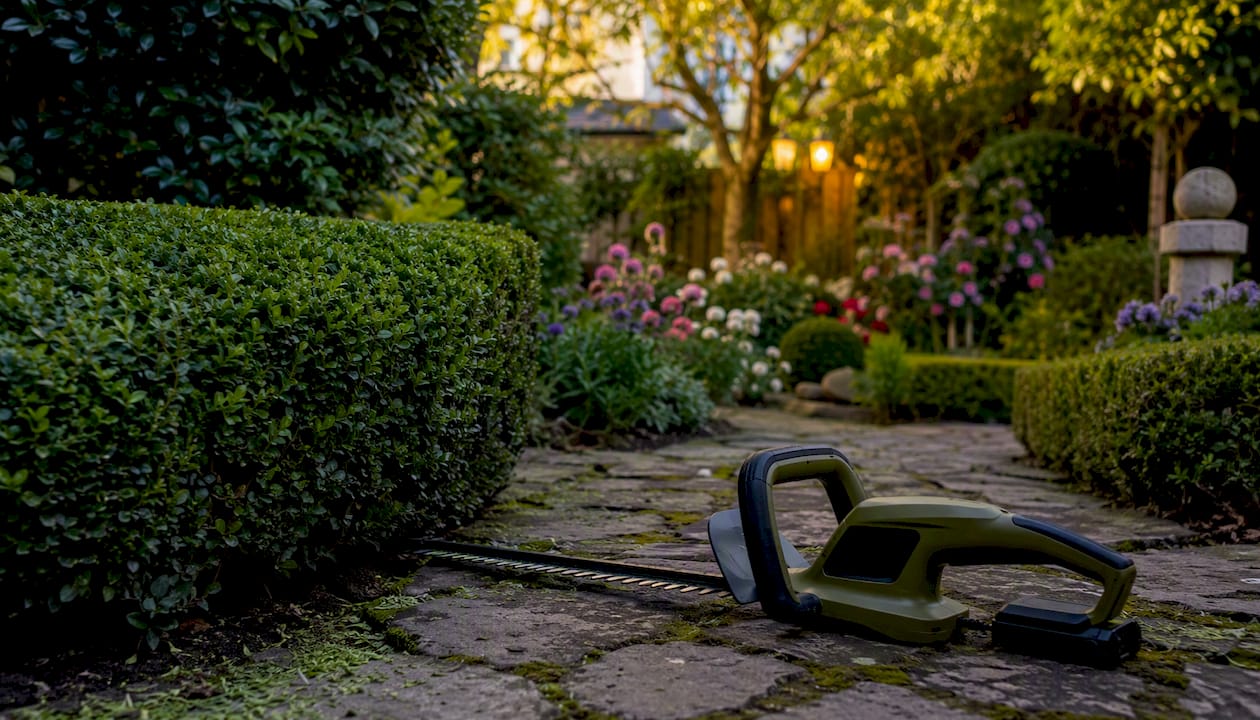
How to match kit to your property size and terrain
Selecting equipment based on usage patterns matters more than raw power. The table below gives practical rules of thumb you can use to check whether a contractor has sized their machines correctly for your site.
| Property type | Lawn area | Recommended mower class | Key access/terrain notes |
|---|---|---|---|
| Inner-city courtyard | Very small | Compact walk-behind or battery push mower | Narrow gate access; battery preferred for noise |
| Suburban terraced garden | Small to medium | Mid-size walk-behind rotary | Check for slopes; straight-shaft trimmer for borders |
| Multi-unit communal lawns | Medium to large | Wide-deck walk-behind or small stand-on | Multiple access points; pressure washer for hard surfaces |
| Large estate or grounds | Very large | Ride-on or stand-on mower | Slopes need stability ratings; spare machine on site |
Narrow gates are a common constraint across Dublin's older residential streets. A contractor who quotes a ride-on mower for a property with a 90 cm side gate either has not visited the site or is not paying attention. Slopes above roughly 15° change the machine class entirely: stability ratings become a safety issue, not just a comfort one. Ask specifically how they plan to handle any slopes or restricted access on your property before accepting a quote.
Petrol, battery or corded electric: what should you ask a contractor?
Power source affects noise, runtime, emissions, running costs and how a crew manages their day. For Dublin properties, battery and petrol are the two realistic options for most jobs; corded electric is rarely practical outdoors beyond small patios.
- Battery: Husqvarna's commercial battery series and similar platforms from Ryobi reduce operational noise and emissions, which matters on urban Dublin sites. Runtime depends on battery count; a professional crew should carry enough charged batteries to complete the job without a mid-day pause.
When speaking to a contractor, ask: how many batteries do they carry per machine, what is their charging plan for a full day's work, and do they carry a petrol backup for battery-critical jobs? A crew without a clear answer to the last question is a single flat battery away from leaving your job half-finished.
Safety, UK regulations and the maintenance standard you should expect
PUWER (Provision and Use of Work Equipment Regulations) and the Electricity at Work Regulations place clear duties on contractors using powered equipment. Under PUWER, equipment must be safe, suitable and properly maintained. Electrical items require annual PAT testing by a competent person. A contractor who cannot produce evidence of both is not meeting the legal minimum.
Request these documents before signing a contract:
- PUWER risk assessment summary for the equipment they will use on your site
- PAT test records for all electrical items (including battery chargers)
- Service and maintenance logs showing scheduled intervals
- Public liability insurance certificate
- Method statement for the specific work scope
For compliance guidance relevant to Dublin landlords, the documentation list above is the minimum. A professional contractor will have these ready without being asked twice.
On maintenance routines: daily 15-minute end-of-day inspections are the highest-ROI activity in fleet management. They catch faults overnight rather than mid-job. Ask whether the contractor follows a daily inspection routine and whether they have a spare blade policy. Scheduled oil and filter changes based on operating hours indicate conscientious equipment maintenance.
How to spot quality operators and well-kept kit on site
A site visit takes 20 minutes and tells you more than a phone call ever will. Look for:
- Equipment with guards in place and no visible damage to cutting decks or trimmer heads
- Labelled batteries and chargers stored separately from fuel
- A spare blade set and trimmer line visible in the van
- Organised tool layout: nothing loose or unsecured during transit
- Operators wearing correct PPE (eye protection, hearing protection, steel-toe boots, gloves)
- Efficient tool transitions between tasks with no wasted movement
Red flags are equally clear. Overly loud machines often indicate a worn or poorly adjusted engine. Missing guards are a PUWER breach. A crew with no spare parts and no backup machine is one breakdown away from leaving your property unfinished. Reluctance to show maintenance records is the single strongest signal that the records do not exist.
One-page checklist: questions to ask before you hire
Pre-qualification questions (ask these first):
- Can you provide public liability insurance and PUWER documentation?
- What machines will you use on this specific property, and have you visited the site?
- What is your maintenance schedule for your fleet?
- Do you carry spare blades, trimmer line and a backup machine?
- What is your availability and how do you handle cancellations or crew illness?
What a solid quote should include:
- Itemised scope: mowing, edging, hedge trimming, blowing, pressure washing listed separately
- Visit frequency and seasonal variation
- Clear inclusions and exclusions (e.g. waste removal, hard-surface cleaning)
- Change-order policy for additional work
- Emergency response time if damage occurs
Red flags in a quote:
- Vague scope ("general garden maintenance" with no line items)
- Unitemised extras added verbally after the quote
- No local presence or named backup crew
- Pressure to sign before a site visit
Quote request template you can copy:
Key takeaways
A contractor with commercial-grade, well-maintained kit and documented PUWER compliance is the clearest signal of a professional grounds-maintenance supplier worth hiring for Dublin properties.
| Point | Details |
|---|---|
| Match kit to your site | Check that the contractor's machines fit your gate width, slope and lawn area before accepting any quote. |
| Demand maintenance evidence | Ask for service logs and daily inspection records; preventive maintenance is the highest-ROI fleet activity. |
| Verify compliance documents | PUWER risk assessments, PAT records and public liability insurance are the legal minimum, not optional extras. |
| Battery platform consistency | A contractor running a single battery ecosystem avoids mid-job charging failures and inventory confusion. |
| Sherrypropertycare for Dublin | Sherrypropertycare provides itemised quotes for Dublin properties, with kit matched to your site and compliance documentation available on request. |
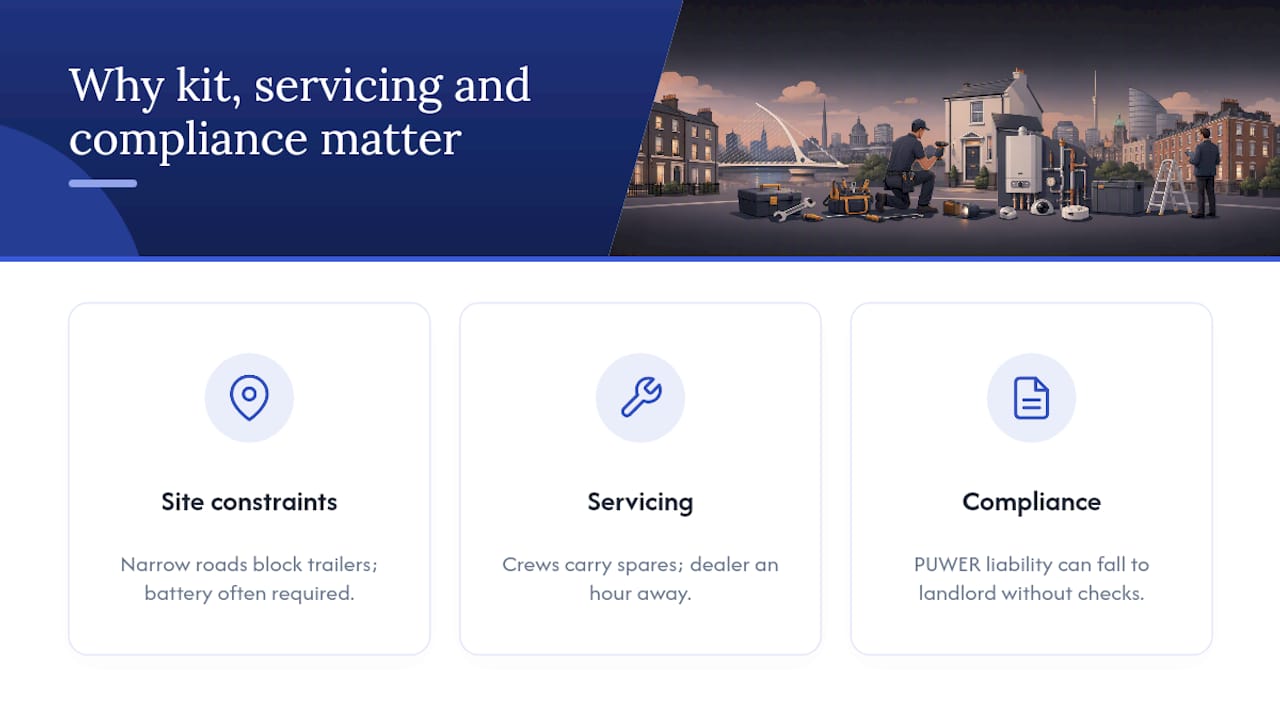
Why kit, servicing and compliance matter for Dublin properties
Dublin's residential streets present a specific set of constraints that change equipment selection in ways a generic grounds-maintenance contractor may not anticipate. Narrow private roads in areas like Ballinteer and Ranelagh mean that a large trailer or ride-on mower simply cannot reach the work area. Apartment blocks often have access rules that restrict working hours and prohibit petrol machinery in enclosed car parks. Terraced housing near noise-sensitive neighbours makes battery equipment the practical choice, not just a preference.
The maintenance record question is not bureaucratic caution. A contractor whose machines break down mid-job on a Dublin property faces a real logistical problem: the nearest dealer for spare parts may be an hour away, and a half-cut lawn or unfinished hedge is a liability for a landlord with tenants. Crews who follow daily inspection routines and carry spares avoid that situation almost entirely.
Compliance documentation matters for landlords specifically because PUWER liability does not disappear when you outsource the work. If a contractor uses unsafe equipment on your property and an incident occurs, the absence of documented checks becomes your problem too. Asking for paperwork upfront is not distrust; it is due diligence.
Sherrypropertycare: get an accurate quote for your Dublin property
Sherrypropertycare handles gardening and grounds maintenance for residential and commercial properties across Dublin, with kit selected to match your specific site, not a standard template.

To get a personalised grounds maintenance quote, send photographs of your property, note the approximate lawn area and any access constraints (gate width, slopes, parking restrictions), and include your preferred visit frequency. Sherrypropertycare will return an itemised quote covering scope by category, recommended equipment, timeline and price. Photos are used solely for quoting purposes.
For a broader picture of what a garden maintenance checklist covers across a full season, that resource sets out the recurring tasks and their timing.
Contact Sherrypropertycare directly to arrange a site visit or request your quote today.
Useful sources
The following sources support the regulatory guidance, maintenance standards and equipment information in this article:
- Commercial landscaping equipment guide 2025: choosing, operating & scaling your fleet
- The complete grounds maintenance equipment guide
- Landscaping solutions — Husqvarna
- Setting up a gardening business
- Professional pressure washers for apartments: rated & compared | FinishSafe Setups
- Best garden tools UK 2026 — a garden designer’s honest guide
- What equipment do I need to start a gardening or grass cutting business?
- Must‑have garden tools
FAQ
What equipment should a professional grounds-maintenance contractor carry?
A professional team should carry commercial mowers (walk-behind and ride-on depending on site size), straight-shaft trimmers, high-CFM backpack blowers, a pressure washer sized by both PSI and GPM, edgers and hand tools. Spare blades and a backup machine are standard for commercial crews.
What compliance documents should I ask a contractor for?
Request a PUWER risk assessment summary, PAT test records for electrical items, service and maintenance logs, public liability insurance and a method statement. These are the legal minimum under UK regulations, not optional paperwork.
Does battery or petrol equipment matter for my Dublin property?
Battery equipment produces less noise and no exhaust emissions, making it the better choice for urban Dublin sites near terraced housing or apartment blocks with access restrictions. Ask the contractor how many charged batteries they carry per machine and whether they bring a petrol backup for longer jobs.
How do I know if a contractor's kit is well maintained?
Ask for service logs and confirm they follow daily end-of-day inspections. On a site visit, look for guards in place, labelled batteries, spare blades in the van and correct PPE on operators. Reluctance to show maintenance records is a clear warning sign.
Can Sherrypropertycare provide a quote for my Dublin property?
Yes. Send photographs of your property along with approximate dimensions and any access notes to Sherrypropertycare, and you will receive an itemised quote covering scope, recommended equipment and pricing. Visit sherrypropertycare.ie to get started.