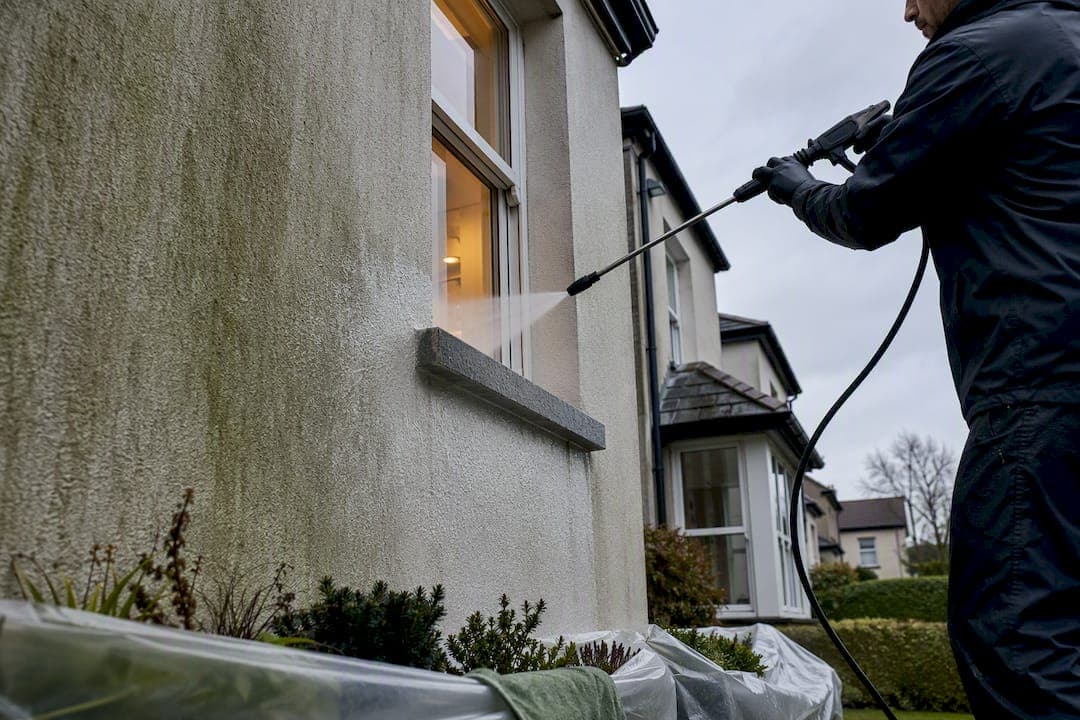
Softwashing, a low-pressure chemical treatment that kills algae and moss at the root, is the professional standard for render cleaning in Ireland. Modern renders are thin and easily etched by jet washers, so DIY pressure washing usually does more harm than good. Call a professional when the job involves working at height, heavy black or pink staining, or planting you can't afford to damage. Sherry Property Care serves Dublin properties with exactly this approach.
TL;DR:
- Softwashing with biocide and dwell time effectively kills algae roots, preventing rapid regrowth compared to pressure washing, which only removes surface stains.
- Irish weather conditions, like shade, organic debris, and poor drainage, cause persistent stains, moisture, and salt deposits on render that cleaning alone cannot fix if moisture issues persist.
- Proper softwash jobs require inspection, careful preparation, low-pressure application under 100 PSI, and appropriate aftercare, usually lasting three to five years before re-treatment.
- Cost varies based on height, access difficulty, staining severity, and bundled services, with site-specific quotes preferred over flat prices to ensure thorough treatment.
- Vigilance for unqualified contractors includes avoiding those who cannot explain methods, lack insurance, or provide quick turnaround promises without proper assessment or warranty clarity.
Table of Contents
- Why render stains and what Irish weather does to it
- Softwashing versus pressure washing: what's safe for Irish renders
- How a professional softwash job actually runs
- What render cleaning costs and how long results last
- When cleaning isn't enough: signs you need a survey, not a wash
- Sherry Property Care's approach to safe render cleaning in Dublin
- Questions to ask a render cleaning provider before you book
- Red flags to watch for when hiring a render cleaner
- Choosing a qualified render cleaning contractor in Ireland
- Coverage across Dublin and safe working at height
- What actually matters when you're choosing a render cleaner
- Get your render cleaned safely, without the pressure-hose gamble
- Sources
- FAQ
Why render stains and what Irish weather does to it
Green algae is the most common culprit on Irish walls, and it thrives because our climate rarely dries anything out properly. Red or pink deposits usually point to a different organism entirely, one that favours damp, shaded brick and render. Black streaking tends to run down from window sills, parapets or roof lines where water repeatedly washes over the same path. Efflorescence, the white powdery bloom, is mineral salts leaching out as moisture moves through the wall and evaporates.
Site conditions in Ireland make all of this worse. Common aggravating factors include:
- North-facing or heavily shaded elevations that never get direct sun to dry them out
- Overhanging trees dropping organic debris and blocking airflow
- Blocked or leaking gutters sending water down the façade instead of away from it
- Poor ground drainage keeping the base of the wall permanently damp
Staining is usually cosmetic. But if it returns within weeks of cleaning, or appears alongside cracking or a hollow sound when tapped, that's often a sign of moisture penetration rather than a surface problem cleaning alone will fix.
Softwashing versus pressure washing: what's safe for Irish renders
Softwashing applies a biocide at low pressure and leaves it to work, sometimes called a spray-and-leave approach. The dwell time kills the spores that cause regrowth rather than just blasting away what you can see. That's the crucial difference: a jet wash strips the visible green but leaves the roots intact, so it's usually back within a season.
Pressure washing carries real risk for modern render. Thin-coat and through-coloured finishes are only a few millimetres deep, and manufacturers warn against high-pressure cleaning because it can etch the surface, force water behind the render, and void any warranty on the finish. Once water gets trapped behind render, you're looking at a repair job, not a cleaning one.
Pro Tip: Ask any contractor quoting for "pressure washing" what PSI they actually run and whether they use a biocide dwell step. If the answer is just "we blast it off," walk away.
There are exceptions. Low-pressure steam can suit heavily carbonised or sooty masonry, and some heritage surfaces call for mechanical cleaning under expert supervision. But assessment always comes first:
- Softwash: correct for algae, most modern renders, coloured finishes
- Steam: occasional use on heavy carbon staining
- Mechanical/abrasive: rare, usually heritage-specific, needs specialist sign-off
Our comparison of soft wash versus power wash methods covers this in more depth if you want to check which surfaces on your property fall into which category.
How a professional softwash job actually runs
A proper job doesn't start with a hose. It starts with a look at the wall.
- Pre-inspection. The contractor identifies the render type, checks for existing cracks, and tests for damp before deciding cleaning is even the right call.
- Preparation. Sensitive planting gets covered or pre-wetted, windows and doors are masked, and access is planned to meet Work at Height Regulations rather than relying on a ladder propped against the wall.
- Application. The biocide is mixed at the correct dilution and applied top-down at low pressure, typically under 100 PSI, well below what a standard jet washer produces.
- Dwell time. The treatment is left to work, often for an hour or more depending on the product and the severity of growth, rather than rinsed off immediately.
- Rinse or leave. Some products are designed to be left entirely (spray-and-leave); others get a gentle low-pressure rinse once the dwell period ends.
- Aftercare. An optional sealer or impregnator can be applied, and the contractor should flag a sensible follow-up schedule.
Professional dosing systems and controlled dwell times are what separate this from a consumer spray bottle. For tall elevations, telescopic low-pressure lances let a crew treat the full height of a wall evenly without ever leaving the ground, which keeps the job both safer and more consistent.
What render cleaning costs and how long results last
Every quote depends on the specifics of your property, which is why reputable contractors ask for photos or a site visit before naming a figure rather than quoting blind over the phone. The main variables that move the price are:
- Number of elevations needing treatment
- Height and access difficulty, including scaffold or telescopic lance requirements
- Severity of staining and how much biocide and time it needs
- Whether you bundle in gutters, fascias, soffits or windows for one combined visit
That last point matters more than most homeowners realise. Bundling exterior jobs into one visit is usually better value than booking separate call outs, and it tackles the causes of staining alongside the symptoms. A softwash treatment done properly commonly keeps a façade clean for several years, though a heavily shaded, tree-lined site in wet parts of Ireland will need re-treatment sooner than a south-facing wall in an open estate.
When cleaning isn't enough: signs you need a survey, not a wash
Some problems look like staining but aren't. Watch for these before booking a clean:
- Wide cracks, particularly stepped cracking near windows or corners
- Render that sounds hollow when tapped, suggesting it's detached from the substrate
- Flaking or blistering paint and finish
- Damp patches appearing on interior walls
- Stains reappearing within weeks of a professional clean
Recurring or patterned staining despite proper cleaning can point to underlying moisture dynamics in the substrate itself, something academic hygro-thermal analysis has linked to selective microbial growth that cleaning alone won't resolve. Applying new render over a damp wall traps the problem rather than fixing it, so a qualified renderer needs to survey first.
Pro Tip: Ask a renderer three things during any survey: what's causing the damp, what warranty applies to the new render, and whether the quote includes remedial work on the substrate or just the finish coat.
Sherry Property Care's approach to safe render cleaning in Dublin
Sherry Property Care builds render cleaning into its broader grounds and exterior maintenance work for Dublin properties, alongside landscaping, hedge trimming and power washing. Every job starts with a look at your property, not a generic price list, because access, height and render condition all change what a job needs.
Safety planning is built in as standard: work-at-height access, insurance cover, protection for planting and beds, and careful handling of cleaning chemicals throughout. Pairing render cleaning with gutter maintenance and grounds upkeep tackles the moisture and organic debris that caused the staining in the first place, so the clean lasts longer instead of needing redoing next spring.
Questions to ask a render cleaning provider before you book
The right questions separate a proper contractor from someone with a jet washer and a van. Ask these before you sign anything.
What method will you use, and why? A contractor should be able to explain softwashing, dwell time, and why it's appropriate for your specific render without prompting.
Are you insured for work at height and public liability? This matters more than most homeowners ask about upfront, and a legitimate contractor will have both ready to show.
Can you show examples of similar work locally? Ireland's weather and building stock are specific enough that experience with modern renders in Irish conditions is worth more than generic testimonials.
What's included in the quote? Confirm whether it covers gutters, sills and windows, or just the render itself, and whether there's a call-back guarantee if staining returns quickly.
What chemicals are you using, and how are they handled? A COSHH-aware contractor will talk you through dilution, runoff control and protection for planting without being asked twice.
Will this affect my render's warranty? If your render carries a manufacturer warranty, ask directly whether the proposed method is compliant. Reputable contractors know the answer immediately; anyone who hesitates probably doesn't check.
A contractor who welcomes these questions is usually one worth hiring. One who brushes past them is a warning sign in itself.

Red flags to watch for when hiring a render cleaner
The cheapest quote is rarely the safest one. Several patterns should make you pause before booking.
Be wary of anyone offering a fixed price without seeing your property first. Render cleaning costs depend on height, access and severity, so a genuine quote follows photos or a site visit, not a phone call alone. Contractors advertising "pressure washing" as their headline service for render, rather than softwashing, are signalling they may not understand thin-coat render's vulnerabilities.
No proof of insurance is a dealbreaker, not a minor gap. Working at height on someone else's property without public liability cover leaves you exposed if something goes wrong. Similarly, a contractor who can't explain what chemical they're using, or dismisses questions about dwell time and dosing, likely hasn't been trained properly on the products they're applying.
Watch for unusually short turnaround promises too. A proper softwash job needs time for the biocide to dwell and work, so anyone offering to "clean and finish" a full house in under an hour is probably skipping the step that actually kills the algae rather than just rinsing the surface. Finally, treat vague answers about aftercare or warranty on the work as a sign to look elsewhere.

Choosing a qualified render cleaning contractor in Ireland
Qualification in this trade isn't about a single certificate. It's a combination of factors that, together, tell you a contractor takes the job seriously.
Look for evidence of proper training in biocide application and dosing, not just general cleaning experience. Insurance for public liability and work at height should be current and available on request, without hesitation. Local experience matters too. A contractor who's worked on render across different parts of Ireland understands how coastal salt exposure, urban pollution and rural tree cover each demand slightly different treatment.
Ask how they handle unusual finishes like lime render, which behaves differently to modern silicone or acrylic renders and can be damaged by the wrong chemical choice entirely. A contractor who treats every render the same way, regardless of finish, hasn't done the homework the job needs.
Finally, weigh how they communicate. Clear explanation of method, realistic timelines, and a written scope of work are basic professional standards, not extras to be grateful for. If a contractor talks you through the process without being asked, that's usually a good sign of how the actual job will go.
Coverage across Dublin and safe working at height
Sherry Property Care works across Dublin and the surrounding areas, serving both residential and commercial properties that need render cleaning alongside broader grounds maintenance. Coverage matters less than how safely the job gets done once someone's on site, particularly on two and three-storey properties where render cleaning inevitably means working above ground level.
Safe access planning follows the same principles professional guidance recommends: telescopic low-pressure lances for taller elevations, proper risk assessment before any ladder or platform goes up, and protection for anything below the working area, from flower beds to parked cars. Rushing this stage is where accidents happen and where render ends up unevenly treated because a crew couldn't safely reach the top third of a wall.
If your property has particularly tricky access, tight side passages, steep gardens or shared walls with neighbours, mention it when you request a quote. It changes the plan, not whether the job can be done.
What actually matters when you're choosing a render cleaner
Method matters more than price. A contractor who can explain softwashing, dwell time and aftercare in plain terms is worth more than one offering the lowest number on a quote sheet, because the cheap job that needs redoing in six months isn't actually cheap.
Skip DIY pressure washing on anything resembling a modern render finish. Check insurance before anyone touches your walls, and ask for evidence of local experience rather than taking claims at face value.
Three checks before you hire: confirm the method is softwash, confirm insurance is current, and confirm they've worked on render in Irish conditions before. Everything else is negotiable.
— gerard
Get your render cleaned safely, without the pressure-hose gamble
Sherry Property Care is the safer alternative to a generic power-washing call out for render cleaning in Dublin, because the job starts with an assessment of your render, not a one-size-fits-all blast with a jet washer. That distinction protects your finish, your warranty and your planting, all things a quick pressure wash puts at risk.

Beyond render, Sherry Property Care handles the full exterior picture: gutter clearing, softwash-capable power washing, and grounds maintenance that keeps the moisture and organic build up from coming straight back. Every job gets a bespoke quote based on your property, not a standard price list, and every crew works insured and planned for safe access at height.
Send photos of your walls or book an on-site survey through the Sherry Property Care contact page, and get a quote built around what your render actually needs.
Sources
- The Ultimate Guide to Render Cleaning and House Facades | Aquatec ECS Ltd
- How to Clean Render Safely | Techno Clean
- How to remove algae from render professionally: best cleaning methods | PureSeal Services
- Render looking tired? What causes cracks, stains & green growth | PD Rendering
- Patterned staining of rendered façades: hygro-thermal analysis as a means for diagnosis
FAQ
What is the best way to clean render?
Softwashing, a low-pressure biocide application with dwell time, is the recommended professional method for most modern and coloured renders, since it kills algae spores rather than just stripping visible growth.
How often should render be cleaned?
Most professionally softwashed façades stay clean for three to five years, though shaded or tree-lined sites in wetter parts of Ireland may need re-treatment sooner.
Is there anything better than wet and forget?
Professional softwash products and application differ from consumer sprays in dosing, dwell control and equipment, and trade sources note this generally produces longer-lasting results than off-the-shelf treatments.
Can I pressure wash render?
High-pressure jet washing risks etching thin-coat render and forcing water behind the finish, and manufacturers commonly advise against it because it can void warranty cover on the render system.