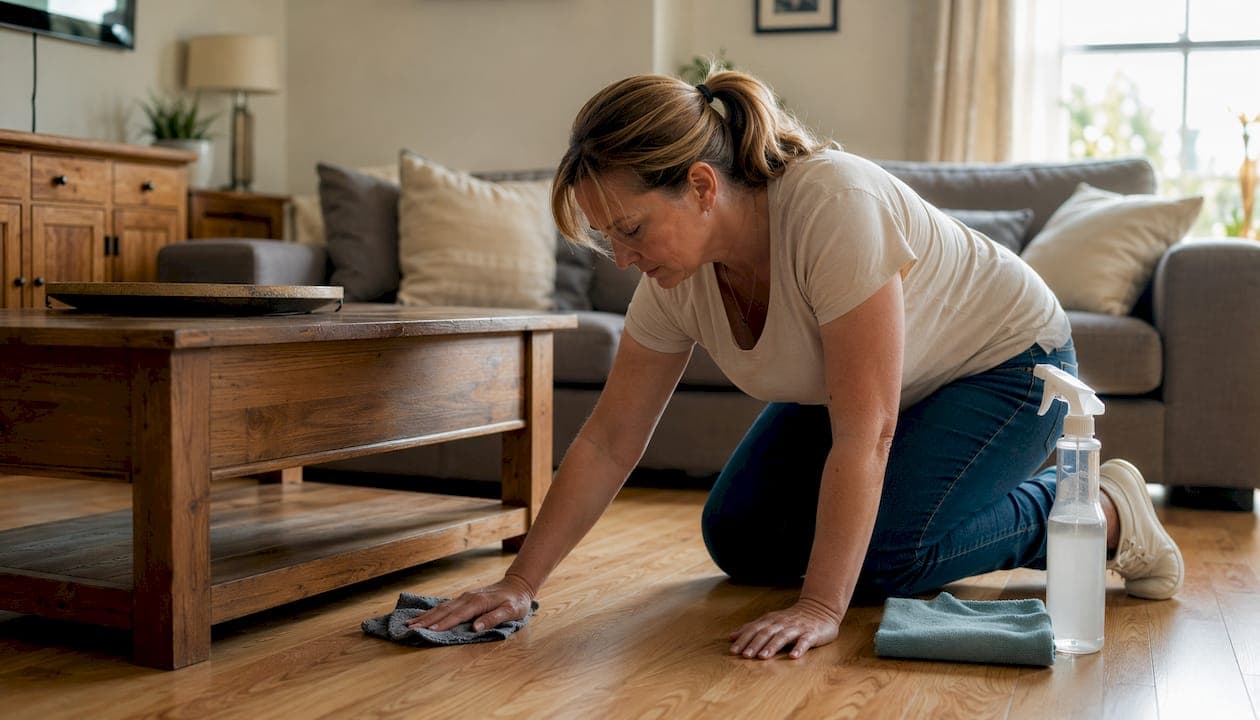
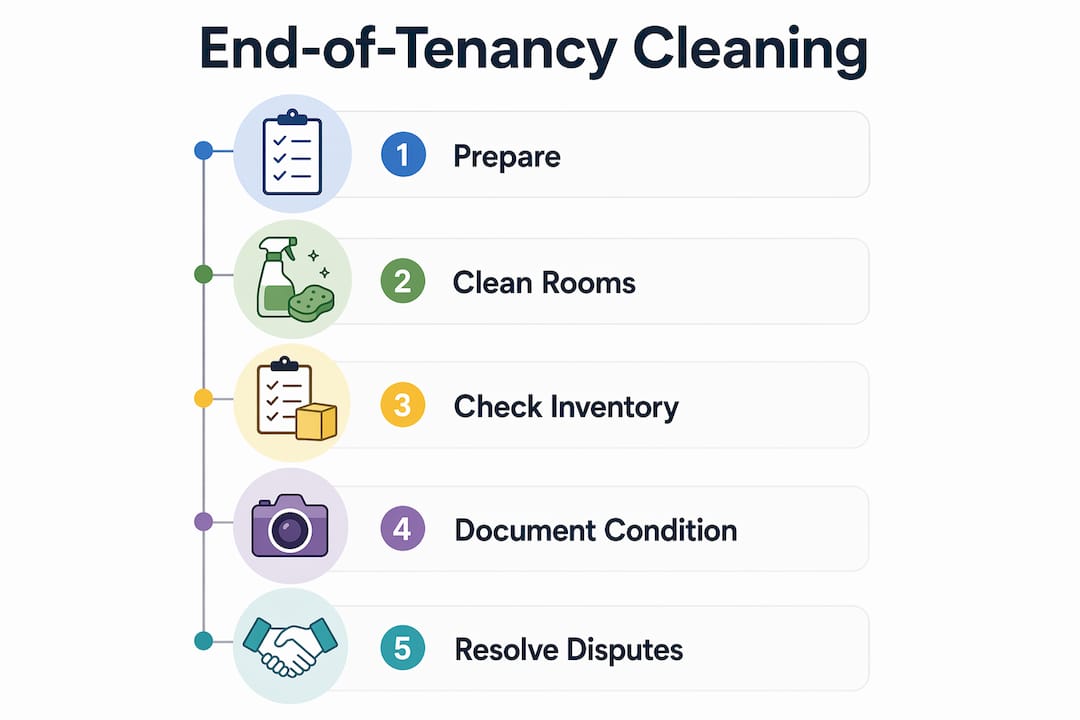
Getting your rental property clean enough to satisfy both parties and protect a deposit is not complicated. It does require a clear plan. Whether you are a tenant preparing to hand back keys or a landlord setting standards for an incoming occupant, the same core areas need attention every time.
The essential end-of-tenancy cleaning checklist:
- Kitchen: oven, hob, extractor fan, fridge, cupboard interiors, worktops, sink, and taps
- Bathroom: toilet, bath, shower, tiles, grout, mirrors, fixtures, and descaling around taps
- Living areas and bedrooms: carpets, hard floors, skirting boards, walls, and ceilings
- Windows: interior glass, frames, and sills throughout the property
- Throughout: light switches, door handles, radiators, and any built-in storage
The standard you are aiming for is the condition the property was in at the start of the tenancy, allowing for fair wear and tear. Minor scuffs on walls, slight paint fading, and light carpet wear in hallways all fall within fair wear and tear. Heavy oven grease, mould from poor ventilation, and large carpet stains do not. A professional cleaning certificate from a registered cleaning company provides strong evidence that you have met the required standard, which is particularly useful if a deposit dispute arises later.
Who is responsible for cleaning: tenants and landlords explained
Cleaning responsibilities are split between tenants and landlords, and knowing the difference saves both parties time and money.
Tenant responsibilities:
- Keep the property clean and hygienic throughout the tenancy
- Return the property in the same condition as at move-in, allowing for fair wear and tear
- Remove all personal belongings and rubbish before vacating
- Address any cleaning issues identified during the tenancy, such as mould caused by poor ventilation
Landlord responsibilities:
- Provide the property in a clean and habitable condition at the start of each tenancy
- Maintain kitchen appliances and laundry facilities in proper working order, as required by the Housing (Standards for Rented Houses) Regulations 2019
- Carry out repairs caused by normal wear and tear
- Not deduct cleaning costs for deterioration that falls within fair wear and tear
The lease agreement is where cleaning expectations should be set out clearly. If a landlord requires a professional clean at tenancy end, that requirement must be stated in the lease. Even then, tenants cannot be forced to use a specific cleaning company; they only need to meet the agreed standard.
Pro Tip: Include a cleaning clause in the lease that specifies the expected standard at tenancy end. This removes ambiguity and gives both parties a clear reference point if a dispute arises.

Room-by-room cleaning checklist for rental properties
A room-by-room approach keeps the work manageable and makes sure nothing is missed. Work through each area systematically before the final inspection.
Kitchen
- Degrease the oven interior, racks, and door glass
- Clean the hob, including around the burners
- Wipe down the extractor fan filter and housing
- Empty and clean the fridge and freezer, including door seals
- Wipe out all cupboard and drawer interiors
- Scrub the sink and descale taps
- Clean worktops, splashbacks, and the area behind the bin
Bathroom
- Sanitise the toilet bowl, seat, and exterior
- Clean the bath or shower tray, screen, and curtain
- Scrub tiles and regrout if mould is present
- Descale showerheads and taps
- Clean mirrors, shelving, and any extractor fan cover
- Wipe skirting boards and door frames
Living areas and bedrooms
- Vacuum and spot-clean carpets; arrange a professional carpet clean if staining is present
- Mop hard floors and clean under furniture
- Wipe skirting boards, light switches, and door handles
- Check walls for marks beyond fair wear and tear and spot-clean where needed
- Dust and wipe window sills, blinds, and curtain rails
Windows and throughout
- Clean interior window glass and frames
- Wipe radiators and any built-in shelving
- Check loft hatches, under-stair storage, and any outbuildings included in the tenancy
Pro Tip: Tackle the oven and bathroom grout first. These are the two areas most likely to trigger a deduction, and they take the longest. Getting them done early means you can revisit if needed.
What does professional end-of-tenancy cleaning cost in Dublin?
Professional cleaning costs in Ireland vary by property size. Typical current rates are:
| Property type | Typical cost |
|---|---|
| Studio or small apartment | — |
| 2-bed apartment or house | — |
| Medium-sized house | — |
| Larger house | — |
| Add-ons: carpet or window clean | €50–€150 each |
These professional cleaning costs are generally far lower than the deposit amount at risk in a dispute. For most tenants, booking a professional clean is the most cost-effective decision they can make at tenancy end.
Advantages of hiring a professional cleaner:
- Trained teams cover areas that are easy to overlook, such as extractor fan filters and oven seals
- You receive a cleaning certificate as documented evidence of the standard achieved
- Professional-grade equipment handles limescale, grease, and mould more effectively than standard household products
- Saves time, particularly for larger properties or those requiring carpet cleaning
Limitations to be aware of:
- You cannot be legally required to use a specific company, only to meet the required standard
- Professional cleaning does not cover damage, only cleanliness
- Costs vary between providers, so get at least two quotes for larger properties
How to avoid and resolve deposit disputes over cleaning
Cleaning accounts for a majority of deposit disputes handled by Ireland's Residential Tenancies Board, making it a significant flashpoint between tenants and landlords at tenancy end.
Steps to protect your deposit:
- Take dated photographs of every room at move-in and move-out
- Keep receipts and the cleaning certificate from any professional clean
- Attend the final inspection and agree on the property's condition in writing
- Raise any disagreements directly with the landlord before involving the RTB
The RTB's dispute resolution process runs in two stages. Stage one is confidential mediation or adjudication. If either party rejects that outcome, the dispute moves to a public hearing before a three-person RTB Tribunal. The RTB consistently gives weight to professional cleaning certificates, dated photographs, and signed inventories when adjudicating cleaning disputes.
Key figure: Cleaning is the primary cause in many RTB deposit disputes in Ireland, making it one of the most contested issues in Irish tenancy law.
Pro Tip: Try to resolve cleaning disagreements directly with the landlord before filing with the RTB. A brief written exchange confirming what was cleaned and when, backed by photos and a certificate, often resolves disputes without formal adjudication.
Practical cleaning tips that save time at tenancy turnover
Regular cleaning throughout the tenancy is far less stressful than a single deep clean at the end. A property maintained consistently week to week rarely needs more than a thorough final clean before handover.
Practical tips for tenants and landlords:
- Always clean top to bottom and back to front in each room; dust and debris fall downward, so floors are always last
- Use non-abrasive cleaners on worktops and bathroom tiles to avoid surface damage that could be charged as damage rather than cleaning
- For limescale on taps and showerheads, soak in white vinegar for 30 minutes before scrubbing
- For oven grease, apply a baking soda and washing-up liquid paste, leave overnight, and wipe clean the following morning
- For mould on grout or sealant, use a dedicated mould remover spray and ventilate the room well during and after application
- Tackle one room per day in the final week rather than attempting everything in a single session
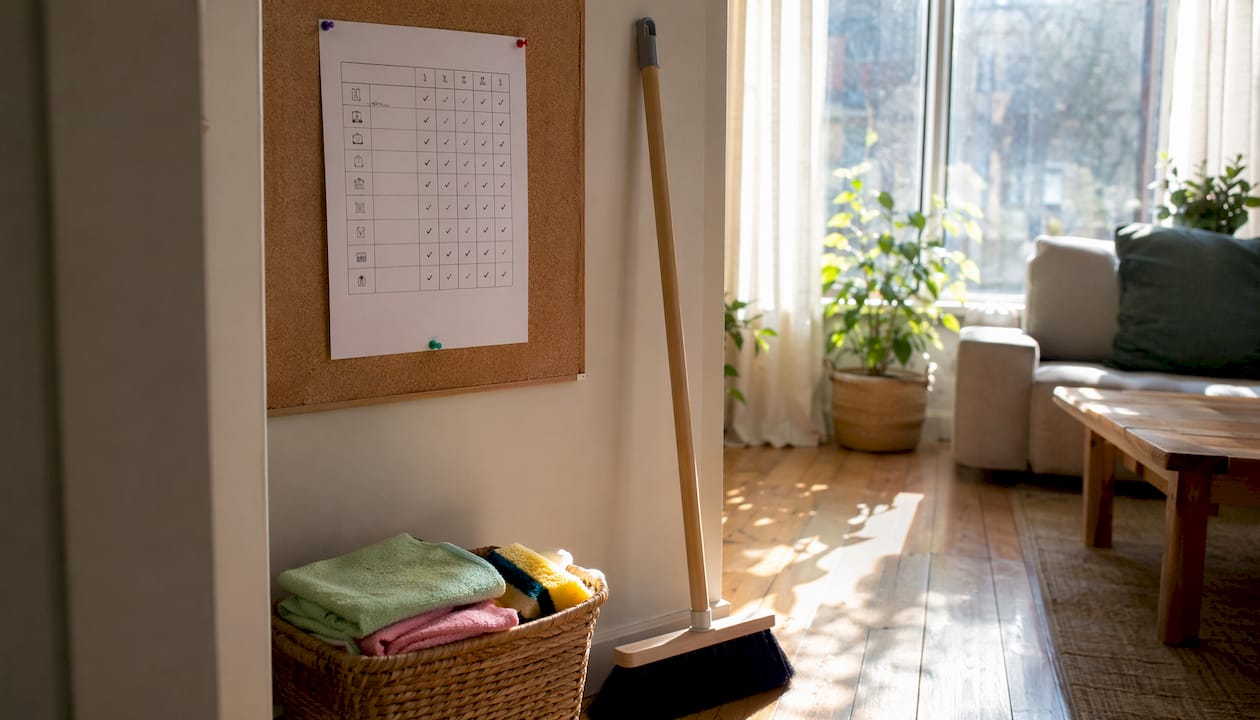
Pro Tip: Write out a simple room-by-room checklist and tick off each task as you complete it. Checklists reduce the chance of missing something and give you a clear record of what was done, which is useful if any question arises later.
Why inventory checks and condition reports matter so much
A detailed move-in inventory is the single most useful document in any tenancy. Without one, neither party has an agreed baseline to refer to at the end.
- The inventory should cover every room, listing the condition of floors, walls, ceilings, fixtures, and appliances with photographs
- Dated photographic reports at move-in set a benchmark that protects both the tenant and the landlord if a dispute arises
- Both parties should sign the inventory at the start of the tenancy; a copy should be kept by each
- At move-out, the same inventory is used during the final inspection to compare conditions
- The RTB advises that joint final inspections, where both tenant and landlord are present and agree on the property's condition, are the most effective way to avoid costly disputes
- Any cleaning issues identified at the inspection should be agreed in writing, with a clear timeline for resolution before the deposit is returned
Landlords managing multiple Dublin properties benefit from a standardised inventory template used consistently across all tenancies. It removes ambiguity and speeds up the handover process considerably.
Health and safety during cleaning: mould, allergens, and hazardous products
Cleaning a rental property at tenancy end can expose you to mould spores, dust allergens, and concentrated chemical products. Taking basic precautions protects your health and avoids making the property worse.
Mould is the most common health risk in rental cleaning. Black mould, often found on bathroom sealant, window frames, and behind furniture placed against external walls, releases spores that irritate the respiratory system. Always wear a disposable face mask rated FFP2 or higher when treating mould, and open windows fully before you start. Never mix bleach-based mould sprays with other cleaning products, as the combination can produce toxic fumes.
Dust and allergens build up in carpets, soft furnishings, and behind radiators over a tenancy. Vacuuming with a HEPA-filter vacuum cleaner captures fine particles rather than recirculating them. Anyone with asthma or a dust allergy should wear a mask during vacuuming and allow the room to air for at least 30 minutes afterwards.
Chemical cleaning products require care. Read labels before use, particularly for oven cleaners and descalers, which are often strongly alkaline or acidic. Wear rubber gloves throughout, and never use abrasive products on surfaces not rated for them, as scratching a worktop or bath panel can create a damage claim on top of a cleaning one.
Which cleaning products and tools work best for rental properties
The right products make a real difference to the quality of the clean and the time it takes. You do not need a large collection; a focused set of products covers most situations.
Recommended products:
- Multi-surface spray (such as Flash or Dettol All-in-One): everyday surfaces, skirting boards, door handles
- Cream cleaner (such as Cif): sinks, baths, and hobs without scratching
- Oven cleaner (such as Mr Muscle Oven): heavy grease inside ovens and on extractor fan filters
- Mould and mildew spray (such as HG Mould Spray): bathroom grout, sealant, and window frames
- Limescale remover (such as Viakal or HG Super Powerful Cleaner): taps, showerheads, and toilet bowls
- White vinegar and bicarbonate of soda: natural alternatives for light limescale and odour neutralising
Essential tools:
- HEPA-filter vacuum cleaner for carpets and hard floors
- Microfibre cloths (use separate sets for kitchen, bathroom, and general areas)
- Scrubbing brush for grout and tile joints
- Squeegee for shower screens and windows
- Mop and bucket for hard floors
- Extendable duster for ceilings, light fittings, and tops of wardrobes
Avoid steel wool or abrasive scouring pads on any surface that could scratch, including enamel baths, acrylic shower trays, and stainless steel sinks. Scratches can be treated as damage rather than cleaning, which changes the nature of any potential deduction.
A step-by-step timeline for end-of-tenancy cleaning
Planning the clean over several days reduces stress and produces a better result than rushing everything into a single day.
Four weeks before moving out:
- Review your tenancy agreement for any specific cleaning requirements
- Book a professional cleaner if you plan to use one; good companies in Dublin fill up quickly at month end
- Identify any areas needing extra attention, such as carpet stains or mould on grout
Two weeks before moving out:
- Begin decluttering and removing personal belongings room by room
- Deep-clean the oven, extractor fan, and fridge; these take the most time and are best done early
- Treat any mould on bathroom sealant or grout and allow time for retreatment if needed
One week before moving out:
- Clean all remaining rooms systematically, working top to bottom in each
- Wash windows inside, clean blinds, and wipe all skirting boards
- Arrange a carpet clean if required
Final 48 hours:
- Do a full walkthrough with your move-in inventory and photographs
- Touch up any areas missed and take dated photographs of every room
- Confirm the joint inspection time with your landlord
Following a property maintenance checklist throughout the tenancy makes this final timeline far more manageable.
Common cleaning disagreements between landlords and tenants, and how to resolve them
Most cleaning disputes come down to a handful of recurring issues. Knowing where disagreements typically arise helps both parties address them before they escalate.
The most common disputes:
- Oven and hob grease: Landlords frequently cite the oven as the most neglected area. Tenants often underestimate how much grease accumulates. A professional oven clean resolves this quickly and the certificate provides evidence.
- Mould: Disagreements arise over whether mould is the result of tenant behaviour (poor ventilation) or a structural issue (damp from outside). The distinction matters legally. Mould caused by a tenant failing to ventilate is beyond fair wear and tear; mould from a structural defect is the landlord's responsibility.
- Carpet stains: Light wear is fair wear and tear. Large stains or pet-related damage are not. The move-in inventory photograph is the key reference point here.
- General dirt versus damage: Landlords sometimes conflate cleaning costs with repair costs. These are separate. A dirty wall can be cleaned; a wall with holes or deep gouges requires repair. Deductions for each must be itemised separately.
When a dispute cannot be resolved directly, the RTB's dispute resolution service provides mediation and adjudication. Both parties should gather their evidence before filing: dated photographs, the signed inventory, cleaning receipts, and any written correspondence about the cleaning issue. The RTB process is designed to be accessible, and the majority of deposit disputes are resolved at the mediation or adjudication stage without reaching a full Tribunal hearing.
Key takeaways
A thorough end-of-tenancy clean, backed by dated photographs, a signed inventory, and a professional cleaning certificate, is the most reliable way to protect a deposit and avoid RTB disputes in Ireland.
| Point | Details |
|---|---|
| Cleaning causes most disputes | Cleaning is a leading factor in RTB deposit disputes in Ireland. |
| Fair wear and tear has limits | Minor scuffs and light carpet wear are acceptable; heavy grease, mould from neglect, and large stains are not. |
| Professional cleaning costs are manageable | Costs vary depending on property size and cleaning requirements. |
| Documentation is your strongest protection | Dated photographs, a signed inventory, and a cleaning certificate are the key evidence in any RTB adjudication. |
| Joint inspections prevent escalation | The RTB recommends joint final inspections as the most effective way to resolve cleaning disagreements before they become formal disputes. |
FAQ
How clean does a rental property need to be at tenancy end?
The property must be returned in the same condition as at the start of the tenancy, allowing for fair wear and tear. This means clean, hygienic, and free from excessive dirt, grease, or mould caused by neglect.
What is fair wear and tear in a rental property?
Fair wear and tear covers natural deterioration through normal everyday use, such as slight paint fading, minor scuffs on walls, and light carpet wear in high-traffic areas. Heavy grease, large stains, and mould from poor ventilation fall outside this definition.
What is the 20-minute rule for cleaning?
The 20-minute rule is an informal time-management approach where you commit to cleaning in manageable intervals rather than attempting a full clean in one session. Applied regularly throughout a tenancy, it keeps the property in good condition and reduces the scale of the final clean before handover.
Can a landlord deduct cleaning costs from a deposit in Ireland?
Yes, but only if the property is left in a condition worse than fair wear and tear. Deductions must be proportionate and supported by evidence such as photographs and cleaning receipts, and landlords must comply with deposit return regulations.
What evidence helps most in an RTB cleaning dispute?
Dated photographs taken at move-in and move-out, a signed move-in inventory, receipts for any professional cleaning, and a cleaning certificate from a registered cleaning company all carry significant weight in RTB adjudication.