
Compliance in property maintenance means meeting every statutory obligation that keeps your property safe, legally sound, and fit for tenants to live in. For UK landlords and property managers, this covers a specific set of duties: obtaining the right safety certificates, carrying out regular inspections, maintaining the structure and essential services, and keeping records that prove you have done all of it. The Landlord and Tenant Act 1985 and the Homes (Fitness for Human Habitation) Act 2018 set the legal baseline. Fail to meet it, and you face court orders, financial penalties, and in some cases criminal liability.
The core compliance elements every landlord must address:
- Valid gas safety certificate from a Gas Safe registered engineer, renewed annually
- Electrical Installation Condition Report (EICR) every five years
- Smoke alarms on every storey and carbon monoxide alarms in rooms with solid fuel appliances
- Energy Performance Certificate (EPC) meeting the required rating
- Deposit protection and Right to Rent checks
- Written tenancy information to be provided to tenants starting in 2026
- Auditable maintenance records covering all statutory inspections and repairs
How does compliance shape your statutory duties as a UK landlord?
The Landlord and Tenant Act 1985 places a clear obligation on landlords to keep the structure and exterior of a property in repair, along with installations for water, gas, electricity, sanitation, and heating. The Homes (Fitness for Human Habitation) Act 2018 goes further, requiring that properties remain safe, healthy, and free from serious hazards throughout the tenancy. Courts can order specific performance of these obligations regardless of what any tenancy agreement says.
UK landlords must obtain safety certificates from Gas Safe registered engineers, maintain valid electrical reports, install smoke alarms on every storey, and fit carbon monoxide alarms in any room with a solid fuel appliance. These are not optional. Missing a single certificate can block a possession claim or trigger enforcement action.
The Renters' Rights Act 2025 abolished Section 21 no-fault evictions starting in 2026. Landlords now rely entirely on Section 8 to regain possession, and Section 8 claims require full compliance documentation. A missing gas certificate or an overdue EICR can stop a legitimate possession claim in its tracks.
Key statutory compliance checkpoints for landlords:
- Gas safety check carried out regularly by a Gas Safe registered engineer
- EICR completed by a qualified electrician periodically as required by regulations
- Smoke alarm on each storey, tested and recorded at tenancy start
- Carbon monoxide alarm in any room with a solid fuel burning appliance
- EPC at the required minimum rating before letting
- Landlord compliance checklist covering deposit protection, Right to Rent, and written tenancy information
- Asbestos management plan for properties built before the material was banned
What do property managers actually need to do for compliance?
A property manager acts as the landlord's agent, responsible for discharging statutory duties with competence. That means more than arranging repairs. It means maintaining auditable records covering fire safety, gas certification, asbestos management, and energy performance, and being able to produce those records quickly when challenged.
RICS guidance is clear that property managers must understand legislation, report on statutory compliance issues, and advise landlords on any breach. At the professional level, this includes instructing specialist surveyors for asbestos reports, managing licence-to-alter applications, and keeping the landlord informed of regulatory changes. Ignoring advice from a competent person you have appointed, or failing to record that you acted on it, can result in a court assuming nothing was done.
The legal and reputational risk of compliance failure falls on the property manager as well as the landlord. A duty of care exists even without a written contract, and courts have found managers liable for negligence where they failed to manage a property with reasonable skill and care.
Essential property manager responsibilities in compliance:
- Maintain a current asset register for all statutory-controlled equipment
- Track certificate expiry dates and schedule renewals before deadlines
- Communicate compliance status clearly to landlords and tenants
- Instruct specialist contractors for gas, electrical, and asbestos work
- Keep date-stamped records of every inspection, repair, and certification
- Report statutory compliance issues to the landlord in writing
- Stay current with regulatory changes, including the Renters' Rights Act 2025
What are the best practices for proactive property maintenance and compliance?
Proactive management means anticipating deadlines rather than reacting to failures. A compliance management system that tracks certificate expiry, inspection schedules, and documentation deadlines removes the risk of human error. Without one, a busy landlord or manager will eventually miss a renewal.

An asset register is the foundation. Every piece of statutory-controlled equipment, from boilers to electrical distribution boards, should be logged with its last inspection date and next due date. For larger properties, this register feeds directly into a planned preventive maintenance schedule.
Detailed, date-stamped records are legally as critical as the maintenance itself. Documenting the date, the action taken, and the engineer or contractor who carried it out creates an evidential trail that defends against enforcement notices and Rent Repayment Orders. Good maintenance records also strengthen Section 8 possession claims by demonstrating full compliance at every stage of the tenancy.
Pro Tip: Use a digital compliance platform with tamper-evident audit trails rather than spreadsheets. Digital records are harder to challenge in enforcement proceedings and easier to share with solicitors or local authority inspectors at short notice.
Practical steps for sustained compliance:
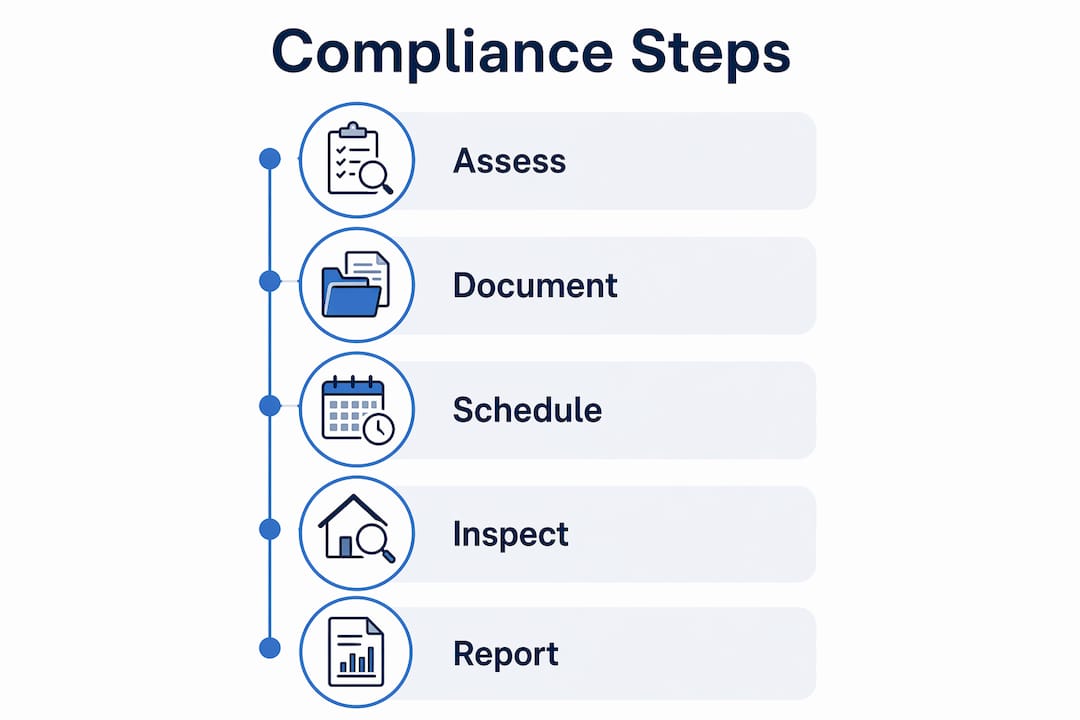
- Build a compliance calendar with automated reminders for every certificate renewal
- Carry out a pre-tenancy inspection and record its findings in writing
- Schedule mid-tenancy inspections at agreed intervals and document outcomes
- Review your asset register at least annually and update it after any works
- Keep copies of all certificates, reports, and correspondence in a single, accessible location
- Use landlord maintenance responsibilities guidance to cross-check your obligations regularly
How Sherrypropertycare approaches compliance and maintenance quality
Sherrypropertycare works with property owners and landlords across Dublin, providing meticulous grounds maintenance and property care that supports both compliance and property value. Dublin properties bring their own considerations: older building stock, varied garden configurations, and the need for year-round grounds upkeep to meet both aesthetic and safety standards.
The approach at Sherrypropertycare is built on thorough documentation and clear communication. Every job is recorded, every visit logged, and every recommendation put in writing. That level of detail matters when a landlord needs to demonstrate that a property has been properly maintained, whether for a tenancy dispute, an insurance claim, or a local authority inspection.
Compliance confidence comes from consistency. Sherrypropertycare's service model is built around scheduled, reliable visits rather than reactive call-outs, which means problems are caught early and records stay current. For landlords managing multiple Dublin properties, that predictability reduces risk and keeps maintenance costs manageable.
Key points from Sherrypropertycare's compliance-focused approach:
- Scheduled maintenance visits with written records for every property
- Clear communication with landlords on any issues requiring further action
- Grounds and exterior maintenance that supports property safety and habitability
- Customised service plans tailored to each property's specific needs
- Quality craftsmanship backed by attention to detail on every visit
Where can you find training and education resources for compliance?
RICS offers the most authoritative professional development pathway for property managers working on statutory compliance. Its competency framework covers knowledge of legislation, practical application, and the ability to advise clients on compliance issues at three levels of professional depth. For those managing residential properties, RICS also publishes dedicated guidance on health and safety management covering fire safety, gas, electrical, and asbestos obligations.
The UK Government's GOV.UK platform publishes plain-English guidance on landlord safety responsibilities, updated to reflect current legislation. This is the most reliable free resource for checking specific obligations around gas safety, electrical standards, and smoke alarm requirements.
For landlords managing properties in Dublin and across Ireland, local regulatory bodies and property management associations provide jurisdiction-specific training. Staying current with both UK and Irish requirements is particularly relevant for landlords operating across both markets. The role of maintenance in safety is a practical starting point for understanding how certification and enforcement interact in practice.
Key takeaways
Compliance in property maintenance requires valid certificates, auditable records, and proactive scheduling to meet UK statutory obligations and protect your legal position.
| Point | Details |
|---|---|
| Statutory baseline | The Landlord and Tenant Act 1985 and Homes (Fitness for Human Habitation) Act 2018 set minimum legal standards for all UK rental properties. |
| Section 21 abolished | Possession claims rely on Section 8, which requires full compliance documentation to succeed. |
| Records are legal evidence | Date-stamped records of inspections and repairs are as legally critical as the work itself, defending against enforcement and Rent Repayment Orders. |
| Proactive systems reduce risk | A compliance management system tracking certificate expiry and inspection deadlines prevents costly enforcement notices. |
| Property managers carry liability | A duty of care exists even without a written contract; failing to manage with reasonable skill and care creates legal exposure. |
FAQ
What does compliance in property maintenance actually require?
Compliance requires valid gas and electrical certificates, working smoke and carbon monoxide alarms, a current EPC, and auditable records of all inspections and repairs. The Landlord and Tenant Act 1985 and Homes (Fitness for Human Habitation) Act 2018 set the legal baseline for all UK landlords.
What happens if a landlord fails to meet compliance standards?
Courts can order specific performance of repair obligations, and penalties range from fines to imprisonment and blocked possession claims. Missing a single certificate can prevent a Section 8 possession claim from succeeding since Section 21 was abolished in May 2026.
How often do landlords need to renew safety certificates?
Gas safety checks are required annually by a Gas Safe registered engineer. Electrical Installation Condition Reports must be completed by a qualified electrician at least every five years, or more frequently if the most recent report requires it.
Why are maintenance records so important for compliance?
Documenting every inspection with dates, actions, and contractor details creates an evidential trail that defends against enforcement notices and Rent Repayment Orders. Without records, a court may assume the work was never done.
How does Sherrypropertycare support property compliance in Dublin?
Sherrypropertycare provides scheduled grounds maintenance and property care across Dublin, with written records for every visit and clear communication on any issues requiring further action, supporting landlords in maintaining safe, well-documented properties.