
TL;DR:
- Documented, regular property maintenance is essential for landlords to protect insurance claims and avoid rejection due to breaches. Insurers require evidence of scheduled inspections and prompt defect repairs; failure to do so can shift cause attribution and refuse claims. Maintaining comprehensive records, including inspections and contractor reports, strengthens the likelihood of full payout and favorable renewal terms.
Regular, documented property maintenance is one of the most direct ways to protect your insurance cover, reduce the risk of a claim being rejected, and support a full payout when something does go wrong. Insurers across the UK and Ireland expect landlords and property managers to take "reasonable precautions" under standard policy wording, and failure to do so can convert a legitimate claim into a refusal.
Here are the immediate actions that protect your cover:
- Arrange a professional grounds maintenance contract and keep all receipts.
- Carry out scheduled inspections at least every three months and log them with dated photos.
- Address small defects promptly — blocked gutters, overhanging branches, and cracked paths are common grounds for claim reductions.
- Store inspection records digitally for at least 24 months, ready to share with a loss adjuster.
The Association of British Insurers (ABI), the Financial Ombudsman Service, and local providers such as Sherrypropertycare all point to the same conclusion: documented, regular maintenance is your strongest defence when a claim is disputed.
Table of Contents
- How does policy wording link maintenance to cover decisions?
- Which grounds issues most often trigger claim reductions?
- What practical steps protect your insurance cover?
- What evidence do loss adjusters expect to see?
- How often should you maintain a Dublin property, and what does it cost?
- Your pre-renewal and void-period maintenance checklist
- How professional grounds maintenance supports your insurance position
- Key takeaways
- Why landlords underestimate grounds maintenance as insurance risk management
- Sherrypropertycare: professional grounds maintenance for Dublin landlords
- Useful sources for landlords and property managers
- FAQ
How does policy wording link maintenance to cover decisions?
Standard residential and landlord policy wordings include a "reasonable precautions" condition that requires premises to be kept in a good state of repair. Breach that condition and your insurer can reduce or reject a claim entirely, even when the triggering event looks like an insured peril.
The key legal concept here is proximate cause. Insurers distinguish between a sudden, unexpected event and gradual deterioration that a reasonable owner should have caught. If blocked drainage made a storm flood foreseeable, the storm is no longer the proximate cause — the neglected drain is. That shifts the loss into a maintenance exclusion.
A Financial Ombudsman Service decision (DRN-4349951) illustrates this precisely. Landlords who had made sporadic visits over a decade could not show when damage occurred or demonstrate that they had mitigated deterioration. The Ombudsman upheld the insurer's refusal because the policy required the premises to be kept in good repair — a duty that could not be delegated to tenants for insurance purposes.
Many policies also set a specific inspection frequency. The Sagic Property Owners wording, for example, requires internal and external inspections at least every three months, with records kept for at least 24 months. Miss that cadence and a claim may be void regardless of the cause of damage.
Policy wording is not ambiguous on this point. The duty to maintain sits with the policyholder, not the tenant. Delegating upkeep to a tenant in a lease does not transfer the insurance obligation — it remains yours.
Pro Tip: Keep all inspection logs, contractor certificates, and dated photos in a shared cloud folder (Google Drive or Dropbox work well). Label each entry with the property address and date so a loss adjuster can access everything within minutes of a request.
Which grounds issues most often trigger claim reductions?
External and grounds maintenance failures are among the most common reasons insurers reduce or dispute property claims. The table below shows the typical risks, their likelihood of causing a claim, and their potential impact on a payout.
| Grounds risk | Likelihood | Impact on claim | Why insurers care |
|---|---|---|---|
| Blocked gutters and drains | High | High | Foreseeable water ingress; proximate cause shifts to neglect |
| Overhanging or dead branches | High | High | Storm damage becomes foreseeable if tree was visibly diseased |
| Moss and root damage on roofs | Medium | High | Gradual deterioration exclusion applies |
| Unmanaged hedges touching buildings | Medium | Medium | Moisture retention and structural damage over time |
| Vermin linked to neglected waste/compost | Medium | Medium | Pest damage is typically excluded; neglect aggravates it |
| Cracked or uneven hard surfaces | Low | Medium | Liability claims if a visitor is injured |
Blocked gutters are the single most common grounds-related trigger. Clearing gutters and drains before winter is one of the simplest and most cost-effective steps a landlord can take. For a practical guide on what to check and how often, the gutter maintenance guide from Sherrypropertycare covers the process in detail.
Overhanging trees deserve particular attention before void periods. A branch that falls on a neighbouring property during a storm can generate a liability claim — and if the tree was visibly diseased or overgrown, the insurer may argue the loss was foreseeable.
What practical steps protect your insurance cover?
Protecting your cover comes down to three things: a professional maintenance contract, a documented inspection schedule, and rapid action on small defects before they become large ones.
- Sign a professional grounds maintenance contract. A written contract with a reputable local provider creates a paper trail that satisfies underwriters. It shows scheduled, recurring work rather than ad hoc visits.
- Follow a quarterly inspection schedule. Many policies require this as a condition of cover. Inspect gutters, drains, roofs, boundary fences, and hard surfaces every three months.
- Carry out a pre-winter check each October/November. Clear leaves, check for blocked downpipes, inspect roof tiles after autumn storms, and service the boiler.
- Repair small defects within 30 days. A cracked path or loose fence panel noted in an inspection log but left unrepaired for months weakens your position significantly.
- Increase inspection frequency during void periods. Properties left empty deteriorate faster and attract greater underwriter scrutiny. Weekly or fortnightly contractor visits with signed attendance records are advisable.
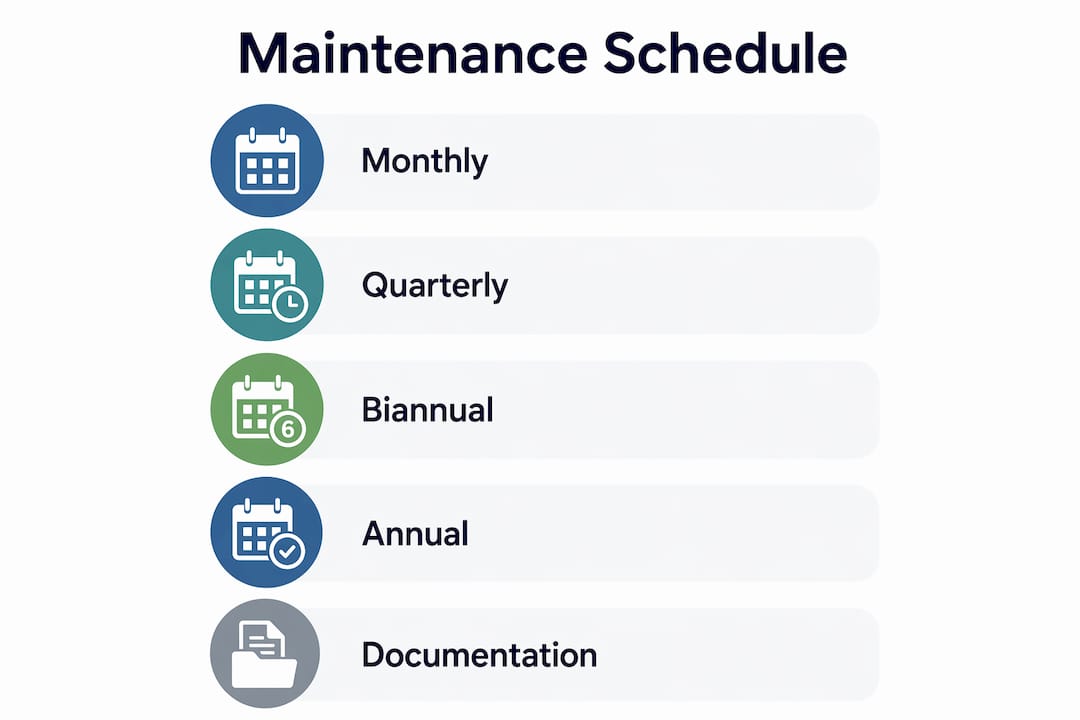
Sample inspection timeline:
| Frequency | Task | Who |
|---|---|---|
| Monthly | Grounds check, litter, pest signs | Contractor or agent |
| Quarterly | Gutters, drains, boundary fences, hard surfaces | Professional contractor |
| Pre-winter (Oct/Nov) | Roof tiles, downpipes, tree branches, boiler service | Specialist contractor |
| Annual | Full tree survey, EICR, gas safety certificate | Qualified specialist |
Pro Tip: Ask your contractor to include a GPS-stamped photo and a brief works description for every visit. Timestamped digital images are increasingly accepted by underwriters as primary evidence and can speed up claim approvals considerably.

What evidence do loss adjusters expect to see?
When a claim is investigated, a loss adjuster will typically ask for documentation covering the 12–24 months before the loss event. Producing this quickly and completely is often the difference between a full payout and a reduced or rejected one.
The core documents to have ready:
- Dated inspection reports (date, works observed, works carried out, contractor name).
- Maintenance contracts and renewal letters.
- Receipts and invoices for all works, including grounds and garden maintenance.
- Time-stamped photographs of the property exterior, gutters, roof, and grounds.
- Gas safety certificates and Electrical Installation Condition Reports (EICRs).
- Any correspondence with tenants about maintenance requests and responses.
A simple inspection entry template to request from your contractor:
| Field | Example entry |
|---|---|
| Date | October 2025 |
| Property address | 12 Example Road, Dublin |
| Works carried out | Gutters cleared, downpipe rodded, leaf debris removed from patio |
| Photographic evidence | timestamped images attached |
| Contractor signature | J. Murphy, Sherrypropertycare |
If a claim is disputed despite strong documentation, the Financial Ombudsman Service provides a free appeals route for policyholders who believe their insurer has acted unreasonably.
How often should you maintain a Dublin property, and what does it cost?
Many insurers expect at least quarterly property inspections and annual key services such as gas safety checks and electrical condition reports. Grounds work follows a seasonal rhythm: autumn leaf clearance, pre-winter gutter checks, spring hedge trimming, and summer lawn care.
Suggested maintenance cadence and cost shape for Dublin properties:
| Task | Frequency | Typical cost shape |
|---|---|---|
| Lawn mowing and grounds tidy | Monthly (Apr–Oct) | Lower end; scales with garden size |
| Gutter and drain clearance | Twice yearly (spring/autumn) | Mid-range; add-on for high rooflines |
| Hedge trimming | 2–3 times yearly | Mid-range; depends on hedge length |
| Tree survey and pruning | Annual | Higher end; varies with tree size and access |
| Pre-winter hard-surface clean | Annual (Oct/Nov) | Mid-range; power washing included |
Properties with patchy maintenance records can pay up to increased annual insurance premiums, and industry data suggests a notable portion of residential landlord claims fail due to inadequate proof of preventive action.
Documented, regular maintenance moves your property into a lower-risk actuarial pool, which can positively influence both your premium and your excess at renewal. The financial case for preventative maintenance over reactive repairs is clear: small, scheduled costs consistently outperform large, unplanned ones.
Because bespoke factors such as garden size, tree coverage, and access significantly affect pricing, the most reliable approach is to request a personalised quote from a local professional such as Sherrypropertycare.
Your pre-renewal and void-period maintenance checklist
Before your policy renews or a property becomes vacant, work through this checklist and attach the evidence to your renewal paperwork.
- Gutters and drains: cleared, photographed, and receipted.
- Roof and downpipes: visually inspected after any recent storms; tiles and flashings checked.
- Trees and branches: overhanging or dead branches identified and scheduled for removal.
- Boundary fences and gates: secure, no loose panels or broken fixings.
- Garden and grounds: cleared of accumulated debris, overgrown vegetation cut back.
- Pest signs: no evidence of rodent activity near bins, compost, or outbuildings.
- Hard surfaces: paths, patios, and driveways free of significant cracks or trip hazards.
For in-house tasks (litter picking, basic tidying), a property manager or agent can handle these. Gutter clearance, tree work, and roof inspections should always go to a qualified contractor. Emergency defects — a fallen branch blocking access, a collapsed fence panel — warrant an immediate call-out rather than waiting for the next scheduled visit.
Use the garden maintenance checklist from Sherrypropertycare as a printable companion to this section.
Pro Tip: Attach contractor receipts and dated photos directly to your renewal paperwork as a PDF bundle. Brokers and underwriters respond well to landlords who present organised evidence upfront — it signals lower risk before the conversation even starts.
How professional grounds maintenance supports your insurance position
A professional provider does more than keep a garden tidy. Scheduled visits, written reports, and timestamped photographic evidence create exactly the documentation trail that underwriters and loss adjusters look for.
Sherrypropertycare delivers this for Dublin landlords and property managers through:
- Scheduled grounds maintenance visits with written attendance records.
- Dated, GPS-stamped photographic evidence supplied after each visit.
- Gutter and drain clearance with before-and-after photos.
- Boundary hedge and tree management, including risk identification.
- Pre-winter hard-surface cleans and post-storm checks.
- Rapid response to defect reports between scheduled visits.
A sample inspection visit record from Sherrypropertycare would include: date, property address, works carried out, photographic evidence (timestamped), and contractor signature — precisely the format loss adjusters request.
Key takeaways
Regular, documented grounds maintenance is the single most effective step a landlord or property manager can take to protect insurance cover and support full claim payouts.
| Point | Details |
|---|---|
| Reasonable precautions clause | Standard policy wording requires premises to be kept in good repair; breach can void a claim. |
| Inspection frequency | Many policies require quarterly inspections; keep records for at least 24 months. |
| Grounds risks to prioritise | Blocked gutters, overhanging trees, and unmanaged hedges are the most common claim triggers. |
| Cost of poor records | Properties with patchy maintenance records can pay up to 25% more in annual insurance premiums. |
| Sherrypropertycare | Dublin-based professional grounds maintenance with documented reports and timestamped evidence for insurers. |
Why landlords underestimate grounds maintenance as insurance risk management
Most landlords think about insurance at renewal and maintenance when something breaks. That gap is where claims get refused.
The Ombudsman case referenced earlier is instructive precisely because it is not unusual. A landlord who had not visited a property for years, who had delegated maintenance to tenants, and who had no inspection records lost a claim that might otherwise have been paid. The policy wording was clear; the evidence was absent. Grounds maintenance, in that context, is not about aesthetics. It is about being able to prove, on a specific date, that you acted as a responsible owner.
What landlords often miss is that insurers now treat maintenance discipline as an actuarial signal. A property with a consistent, documented maintenance history sits in a different risk pool from one with no records. That affects not just claim outcomes but renewal pricing and excess levels. The role of maintenance in real estate value extends directly into insurance economics, and the two are increasingly inseparable.
Sherrypropertycare: professional grounds maintenance for Dublin landlords
Documented grounds maintenance is the practical difference between a claim that pays and one that does not. Sherrypropertycare provides scheduled, professional gardening and grounds maintenance for residential and commercial properties across Dublin, with every visit recorded and evidenced to insurer standards.

Services relevant to landlords and property managers:
- Scheduled grounds maintenance with written visit records.
- Gutter and drain clearance with photographic evidence.
- Hedge trimming, boundary maintenance, and tree risk identification.
- Pre-winter hard-surface cleans and post-storm inspections.
- Bespoke maintenance plans with personalised quotes.
Request a tailored quote or book an initial inspection at Sherrypropertycare. Send photos of your property and receive a personalised plan that meets both your grounds care needs and your insurer's documentation requirements.
Useful sources for landlords and property managers
Keep these links alongside your inspection records when preparing for renewals or disputes.
- Financial Ombudsman Service — Decision DRN-4349951: A real case showing how absent inspection records led to a claim refusal; useful if you need to understand what the Ombudsman considers reasonable.
- ABI Guide to Home Buildings and Contents Insurance: Authoritative overview of what buildings insurance covers and excludes, including wear and tear.
- NRLA — Wear and Tear vs Insurable Damage: Practical guide for landlords on the proximate cause principle and how to distinguish maintenance from insurable events.
- Deacon — Buildings Insurance Is Not a Maintenance Contract: Clear explanation of gradual deterioration exclusions and what insurers expect owners to handle themselves.
- Policy wording documents: Request the full wording from your broker and check the "Duty of Care" or "Reasonable Precautions" conditions; bring these to any Ombudsman dispute.
FAQ
Does lack of maintenance void a landlord insurance claim?
Yes, it can. Standard policy wording requires landlords to keep premises in good repair; a loss adjuster can reject or reduce a claim where neglect is identified as the proximate cause of damage.
How often do insurers expect landlords to inspect their property?
Many policies require at least quarterly inspections, with records kept for a minimum of 24 months. Check your specific policy wording, as some wordings make this a condition precedent to cover.
What grounds maintenance records do I need for a claim?
Loss adjusters typically ask for dated inspection reports, maintenance contracts, receipts, and timestamped photographs covering the 12–24 months before the loss event. Sherrypropertycare supplies these as standard with every scheduled visit.
Can regular maintenance reduce my insurance premium?
Documented preventive maintenance can move your property into a lower-risk actuarial pool, which may positively influence your premium and excess at renewal. Properties with patchy records can pay up to 25% more in annual premiums.
Where can I appeal if my insurer rejects a claim unfairly?
The Financial Ombudsman Service provides a free appeals route for policyholders who believe a claim has been handled unreasonably. Bring your inspection records, maintenance contracts, and policy wording to support your case.
This article provides general information for landlords and property managers. It is not professional insurance or legal advice. Always check your specific policy wording and consult a qualified broker or the Financial Ombudsman Service for guidance on your own situation.