TL;DR:
- Proper maintenance prevents hazards, injuries, and failures, forming the foundation for property safety and compliance.
- Switching from reactive to preventive maintenance reduces costs, enhances safety, and allows better control over safety risks.
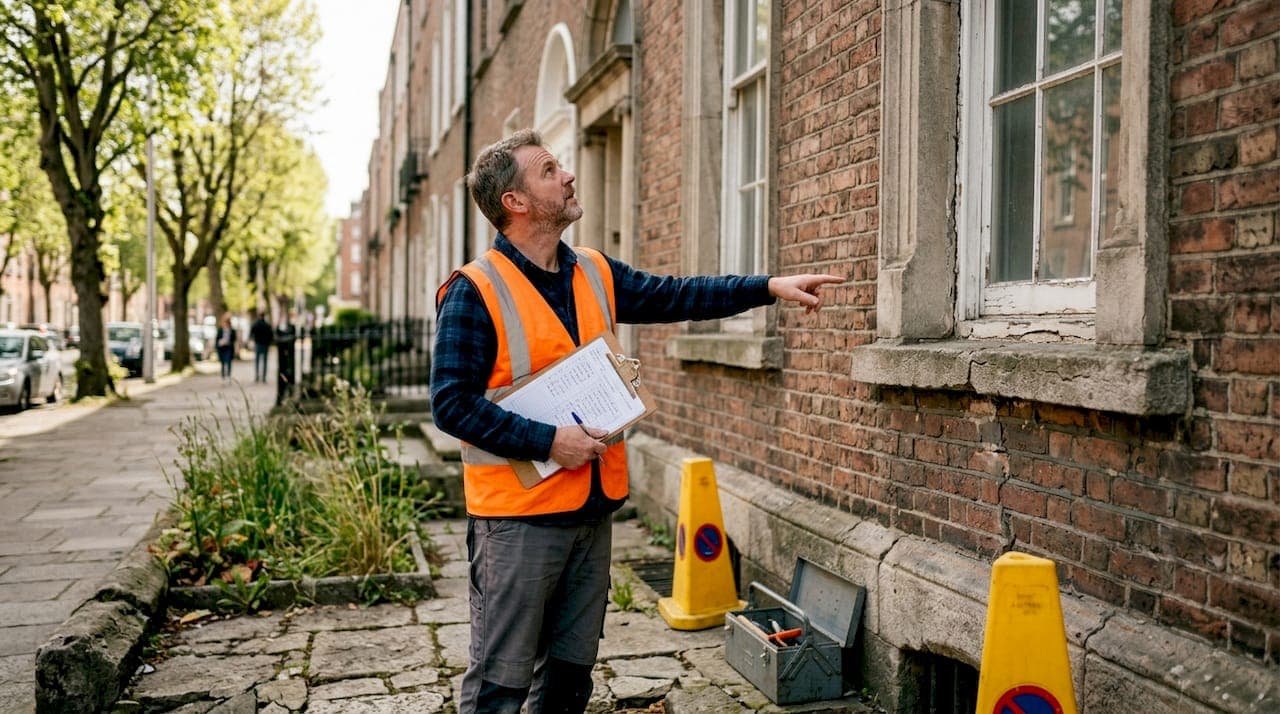
Maintenance is defined as the practice of keeping equipment, structures, and grounds in a condition that actively prevents hazards, injuries, and system failures. The role of maintenance in safety is not a secondary concern. It is the foundation of every compliant, well-run property. The global maintenance gap costs between $1 trillion and $3 trillion annually. That figure reflects the combined cost of asset failure, unplanned downtime, and the safety incidents that follow when maintenance is neglected. For property owners and facility managers in Dublin and beyond, the message is clear: maintenance and safety are not separate disciplines. They are the same discipline.
How does preventive maintenance enhance safety compared to reactive maintenance?
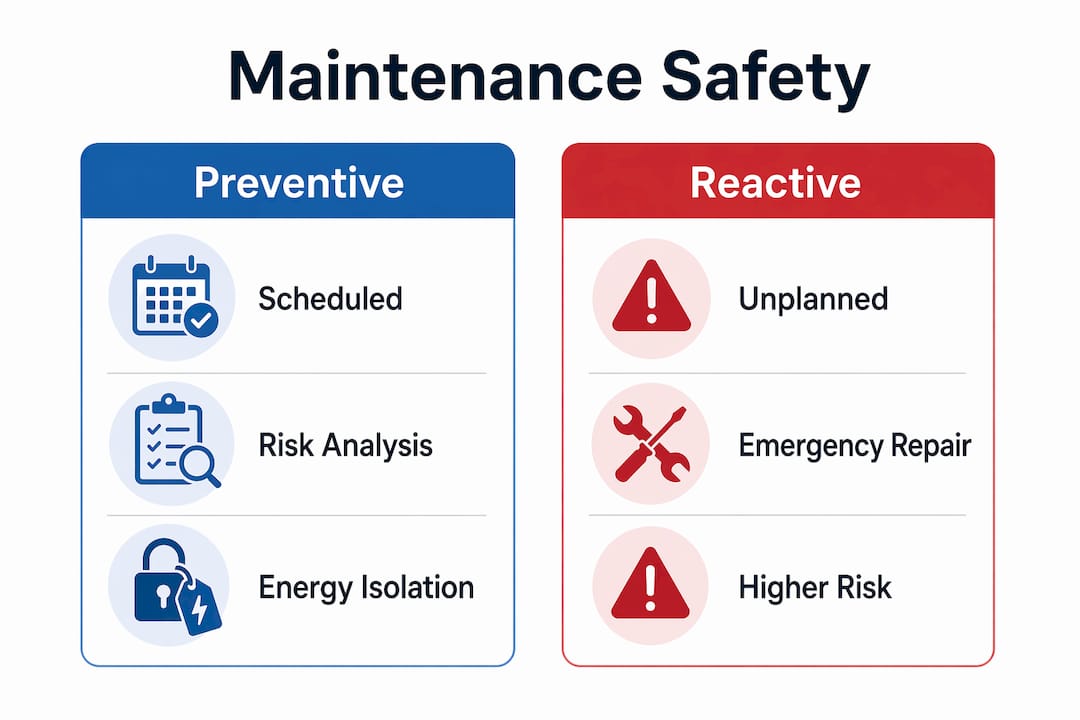
Preventive maintenance is defined as scheduled, planned work carried out before a fault occurs. Reactive maintenance is the repair of something after it has already failed. The safety difference between the two is significant.
Emergency corrective repairs cost 3 to 5 times more than planned preventive work. That cost difference comes from emergency labour rates, expedited parts, and the downtime that follows an unplanned failure. Beyond the financial impact, reactive repairs create pressure to fix problems fast, and that pressure is where safety protocols break down.
World-class maintenance operations target an 80/20 to 90/10 ratio of planned to reactive work. That ratio is not arbitrary. It reflects the point at which a maintenance programme stops being driven by emergencies and starts being driven by data. When most of your work is planned, your team has time to follow procedures correctly.
The practical steps for shifting from reactive to preventive maintenance are straightforward:
- Audit your current asset register and identify which items have no scheduled maintenance plan.
- Assign criticality ratings to each asset based on the safety risk it poses if it fails.
- Set maintenance intervals based on manufacturer guidance and actual usage data, not calendar dates alone.
- Record every completed task so patterns and failure trends become visible over time.
- Review the plan quarterly and adjust intervals when the data supports it.
Pro Tip: Preventive maintenance frequency should be based on usage cycles and condition data, not arbitrary calendar dates. Over-maintaining an asset causes premature wear and introduces unnecessary risk during the maintenance task itself.
What safety risks arise from poor or neglected maintenance practices?
Neglected maintenance creates hazards that are predictable and preventable. The risks fall into three broad categories: equipment failure, environmental dangers, and the hazards introduced by rushed emergency repairs.
Equipment failure is the most direct consequence. A heating boiler with no annual service can develop a carbon monoxide leak. Electrical installations that are never inspected develop faults that cause fires. Plumbing that is left unchecked corrodes and fails, creating slip hazards and structural damage. Each of these outcomes is a direct result of a maintenance gap.
The condition of the maintenance environment itself is a commonly overlooked risk factor. Poor lighting, restricted access, and uncleared hazards around the work area are a frequent cause of contractor injuries during maintenance tasks. A property owner who calls in a tradesperson to fix a fault in a cluttered, poorly lit plant room has already created a hazardous working environment before the job has started.
Reactive maintenance environments are structurally hazardous. The pressure to restore a failed system quickly leads to protocol bypass and a higher likelihood of injury. Safety protocol bypass is significantly more likely during reactive repairs than during planned work. That is not a reflection of individual carelessness. It is a predictable outcome of a system that prioritises speed over procedure.
Key risks from poor maintenance practices include:
- Electrical faults from uninspected wiring and aged switchgear
- Slip and trip hazards from deteriorating flooring, paths, and drainage
- Fire risk from blocked ventilation, faulty heating, and accumulated debris
- Structural risk from unchecked roof, guttering, and boundary wall condition
- Contractor injury from unsafe access, poor lighting, and unmanaged site conditions
What maintenance safety procedures protect workers and residents?
Effective preventive maintenance safety planning combines risk analysis, energy isolation, permit controls, and contractor management into a single coordinated system. No one element works in isolation.
Energy isolation, commonly known as lockout/tagout (LOTO), is the procedure of physically isolating an energy source before maintenance begins. This applies to electrical circuits, gas supplies, and hydraulic systems. A property manager who arranges boiler servicing without confirming the engineer follows a formal isolation procedure is accepting unnecessary risk.
Permit-to-work systems formalise the authorisation of high-risk maintenance tasks. A permit confirms that the task has been assessed, the hazards are understood, and the correct controls are in place before work starts. This is standard practice in commercial facilities and increasingly expected in residential settings where contractors are engaged.
Maintenance safety management in 2026 integrates digital tools such as IIoT sensors and augmented reality into maintenance workflows. These tools improve compliance and safety outcomes, but they depend on standardised procedures and trained personnel to function correctly. Technology does not replace procedure. It supports it.
Key safety procedures every property owner and facility manager should have in place:
- Written maintenance schedules with assigned responsibility for each task
- Pre-task risk assessments for all contractor and in-house maintenance work
- Formal energy isolation procedures for any work on electrical, gas, or mechanical systems
- Permit-to-work documentation for confined spaces, working at height, and hot works
- Contractor induction records confirming site hazards have been communicated before work begins
Pro Tip: Coordinate between your maintenance planner, site supervisor, and attending technician before any significant task begins. Miscommunication between these three roles is one of the most common causes of safety incidents during planned maintenance work.
How can property owners implement maintenance for safety?
Maintenance is not just repairing faults. It is keeping equipment as safe as the day it was installed. Employers and property owners have a legal obligation to maintain hazard-free environments. In Dublin, this obligation applies equally to residential landlords and commercial facility managers under Irish health and safety legislation.
The starting point is a planned maintenance programme aligned with asset criticality. Not every asset carries the same safety risk. A faulty gate latch is not in the same category as a faulty boiler flue. Prioritise the assets whose failure creates the greatest risk to occupants and visitors.
Examples of planned maintenance critical to safety in residential and commercial properties include:
- Annual boiler and heating system service
- Periodic electrical installation condition reports (EICRs)
- Regular inspection of guttering, drainage, and roof condition
- Grounds maintenance including path clearance, tree inspection, and boundary checks
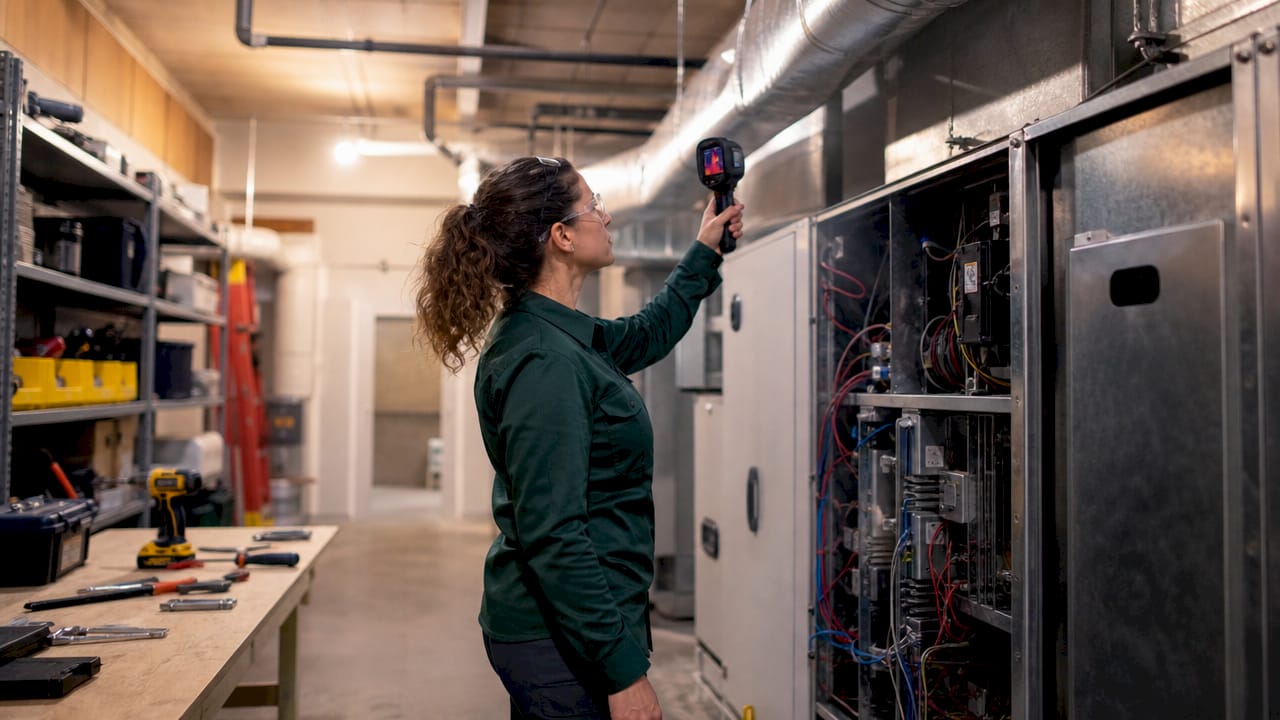
- HVAC system checks to prevent air quality and fire hazards
Understanding the difference between planned maintenance and reactive repairs is also worth your time. Planned maintenance versus reactive repairs is not just a cost question. It is a safety question. Planned work is carried out in controlled conditions by prepared personnel. Reactive repairs are carried out under pressure, often in suboptimal conditions.
Digital checklists and property management platforms make it straightforward to track maintenance schedules, record completed tasks, and flag overdue items. You do not need enterprise-level software to achieve this. A well-structured spreadsheet with assigned owners and completion dates delivers most of the benefit.
For Dublin landlords, legal maintenance responsibilities under Irish tenancy law are specific and enforceable. Keeping a property safe is not optional. It is a condition of the tenancy agreement and a requirement of the Residential Tenancies Act.
Regular HVAC inspections are a practical example of preventive maintenance that directly reduces fire and air quality risk in both residential and commercial settings. Scheduling these annually removes a significant and often overlooked hazard.
Key takeaways
Preventive maintenance is the single most effective tool for managing safety risk in residential and commercial properties, reducing both incident likelihood and repair costs.
| Point | Details |
|---|---|
| Preventive beats reactive | Planned maintenance costs 3 to 5 times less than emergency repairs and is far safer to carry out. |
| Neglect creates predictable hazards | Electrical faults, slip risks, and structural failures are direct results of skipped maintenance cycles. |
| Procedures protect everyone | Energy isolation, permit-to-work systems, and pre-task risk assessments reduce injury risk for workers and residents. |
| Criticality guides prioritisation | Assign safety risk ratings to assets and schedule maintenance based on consequence of failure, not convenience. |
| Dublin owners have legal duties | Irish health and safety law requires property owners to maintain hazard-free environments for occupants and contractors. |
Why I treat maintenance as a safety decision, not a cost decision
Gerard here. After years of working with property owners across Dublin, the pattern I see most often is this: maintenance gets deferred when budgets are tight, and then something fails at the worst possible time. The boiler goes in january. The path cracks and someone trips in november. The hedge overgrows and blocks a sightline at the entrance.
The intersection of safety and asset management is not a technical concept reserved for industrial facilities. It applies directly to every residential and commercial property. The most effective approach treats safety and asset condition as a single integrated function, not two separate budgets.
What I have found is that property owners who treat maintenance as a safety decision make better choices. They do not ask "can we skip this year?" They ask "what is the risk if we skip this year?" That shift in framing changes everything. It moves maintenance from a line item to be cut to a control measure to be maintained.
The properties that hold their value, pass inspections, and avoid incidents are not the ones with the biggest budgets. They are the ones with the most consistent maintenance programmes. Consistency beats intensity every time.
— gerard
Sherrypropertycare: grounds maintenance for safe Dublin properties
Property safety starts at the boundary. Overgrown hedges, cracked paths, blocked drains, and neglected grounds are not just aesthetic problems. They are safety hazards for residents, visitors, and contractors.

Sherrypropertycare provides professional grounds maintenance for residential and commercial properties across Dublin. From lawn care and hedge trimming to full grounds upkeep, the team delivers reliable property care that keeps your outdoor spaces safe, compliant, and well-presented year-round. Every job is tailored to your property's specific needs. Send a photo of your grounds and get a customised quote directly from the team.
FAQ
What is the role of maintenance in safety?
Maintenance keeps equipment and structures in a condition that prevents hazards, injuries, and failures. Without it, properties develop faults that create direct safety risks for occupants, visitors, and workers.
Why is preventive maintenance safer than reactive maintenance?
Planned maintenance is carried out in controlled conditions with proper procedures in place. Reactive repairs happen under pressure, which significantly increases the likelihood of safety protocol bypass and injury.
What are the most important maintenance safety procedures?
Energy isolation (lockout/tagout), permit-to-work systems, and pre-task risk assessments are the three core procedures. Together, they control the hazards present during maintenance work on electrical, gas, and mechanical systems.
How often should property owners schedule maintenance checks?
Frequency should be based on asset criticality and usage data, not arbitrary calendar dates. High-risk assets such as boilers and electrical installations require annual inspection as a minimum under Irish regulations.
Do Dublin landlords have legal obligations around maintenance safety?
Yes. Under the Residential Tenancies Act and Irish health and safety legislation, landlords must maintain properties in a safe and habitable condition. Failure to do so creates legal liability as well as direct safety risk.