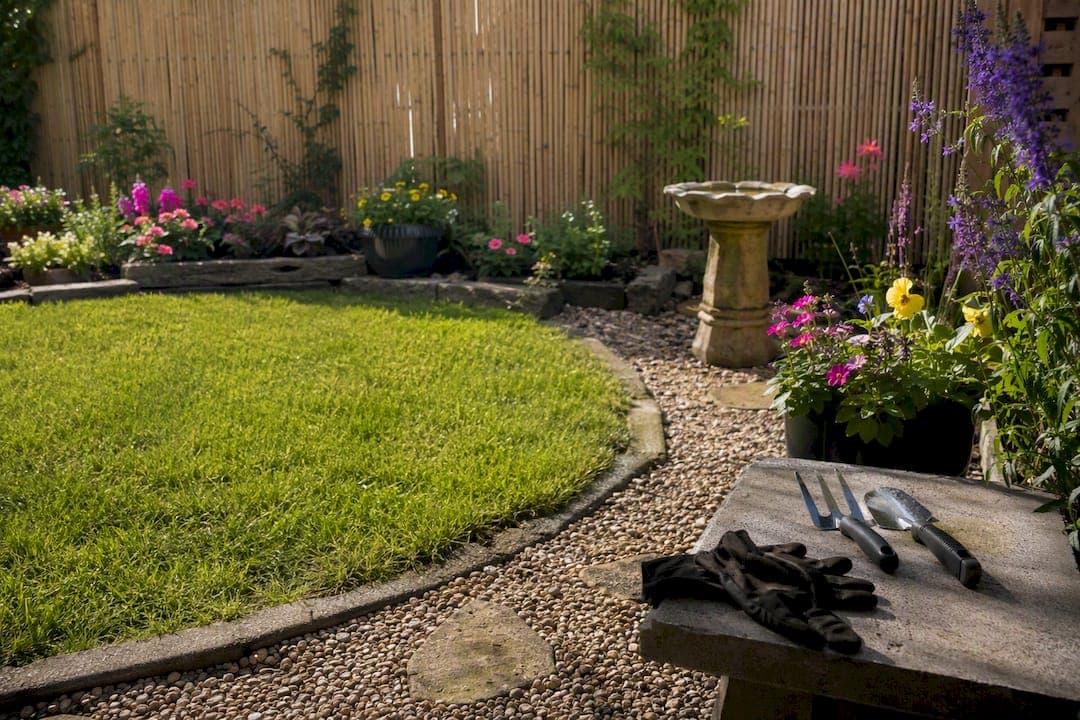
The best approach to small garden design in Ireland is to build a zoned "outdoor room" with durable, light-coloured surfaces and evergreen structure that copes with our wet, low-light winters. Two things to decide before anything else: what the garden is actually for (dining, play, or quiet relaxation), and which single hard-wearing, light-toned surface will anchor the main area.
Everything else follows from those two choices. Once you know the purpose, you can size the patio, plan planting beds, and pick materials that won't fight each other visually.
- Decide the garden's primary use first. A dining space, a play area, and a relaxation nook each need different proportions.
- Choose one durable, light-coloured surface (porcelain, limestone, or light gravel) for the main zone before adding anything else.
If you'd rather skip the planning and go straight to a quote, Sherry Property Care carries out site visits across Dublin and can turn a few photos into a costed plan.
Table of Contents
- What are the design principles behind small garden design in Ireland?
- How should you lay out a small back garden or courtyard?
- Which plants actually thrive in Irish small gardens?
- What materials and surfaces suit Irish weather best?
- How do you keep a small garden low maintenance?
- How should you light a small garden for evening use?
- What does a small garden project cost in Ireland?
- What happens during a Sherry Property Care site visit?
- How can you make a small Irish garden wildlife-friendly?
- How do you get privacy in an overlooked urban garden?
- What should you plant each season in a small Irish garden?
- How do you manage drainage in a wet Irish garden?
- Which furniture and ornaments suit a small garden?
- What matters most when planning a small garden in Ireland?
- Why most small garden advice misses the point
- Get a garden quote from a Dublin grounds care team
- Sources
- FAQ
What are the design principles behind small garden design in Ireland?
Small gardens fail for one of two reasons: they try to show everything at once, or they use too many materials fighting for attention. Fixing both comes down to three rules.
- Zone the space into an outdoor room. Create a defined seating or dining area close to the house, then a path leading somewhere else, even if "somewhere else" is only a bench three metres away. Irish designers increasingly treat a pocket garden as an outdoor room, using zoning to build a sense of movement rather than one flat view.
- Limit your palette and repeat it. Pick one paving material, two or three plant species, and one boundary treatment, then repeat them. A professional low-maintenance design approach favours fewer varieties used consistently over a scattered collection of one-offs.
- Expand the space visually. Borrow a neighbour's tree line if you can see it over the fence, use lighter-toned materials to bounce light around, and add height through vertical planting rather than more floor-level clutter.
Pro Tip: Stand at your back door and count how many separate "features" you can see. If it's more than three, the garden will read as busy rather than considered, no matter how nice each element is on its own.
How should you lay out a small back garden or courtyard?
Most Irish terraced houses and courtyard gardens share the same basic shape: narrow, overlooked, and short. The layout that consistently works splits the space into three bands.
- Patio or decking nearest the house, sized for a table and four chairs at minimum, since this is where you'll actually spend time.
- A narrow connecting path, even if it's only 600mm wide, linking the patio to whatever sits beyond it.
- Planting bands or raised beds along the boundaries, leaving the centre open so the garden doesn't feel hemmed in.
For raised beds, keep the depth to 600mm or less. That's the maximum you can comfortably reach across from one side without stepping on the soil, and beds wider than this compact the soil underfoot, which means more replanting later. Sleeper-built beds at seat height double as extra seating during summer barbecues, which is worth considering if your patio is tight.
On lawns: a small patch of real grass in a shaded, well-used courtyard often thins out within two seasons. Artificial grass makes more sense for tight, high-traffic areas, while a genuine lawn still suits a larger, sunnier back garden where it gets a fair chance to establish.
Which plants actually thrive in Irish small gardens?
Irish weather is the defining factor here: mild but wet, with plenty of gardens sitting in partial shade from boundary walls or neighbouring extensions. The plants that hold up best are structural evergreens rather than anything that depends on a long dry summer.
- Box and pittosporum for year-round shape, especially useful near a patio where you want green in January as much as July.
- Ornamental grasses for movement and texture without demanding much from the soil.
- Repeat perennials in blocks of three or five rather than one of everything, which keeps the planting readable rather than fussy.
- Climbers and trained jasmine on boundary walls or trellis, adding vertical green without eating into floor space. Wall-mounted planters work well for renters who can't dig into a shared wall or a landlord's soil.
Woodie's makes the same point about vertical planting in small gardens: climbers and wall planters bring greenery in without sacrificing the little floor space you have.
Mulch matters more than most people think. Applying mulch at a depth of 7 to 10 centimetres suppresses weeds and holds moisture through dry spells, cutting the weeding you'll do over a season significantly.
Dense planting does similar work to mulch: pack beds so there's little bare soil for weeds to colonise, and you'll spend far less time on your knees come July. For a fuller planting plan, our guide to low-maintenance garden ideas covers combinations that hold their shape through an Irish winter.
What materials and surfaces suit Irish weather best?
Irish rain makes surface choice a practical decision, not just an aesthetic one. Materials that pool water or stain easily will look tired within a year.
- Large-format porcelain or local limestone reflects more light than dark, small-unit paving, and fewer joints mean fewer places for moss to establish. Light-coloured, large-format surfaces are now standard in Dublin small-garden projects for exactly this reason.
- Composite decking costs more upfront than timber but doesn't need annual staining or oiling, which matters in a climate where damp timber decking can turn slippery and green within two seasons.
- Permeable surfacing (resin-bound gravel, permeable jointing) prevents puddling on patios, a real issue in gardens with heavy clay soil underneath.
Whatever you choose, check the fall of the ground before laying anything. A patio without a slight gradient towards a drain will hold water after every downpour.
How do you keep a small garden low maintenance?
Three specific choices do most of the work in reducing your weekly and seasonal upkeep.
- Mulch at 7 to 10cm every spring. This single step handles weed suppression and moisture retention in one pass.
- Plant densely. Gaps between plants are where weeds establish. Fill them and you remove the opportunity.
- Automate watering where you can. Drip irrigation lines on a simple timer keep pots and beds consistent without daily attention, and a robot mower or artificial grass removes lawn care entirely from small, awkward-shaped patches.
Pro Tip: If you're planting in autumn, mulch immediately after. Bare soil left over winter invites weed seeds that would otherwise never get a foothold.
How should you light a small garden for evening use?
Lighting does two jobs in a small Irish garden: it extends the hours you can actually use the space, and it distracts the eye from close boundaries after dark.
- Use warm LED uplights on one or two feature plants rather than lighting everything, which flattens the effect.
- Add low path lights along the connecting route for safety rather than decoration.
- Wired low-voltage LEDs outperform solar fixtures through an Irish winter, when short days leave solar panels with little charge time. Designers consistently recommend warm uplighting and path lights as the combination that works best for extending garden use into the evening.
Lighting a boundary fence rather than pointing lights at it also helps: it draws the eye up and out rather than stopping dead at the fence line.
What does a small garden project cost in Ireland?
Budgets for small Dublin projects vary with scope, but courtyard and small rear garden projects typically fall between €3,000 and €10,000, depending on paving choice, planting, and whether drainage work is needed. A modest courtyard refresh, new paving, planting beds, and basic lighting, generally takes three to seven working days once work starts.
Before accepting any quote, ask:
- Is there a drainage plan, and where does surface water go?
- What's the exact material specification, not just "porcelain" or "composite"?
- Is there a warranty on paving and planting?
- What's the realistic start-to-finish timeline, including any weather contingency?
Hire a professional rather than DIY-ing it when the job involves complex drainage, changes in ground level, permanent electrical lighting, or bespoke stonework. These are the areas where a mistake is expensive to undo, and where a small garden's tight tolerances punish sloppy work far more than a large one would.
What happens during a Sherry Property Care site visit?
Sherry Property Care works across Dublin on landscaping, lawn care, hedge trimming, patio cleaning, and power washing for residential and commercial properties. A site visit or photo-based quote typically reviews:
- Current photos of the space from a few angles, including boundaries and any existing paving.
- Access, since a narrow side return changes what materials and machinery are practical.
- Drainage and any obvious puddling or damp patches.
- Your brief: what the garden needs to do, and any materials or plants you already have in mind.
Sending clear photos, taken in daylight, from the doorway and both corners, speeds up an accurate estimate considerably. You can start that conversation directly through Sherry Property Care's site.
How can you make a small Irish garden wildlife-friendly?
A small garden supports more wildlife than most people expect, provided a few deliberate choices are made. Native hedging, such as hawthorn or beech mixed into a boundary planting scheme, gives birds shelter and nesting cover that a bare fence never will.
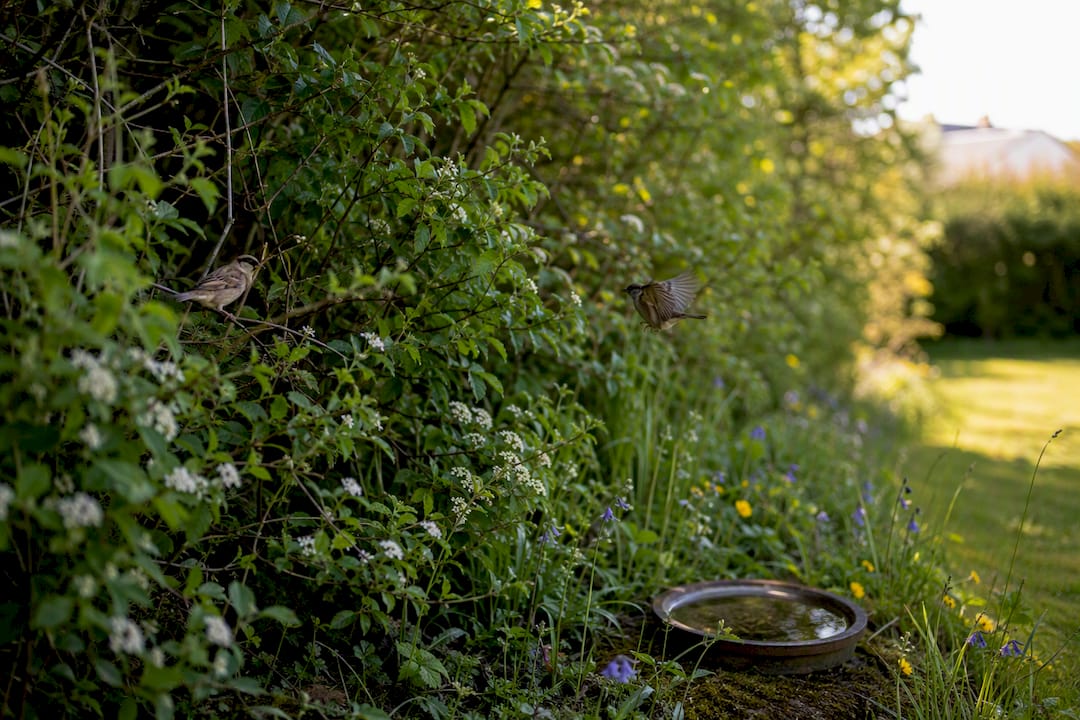
Leaving a small strip of long grass or a patch of wildflowers, even a single square metre, provides food for pollinators through summer. A shallow water dish or a small pond insert, tucked into a corner bed, brings in birds and, in time, frogs, particularly useful if slugs are a recurring problem on your vegetables.
Log piles or a stack of broken terracotta pots pushed against a shaded boundary wall become shelter for beetles and overwintering insects, doing double duty as an inexpensive design feature. None of this requires sacrificing the tidy, structured look most small Irish gardens aim for. A wildlife strip can sit quietly behind a clipped box hedge, invisible from the patio but doing real work for local biodiversity.
How do you get privacy in an overlooked urban garden?
Overlooking is the single biggest complaint about small urban gardens in Dublin and Cork alike, where terraced housing and close-set extensions put neighbours' windows directly into your sightline. Height-based solutions work faster than most people expect.
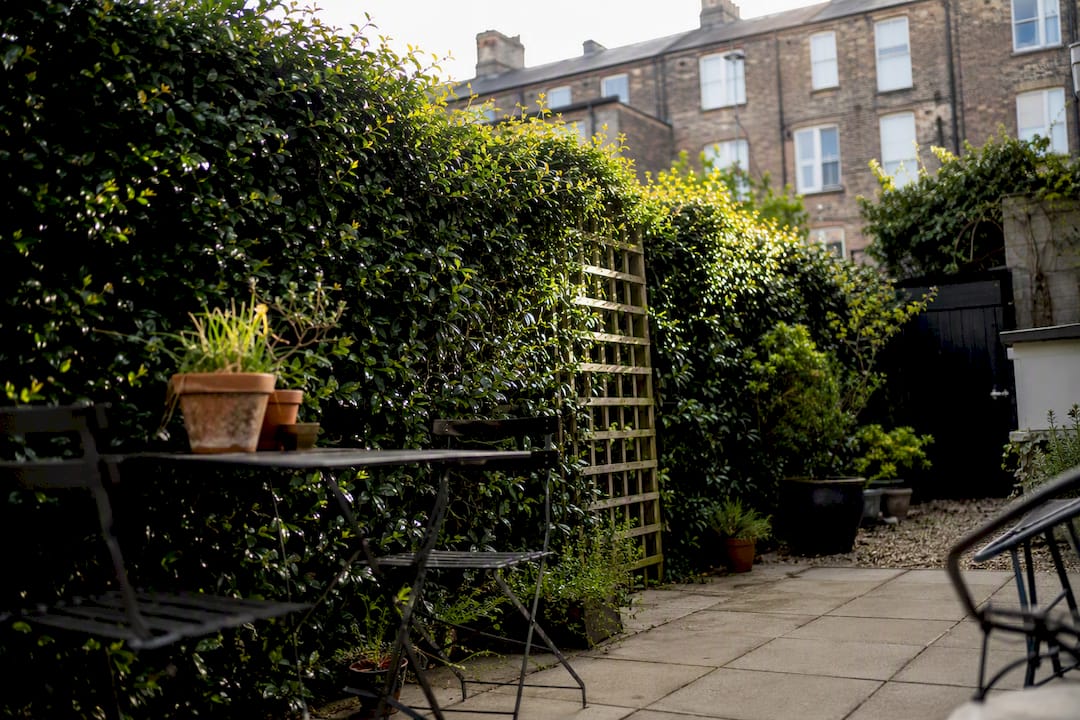
A well-chosen hedge, rather than a fence, softens the boundary while blocking sightlines, and it keeps growing taller as trees around it mature. Our guide to privacy hedge plants for Irish gardens covers species that establish quickly in Irish soil without needing constant trimming.
Where a hedge would take too long to establish, trellis panels topped with fast climbers such as clematis or evergreen ivy give near-instant screening at eye level, the point that matters most for privacy from a neighbouring upstairs window. Pergolas with retractable canopies solve the same problem for overhead overlooking from taller buildings nearby.
Positioning matters as much as material. A single well-placed multi-stem tree or tall grasses near the boundary, rather than a solid wall of screening, often blocks the specific sightline that bothers you without darkening the whole garden.
What should you plant each season in a small Irish garden?
Irish gardens have a longer, milder growing window than much of Britain, but wetter soil through winter changes the timing of a few key jobs.
Spring is for planting summer bulbs and dividing overcrowded perennials before growth accelerates in April. It's also the best window to lay fresh mulch, since soil is workable but not yet baked.
Summer needs little beyond deadheading and watering new plantings, particularly anything installed within the last twelve months. Established, densely planted beds need surprisingly little intervention through July and August.
Autumn is when structural evergreens and hedging go in, giving roots time to establish before winter dormancy. It's also the ideal time to plant spring bulbs and to mulch beds again ahead of the wet months.
Winter in Ireland rarely brings hard, prolonged frost compared with inland Britain, so evergreen structure earns its keep here more than anywhere. A garden built around box, pittosporum, and ornamental grasses still looks composed in January, when deciduous-only planting schemes look bare.
How do you manage drainage in a wet Irish garden?
Standing water is the most common small-garden complaint after privacy, and it's almost always a levels problem rather than a soil one. Patios and paths need a gentle fall, roughly 1 in 80, directing water away from the house towards a drain or soakaway rather than pooling against a wall.
Permeable paving and resin-bound gravel let rainwater filter through rather than running straight off, which matters in gardens with heavy clay subsoil that holds water at the surface. A simple soakaway pit, filled with rubble and topped with gravel, in the lowest corner of the garden gives excess water somewhere to go during heavy downpours.
Raised beds also help indirectly: lifting planting above ground level keeps roots clear of waterlogged soil during the wettest months, a genuine risk in low-lying gardens across the west and midlands. Guttering and downpipes from any shed or extension should discharge into a water butt or soakaway rather than directly onto a path, where repeated saturation speeds up moss growth and surface damage.
Which furniture and ornaments suit a small garden?
Furniture in a small garden has to earn its footprint twice over: it needs to work practically and avoid crowding the space visually. Folding or stacking furniture, stored against a wall when not in use, keeps a small patio flexible for both dining and open space.
Built-in seating along a boundary, using the sleeper-built raised beds mentioned earlier, saves floor space compared with freestanding chairs and doubles as planting structure. A single well-placed piece, one sculptural pot, a simple water feature, a piece of driftwood, reads as considered, while several smaller ornaments scattered around create visual clutter that fights the zoning principles covered earlier.
Scale matters more here than in a large garden. A pot that would look modest on a large patio can dominate a small courtyard, so oversized single pieces often work better than several small ones grouped together. Materials should echo whatever you've chosen for paving or boundary treatment: a limestone patio pairs naturally with stone or terracotta ornaments, while a composite deck suits painted timber or powder-coated metal furniture that won't clash with the deck's grain.
What matters most when planning a small garden in Ireland?
Getting a small Irish garden right depends on zoning the space, choosing durable light-toned materials, and building with evergreen structure suited to Irish winters.
| Point | Details |
|---|---|
| Zone before you plant | Define a patio "outdoor room" near the house and a connecting path before choosing plants or materials. |
| Keep raised beds narrow | Stay at 600mm or under so beds remain reachable from one side without soil compaction. |
| Mulch at the right depth | Apply mulch at 7 to 10cm each spring to suppress weeds and retain moisture through dry spells. |
| Choose light, durable surfaces | Large-format porcelain or limestone reflects light and reduces joints where moss can establish. |
| Budget realistically | Small Dublin courtyard projects typically cost €3,000 to €10,000 and take three to seven working days. |
| Get a local quote | Sherry Property Care carries out Dublin site visits and photo-based quotes for landscaping and grounds maintenance. |
Why most small garden advice misses the point
Most small garden guides lead with plant lists, which is backwards. The gardens that actually work, the ones that still look good three years on, are decided by layout and materials first, planting second. A gorgeous plant palette dropped into a badly zoned, poorly drained space will always look messier than a restrained scheme built on good bones.
The other place conventional advice falls short is cost honesty. Plenty of articles show glossy after-photos without saying what they cost or how long they took. Irish readers planning a small garden deserve the real bands, €3,000 to €10,000 for a typical Dublin courtyard, and a realistic three to seven working days, so they can budget properly rather than guessing.
If there's one thing to prioritise above all else, it's drainage. Get the fall of a patio wrong, or skip a soakaway where the ground clearly needs one, and every other design decision sits on a foundation that will eventually fail. Get that right first, then let the mulch, the planting, and the lighting do the rest of the work.
— gerard
Get a garden quote from a Dublin grounds care team
Sherry Property Care is the practical alternative to piecing a small garden project together yourself across several separate contractors. Instead of separately sourcing a landscaper, a paving supplier, and someone for ongoing lawn and hedge care, you get one Dublin-based team that handles landscaping, patio and garden cleaning, hedge trimming, and power washing, then keeps the garden looking sharp long after the initial project finishes.

That matters most for the gardens covered in this guide: small, tightly zoned spaces where a mistake in levels, drainage, or material choice is hard to disguise later. Sherry Property Care reviews your photos, checks access and drainage, and puts together a costed plan suited to your garden's actual shape rather than a generic template.
If you've read this far and recognise your own garden in the layout and material choices above, the next step is straightforward. Send a few daylight photos of your space through Sherry Property Care's quote page and get a plan tailored to your patch of Dublin.
Sources
- Pocket gardens: making the most of small outdoor spaces
- Irish Examiner gardening guidance on mulching
- Small gardens: A designer’s top tips on how to make best of the space – The Irish Times
FAQ
How can I design my small garden?
Start by choosing the garden's main purpose, dining, play, or relaxation, then zone the space into an outdoor room near the house with a clear path beyond it. Pick one durable, light-coloured surface and a limited plant palette before adding anything else.
What are some simple garden ideas for small spaces in Ireland?
Repeat a small number of evergreen plants like box or pittosporum, mulch beds at 7 to 10cm, and use vertical planting such as climbers or wall planters to add greenery without losing floor space. Large-format light paving and warm LED uplighting both make a small space feel bigger after dark.
Can I design my own garden online for free?
Several free tools and mood-board apps let you sketch a rough layout and test material combinations before committing to anything. For anything involving drainage, level changes, or permanent structures, a site visit from a local professional such as Sherry Property Care catches problems a free planning tool won't.
What is the hourly rate for a gardener in Ireland?
Rates vary by region and the scope of work involved, from routine lawn and hedge maintenance to full landscaping projects. Most Dublin providers, including Sherry Property Care, quote a fixed price per project after reviewing photos or a site visit rather than a flat hourly rate, since garden condition and access vary so much between properties.