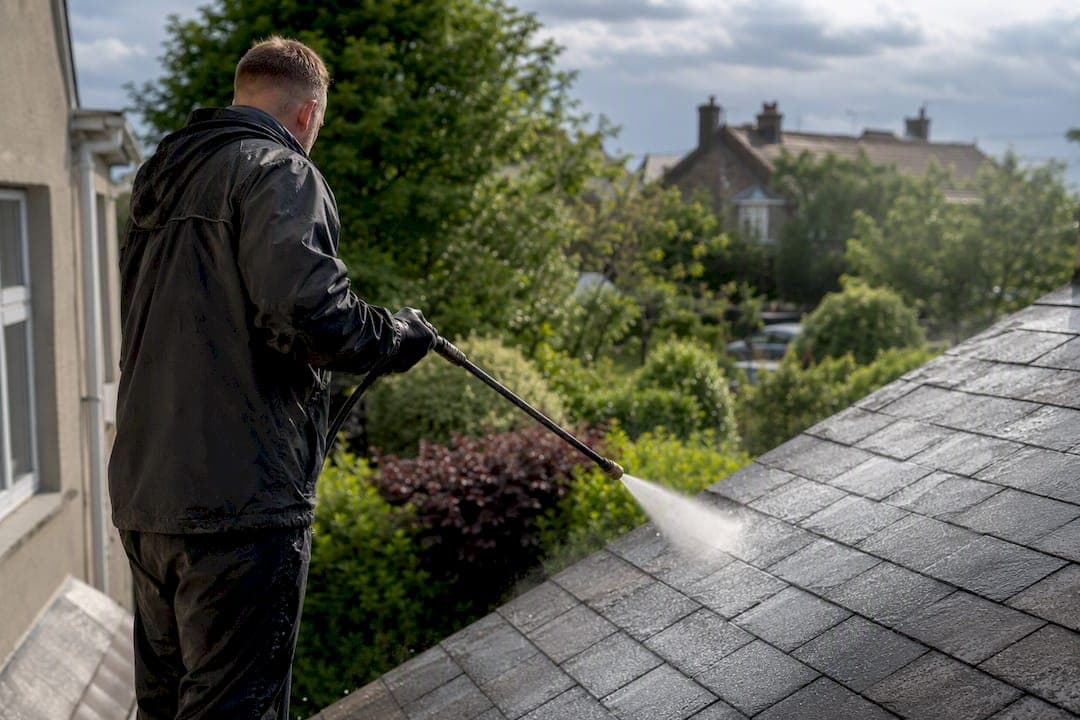
Soft wash your roof, render, timber cladding, and painted surfaces. Pressure or power wash your driveway, patio, and brick. That is the short answer, and getting it backwards is how homeowners end up with stripped shingles, water behind the render, or a driveway that still looks patchy after an afternoon of scrubbing.
- Roofs and painted or delicate exteriors: soft wash. The biocidal chemistry kills moss, algae and lichen at the root without mechanical force.
- Concrete, brick, patios and oily driveways: pressure or power wash. These surfaces can take the mechanical force needed to shift embedded dirt, gum, and grease.
- Mixed properties: use a hybrid approach, one method per surface, and never point a high-pressure jet at a roof or painted finish.
Key Takeaways
Choosing between soft wash and power wash comes down to the surface: biological growth and delicate finishes need chemistry and dwell time, while hard, soiled surfaces need mechanical force or heat.
| Point | Details |
|---|---|
| Match method to surface | Soft wash roofs, render, and painted exteriors; pressure or power wash concrete, brick, and driveways. |
| Watch your PSI | Soft wash typically stays under 500 PSI; pressure washing commonly runs 1,500 to 4,000+ PSI. |
| Chemistry needs time | Dwell time and correct dilution, not just rinsing, are what actually kill moss and algae spores. |
| Protect warranties and plants | High pressure on shingles can void roof warranties; poor runoff control can damage garden beds. |
| Get a local quote | Sherrypropertycare offers tailored Dublin quotes based on photos, covering both soft wash and power wash jobs. |
Table of Contents
- Soft wash vs power wash: how each method actually cleans
- Which surfaces suit soft wash and which suit power wash
- Where soft washing and power washing go wrong
- A quick checklist for choosing your method
- DIY vs hiring a professional: what actually matters
- Why Dublin homeowners choose Sherrypropertycare
- What the "power washing" debate gets wrong
- Book a power washing quote with Sherrypropertycare
- Sources
- FAQ
Soft wash vs power wash: how each method actually cleans
The real difference between soft washing and power washing is not the machine. It's the physics doing the work. Soft washing relies on chemistry and time, while pressure and power washing rely on mechanical force.
Soft washing applies a biocidal solution, typically sodium hypochlorite blended with a surfactant, at low pressure, usually under 500 PSI at the surface. The solution needs dwell time on the surface to kill spores and roots, not just rinse away visible staining.
Pressure washing skips the chemistry and leans on brute force. Working pressures commonly run from 1,500 up to 4,000+ PSI, enough to blast dirt and moss off concrete or brick without any detergent at all. Power washing is pressure washing with heated water added, which cuts through grease and oily grime far faster than a cold-water pressure washer manages on its own.
Quick reference on setup:
- Soft wash rigs use downstream injection or a dedicated 12V pump to draw chemical into the water line.
- Nozzle choice matters as much as pressure: a black or soap nozzle spreads a wide, gentle fan for chemical application; a narrow fan or pencil-jet nozzle is for rinsing hard surfaces only.
- GPM (gallons per minute) affects rinse speed and chemical coverage, not just pressure, so a machine's flow rate matters alongside its PSI rating.
Pro Tip: If a job listing quotes "power washing" for a roof, ask which pressure range and chemistry they plan to use. The term gets used loosely, and the wrong answer here is the one that costs you a new roof.
Which surfaces suit soft wash and which suit power wash
Matching the method to the material is the entire decision. Get the surface wrong and you're either wasting money on an under-powered clean or risking real damage.
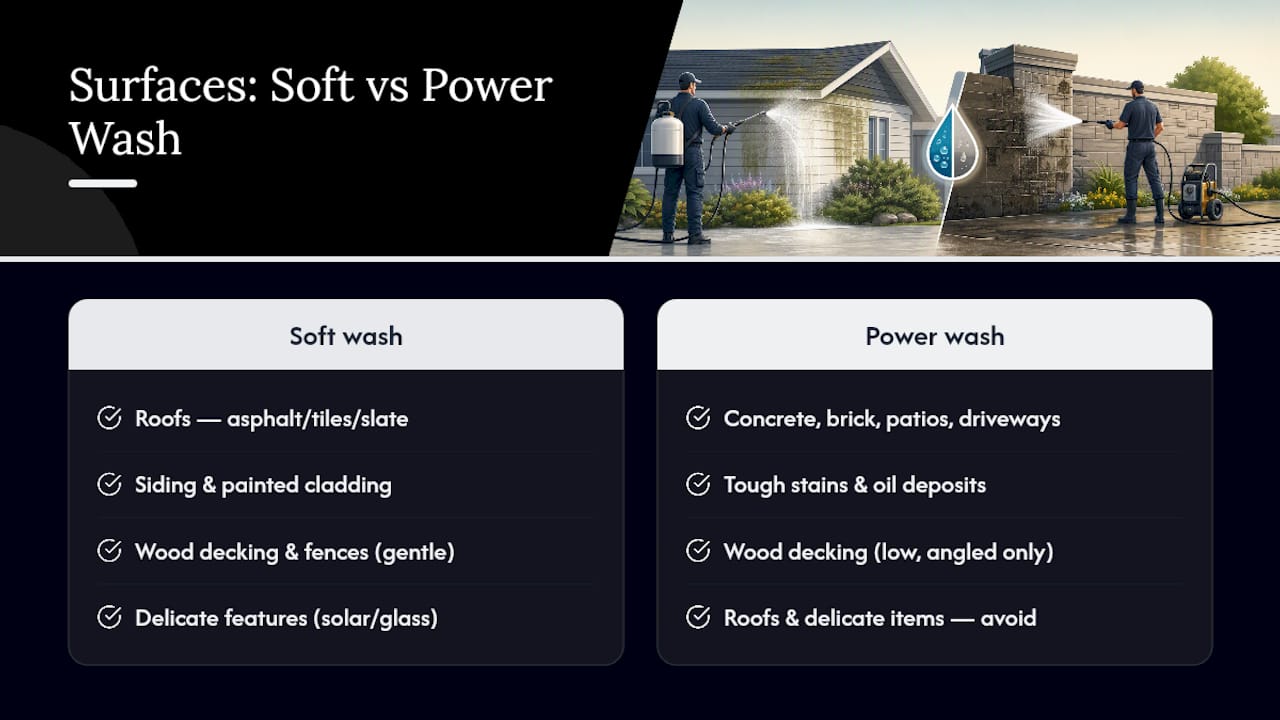
Roofs (asphalt shingles, tiles, slate) Soft wash only. High pressure strips the protective granules off asphalt shingles and can crack tiles or slate, and most roofing manufacturers list high-pressure cleaning as a warranty-voiding act. A soft wash chemical treatment kills the moss and lichen causing the staining without touching the roof's structure.
Siding and painted surfaces (vinyl, timber, render, fibre cement) Soft wash is strongly preferred. Pressure forces water behind cladding and under render, which leads to trapped moisture and, eventually, damp problems inside the wall. It also strips paint that a gentler chemical wash would leave intact.
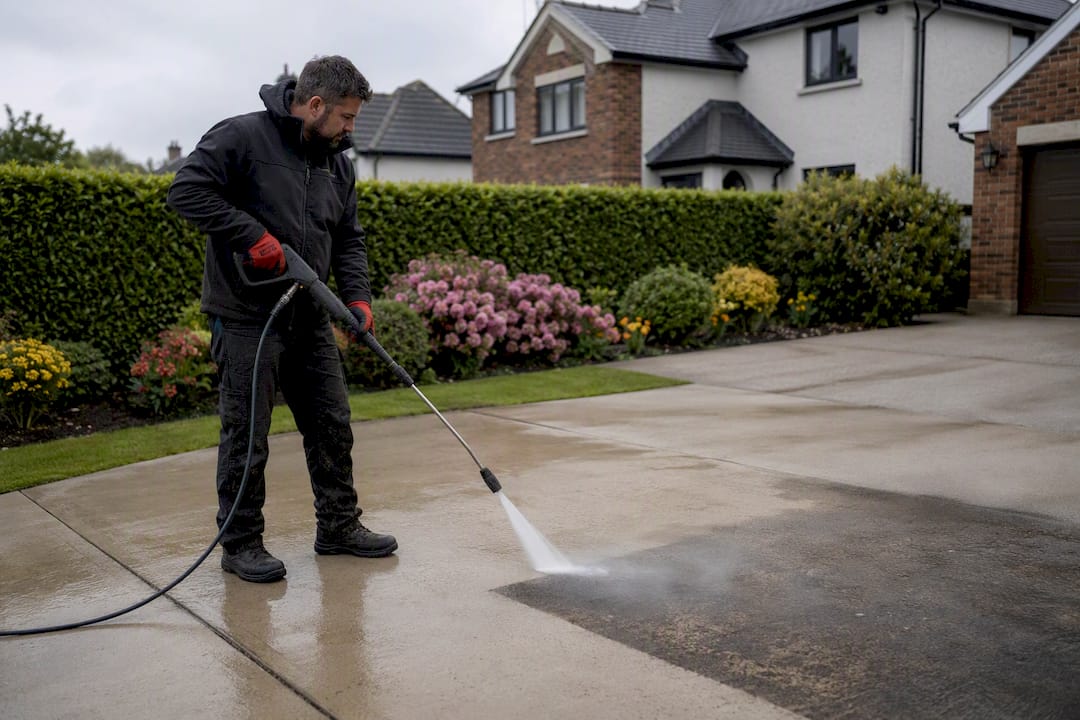
Concrete, brick, patios and driveways This is pressure and power washing's home turf. These surfaces can absorb mechanical force, and embedded dirt, oil stains, and old chewing gum need that force, sometimes paired with heat, to actually lift.
Wood decking and fences Treat with care. Low-pressure soft washing is the safer default; if you use a pressure washer, keep it low and the wand angled with the grain, because high pressure raises and splinters the wood grain.
Delicate features (solar panels, screens, leaded glass) These need specialist soft-wash chemistry or whatever method the manufacturer explicitly approves. Anything else risks scratching glass coatings or damaging seals.
Where soft washing and power washing go wrong
Most damage isn't caused by the method itself. It's caused by using the wrong one, or using the right one badly.
- High pressure on roofing strips granules from asphalt shingles and can void the manufacturer's warranty outright, sometimes with a single pass.
- Weak chemical dilution or a rushed rinse during soft washing leaves spores alive under the surface, so the growth returns within months instead of years.
- Wrong nozzle or a wand held too close turns a routine clean into gouged render or scored timber, one of the most common DIY errors.
- Skipping plant and drain protection lets runoff and chemical concentrate damage garden beds or enter drains untreated.
Pro Tip: A test patch in an unobtrusive corner tells you more in five minutes than any product label. If the surface reacts badly, you've just saved the rest of the wall.
A pre-clean survey catches most of this before it starts, checking existing roof leaks, loose render, or failing paint before water and chemical touch them.
A quick checklist for choosing your method
- Identify the soil type. Green or black staining and moss point to biological growth; ground-in dirt, oil, or tyre marks point to physical grime.
- Check for sensitivities. Note any paintwork, roofing warranty terms, membranes, or fragile pointing before choosing a pressure level.
- Assess access and height. Roofs, upper storeys, and anything requiring ladders or scaffold raise the safety stakes considerably.
- Match the method. Soft wash for biological growth and anything delicate; pressure or power wash for hard, oily, or heavily soiled surfaces.
- Sequence a hybrid job carefully. On mixed properties, soft wash the building envelope first, then pressure wash the hardscaping, so debris and chemical from one job don't contaminate the other.
- Call a professional for roofs, complex render, tall or hard-to-reach areas, or any job where a warranty could be affected by the wrong technique.
DIY vs hiring a professional: what actually matters
A small patio or a straightforward timber fence is genuinely within reach of a consumer pressure washer, provided you keep the pressure sensible and the nozzle appropriate. Where DIY runs out of road is anywhere requiring the correct chemical dilution, controlled runoff, or work at height.
Professionals bring three things a domestic setup usually can't: correctly mixed chemistry, contained runoff that protects drains and plant beds, and warranty-safe technique on roofing. A rig set up for both soft wash and pressure work also means one visit covers the whole property instead of two separate efforts.
- Soft-washed results on organic growth tend to last considerably longer than a pressure-only clean, because the chemistry kills the spores rather than just blasting away the visible staining.
- Runoff control and plant protection are standard practice for a competent operator, not an optional extra.
- Before booking, ask for proof of insurance and a short site survey; both are reasonable requests for any exterior cleaning job.
Taking a few photos of the affected areas before you contact anyone speeds up an accurate quote, and helps a power washing specialist assess pressure and chemical needs before they arrive.
Why Dublin homeowners choose Sherrypropertycare
Sherrypropertycare specialises in gardening and grounds maintenance across Dublin, and power washing sits alongside that work as part of keeping a property looking its best. The approach is straightforward: send photos of the areas that need attention and get a quote built around your property, not a generic price list.
- Tailored quotes based on photos of your actual patio, driveway, or exterior, not guesswork.
- Local, hands-on experience across Dublin properties, including area-specific guidance such as the Lucan power washing guide and the Clonsilla homeowner's guide.
- A grounds maintenance team that already understands which surfaces on your property need soft chemistry versus mechanical force, because that judgement call is part of daily gardening and landscaping work, not a one-off specialism.
What the "power washing" debate gets wrong
Most of the confusion around soft wash versus power wash comes from treating "power washing" as a single catch-all term for exterior cleaning. It isn't. It's one method among several, and it happens to be the wrong one for a large share of the jobs homeowners actually need done.
The conventional advice, hose it down hard and it'll come clean, ignores the fact that biological growth regrows from spores left behind after a purely mechanical rinse. That's why a driveway blasted clean with a pressure washer often looks patchy with moss again within a season, while a soft-washed roof can stay clear for considerably longer. The industry's own guidance on operators frequently getting this wrong isn't marketing spin; it reflects how often the wrong method gets applied out of habit rather than judgement.
What should homeowners prioritise first? Identify what's actually causing the mess before choosing a machine. Biological growth and grease are different problems needing different solutions, and no amount of extra pressure fixes a chemistry problem.
Book a power washing quote with Sherrypropertycare
Sherrypropertycare gives Dublin homeowners a single point of contact for both the soft chemistry and the mechanical force that exterior cleaning demands, instead of guessing which contractor handles which method.

Rather than a one-size-fits-all price list, quotes are built from photos of your actual roof, render, patio, or driveway, so the pressure, chemistry, and time involved match the job in front of you, not a generic estimate. That local, surface-led judgement also runs through the grounds maintenance side of the business, so anyone already using Sherrypropertycare for lawn care or hedge trimming gets the same care applied to their exterior surfaces. If your patio, driveway, or exterior render needs attention, send a few photos through the Sherrypropertycare contact page and get a tailored quote back, or read the patio power washing guide first if you want a sense of what's involved before you book.
Sources
- Soft Wash vs Pressure Wash — When to Use Each Method (and Why Most Operators Get It Wrong) - Power Line Industries, Inc.
- Pressure Washing vs. Soft Washing: Which Is Best for Commercial Buildings? — RBM Building Services
- Soft Washing vs Pressure Washing vs Power Washing 2026 - Westlink Cleaning Services Sydney
FAQ
Is it better to soft wash or pressure wash?
Neither is universally better. Soft wash suits roofs, render, and painted surfaces because it kills growth without mechanical force, while pressure washing suits concrete, brick, and driveways where embedded dirt needs physical force to shift.
Can I use my pressure washer as a soft wash system?
Yes, with the right setup. Adding downstream injection or a 12V chemical pump and switching to a wide soap nozzle lets a standard pressure washer apply soft-wash chemistry at low pressure.
Do you rinse the roof after soft washing?
Most soft wash treatments are designed to be left to dwell and often need only a light, low-pressure rinse, if any, since the chemistry does the cleaning rather than mechanical force. Always follow the specific product's dwell-time guidance rather than rinsing early.
What PSI is considered soft wash?
Soft washing typically operates under 500 PSI at the surface, compared with 1,500 to 4,000+ PSI for standard pressure washing.
Should I hire a professional for roof cleaning?
For roofs specifically, yes, given the warranty risk from incorrect pressure and the need for a pre-clean survey to check for existing leaks. Sherrypropertycare's Dublin team can assess this as part of a tailored quote before any work starts.