TL;DR:
- A spring cleaning workflow involves a structured sequence of decluttering, organising, and deep cleaning. Following this process in manageable sessions helps ensure thorough results and reduces fatigue. Maintaining the cleanliness requires consistent daily and seasonal habits to keep the home fresh year-round.
A spring cleaning workflow is a planned sequence of cleaning tasks that organises your effort, reduces overwhelm, and delivers thorough results across your entire home. Rather than attacking every room at once, a structured seasonal tidying method breaks the work into manageable sessions built around preparation, decluttering, organising, and deep cleaning. For Dublin homeowners and renters, where damp winters leave their mark on windows, vents, and outdoor spaces, a clear home organisation plan makes the difference between a half-finished attempt and a genuinely refreshed property. The right workflow saves time, protects your energy, and keeps results lasting well beyond spring.
What tools and supplies do you need to start a spring cleaning workflow?
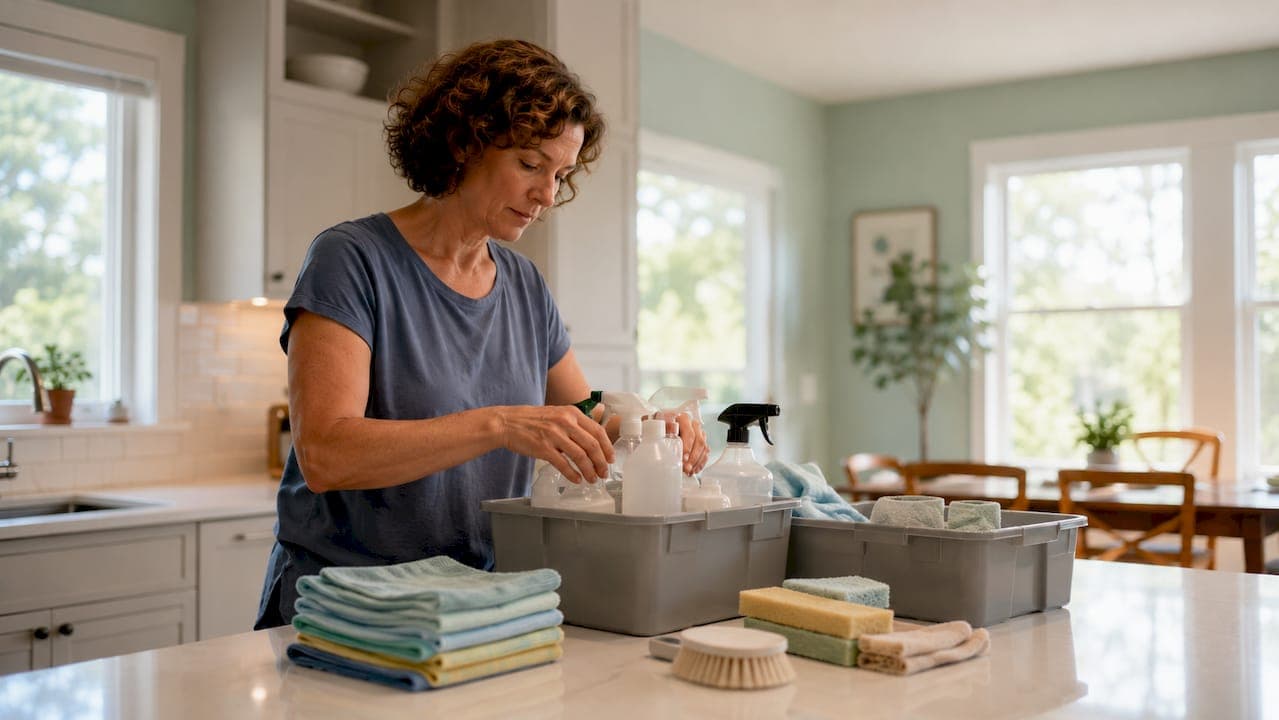
The right supplies make your cleaning schedule faster and more effective. Arriving at a room without the correct tools wastes time and forces you to stop mid-task. Gather everything before you begin.
Core supplies to have ready:
- All-purpose cleaner (suitable for kitchen and bathroom surfaces)
- Glass cleaner for windows and mirrors
- Microfiber cloths in two colours (one for wet tasks, one for dry dusting)
- A vacuum with a soft brush attachment for corners, vents, and upholstery
- Mop and bucket
- Scrubbing brushes in two sizes
- Bin bags for rubbish, donations, and recycling
- Labelled storage boxes for sorting items during decluttering
For scheduling, a simple kitchen timer or a free app like Google Tasks works well for 60-minute cleaning blocks. Storage solutions such as clear plastic boxes, drawer dividers, and shelf organisers help you sort items quickly during the declutter phase.
| Tool | Recommended option | Budget option |
|---|---|---|
| Microfiber cloths | E-Cloth General Purpose | Supermarket own-brand packs |
| Vacuum | Dyson V15 Detect | Shark IZ201UK cordless |
| All-purpose cleaner | Method All-Purpose Spray | Lidl W5 Multi-Surface |
| Storage boxes | IKEA SAMLA | Dealz clear storage tubs |
| Timer or scheduler | Google Tasks app | Standard kitchen timer |
In Dublin, most of these supplies are available at Woodies DIY, Lidl, or Dunnes Stores. Buying in bulk before you start avoids mid-session trips to the shops.
Pro Tip: Spray your microfiber cloth directly rather than spraying the surface. The American Cleaning Institute confirms this protects delicate finishes from over-saturation and staining.
How to organise your spring cleaning schedule for maximum effectiveness?
A well-built cleaning schedule is the backbone of any successful seasonal tidying method. Without one, tasks pile up, energy drops, and rooms get skipped.
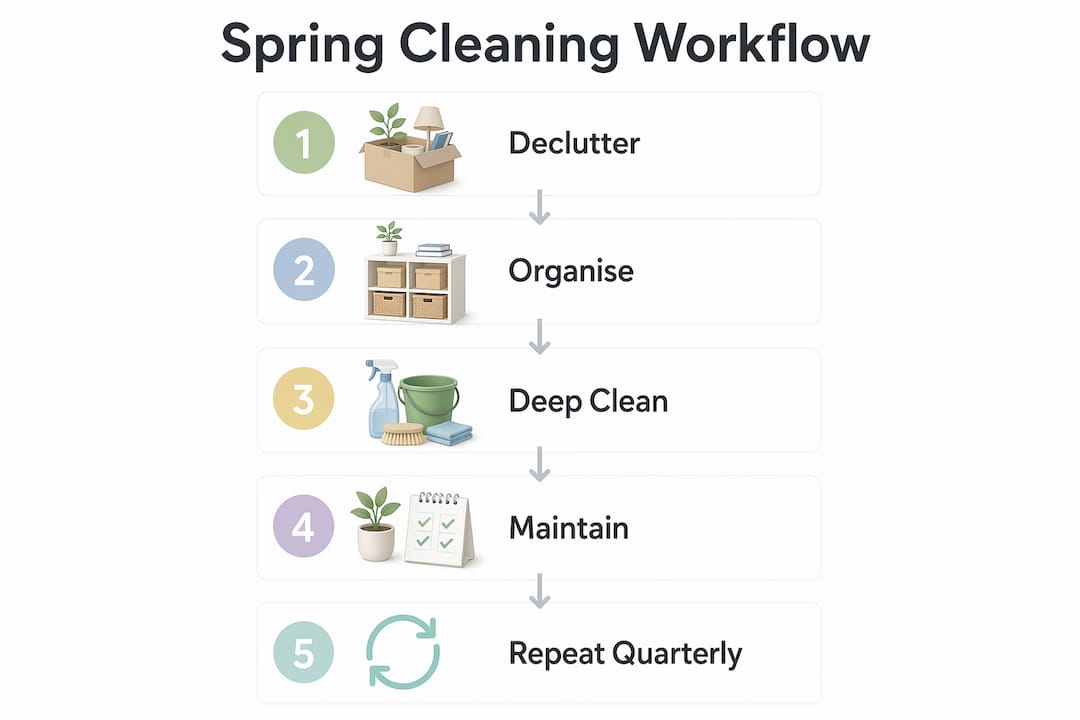
The American Cleaning Institute recommends spreading spring cleaning across a 6-day period. That structure gives each room proper attention without exhausting you. For most Dublin households, spreading sessions across two or three weekends works just as well.
A practical 6-session cleaning plan:
- Session 1: Declutter the entire home. Go room to room with bin bags and boxes. Sort items into keep, donate, recycle, and discard.
- Session 2: Organise what remains. Put items back in logical places. Label storage boxes. Clear surfaces.
- Session 3: Deep clean the kitchen. Focus on appliances, cupboards, and worktops.
- Session 4: Deep clean bathrooms and utility areas.
- Session 5: Deep clean bedrooms and living areas.
- Session 6: Tackle entryways, hallways, windows, and outdoor spaces.
Work in 60-minute focused blocks. This time-boxing approach prevents fatigue and keeps your energy consistent throughout each session. Set a timer, work without distraction, then take a short break.
Prioritise high-use rooms first. Kitchens and bathrooms accumulate the most grime and benefit most from early attention. Bedrooms and living rooms can follow.
Pro Tip: Involve family members or flatmates with age-appropriate tasks. Dyson's spring cleaning guidance notes that assigning simple jobs to children and other household members lightens the workload significantly and keeps everyone accountable.
What is the best sequence of tasks: decluttering, organising, and deep cleaning?
Task order is the single most important factor in an efficient cleaning task list. Get it wrong and you waste effort cleaning items you later throw away, or you move clutter back onto surfaces you have just scrubbed.
The correct sequence is: declutter first, organise second, deep clean last. This order is the most efficient workflow for lasting results. Decluttering before deep cleaning prevents wasted effort on items that will be discarded and improves access to surfaces and corners.
How to declutter properly
Work through each room with four clearly labelled boxes or bags: keep, donate, recycle, and discard. Be decisive. If an item has not been used in 12 months, it belongs in the donate or discard pile. Charities in Dublin such as St Vincent de Paul and Oxfam accept good-condition clothing, books, and household items.
How to organise what remains
Once clutter is gone, organise what stays. Group similar items together. Use drawer dividers, shelf organisers, and labelled boxes. Clear surfaces give you unobstructed access for the deep clean that follows.
Common mistakes to avoid in sequencing
- Deep cleaning before decluttering (you clean items you later remove)
- Organising before decluttering (you create order around things you do not need)
- Skipping the organise step entirely (surfaces fill up again within weeks)
- Mixing decluttering and deep cleaning in the same session (both suffer)
Pro Tip: Always dust from the highest point in a room downwards, and work left to right. The American Cleaning Institute confirms this professional protocol prevents you from re-contaminating surfaces you have already cleaned.
How to deep clean your home efficiently room by room?
Deep cleaning is the most labour-intensive part of your home organisation plan. A room-by-room approach keeps you focused and creates visible progress, which builds momentum. Completing one room fully before moving to the next is a proven method for maintaining thoroughness and motivation.
| Room | Key tasks | Estimated time |
|---|---|---|
| Kitchen | Clean oven, fridge, cupboards, worktops, sink, extractor fan | 2–3 hours |
| Bathroom | Scrub tiles, toilet, bath, shower, clean mirrors and ventilation | 1–2 hours |
| Bedroom | Launder bedding and pillows, vacuum mattress, clean wardrobe | 1.5–2 hours |
| Living room | Vacuum upholstery, clean skirting boards, wipe shelves, dust lights | 1–2 hours |
| Entryway and hallway | Wipe doors, clean coat hooks, vacuum floor, clean light switches | 45 minutes |
Kitchen deep clean
Apply oven cleaner and let it dwell while you clean other surfaces. Pre-soaking heavy-duty areas before scrubbing reduces effort and delivers better results. Wipe down the inside of the fridge, discard expired items, and clean the extractor fan filter. Finish with worktops and the sink.
Pro Tip: When soaking oven racks, lay old towels in the bathtub first. This protects the tub from scratches and makes the whole process far less messy.
Bathroom deep clean
Apply bathroom cleaner to tiles, the toilet bowl, and the shower tray. Let it sit for five minutes while you wipe mirrors and clean the sink. Scrub tiles from top to bottom. Finish with the floor.
Bedrooms
Experts recommend laundering pillows two to three times annually. Spring cleaning is the ideal time for this task. Vacuum the mattress with a soft brush attachment, rotate it if needed, and launder all bedding. Wipe down wardrobes inside and out.
Windows and outdoor areas
Spring is the best time to clean windows because mild temperatures allow cleaning solutions to dry slowly, which prevents streaks. In Dublin, this is especially relevant after winter rain and wind. Clean interior glass first, then exterior. Use a vacuum with a soft brush attachment to clear vents, cobwebs from corners, and dust from baseboards without causing damage.
For outdoor spaces, a spring outdoor cleaning checklist covering patios, pathways, and garden furniture helps you extend the workflow beyond your front door.
How to maintain your home's cleanliness after spring cleaning?
Sustaining the results of your spring clean requires simple, consistent habits. Without a maintenance routine, clutter and grime return within weeks.
Daily and weekly habits that work:
- Spend 10 minutes each evening returning items to their designated places
- Wipe kitchen surfaces after cooking rather than leaving it for a weekly clean
- Run a quick bathroom wipe-down twice a week to prevent soap scum and limescale
- Vacuum high-traffic areas such as hallways and the kitchen floor twice a week
- Deal with post immediately: sort into action, file, or recycle
Seasonal rotation keeps your home organised between deep cleans. Swap winter bedding for lighter duvets in spring, store heavy coats, and rotate seasonal clothing in wardrobes. This prevents cupboards from becoming overcrowded.
Build a quarterly declutter habit. Set aside 30 minutes every three months to go through one area of the home. Charity bags fill up quickly, and regular donation cycles prevent the annual overwhelm that makes spring cleaning feel so daunting.
Keep family members or flatmates involved. Assign specific weekly tasks to each person. Shared responsibility means no single person carries the full maintenance burden, and the home stays in better condition year-round. For Dublin landlords managing multiple properties, a property maintenance checklist can help you track upkeep across rooms and seasons.
Key takeaways
A structured spring cleaning workflow built around the declutter, organise, and deep clean sequence is the most effective method for achieving thorough, lasting results without burnout.
| Point | Details |
|---|---|
| Follow the correct sequence | Always declutter first, organise second, and deep clean last for lasting efficiency. |
| Spread sessions over multiple days | A 6-day or multi-weekend plan prevents burnout and improves thoroughness. |
| Use 60-minute timed blocks | Time-boxing each session keeps energy consistent and prevents fatigue. |
| Work room by room | Completing one room fully before moving on builds momentum and visible progress. |
| Build a maintenance routine | Daily 10-minute resets and quarterly declutters sustain spring cleaning results year-round. |
Why I think most people approach spring cleaning the wrong way
Most people treat spring cleaning as a single-day event. They wake up on a Saturday in April, feel motivated, and try to clean the entire house before dinner. By mid-afternoon, they are exhausted, two rooms are half-done, and the motivation is gone. I have seen this pattern repeatedly, and it is the main reason spring cleaning gets a bad reputation.
The shift that actually works is treating it as a seasonal transition rather than a one-off task. When you spread the work across several sessions, each one feels manageable. You finish each session with a visible result, which makes you want to continue.
For Dublin homes specifically, I would add one thing most guides miss: ventilation. Dublin winters are damp, and homes hold moisture in walls, behind furniture, and in wardrobes. When you are deep cleaning in spring, open windows in each room as you work. Let fresh air circulate for at least 30 minutes. This removes stale air, helps surfaces dry faster, and makes the whole home feel genuinely refreshed rather than just tidied.
The other thing I would emphasise is the outdoor connection. Interior cleaning is only half the picture. Gutters, pathways, garden furniture, and exterior walls all need attention after winter. If you want to maintain your property's value in Dublin, gutter maintenance and exterior upkeep belong on your spring cleaning task list alongside the kitchen and bathrooms.
— gerard
Get professional property care support in Dublin

Spring cleaning covers a lot of ground, and some tasks are better handled by professionals. Sherrypropertycare provides high-quality grounds maintenance and property care services across Dublin, helping homeowners and landlords keep their properties in excellent condition throughout the year. Whether you need exterior cleaning, garden tidying, or grounds upkeep after a long winter, the team at Sherrypropertycare delivers meticulous results tailored to your property. Get in touch today for a personalised quote. Simply send a photo of your outdoor space and Sherrypropertycare will put together a plan that suits your needs. Visit Sherrypropertycare to get started.
FAQ
What is a spring cleaning workflow?
A spring cleaning workflow is a structured sequence of tasks covering decluttering, organising, and deep cleaning your home. It breaks the work into manageable sessions to improve efficiency and reduce overwhelm.
How long should spring cleaning take?
Spreading spring cleaning across six sessions or multiple weekends delivers the best results. Attempting to complete everything in one day leads to burnout and incomplete tasks.
What order should I clean rooms in spring?
Start with high-use rooms such as the kitchen and bathrooms, then move to bedrooms, living areas, and finally hallways and outdoor spaces. Always declutter the entire home before beginning any deep cleaning.
How do I stop spring cleaning results from fading quickly?
Build a daily 10-minute reset habit and a quarterly declutter routine. Assigning weekly maintenance tasks to household members keeps the home in good condition between seasonal deep cleans.
When is the best time to clean windows in Dublin?
Spring is ideal for window cleaning because mild temperatures slow the drying of cleaning solutions, which prevents streaks. In Dublin, cleaning after the worst of the winter rain has passed gives the best results.