
TL;DR:
- Proactive carpentry maintenance protects property stability, reduces repair costs, and sustains long-term value.
- Regular inspections and timely repairs address structural load-bearing elements, enhancing energy efficiency and market appeal.
Carpentry is the skilled trade that maintains a property's structural stability, functionality, and long-term value. Whether you own a terraced house in Ranelagh or manage a commercial block in Dublin city centre, the role of carpentry in property upkeep is not optional. It is the foundation of a well-maintained building. Skilled carpenters work across framing, joinery, doors, windows, and timber repairs, addressing problems before they become expensive failures. Neglect this trade and you risk structural deterioration, rising energy bills, and a property that loses value faster than it should.
How does carpentry directly support structural integrity in properties?
Carpentry is the primary trade responsible for maintaining load-bearing elements such as beams, joists, rafters, and wall framing. These components carry the weight of the entire building. When they degrade, the consequences range from sagging ceilings to cracked walls and, in serious cases, structural collapse.
Professional carpentry maintenance preserves structural integrity by addressing wear and tear before it compounds. A carpenter who spots a softening joist early can replace it at a fraction of the cost of a full floor repair. That is the core financial argument for proactive maintenance over reactive patching.
Timber is also vulnerable to moisture and pests. Gaps in external cladding, poorly fitted window frames, and cracked skirting boards all create entry points for damp and insects. Targeted carpentry repairs seal these gaps, restoring safety and structural stability without requiring full replacement. In Dublin, where Atlantic weather brings persistent damp, this matters more than in drier climates.
Key structural carpentry tasks that protect your property include:
- Inspecting and reinforcing load-bearing beams and joists annually
- Replacing or treating timber showing signs of rot, moisture damage, or insect activity
- Resealing external timber cladding and fascia boards before winter
- Checking loft structures and roof timbers after storms
- Repairing or replacing damaged subfloor sections before surface finishes are laid
What is the impact of carpentry on property value and energy efficiency?
Skilled carpentry drives property value and energy efficiency through precise installation of doors, windows, and joinery that reduce heat loss. This is not a minor detail. Doors, windows, and joinery are critical to thermal performance and comfort in modern homes. A poorly fitted door frame or warped window sash creates draughts that push up heating costs and reduce a property's energy rating.
For Dublin homeowners, a lower Building Energy Rating (BER) directly affects resale value and rental appeal. Buyers and tenants now scrutinise energy performance. Bespoke joinery, well-fitted skirting, and properly sealed frames all contribute to airtightness, which is a measurable factor in BER assessments.
The aesthetic dimension matters too. Well-maintained timber structures require fewer repairs compared to poor installations and present far better at valuation. A property with quality fitted wardrobes, solid internal doors, and clean architraves commands a stronger market position than one with swollen doors and cracked trim.
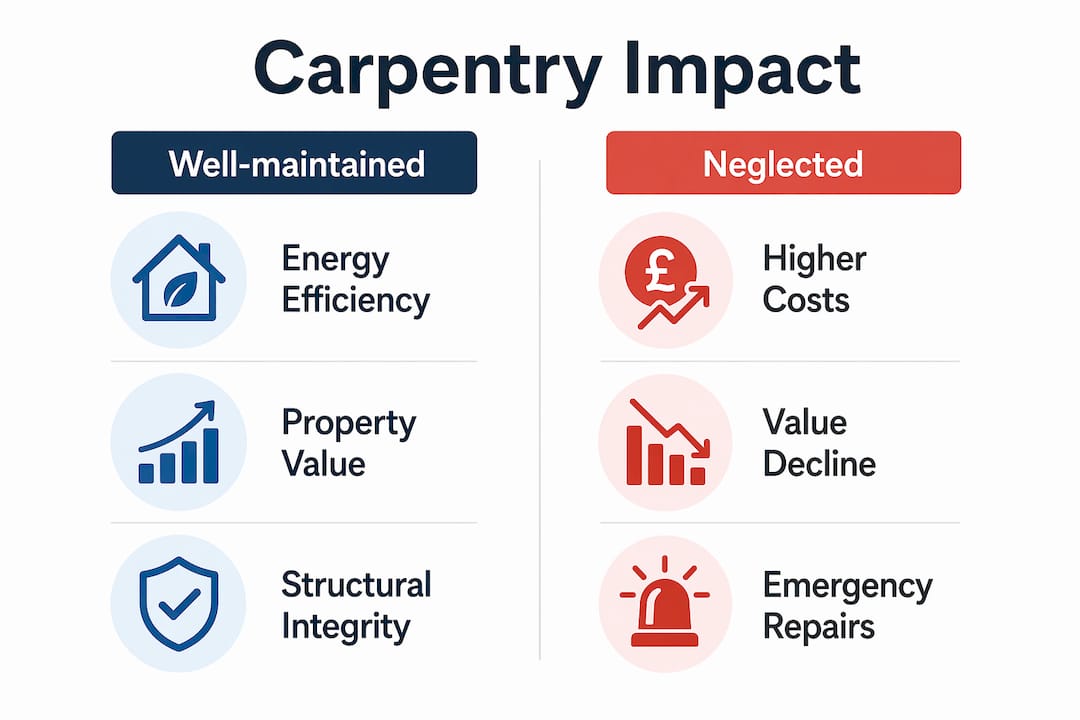
| Feature | Well-maintained carpentry | Neglected carpentry |
|---|---|---|
| Energy performance | Tight seals reduce heat loss | Draughts raise heating costs |
| Market appeal | Clean finishes support higher valuations | Visible wear reduces buyer confidence |
| Repair frequency | Fewer callbacks and emergency fixes | Frequent reactive repairs needed |
| Structural risk | Early issues caught and resolved | Deterioration compounds over time |
Pro Tip: When upgrading windows or external doors in Dublin, ask your carpenter to check the surrounding frame and lintel for moisture damage before fitting new units. Fitting quality joinery into a compromised frame wastes the investment.
How do routine carpentry maintenance roles prevent emergencies?
Preventative carpentry inspections reduce emergency structural repair costs by 3 to 5 times compared to reactive patching. That figure alone justifies building carpentry into your annual maintenance schedule. The savings are not theoretical. They show up in avoided call-out fees, reduced material waste, and fewer disruptions to occupants.
Routine carpentry maintenance covers tasks that are easy to overlook but expensive to ignore. Here is a practical schedule for residential and commercial properties:
- Every 6 months: Check all internal and external door alignments. Doors that stick or drag indicate frame movement or moisture expansion, both of which worsen without attention.
- Every 6 months: Inspect door and window hardware, including hinges, locks, and closers. Lubricate moving parts to prevent wear on frames.
- Annually: Examine skirting boards, architraves, and coving for cracks, gaps, or lifting. These are early indicators of structural movement or damp ingress.
- Annually: Inspect timber decking, fencing, and external structures for rot, loose fixings, and surface degradation.
- After severe weather: Check fascia boards, soffits, and any exposed roof timbers for storm damage.
Scheduling carpentry alongside other trades avoids costly emergency repairs and reduces the number of separate contractor visits. Property managers in Dublin who coordinate plumbing, electrical, and carpentry checks in a single annual visit consistently report lower overall maintenance spend.
Pro Tip: Keep a simple property log noting the date and condition of each carpentry element after every inspection. This record helps you spot patterns, such as a door that sticks every autumn, and address the root cause rather than repeating the same fix.
What practical steps help you integrate carpentry into your upkeep plan?
The most effective approach to property maintenance carpentry is a written schedule tied to a qualified contractor. Without a plan, carpentry work happens reactively, which is always more expensive and disruptive.

Skilled carpenters diagnose underlying causes of issues such as door misalignment, moisture expansion, or shifting frames, preventing ineffective cosmetic repairs that fail within months. This diagnostic expertise is what separates a qualified carpenter from a general handyman. When you hire for property maintenance, verify that your carpenter holds relevant trade qualifications and carries public liability insurance. In Ireland, the Construction Industry Federation (CIF) and SOLAS provide recognised carpentry training frameworks.
Choosing the right timber matters as much as choosing the right person. High-quality, stable timber matched to your property's existing moisture levels reduces callback repairs caused by warping or shrinking. Dublin's damp climate means timber acclimatisation before installation is not optional. It is standard practice for any competent carpenter working in the city.
Early warning signs that carpentry attention is overdue include:
- Doors or windows that no longer close flush with their frames
- Visible gaps between skirting boards and walls or floors
- Soft or springy sections in timber flooring
- Discolouration or staining on timber near external walls
- Cracking or splitting in external fascia and barge boards
Addressing these signs early keeps repair costs manageable. Ignoring them turns a one-hour fix into a multi-day job. For Dublin properties specifically, the combination of older housing stock and wet winters accelerates timber deterioration, making property maintenance in Dublin a year-round commitment rather than a seasonal one.
How does carpentry differ between residential and commercial property upkeep?
Carpentry in residential and commercial settings shares the same core principles but differs significantly in scale, frequency, and compliance requirements. Understanding these differences helps property managers allocate budgets and set realistic maintenance expectations.
| Aspect | Residential properties | Commercial properties |
|---|---|---|
| Typical tasks | Door repairs, skirting, fitted furniture, decking | Partitions, fire doors, shopfitting, structural frames |
| Inspection frequency | Annually or after weather events | Every 6–12 months as standard |
| Compliance requirements | Building regulations for structural work | Fire safety, disability access, and health and safety law |
| Traffic and wear | Low to moderate | High, accelerating hardware and frame wear |
| Urgency of repairs | Moderate, planned scheduling works well | High, failures affect staff, customers, and legal compliance |
Frequent failures in commercial carpentry often involve door pivots and hardware that cause frame splits if ignored. Inspections and lubrication every 6–12 months prevent serious damage. For commercial property managers in Dublin, fire door integrity is a legal requirement, not a preference. A fire door that fails to close properly due to a worn pivot or swollen frame is a compliance failure with real consequences.
Residential properties face different pressures. Fitted kitchens, internal doors, and timber flooring take the most wear in family homes. The key differences between residential and commercial maintenance inform how you prioritise and budget for carpentry work across your portfolio.
Key takeaways
Skilled, proactive carpentry is the single most cost-effective way to protect a property's structure, energy performance, and market value over time.
| Point | Details |
|---|---|
| Structural protection | Annual carpentry inspections catch beam, joist, and frame issues before they become costly failures. |
| Energy and value impact | Properly fitted doors, windows, and joinery reduce heat loss and support stronger property valuations. |
| Preventative savings | Proactive carpentry maintenance costs 3 to 5 times less than emergency reactive repairs. |
| Timber and material matching | Selecting timber matched to local moisture conditions prevents warping and reduces callback repairs. |
| Commercial compliance | Commercial properties require carpentry checks every 6–12 months to meet fire safety and access standards. |
Why I think carpentry is the most undervalued trade in property maintenance
Most property owners think of carpentry as finishing work. They picture skirting boards and fitted wardrobes, not structural frames and load-bearing joists. That misconception is expensive.
Homeowners often underestimate carpentry as structural life-support, treating it as purely aesthetic. I have seen this play out repeatedly. A landlord defers a sticking door for two years. By the time they call someone in, the frame has shifted, the floor has moved, and what should have been a 30-minute adjustment becomes a full frame replacement.
The properties that hold their value and avoid emergency spend are the ones where carpentry is treated as infrastructure, not decoration. Skilled carpenters transform plans into durable realities. The foundation of longevity lies in precise framing and joinery, not just the surface finishes that buyers see on viewing day.
My practical caution is this: do not let price be the only filter when choosing a carpenter for maintenance work. A cheap fix that misses the root cause costs more in the long run. Invest in someone who diagnoses properly, uses quality materials, and documents what they find. That approach, combined with a planned maintenance contract, is the most reliable way to protect your property investment in Dublin's demanding climate.
— gerard
How Sherrypropertycare supports Dublin property owners with professional maintenance
Sherrypropertycare works with homeowners and property managers across Dublin to keep properties in excellent condition year-round. Whether you need a structured maintenance plan or a one-off assessment, Sherrypropertycare delivers reliable, high-quality service tailored to your property's specific needs.

From grounds maintenance to coordinating property upkeep schedules, Sherrypropertycare understands what Dublin properties require across every season. The team takes a detail-focused approach, helping you identify issues early and avoid the cost of emergency repairs. If you manage a residential portfolio or a commercial premises in Dublin, get in touch with Sherrypropertycare today to discuss a maintenance plan that works for your property and your budget.
FAQ
What does a carpenter do in property maintenance?
A carpenter maintains and repairs structural timber elements, doors, windows, joinery, and fitted fixtures. Their work covers everything from replacing a rotting joist to realigning a fire door in a commercial building.
How often should carpentry be inspected in a residential property?
Residential properties benefit from a carpentry inspection at least once a year, with additional checks after severe weather. Dublin's wet winters make autumn inspections particularly worthwhile for external timber elements.
Does carpentry affect a property's energy rating in Ireland?
Properly fitted doors, windows, and joinery directly affect airtightness, which is a measured factor in Ireland's Building Energy Rating (BER) system. Poor carpentry installation creates draughts that lower the rating and raise heating costs.
What is the difference between reactive and preventative carpentry maintenance?
Reactive maintenance fixes problems after they fail, which is typically 3 to 5 times more expensive than planned preventative work. Preventative carpentry addresses wear before failure, reducing both cost and disruption to occupants.
How do I find a qualified carpenter for property maintenance in Dublin?
Look for carpenters with recognised trade qualifications from SOLAS or membership of the Construction Industry Federation (CIF). Always confirm they carry public liability insurance before work begins on your property.