TL;DR:
- Personal readiness, proper preparation, and understanding costs are more crucial than market timing when selling a Dublin home in 2026.
- Constrained supply and steady demand enable well-presented properties to sell above asking price and within 60 to 90 days.
Thinking of selling your home is one of the most significant financial decisions you will make, and in Dublin's 2026 property market, timing and preparation can directly affect how much you walk away with. The decision is not purely about market conditions. Personal readiness, property presentation, and a clear understanding of costs all shape the outcome. This guide covers the key personal factors to weigh, current Dublin market conditions, practical preparation steps, a full cost breakdown, and the selling options available to you right now.
What personal factors should homeowners consider before selling?
Personal readiness often matters more than market timing when deciding to sell. The National Association of Realtors identifies seven core questions every seller should answer before listing, covering family fit, lifestyle, income, and readiness for a move. These questions cut through the noise of market speculation and focus your thinking on what actually drives a good sale.
Start by asking whether your home still suits your family's needs. A growing family in a two-bedroom apartment in Ranelagh faces a different calculation than an empty nester in a four-bedroom house in Clontarf. Career changes that affect your commute or remote working arrangements also shift the equation significantly.
Consider the following personal factors before you proceed:
- Family and space needs. Has your household grown or shrunk since you bought? A poor fit between home and family is one of the clearest signals to sell.
- Income and affordability. A salary increase, redundancy, or change in household income affects whether you can upsize, downsize, or move to a different area of Dublin.
- Lifestyle priorities. Proximity to schools in Blackrock or Dundrum, access to public transport on the Luas Red Line, or a desire for a larger garden all influence where you want to be next.
- Maintenance readiness. Older properties in areas like Drumcondra or Phibsborough often carry higher upkeep costs. If you are tired of ongoing repairs, moving to a newer build may reduce that burden.
- Emotional readiness. Selling a family home carries real emotional weight. Rushing the process before you are ready leads to poor decisions under pressure.
Pro Tip: Write down your top three reasons for selling. If at least two of them are practical rather than emotional, you are likely ready to move forward with planning.
How is the Dublin property market shaping the best time to sell?
The Dublin property market in 2026 remains a seller's market, though the pace of growth has moderated from the peaks of recent years. Supply remains constrained and buyer demand continues to be strong, with homes regularly selling above asking price by around 8.5%. Price growth of 3 to 5% is forecast through the year, which is meaningful but no longer the double-digit surge seen previously.
Interest rates have stabilised following the European Central Bank's adjustment cycle, which has brought more buyers back into the market after a period of caution. This is good news for sellers, as mortgage approvals in Dublin have recovered and competition among buyers for well-presented properties remains high.
| Market factor | 2026 position | Impact on sellers |
|---|---|---|
| Supply of homes | Constrained | Fewer competing listings |
| Buyer demand | Steady and strong | Faster sales, above-asking offers |
| Price growth forecast | 3 to 5% | Moderate gains, not explosive |
| Average premium over asking | ~8.5% | Realistic upside for well-priced homes |
| Interest rates | Stabilised | More active buyers in the market |
"Supply constraints in Dublin are structural, so waiting to sell carries real risk if your home is ready and demand remains strong." — Earnest.ie, 2026
The risk of waiting is real. If you are already prepared and your personal circumstances support a sale, holding out for a further price surge may cost you more in carrying costs, mortgage payments, and missed opportunities than any marginal gain would deliver.
What steps should Dublin homeowners take to prepare their property for sale?
Preparing your property properly is one of the highest-return activities you can do before listing. Starting preparation 4 to 6 weeks before listing gives you enough time to address repairs, complete cleaning, and arrange professional photography without rushing. Buyers begin their search online, so the first impression your home makes is almost always a photograph.
Follow this preparation timeline to keep things on track:
- Six weeks out. Walk through every room and note repairs, scuffs, broken fixtures, and anything a buyer might flag. Book a pre-listing inspection at this stage.
- Five weeks out. Complete all minor repairs. Fix leaking taps, replace cracked tiles, repaint scuffed walls in neutral colours, and address any damp or mould issues.
- Four weeks out. Declutter thoroughly. Remove personal photographs, excess furniture, and anything that makes rooms feel smaller. Hire a deep cleaning service to bring the property to a show-ready standard.
- Three weeks out. Focus on kerb appeal. Mow the lawn, trim hedges, clean the driveway, repaint the front door if needed, and add simple planting to the front garden. First impressions at the gate matter as much as first impressions online.
- Two weeks out. Stage key rooms. The living room, kitchen, and master bedroom carry the most weight with buyers. Home staging improves buyer perception and can increase the sale price by 1 to 5%, with 81% of buyer agents reporting it makes properties easier to visualise.
- One week out. Organise all paperwork. Gather warranties, appliance manuals, planning permissions, and any certificates for recent works. Buyers and solicitors will ask for these.
A pre-listing inspection costs between €300 and €600 but shifts negotiation leverage firmly to your side. You identify issues on your own terms and fix them before a buyer uses them to chip away at your price.
Pro Tip: Book your kerb appeal improvements at least three weeks before photography day. Freshly cut grass and trimmed hedges photograph far better than overgrown ones, and the difference in buyer interest is immediate.

What are the typical costs involved in selling a home in Dublin?
Selling costs in Dublin are higher than many homeowners expect. Typical selling costs for a Dublin three-bed at €520,000 range between €14,000 and €22,000, covering agent commission, solicitor fees, BER certification, and preparation expenses. Understanding these costs before you list prevents unpleasant surprises when you receive your net proceeds.
| Cost item | Typical range | Notes |
|---|---|---|
| Estate agent commission | 1% to 2.5% plus VAT | Negotiable; VAT at 23% applies |
| Solicitor/conveyancing fees | €1,500 to €3,000 | Fixed fee common; shop around |
| BER certification | €150 to €300 | Legally required before listing |
| Home preparation and staging | €500 to €3,000 | Varies by property size and condition |
| Marketing and photography | Often included in agent fee | Confirm what is covered in writing |
Agent commissions in Ireland typically range from 1% to 2.5% plus VAT, and negotiating this fee is both common and expected. On a €520,000 sale, the difference between 1% and 2% commission is €5,200 before VAT. Always request VAT-inclusive quotes and ask exactly what marketing is included before signing any agreement.
A BER (Building Energy Rating) certificate is a legal requirement before you can list your property. If your rating is low, a targeted upgrade such as attic insulation or a new boiler can improve the rating and attract more buyers, but weigh the cost against the likely price benefit before committing.
Pro Tip: Ask your estate agent for a written net sheet before you agree to list. This document estimates your actual proceeds after all fees and costs are deducted from the sale price. It is the only number that truly matters.
What selling options are available to Dublin homeowners?
The home selling process in Dublin offers three main routes, each with different trade-offs on price, speed, and effort.
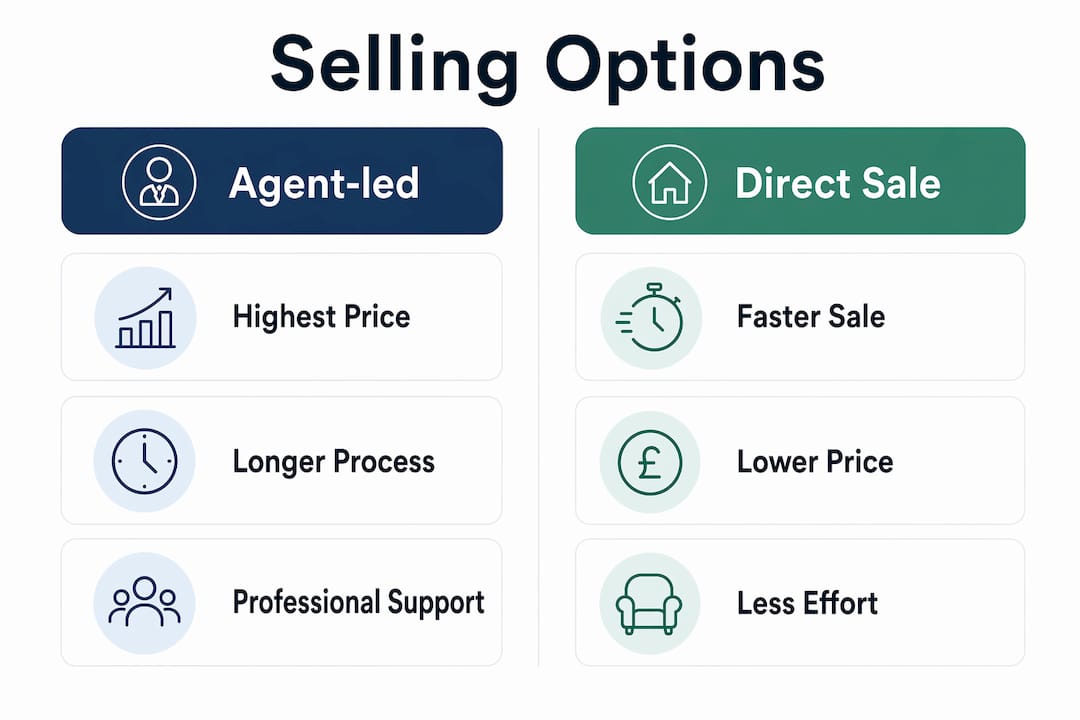
Traditional agent-led sale is the most common route and typically achieves the highest price. An experienced local agent brings market knowledge, negotiation skills, and an existing buyer database. The trade-off is time. Dublin sellers should realistically expect 60 to 90 days for a traditional sale from listing to closing, though well-presented properties in high-demand areas like Rathmines, Stillorgan, or Castleknock often move faster.
For sale by owner (FSBO) saves the agent commission but carries real risks. FSBO sellers typically achieve a lower sale price because they lack access to the same buyer pool, negotiation experience, and market data that agents use. The saving on commission is often offset by the lower final price and the significant time investment required.
Cash offer or accelerated sale routes provide speed and certainty. Some buyers and property companies in Dublin offer fast cash purchases, closing in as little as 14 days. The price is typically 10 to 15% below market value. This route suits sellers who prioritise speed over price, such as those facing probate, relocation, or financial pressure.
- Choose a traditional agent sale if you want the best price and have 60 to 90 days available.
- Choose FSBO only if you have direct sales experience and a strong personal network of buyers.
- Choose a cash offer if speed and certainty matter more than achieving full market value.
Overpricing is the primary reason homes remain unsold, regardless of which route you choose. A competitive launch price generates early interest and competing offers. A price reduction after a slow start signals weakness to buyers and costs you negotiation power.
Key takeaways
Selling your Dublin home successfully in 2026 requires personal readiness, competitive pricing, thorough preparation, and a clear understanding of all costs before you list.
| Point | Details |
|---|---|
| Personal readiness first | Assess family, lifestyle, and financial factors before acting on market conditions. |
| Dublin market favours sellers | Constrained supply and steady demand mean well-prepared homes sell above asking. |
| Prepare 4 to 6 weeks early | Use the buffer to complete repairs, stage rooms, and boost kerb appeal before photography. |
| Know your full costs | Selling a €520,000 Dublin home typically costs €14,000 to €22,000 in fees and preparation. |
| Price competitively from day one | Overpriced homes lose early momentum and require reductions that weaken your position. |
What I have learned about selling in Dublin
The sellers I see succeed in Dublin are not the ones who waited for the perfect market moment. They are the ones who got their property in order, priced it honestly, and committed to the process with clear expectations. Market timing matters at the margins. Personal readiness and preparation matter far more.
One thing I would push back on is the common advice to spend heavily on renovations before selling. In most cases, a deep clean, fresh neutral paint, a well-maintained garden, and decluttered rooms will outperform a new kitchen in terms of return on spend. Buyers want to imagine their own life in a space, not pay a premium for your taste in worktops.
The other thing worth saying plainly is that agent selection is underrated. A good agent in Dublin knows which buyers are active right now, how to handle a sealed-bid situation, and when to hold firm on price. That knowledge is worth the commission. Interview at least three agents, ask for comparable sales evidence, and choose based on local track record rather than the highest valuation they offer you.
If you are preparing to sell, start with your seasonal property maintenance well in advance. A property that looks cared for from the outside attracts more viewings before a single word is said about price.
— gerard
How Sherrypropertycare helps Dublin sellers get ready
If you are preparing to sell your Dublin home, first impressions start at the gate. Sherrypropertycare provides professional grounds maintenance and kerb appeal services across Dublin, helping homeowners present their property at its best before listing.

From lawn care and hedge trimming to full garden tidying and driveway clearance, Sherrypropertycare handles the outdoor preparation that buyers notice immediately. A well-maintained exterior signals a well-maintained home, and that perception carries through to offers. Visit Sherrypropertycare to request a quote tailored to your property. Send a photo of your garden or grounds and get a personalised estimate quickly. Getting your outdoor space ready does not need to be complicated.
FAQ
What is the best time to sell a house in Dublin?
Spring and early autumn are traditionally the strongest periods for buyer activity in Dublin, but personal readiness and property condition matter more than the calendar. A well-prepared home listed in any month will outperform a poorly presented one listed at peak season.
How do I find out what my home is worth in Dublin?
Request valuations from at least three local estate agents and ask each one to provide evidence of comparable recent sales in your area. Online tools give a rough indication, but an agent with active local knowledge will give you the most accurate figure.
How long does it take to sell a house in Dublin?
Traditional sales in Dublin typically take 60 to 90 days from listing to closing. Well-presented properties in high-demand areas often go sale agreed within the first two to three weeks of listing.
What costs should I budget for when selling my home?
For a Dublin property at around €520,000, budget between €14,000 and €22,000 to cover agent commission, solicitor fees, BER certification, and preparation costs. Always request a net sheet from your agent before signing any agreement.
Do I need a BER certificate to sell my home in Ireland?
Yes. A Building Energy Rating certificate is a legal requirement before you can advertise your property for sale in Ireland. Costs typically range from €150 to €300 depending on the property size and assessor.