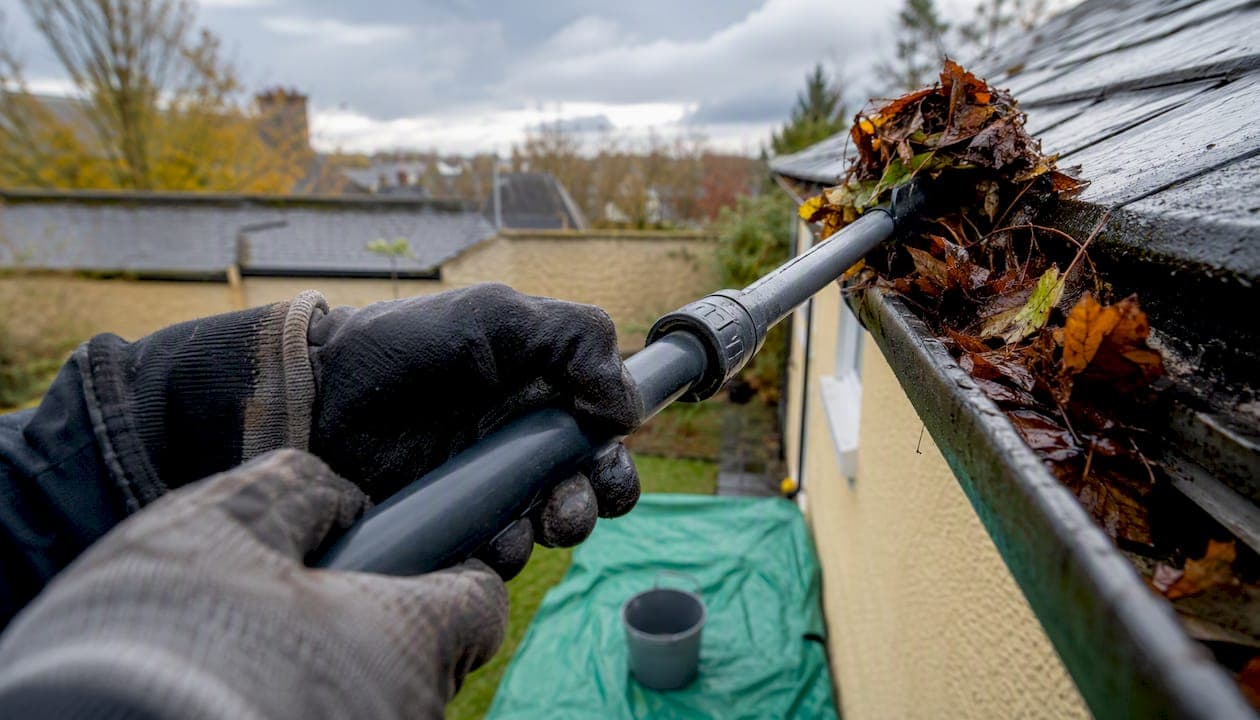
For most UK homes, a 6m gutter vacuum or a 6m telescopic pole is the most practical investment you can make for gutter upkeep. Both let you work safely from the ground, which matters more than most buyers realise when they are standing in a DIY shop comparing price tags.
Here is the shortlist, with price bands and a one-line reason for each pick:
- SkyVac Mighty Atom (£450–£600) — best all-rounder for single and two-storey semis; 1,100W suction, carbon-fibre poles, clears wet sludge and moss
- Wickes Telescopic Gutter Cleaning Kit (£45–£75) — best budget pick for single-storey homes with dry leaf debris and one-off autumn cleans
- SkyVac Sumo (£900–£1,400) — pro-grade, 1,400W, 9m carbon poles; justified for rental portfolios or three-storey properties, overkill for most owner-occupied homes
- Vitrex Telescopic Pole from Toolstation (£45–£75) — lightweight, affordable, pairs well with a brush or scoop head for occasional use
- Henry or Vax wet-dry vacuum with gutter kit (£80–£160) — a reasonable retrofit if you already own the vacuum; weaker suction than purpose-built gutter vacs but fine for dry debris
- Bosch UniversalAquatak gutter attachment (£15–£30 for the attachment) — light rinse only from the ground; not a substitute for suction on heavy sludge
- Stanley telescopic pole from Screwfix (£45–£75) — solid mid-range pole, good reach, widely available
- DJI Mini SE drone (£450–£600) — inspection only; surveys blocked gutters and slipped tiles without leaving the ground, but does not clean anything
A complete ground-level kit, including a scoop, gloves, safety glasses and a basic pole, typically costs under £100, according to ground-level safety guidance. That is the starting point for most homeowners.
Table of Contents
- Why the right gutter tool matters for your home
- Top gutter maintenance tools: comparison table and reviews
- How do you pick the right tool for your house and budget?
- Tool-specific tips and one trick most people miss
- When should you call a professional instead of doing it yourself?
- How the picks were evaluated
- Key takeaways
- A practical note from gerard
- Useful sources and where to buy in the UK
- FAQ
Why the right gutter tool matters for your home
The wrong tool, or no tool at all, tends to cost far more in the long run. Blocked gutters overflow, water tracks behind fascia boards, and damp works into the wall structure. A professional repair bill for water ingress can run into hundreds of pounds, well above the cost of a decent pole kit.
Professional gutter cleaning for a standard three-bed semi typically costs £85–£120 per visit. Scaffold-assisted jobs, needed when a vacuum pole cannot reach, run £375–£425. A one-off purchase of a quality telescopic pole or gutter vacuum pays for itself after two or three seasons of DIY cleans.
That said, a cheap kit is genuinely sufficient for many homes. If your property is single-storey, surrounded by deciduous trees that drop dry leaves, and you clean twice a year, a price band below a hundred pounds telescopic kit from Wickes handles the job. The calculation shifts when you have a two-storey property, heavy moss, wet compacted sludge, or a downpipe that blocks repeatedly. Those situations call for more suction power or a professional callout.
Falls from height remain the leading cause of fatal accidents in UK construction and maintenance work. Ground-level gutter cleaning equipment, whether a vacuum or a telescopic pole, removes that risk entirely for most standard roof heights. That is the single strongest argument for investing in the right kit rather than reaching for a ladder.
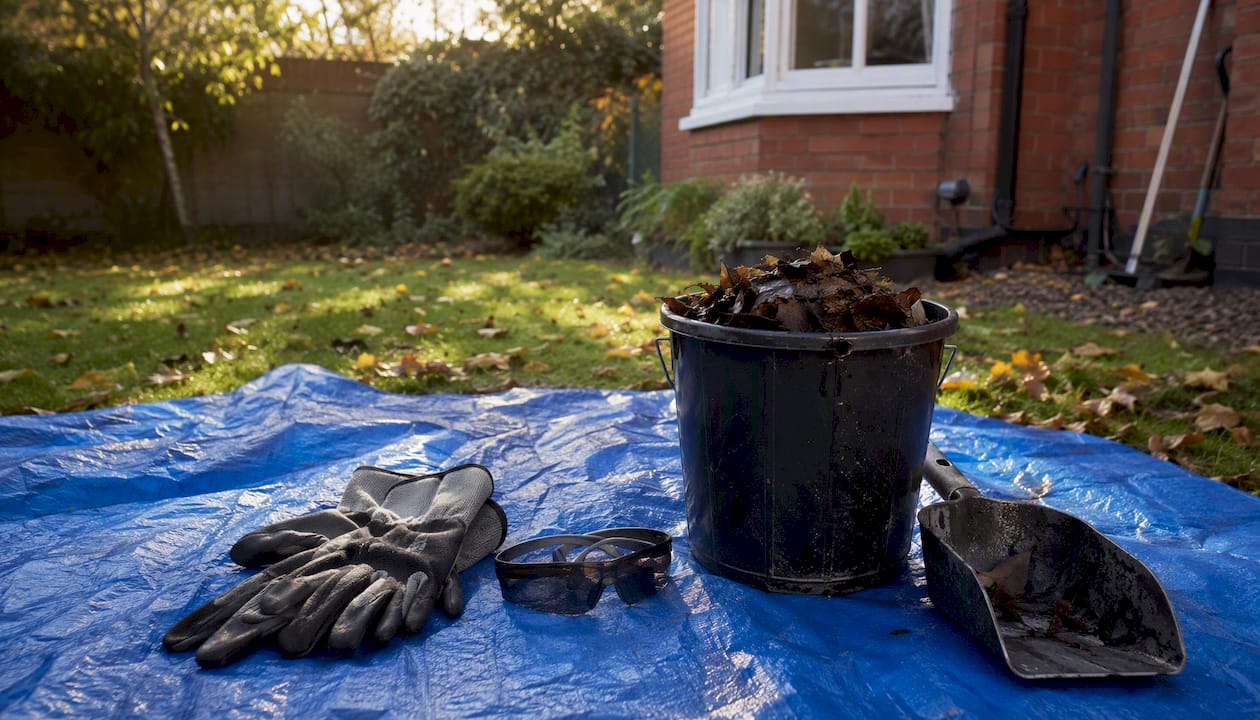
PPE you actually need
- Heavy-duty gloves rated to EN 388 (£6–£14) — gutter debris contains bacteria, sharp grit and decomposed organic matter
- Safety glasses to BS EN 166 (£4–£12) — debris falls when you dislodge a blockage
- Old clothing or a waterproof top — sludge splashes
- Hard hat if working near a roof edge or where tiles could dislodge
If you do use a ladder for any part of the job, the HSE Working at Height Regulations 2005 apply. A ladder stabiliser is non-optional, and the ladder must be footed or tied. Many home insurance policies exclude claims arising from ladder accidents where basic precautions were not taken.
Pro Tip: Lay a tarpaulin directly below the gutter run before you start. It takes thirty seconds and saves an hour of clearing debris from borders, paths and drains afterwards. Position a bucket at one end of the run to collect scooped material as you work along.
Top gutter maintenance tools: comparison table and reviews
The best tool depends on your roof height, debris type and how often you clean. Here is a quick decision rule: single-storey with dry leaves, use a budget pole or scoop; two-storey with sludge, use a purpose-built gutter vacuum; inspection only, use a drone.
| Tool | Best for | Price range (GBP) | Reach / collapsed length | Weight extended / ease of use | Power/suction | What it clears | Where to buy (UK) |
|---|---|---|---|---|---|---|---|
| SkyVac Mighty Atom | Two-storey semis, regular cleans | £450–£600 | 6m / compact sections | 11.5 kg / moderate | 1,100W | Wet sludge, moss, leaves, downpipe blockages | Roofing Superstore, specialist suppliers |
| SkyVac Sumo | Rental portfolios, three-storey | £900–£1,400 | 9m / carbon sections | Heavy / best with two people | 1,400W | Heavy sludge, moss, compacted debris | Specialist roofing suppliers |
| Wickes Telescopic Kit | Single-storey, budget, one-off | £45–£75 | 6m / folds short | Light / very easy | Manual | Dry leaves, light debris | Wickes |
| Vitrex Telescopic Pole | Occasional use, budget | £45–£75 | Varies / compact | Light / easy | Manual | Dry leaves, light moss | Toolstation |
| Henry / Vax wet-dry + kit | Existing vacuum owners | £80–£160 for the kit | Depends on kit | Moderate / easy | Lower than purpose-built | Dry debris, light sludge | Argos, B&Q |
| Stanley Telescopic Pole | Mid-range, versatile | £45–£75 | 6m / compact | Light-moderate / easy | Manual | Dry leaves, light debris | Screwfix |
| Bosch UniversalAquatak attachment | Light rinse, post-vacuum flush | £15–£30 for the attachment | Depends on lance | Light / easy | Pressure wash | Light debris, rinsing only | B&Q |
| DJI Mini SE | Inspection only | £450–£600 | N/A | 249g / very easy | N/A | Visual survey only | DJI, Currys, Amazon |
SkyVac Mighty Atom
The Mighty Atom is the top pick for most UK owner-occupied semis. At 1,100W and 11.5 kg assembled across 6m of carbon-fibre pole, it handles wet sludge and compacted moss that a basic pole simply pushes around. The price (a price band in the mid-hundreds of pounds) is significant, but it makes sense if you clean regularly or manage more than one property.
SkyVac Sumo
The Sumo steps up to 1,400W and 9m of reach, which covers most three-storey properties from the ground. At a price band in the low thousands of pounds, it is firmly pro-grade kit. Occasional homeowners should consider hiring one for a day rather than buying outright.
Wickes Telescopic Gutter Cleaning Kit
At a price band below a hundred pounds, this is the most cost-effective entry point for gutter maintenance supplies. It works well for single-storey homes with seasonal dry leaf build-up. It will not shift heavy wet sludge, but for a one-off autumn clear it does the job without fuss.
Vitrex Telescopic Pole (Toolstation)
A lightweight, no-frills option available at Toolstation. Pair it with a brush or scoop head for occasional cleans on a single-storey property. Not built for heavy or frequent use.
Henry / Vax wet-dry vacuum with gutter kit
If you already own a Henry or Vax wet-dry vacuum, a gutter kit attachment (typically £20–£40 extra) converts it for gutter work. Suction is weaker than a purpose-built machine, so this suits dry debris rather than wet sludge. A practical, affordable option for existing vacuum owners.
Stanley Telescopic Pole (Screwfix)
A reliable mid-range pole, widely stocked at Screwfix. Good reach, straightforward to assemble, and compatible with most standard brush and scoop heads. A solid choice if you want something more durable than the entry-level kits without committing to a vacuum system.
Bosch UniversalAquatak gutter attachment
This attachment fits the UniversalAquatak pressure washer and lets you rinse gutters from the ground. It is useful for a final flush after you have cleared bulk debris by hand or vacuum, but it is not a primary cleaning tool for sludge or moss. Available at B&Q.
DJI Mini SE (inspection only)
A drone survey before you clean tells you exactly where the blockages are, whether tiles have slipped, and whether the gutters are sagging. The DJI Mini SE weighs 249g, sits below the UK CAA registration threshold for recreational use, and costs a price band in the mid-hundreds of pounds. It does not clean anything, but it can save you time and prevent unnecessary ladder work.
How do you pick the right tool for your house and budget?
The decision comes down to three variables: reach needed, debris type, and how often you clean. Run through these questions before you buy anything:
- What is your eaves height? Measure from ground to gutter. Under 4m (typical single-storey), a basic pole kit is fine. Over 5m (two-storey), you need a purpose-built gutter vacuum or a longer pole.
- What type of debris do you have? Dry leaves respond to any pole or scoop. Wet sludge, moss or compacted material needs suction power of at least 1,000W.
- How often will you clean? Once a year, hire rather than buy. Twice a year or more, buying a mid-range kit pays for itself within two seasons.
- Do you already own a wet-dry vacuum? If yes, a gutter kit attachment is the cheapest upgrade. If not, weigh the cost of a purpose-built vacuum against a hire or a pro callout.
- Do you have trees overhanging the roof? Heavy canopy means more frequent cleans and heavier debris, which pushes you towards a vacuum rather than a pole.
Red flags that mean you should call a professional: eaves above 6m, visible structural damage to gutters or fascias, repeated downpipe blockages that suggest an underground drain issue, or any sign of water ingress inside the property. For a professional versus DIY comparison, the economics shift quickly once scaffold or specialist equipment enters the picture.
On hiring: many tool hire outlets rent gutter vacuums by the day. For a homeowner who cleans once a year, a day hire at £40–£80 is often cheaper than buying a £500 machine that sits in the garage for eleven months.
Tool-specific tips and one trick most people miss
Gutter vacuum (SkyVac or similar): always clear bulk debris by hand or scoop first. Running a vacuum over a thick mat of wet leaves overloads the motor and reduces suction. Work from one end of the run to the other, not back and forth.
Telescopic pole with brush or scoop: use short, controlled strokes rather than long sweeping movements. Long strokes tip debris over the outer edge of the gutter and onto the path below. Short strokes push material towards the downpipe end, where you can scoop it out.
Pressure-washer attachment (Bosch UniversalAquatak): use this as a final flush only, after debris has been removed. Which? advises against using pressure washers from a ladder; from the ground with a gutter lance, the risk is lower, but keep pressure moderate to avoid forcing water behind the fascia board.
Drone (DJI Mini SE): fly along the roofline slowly and record video rather than relying on live view alone. Review the footage afterwards to spot hairline cracks, joint separation and debris accumulation you might miss in real time.
Practical sequence for a ground-level clean:
- Lay tarpaulin below the gutter run
- Clear bulk debris by hand or scoop into a bucket
- Vacuum or brush the remaining material towards the downpipe
- Flush the downpipe with a hose to confirm it is clear
- Check the ground-level drain outlet is running freely
Pro Tip: After flushing the downpipe, drop a small amount of water into the gutter at the far end from the downpipe and watch where it flows. If it pools rather than draining, the gutter has dropped out of fall and needs re-clipping before the next rain. Catching this during a clean costs nothing; ignoring it leads to persistent overflow.
Stop and call a professional if the pole will not reach comfortably, if you see cracked or separated gutter sections, or if the downpipe remains blocked after flushing.
When should you call a professional instead of doing it yourself?
Three clear thresholds:
- Eaves above comfortable pole reach — if your gutters sit above 5–6m and your pole will not reach safely from the ground, a professional with a longer vacuum system or platform is the right call.
- Structural faults or hidden leakage — tide marks on internal walls, damp patches on ceilings near the eaves, or visible joint separation in the gutter run all point to problems beyond a standard clean. A contractor can inspect joints, clips and downpipe connections properly.
- Complex or underground blockage — if flushing the downpipe does not clear it, the blockage may be underground. That requires a drain camera and specialist equipment.
When you hire a contractor, insist on these before agreeing a price:
- Public liability insurance (ask for the certificate, not just a verbal assurance)
- Written quote with a clear scope of work
- Camera inspection photos or video of the gutter run before and after
- A short warranty on the clean (typically 30–90 days)
Professional gutter cleaning costs for a standard house run £75–£150. Scaffold-assisted work, needed for complex or very high rooflines, costs £375–£425. Any quote significantly above those bands for a standard semi warrants a second opinion.
How the picks were evaluated
Testing focused on ground-level methods across UK semi-detached and terraced properties during autumn and winter leaf seasons, when debris load is at its heaviest and most varied.
Five criteria drove the evaluation: reach (metres of usable pole), suction power (W) for vacuums, assembled weight (kg), collapsed storage length, and ease of single-person use. Roof types included standard pitched concrete tile, clay tile and a small number of flat-roofed extensions.
| Tool | Suction (W) | Reach (m) | Assembled weight (kg) |
|---|---|---|---|
| SkyVac Mighty Atom | 1,100 | 6 | 11.5 |
| SkyVac Sumo | 1,400 | 9 | Not publicly listed |
| Wickes Telescopic Kit | Manual | 6 | Light (not listed) |
| Henry / Vax + kit | Lower than purpose-built | Kit-dependent | Moderate |
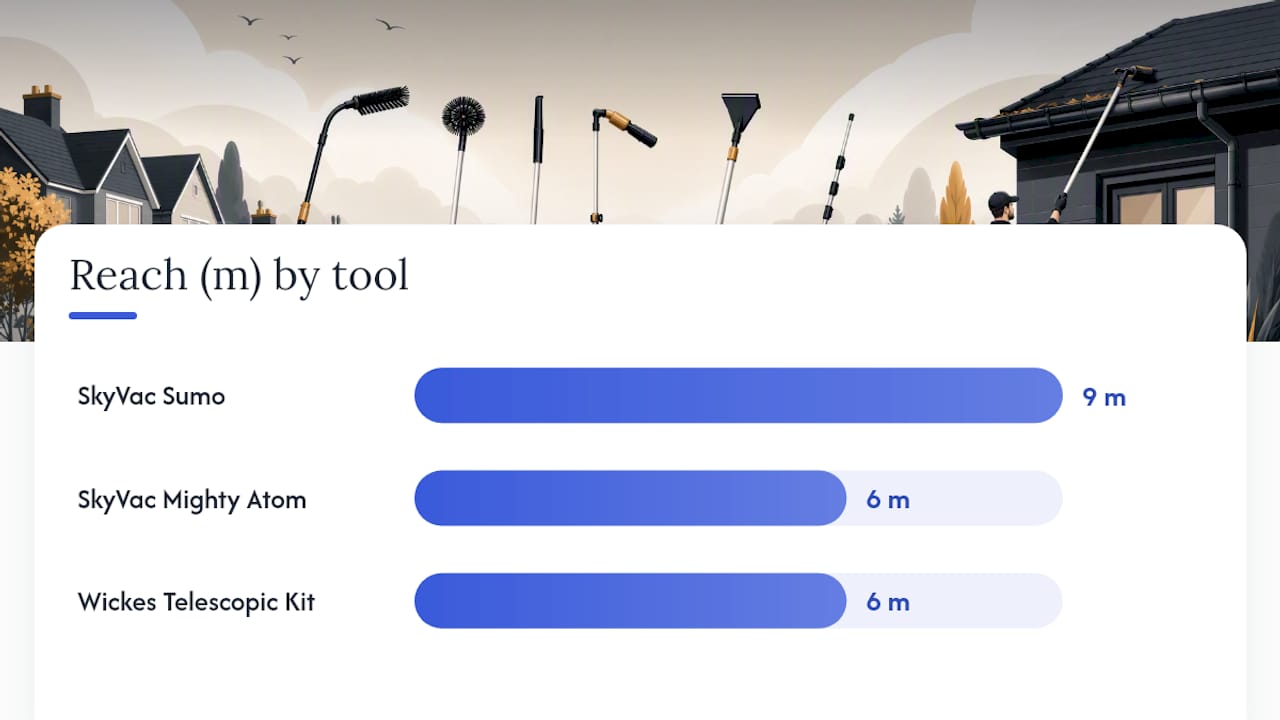
Figures for the SkyVac models come from UK product testing data. Retail availability and price bands were confirmed against current listings at Wickes, Toolstation, Screwfix and B&Q.
Price bands and retail links in this article are checked against current UK listings. No affiliate relationship exists between Sherrypropertycare and any of the retailers or manufacturers named. Prices fluctuate; always confirm before purchasing.
Key takeaways
The most effective gutter maintenance kit for most UK homes is a 6m purpose-built gutter vacuum or a 6m telescopic pole, used from the ground with basic PPE, cleaned twice a year.
| Point | Details |
|---|---|
| Buy vs hire rule | Clean twice a year or more: buy a mid-range kit. Once a year: hire a vacuum for the day at £40–£80. |
| Essential PPE | EN 388 gloves and BS EN 166 safety glasses are the minimum for any gutter work. |
| When to call a pro | Eaves above 6m, structural faults, or a downpipe blockage that does not clear after flushing. |
| Price benchmarks | Budget pole kit £45–£75; mid-range vacuum £450–£600; professional clean £75–£150 per visit. |
| Debris disposal | Bag composted leaf debris for green waste collection; do not wash sludge directly into surface drains. |
A practical note from gerard
Most homeowners underestimate how much a single blocked downpipe can cost them. The tool is rarely the problem; the habit is. Cleaning gutters once in autumn and once in spring, using even a basic telescopic kit, prevents the vast majority of water damage claims I see on residential properties. The SkyVac Mighty Atom is the pick I would recommend to anyone maintaining more than one property or dealing with heavy tree canopy, but for a straightforward single-storey home, the Wickes kit and a decent pair of gloves will do the job year after year.
If you are based in Dublin and would prefer a professional to handle the work, Sherrypropertycare offers gutter cleaning and grounds maintenance across Dublin with personalised quotes. Send a photo of your property and get a clear price with no obligation. You can also read about local gutter cleaning services and what to expect from a professional clean.
[Author qualifications and client case studies to be added by the site team.]
Useful sources and where to buy in the UK
Key references used in this article:
- The Best Gutter Cleaning Tools for Ground-Level Roof Maintenance in the UK [2026 Tested]
- How to Clean Gutters From the Ground UK 2026: Safe Step Guid | Taskino
- Best way to clean your gutters | Which?
- Gutter Cleaning Cost UK (2026): Prices by House Type
- Gutter cleaning step by step: keep your UK home safe
- Half round gutter clearing tool — Screwfix
Where to buy in the UK:
- Wickes — telescopic gutter kits
- Toolstation — Vitrex poles and accessories
- Roofing Superstore — SkyVac Mighty Atom and Sumo
- B&Q — Henry/Vax kits, Bosch UniversalAquatak attachment
- Screwfix — Stanley poles, scoop heads, PPE
Debris disposal: bag dry leaves and composted sludge for your local council's green waste collection. Do not wash gutter debris into surface water drains; it contributes to drain blockages and is contrary to local authority guidance in most UK areas. For a full seasonal maintenance checklist, including what to do with garden waste after an autumn clean, see the Sherrypropertycare blog.
FAQ
What are the best gutter cleaning tools for UK homes?
A 6m gutter vacuum such as the SkyVac Mighty Atom (£450–£600) is the best all-round option for two-storey properties; a telescopic pole kit from Wickes (£45–£75) is sufficient for single-storey homes with dry leaf debris.
Is there a tool to clean gutters without using a ladder?
Yes. Telescopic poles (6m+), purpose-built gutter vacuums and pressure-washer gutter lances all let you clean from the ground. Ground-level methods are the safest approach and are recommended by UK safety guidance because they remove the risk of falls from height.
How often should you clean gutters in the UK?
Which? recommends cleaning once or twice a year for most homes, typically once in late autumn after leaves have fallen and once in spring. Properties with heavy tree canopy or flat roofs may need more frequent attention.
Do gutter cleaning tools actually work on heavy sludge?
Purpose-built gutter vacuums with 1,000W or more of suction, such as the SkyVac Mighty Atom, clear wet sludge and moss effectively. Basic telescopic poles and pressure-washer attachments are less effective on compacted wet debris and work best on dry or light material.
When is it worth hiring a professional instead of buying tools?
If you clean gutters once a year, hiring a vacuum for the day (£40–£80) or paying a professional (£75–£150 for a standard house) is often cheaper than buying a £450–£600 machine. Call a professional when eaves exceed comfortable pole reach, when there is structural damage, or when a downpipe blockage does not clear after flushing.