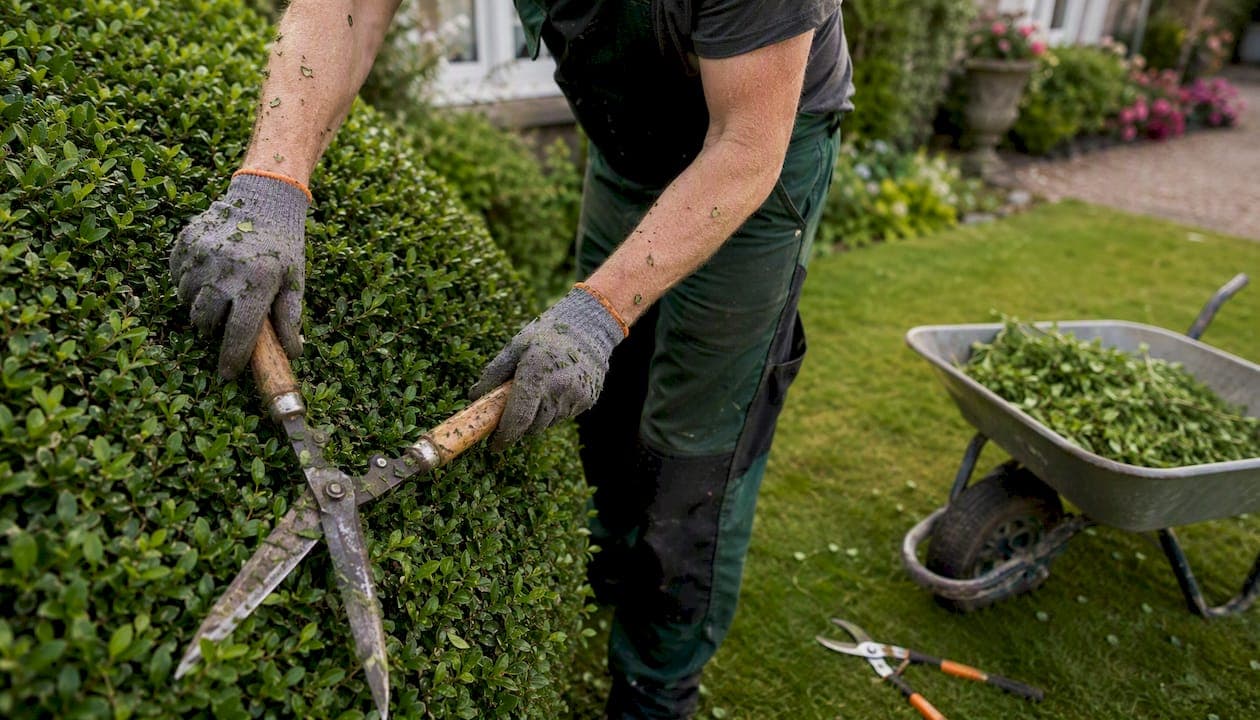
Professional outdoor maintenance covers core service types such as lawn care, hedge and shrub trimming, tree work, mulching and planting, irrigation and drainage, hardscape cleaning and repair, power washing, and seasonal cleanups. If you manage a residential or commercial property in Dublin, these are the services worth scheduling before problems escalate.
- Lawn care: mowing, feeding, aeration, and overseeding
- Hedge and shrub maintenance: pruning, shaping, and removal
- Tree work: inspection, crown pruning, and emergency clearance
- Mulching and planting: soil improvement, planting plans, ground cover
- Irrigation and drainage: system repair, design, and rainwater features
- Hardscape cleaning and repair: patios, paths, retaining walls
- Power washing: driveways, paving, exterior surfaces
- Seasonal cleanups: spring preparation and autumn clearance
Request a tailored quote at the start of each season, after a storm, or when you set up a new recurring maintenance plan. Sherrypropertycare provides customised written quotes for all of the above.
Key takeaways
Professional grounds maintenance, planned in advance and delivered by an insured contractor with a written scope, protects property value, reduces liability, and avoids costly emergency repairs.
| Point | Details |
|---|---|
| Prioritise safety first | Address tree hazards, drainage failures, and trip hazards before aesthetic tasks. |
| Written quotes are non-negotiable | Always request itemised written quotes with scope, frequency, materials, and warranty terms. |
| Plan seasonal tasks early | Book spring and autumn work well in advance to avoid premium pricing. |
| Sustainable choices pay back | Native planting, rainwater management, and IPM lower irrigation costs and reduce reactive repairs. |
| Sherrypropertycare | Provides customised written quotes, public liability insurance, and professional grounds maintenance across Dublin. |
Table of Contents
- What does each professional grounds-maintenance service actually include?
- How do you prioritise maintenance tasks and set a realistic budget?
- How do you choose a reliable grounds-maintenance contractor?
- What should a professional quote and contract include?
- When should you call for emergency outdoor repairs?
- Which sustainable options reduce long-term maintenance costs?
- Common indoor home repair types: a brief overview
- Estimated cost ranges for common home repair types
- How long do home repair projects typically take?
- DIY versus hiring a professional: when does it make sense?
- What warranty and guarantee terms should you expect from contractors?
- The case for starting with a site visit, not a phone estimate
- Sherrypropertycare: professional grounds maintenance for Dublin properties
- Sources
- FAQ
What does each professional grounds-maintenance service actually include?
Landscape maintenance covers far more than a weekly mow. Understanding what each service involves helps you scope work correctly and spot when a contractor is underdelivering.
Lawn care includes mowing during the growing season, seasonal fertilising, aeration to relieve compaction, and overseeding thin patches. Signs you need it: patchy, yellowing turf, waterlogged areas, or a lawn that has not been fed in over a year.
Hedge and shrub maintenance covers pruning to shape, removing dead wood, and controlling spread. Overgrown hedges that block light or encroach on boundaries are the clearest signal. Seasonal scheduling is central here: structural pruning suits dormant months, while light tidying runs through the growing season.
Tree work ranges from routine crown pruning to full removal and stump grinding. Any leaning limb over a structure, visible decay, or root heave near paving warrants a professional inspection. For significant removal or surgery, ask whether the contractor works with a qualified arborist. Expert tree care is a specialist discipline, not a general gardening task.
Mulching and planting improves soil health, conserves moisture, and suppresses weeds. Mulch and correct ground cover also help prevent soil erosion on slopes, reducing longer-term maintenance needs.
Irrigation and drainage covers repair of existing systems, design of new ones, and rainwater features such as swales or soakaways. Blocked drains, standing water after rain, and soggy borders are the key indicators.
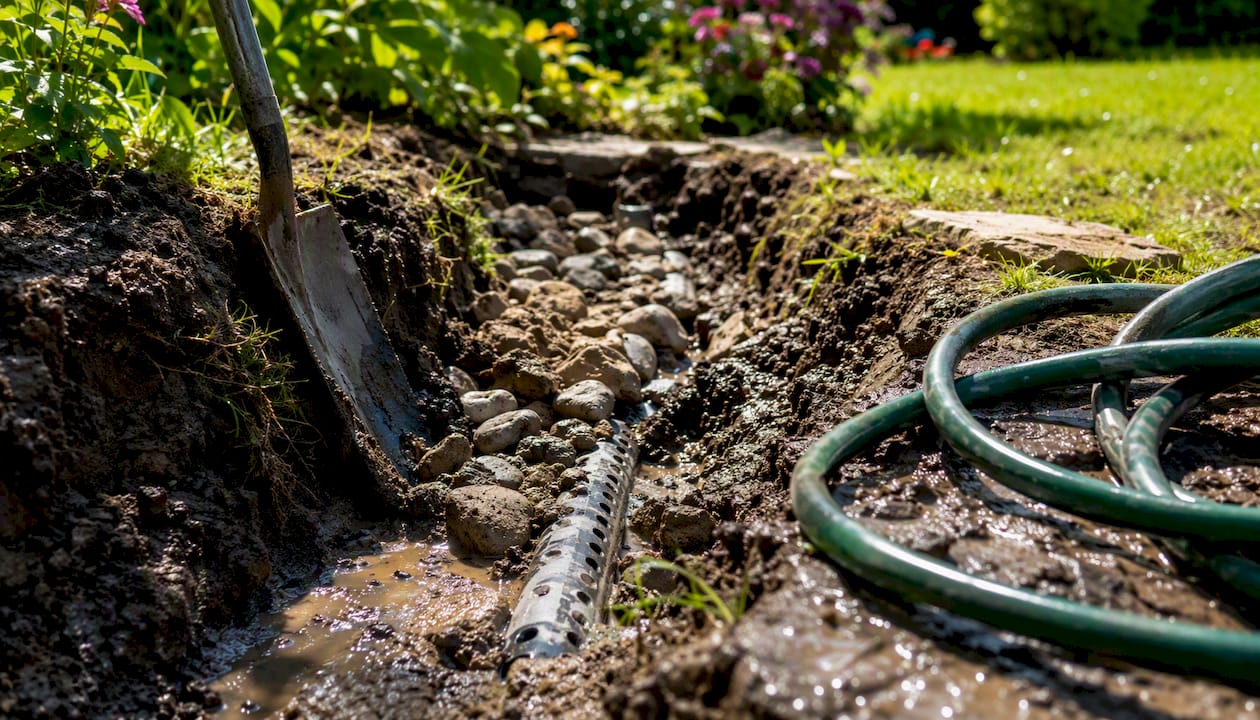
Hardscape cleaning and repair addresses moss and algae on paving, cracked pointing, loose retaining wall stones, and trip hazards on paths. Three core services for managed properties, professional tree care, smart water management, and functional hardscaping, work together to prevent erosion, foundation risk, and standing water.
Power washing removes built-up grime, algae, and staining from driveways, patios, and exterior walls. It is often combined with a hardscape inspection.
Seasonal cleanups cover spring bed preparation and autumn leaf clearance, cutting back dead growth, and preparing borders for the next season.
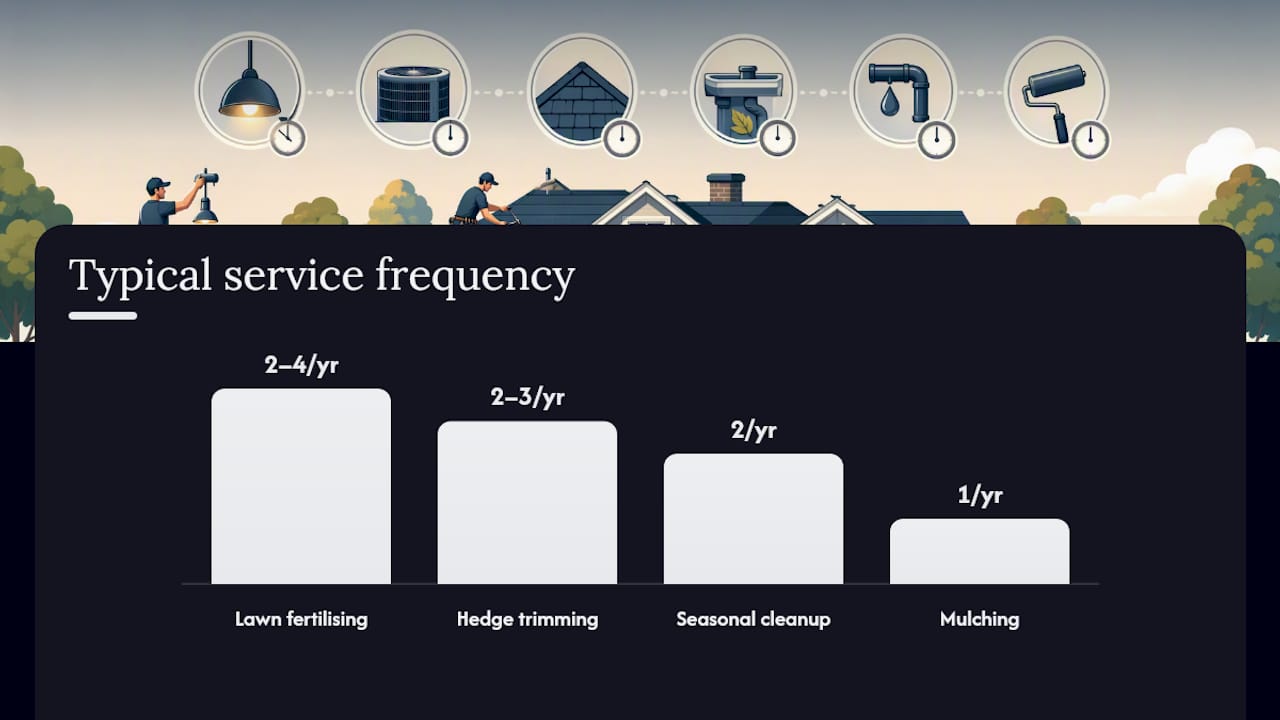
Typical service frequency
Regular landscape maintenance includes spring and autumn cleanups, turf fertilisation, and weekly mowing, with mulching and tree trimming typically scheduled annually or every few years.
| Service | Typical frequency |
|---|---|
| Lawn mowing | Weekly (growing season) |
| Lawn feeding / fertilising | 2–4 times per year |
| Hedge trimming | 2–3 times per year |
| Mulching | Once per year |
| Tree pruning | Every 2–5 years |
| Hardscape cleaning | Once per year or as needed |
| Seasonal cleanup | Spring and autumn |
Pro Tip: Hold off heavy pruning on newly planted shrubs for at least one full growing season. Letting roots establish before cutting back hard reduces transplant stress and improves long-term shape.
How do you prioritise maintenance tasks and set a realistic budget?
Start with safety and asset protection, then plan aesthetic work around it. Professional landscape maintenance reduces emergency repair costs and extends the service life of turf, trees, irrigation, and hardscape, while lowering liability risk through routine inspections.
Priority order:
- Immediate safety items: fallen or damaged limbs, blocked drains threatening buildings, trip hazards on paths
- Asset protection: drainage design, retaining wall repair, tree inspections
- Performance tasks: lawn health, border planting, irrigation efficiency
- Aesthetic and seasonal: planting schemes, power washing, seasonal colour
Budgeting checklist:
- Separate one-off project costs from recurring maintenance plans
- Allow a contingency of roughly 10–15% for urgent post-storm work
- Factor in seasonal peaks: spring and autumn are the busiest periods, so prices and lead times rise
- Account for cost-shaping factors: property size, site access, specialist equipment, soil condition, and visit frequency
A planned maintenance approach generally delivers stronger long-term financial returns than reactive repairs, because it prevents asset deterioration and unexpected replacements.
How do you choose a reliable grounds-maintenance contractor?
Prioritise contractors with horticultural expertise, public liability insurance, customised written quotes, local references, and a clear maintenance schedule. A full-service landscape management provider covers mechanical systems, constructed elements, and horticultural elements, offering expertise well beyond a basic mowing-and-weeding model.
Questions to ask when getting quotes:
- What exactly is included in each visit?
- How do you handle emergency callouts?
- Are materials, disposal, and machinery hire itemised separately?
- Do you carry public liability insurance, and can you provide a certificate?
- What guarantee or warranty applies to your work?
- Will any work be subcontracted?
Red flags to watch for:
- No written scope of work
- Vague or missing timelines
- Pressure to sign on the spot
- No insurance documentation on request
Trust signals to confirm:
- Portfolio photos and before-and-after examples
- Local testimonials and references
- Bespoke written quote with clear line items
- Stated warranty or guarantee terms
What should a professional quote and contract include?
A good quote lists scope, frequency, materials, clear line items, start and completion dates, payment terms, insurance details, and warranty terms. Without these, comparing bids fairly is difficult.
Sample quote line items to expect:
- Labour (hours or day rate)
- Materials (plants, mulch, aggregates)
- Waste disposal
- Machinery hire or mobilisation
- Any subcontractor costs listed separately
Comparison tip: Normalise bids by calculating cost per scheduled visit or cost per month for recurring plans. A quote that bundles everything into one lump sum is harder to compare than one broken into line items.
Watch for these common variations: one-off clearance versus ongoing maintenance contracts; supply-only versus supply-and-fit for plants; and reactive versus scheduled tree inspections. Each changes the total cost significantly.
When should you call for emergency outdoor repairs?
Call professionals immediately for fallen limbs on structures, blocked drains causing flooding, or major uprooted trees. These are safety hazards, not maintenance tasks, and they affect tenant safety and your liability as a property owner.
What a professional emergency response covers:
- Site safety assessment and temporary stabilisation
- Damage documentation for insurance purposes
- Written follow-up quote for permanent repairs
- Clearance of debris and access routes
Expect weekend surcharges and longer lead times during busy seasons. On-call availability varies by contractor, so ask about emergency response times before signing a maintenance contract.
Pro Tip: Book routine seasonal tasks early, ideally six to eight weeks before the season starts. Contractors fill their schedules quickly in spring and autumn, and last-minute bookings often carry a premium.
Which sustainable options reduce long-term maintenance costs?
Native planting, rainwater management, water-efficient irrigation, and integrated pest management (IPM) all lower ongoing costs and reduce reactive repairs. Installing native-plant landscapes and rainwater features such as swales and rain gardens reduces runoff, lowers irrigation demand, and helps control erosion and flooding.
Practical sustainability steps to include in your brief:
- Request native or climate-adapted plant options
- Specify rainwater management features (swales, rain gardens, soakaways)
- Ask for an irrigation audit and water-saving recommendations
- Request IPM for pest control rather than blanket chemical treatment
These choices also reduce biodiversity loss and can lower fire risk for certain planting types.
Pro Tip: Small upfront investments in soil improvement and correct planting depth pay back over the life of the planting. Plants established in well-prepared soil need less irrigation, fewer replacements, and less corrective pruning.
Common indoor home repair types: a brief overview
While Sherrypropertycare focuses on outdoor and grounds maintenance, property owners often ask about indoor repair categories when planning a full property review. The main types of building repairs indoors are plumbing, electrical, HVAC, roofing, drywall, flooring, and painting. Each represents a distinct trade and requires a licensed contractor for anything beyond minor fixes.
Plumbing covers leaks, pipe replacement, and drainage. Electrical work includes rewiring, consumer unit upgrades, and fault finding. HVAC repairs address heating, ventilation, and air-conditioning systems. Roofing ranges from tile replacement to full re-roofing. Drywall and plastering repairs follow water damage or structural movement. Flooring covers board replacement, tiling, and subfloor repair. Painting and decorating is typically the final stage after structural repairs are complete.
Estimated cost ranges for common home repair types
Costs vary by property size, location, and trade, but these ranges give a useful planning baseline for Dublin properties.
These figures are indicative. Always request itemised written quotes before committing to any contractor.
How long do home repair projects typically take?
Timeline depends on the repair type and whether the fault is straightforward or requires diagnosis first.
Minor plumbing or electrical faults: same day to two days from diagnosis. Roofing repairs: one to three days for small areas, longer for full replacement. Drywall and plastering: two to five days including drying time. Flooring: one to three days depending on area. Interior painting: two to five days per room sequence.
Grounds maintenance projects follow a different rhythm. A one-off garden clearance typically takes one to two days. A full landscaping redesign may run two to four weeks. Ongoing maintenance plans start from the first scheduled visit and run continuously.
DIY versus hiring a professional: when does it make sense?
Some tasks are genuinely DIY-friendly. Painting a single room, replacing a tap washer, or touching up minor plasterwork are within reach for a competent homeowner. The risk is low and the cost of a mistake is manageable.
Electrical work, gas systems, structural repairs, and tree work near buildings are different. These carry safety and legal obligations. In Ireland, electrical installation work must comply with the National Rules for Electrical Installations (ET 101), and most significant electrical work requires a registered contractor. Tree work near structures or overhead lines is a specialist task regardless of tree size.
For grounds maintenance, the DIY question is less about safety and more about time and consistency. A professional maintenance plan delivers reliable scheduling, the right equipment, and horticultural knowledge that most property owners do not have on hand.
What warranty and guarantee terms should you expect from contractors?
A reputable contractor will state warranty terms in writing before work begins. For planting and landscaping, a standard plant guarantee covers replacement within one growing season if plants fail due to contractor error. For hardscape work, expect a minimum one-year guarantee on workmanship.
For ongoing maintenance contracts, ask specifically what happens if a scheduled visit is missed, how complaints are handled, and whether the contractor carries public liability insurance that covers damage to your property. Vague verbal assurances are not enough. Get it in writing, with a named contact and a clear process for raising issues.
The case for starting with a site visit, not a phone estimate
Property owners often underestimate how much a site visit changes the quality of a quote. A contractor who quotes from a description alone cannot account for access constraints, soil conditions, or the actual condition of existing planting. The result is either an underestimate that leads to scope creep or an overestimate that prices the job unnecessarily high.
A written, site-specific quote is the single most reliable indicator of a contractor's professionalism. It shows they understand your property, not just the general task. For landlords and property managers juggling multiple sites, that specificity is what makes a maintenance plan actually deliverable.
Sherrypropertycare: professional grounds maintenance for Dublin properties
Sherrypropertycare delivers professional gardening and grounds maintenance across Dublin, covering lawn care, hedge and tree work, patio and garden cleaning, power washing, and seasonal maintenance plans for residential and commercial properties.

Every job starts with a customised written quote based on your specific property. Sherrypropertycare carries public liability insurance, and Gerard brings hands-on horticultural expertise to every site assessment. You can view before-and-after portfolio examples and read local testimonials directly on the website. Quotes are tailored, not templated, and all work comes with clear warranty and timescale terms agreed in advance.
Send photos of your property and request a bespoke quote today.
Sources
- Changing the landscape - JPM
- What professional garden maintenance includes for homeowners – Spadeshire
- The Long-Term Financial Benefits of Professional Commercial Landscape Maintenance
- Property Management Landscaping Services 101
FAQ
What types of home repairs does a grounds-maintenance contractor cover?
A professional grounds-maintenance contractor covers lawn care, hedge and tree work, mulching, planting, irrigation and drainage, hardscape cleaning and repair, power washing, and seasonal cleanups. Indoor repairs such as plumbing or electrical work require separate licensed tradespeople.
How often should professional garden maintenance be scheduled?
Lawn mowing typically runs weekly during the growing season, with fertilising two to four times per year. Hedge trimming suits two to three visits annually, mulching once per year, and tree pruning every two to five years depending on species and condition.
What should I check before signing a maintenance contract?
Confirm the contractor carries public liability insurance, provides a written scope of work with clear line items, states warranty terms, and gives a named contact for complaints. Ask specifically about emergency response times and whether any work will be subcontracted.
When is outdoor repair classed as an emergency?
Fallen limbs on structures, blocked drains causing flooding, and major uprooted trees are emergencies requiring immediate professional response. These situations affect tenant safety and property liability, so they take priority over scheduled maintenance.
Does Sherrypropertycare provide written quotes for Dublin properties?
Yes. Sherrypropertycare provides customised written quotes based on a site-specific assessment for residential and commercial properties across Dublin. Send photos of your property via the website to get started.