
TL;DR:
- Homeowners and property managers in Dublin should classify repairs into five categories: emergency, planned, preventative, reactive, and specialist trades, to control costs and meet legal obligations. Prioritizing scheduled maintenance and using certified trades for regulated work reduces long-term expenses and legal risks, while relying solely on reactive repairs increases damage and costs. Proper documentation and written notices ensure legal compliance and protect against disputes, making a hybrid maintenance approach most effective.
Types of repair services classify property repairs into five core categories: emergency, planned, preventative, reactive, and specialist trades. Understanding these distinctions is the single most effective way for homeowners and property managers in Dublin to control costs, meet legal obligations, and keep properties safe. Whether you manage a rental flat in Rathmines or a family home in Clontarf, knowing which category a repair falls into determines who you call, how fast you act, and what you pay. This guide covers each type, the costs involved, and your legal responsibilities under UK and Irish law.
What are the main types of repair services?
Repair services fall into five recognised categories used across the property management industry. Each category carries different urgency levels, cost structures, and legal implications.
- Emergency repairs: Immediate response required due to health, safety, or structural risk.
- Planned maintenance: Scheduled work carried out at set intervals to prevent failures.
- Preventative maintenance: Proactive inspections and servicing to extend asset lifespan.
- Reactive repairs: Unscheduled fixes carried out after a fault or failure occurs.
- Specialist trades: Certified professionals handling gas, electrical, roofing, and plumbing work.
Handyman services sit alongside these categories as a cost-efficient option for general upkeep and minor repairs that do not require certification. Knowing where a job belongs saves you money and protects you legally.
What are emergency repairs and when should you act?
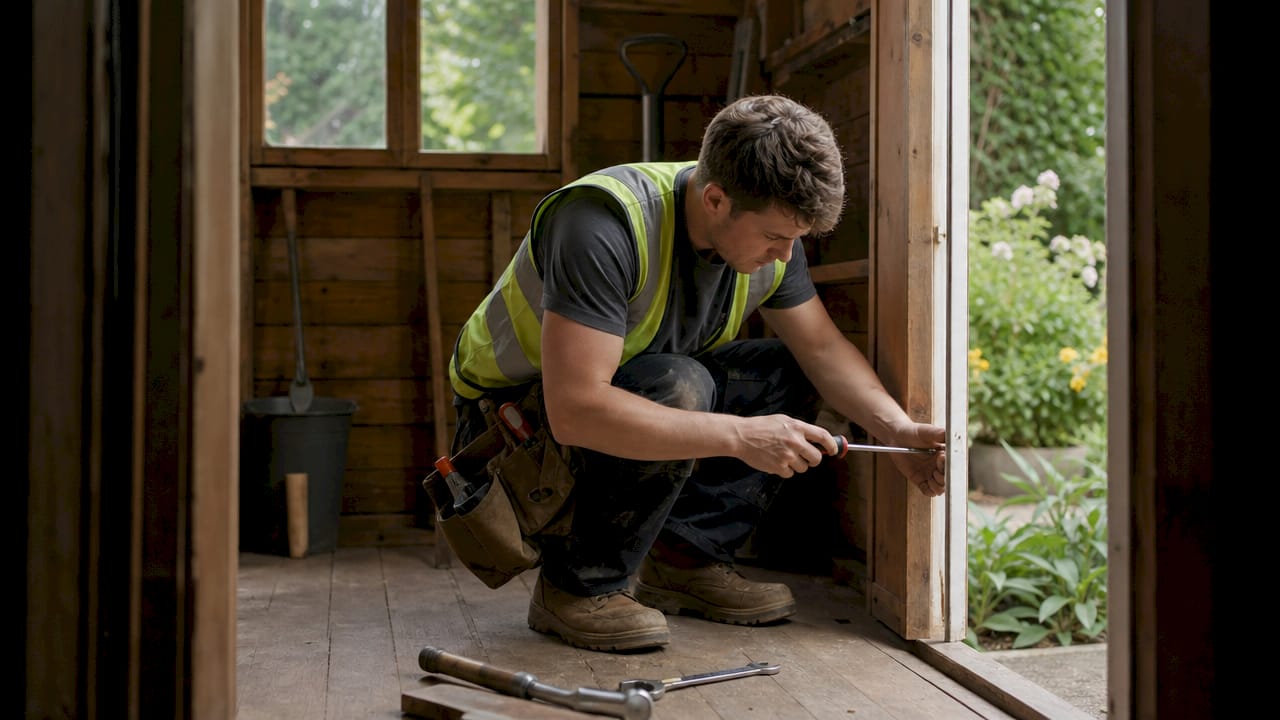
Emergency repairs cover urgent issues that pose an immediate health or safety risk, or cause serious property damage if left unaddressed. Emergency repairs include gas leaks, flooding, major electrical faults, and structural failures. Landlords must respond to these swiftly under legal obligations, and delays compound both the damage and the liability.
Common emergency repair scenarios include:
- Gas leaks: Require immediate evacuation and a Gas Safe registered engineer.
- Roof leaks: Can cause internal water damage within hours if not contained.
- Electrical faults: Exposed wiring or total power loss creates fire and electrocution risk.
- Blocked or burst drains: Flooding causes rapid damage to floors, walls, and foundations.
- Boiler failure in winter: A legal obligation for landlords to resolve quickly.
The cost of delay is significant. Emergency call-outs for complex repairs such as roof or boiler issues can reach £150–£1,500, and secondary water or fire damage can multiply that figure several times over.
Pro Tip: Always photograph and timestamp the fault the moment you discover it. Send written notification to your landlord or contractor immediately. Verbal reports are often insufficient legally, and a written record protects you if the matter escalates.
How do planned and preventative maintenance reduce repair costs?
Planned maintenance involves scheduled inspections and servicing carried out at fixed intervals, regardless of whether a fault has appeared. Preventative maintenance is closely related but focuses specifically on identifying and addressing early signs of wear before failure occurs. Both approaches reduce the frequency and severity of reactive repairs.
Planned maintenance includes scheduled inspections for roofs, gutters, boilers, electrical systems, and plumbing. For Dublin properties, this typically means annual boiler servicing before winter, gutter clearing in autumn, and electrical safety checks every five years. These tasks are predictable, budgetable, and far cheaper than emergency call-outs.
| Factor | Planned maintenance | Reactive maintenance |
|---|---|---|
| Cost predictability | High. Fixed schedule and known costs. | Low. Unpredictable call-out fees. |
| Average long-term cost | Lower over 3 years. | 20%–50% higher over 3 years. |
| Property disruption | Minimal. Work is scheduled in advance. | High. Faults cause sudden disruption. |
| Compliance risk | Low. Records demonstrate due diligence. | Higher. Gaps in records create liability. |
| Tenant satisfaction | High. Fewer unexpected failures. | Lower. Reactive issues cause frustration. |
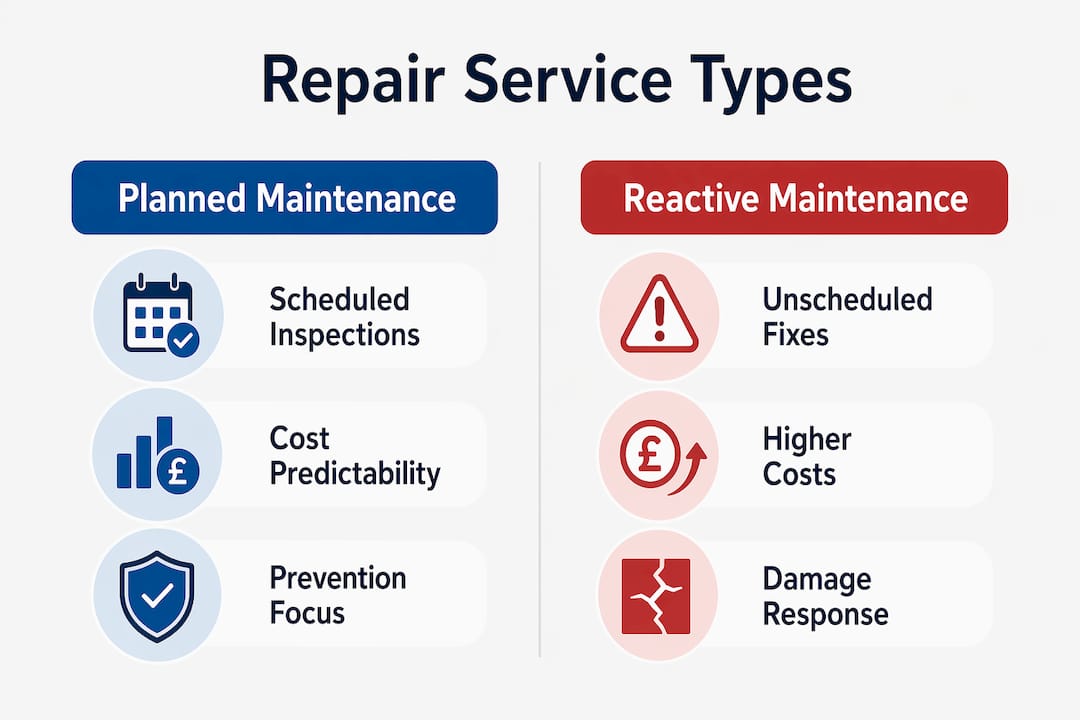
Reactive maintenance costs 20%–50% more over three years compared to a hybrid planned and reactive approach. That gap reflects emergency call-out premiums, secondary damage, and the higher labour rates charged for unscheduled work.
Pro Tip: Set calendar reminders for your annual maintenance tasks. A property maintenance checklist tailored to Dublin landlords helps you track every scheduled task and avoid costly oversights.
What is reactive repair and how does it differ from other types?
Reactive repair is the response to a fault or failure that has already occurred. Unlike planned maintenance, it is unscheduled and triggered by a breakdown rather than a calendar date. Most property managers rely on reactive repairs to some degree, but over-reliance on this approach is expensive.
The core problem with reactive repair is compounding damage. A small roof leak ignored for two weeks can saturate insulation, rot timber joists, and damage ceilings below. What began as a £200 repair becomes a £2,000 job. Small leaks left unattended cause extensive internal damage that increases costs significantly.
Reactive repairs are unavoidable in practice. Boilers fail unexpectedly. Pipes burst without warning. The goal is not to eliminate reactive repairs but to reduce their frequency through planned maintenance. A balanced hybrid strategy combining planned and reactive approaches best manages costs and property condition over the long term.
Reactive repair situations that homeowners and property managers encounter most often:
- Boiler breakdown outside scheduled servicing periods.
- Burst pipes during cold spells.
- Broken windows or locks following weather damage or incidents.
- Appliance failures affecting tenants' daily living.
- Drainage blockages caused by tenant use.
The practical advice is straightforward. Keep a list of trusted, certified tradespeople you can call at short notice. Response time matters enormously when reactive repairs occur, and having contacts ready reduces both damage and cost.
Specialist trades vs handyman services: which do you need?
The distinction between handyman services and specialist trades is one of the most misunderstood areas of property repair. Getting it wrong can void your insurance and breach regulations.
Handyman services cover general maintenance and minor repairs including hanging shelves, curtain fitting, minor plumbing adjustments, and flat-pack assembly. Handymen are cost-efficient for these tasks and typically charge £40–£70 per hour. Specialist trades, by contrast, handle plumbing, gas, electrical, and roofing work that requires formal certification.
Here is a clear breakdown of when to use each:
- Use a handyman for: Painting and decorating, minor carpentry, shelf installation, door adjustments, and general upkeep tasks that carry no certification requirement.
- Use a certified electrician for: Any work on your consumer unit, new circuits, outdoor wiring, or fault diagnosis. Certified electricians charge £50–£90 per hour.
- Use a Gas Safe registered engineer for: Boiler installation, gas appliance servicing, and any work on gas pipework. This is a legal requirement, not a recommendation.
- Use a certified roofer for: Structural roof repairs, flashing replacement, and chimney work where falls or structural risk are present.
- Use a certified plumber for: Pipe replacement, bathroom installations, and drainage work beyond basic unblocking.
DIY repairs involving gas or electrical systems risk fire, electrocution, and insurance voidance. Regulatory work must only be carried out by Gas Safe or certified electricians. The cost of failure is the primary rule when deciding between DIY and professional repairs. If the risk includes flooding or fire, call a certified trade.
Pro Tip: Always ask for a certificate of completion after gas or electrical work. This document is your proof of compliance and protects you if an insurer or local authority ever queries the work. For more on choosing the right professional, see certified technicians for home repairs.
Misusing handymen on certified work can invalidate insurance and violate regulations. The saving on labour is never worth the liability.
What are landlords' legal repair obligations in Dublin and the UK?
Section 11 of the Landlord and Tenant Act 1985 requires landlords to maintain the structure and exterior of a property, as well as essential water, gas, electrical, and sanitation installations. This applies to tenancies of less than seven years in England and Wales. In Dublin, equivalent obligations exist under Irish residential tenancy legislation, covering structural integrity, heating, and utility systems.
Key landlord repair responsibilities include:
- Structure and exterior: Roof, walls, windows, doors, and foundations.
- Heating and hot water: Boilers, radiators, and pipework must be maintained and functional.
- Electrical installations: Wiring, consumer units, and fixed electrical fittings.
- Plumbing and drainage: Pipes, sanitary fittings, and drainage systems.
- Damp and mould: Where caused by structural defects, the landlord is responsible.
Landlords' repair obligations activate only when the tenant provides formal written notice of the defect. Verbal reports are often insufficient legally. Once notified, the landlord must be given a reasonable opportunity to carry out the repair. Tenants and property managers should always formalise repair notices in writing and keep copies.
Written documentation of repair requests is the single most important protection under UK law for both landlords and tenants. For Dublin landlords, a detailed guide to landlord maintenance responsibilities covers local obligations in full.
Key takeaways
A hybrid approach combining planned and reactive maintenance is the most cost-effective strategy for homeowners and property managers in Dublin.
| Point | Details |
|---|---|
| Know your repair category | Classifying repairs as emergency, planned, reactive, or specialist determines urgency, cost, and who to call. |
| Planned maintenance saves money | Reactive-only approaches cost 20%–50% more over three years due to emergency call-outs and secondary damage. |
| Use certified trades for regulated work | Gas and electrical repairs must be carried out by Gas Safe or certified electricians to avoid insurance voidance. |
| Written notice triggers legal duties | Landlord repair obligations only activate after formal written notification from the tenant. |
| Document everything | Photographs, timestamps, and written records protect both landlords and tenants if disputes arise. |
What I have learned managing repairs in Dublin
After years of coordinating property repairs across Dublin, the pattern I see most often is this: property owners who rely entirely on reactive repairs end up spending far more than those who commit to a basic planned maintenance schedule. A boiler service costs a fraction of an emergency replacement. Gutter clearing in autumn costs far less than ceiling repairs caused by winter overflow.
The other consistent mistake is hiring a handyman for work that legally requires certification. I understand the appeal. Handymen are available, affordable, and often willing to take on jobs outside their scope. But the moment something goes wrong on uncertified gas or electrical work, the insurance claim fails and the liability falls entirely on the property owner. That is a risk no saving justifies.
My practical advice for Dublin property managers is to build a short list of certified tradespeople before you need them. A Gas Safe engineer, a certified electrician, a reliable plumber, and a general handyman cover most scenarios. Keep written records of every repair request and every job completed. And if you are a landlord, never rely on a tenant's verbal report as your trigger for action. Get it in writing, respond in writing, and keep both.
The properties I have seen maintained most effectively are those where the owner treats maintenance as a scheduled cost, not a surprise expense. That mindset shift alone reduces annual repair bills considerably.
— gerard
How Sherrypropertycare helps Dublin property owners stay on top of maintenance
Keeping a property in good condition takes consistent effort, and knowing which repair category applies to each job is only the first step.

Sherrypropertycare works with homeowners and property managers across Dublin to deliver reliable grounds maintenance and property upkeep. From lawn care and hedge trimming to general grounds management, the team brings local knowledge and meticulous attention to every property. If you want a tailored quote based on your specific property, visit Sherrypropertycare and get in touch. Send a photo of your grounds and receive a personalised quote with no obligation. Quality service, local expertise, and a straightforward process from first contact to completed job.
FAQ
What are the main types of repair services for homeowners?
The main types are emergency repairs, planned maintenance, preventative maintenance, reactive repairs, and specialist trades services. Each category carries different urgency levels, costs, and legal implications for homeowners and property managers.
When must a landlord carry out repairs by law?
Landlord repair duties activate once the tenant provides formal written notice of the defect. Verbal reports are often insufficient to trigger legal obligations under UK law.
What is the difference between planned and reactive maintenance?
Planned maintenance is scheduled work carried out at fixed intervals to prevent failures. Reactive maintenance is unscheduled work carried out after a fault occurs, and it typically costs 20%–50% more over three years.
Can a handyman carry out gas or electrical repairs?
No. Gas and electrical repairs must be carried out by Gas Safe registered engineers or certified electricians. Using an uncertified person for this work can void your insurance and breach safety regulations.
How do I find reliable local repair service providers in Dublin?
Build a list of certified tradespeople before you need them, covering gas, electrical, plumbing, and general handyman services. The role of property managers in maintenance includes coordinating these contacts to reduce response times when faults occur.