
TL;DR:
- Common area maintenance involves the ongoing upkeep of shared property spaces funded by tenants or leaseholders. Property owners must ensure statutory safety inspections, proper record-keeping, and clear, enforceable charges to prevent legal disputes. Proper management and documentation ultimately protect property value, reduce risks, and support tenant retention and satisfaction.
Common area maintenance (CAM) is defined as the ongoing upkeep of shared spaces within a residential or commercial property, funded through charges paid by tenants or leaseholders. These shared spaces include hallways, stairwells, lifts, car parks, gardens, and communal lighting. CAM sits at the heart of property management because neglected shared areas create safety risks, legal liability, and tenant disputes. For property owners and managers in Dublin and across Ireland, understanding CAM responsibilities is not optional. It is a legal and commercial necessity.
What is common area maintenance and what does it cover?
Common area maintenance is the structured process of keeping all shared parts of a property safe, clean, and functional. The term is often used interchangeably with "service charge management" in UK and Irish property law, though CAM is the broader operational concept and service charges are the financial mechanism that funds it.
Typical areas covered under CAM include:
- Entrance lobbies and hallways
- Stairwells and lifts
- Communal gardens and outdoor grounds
- Car parks and bin storage areas
- Shared lighting, plumbing, and ventilation systems
- Roof spaces and external walls accessible to all occupants
The scope of CAM varies by property type. In apartment blocks, it covers everything from cleaning rotas to lift servicing contracts. In commercial properties, it extends to HVAC systems, security, and shared reception areas. In both cases, the principle is the same: shared spaces require shared funding and clear management responsibility.
What responsibilities does common area maintenance place on property owners?
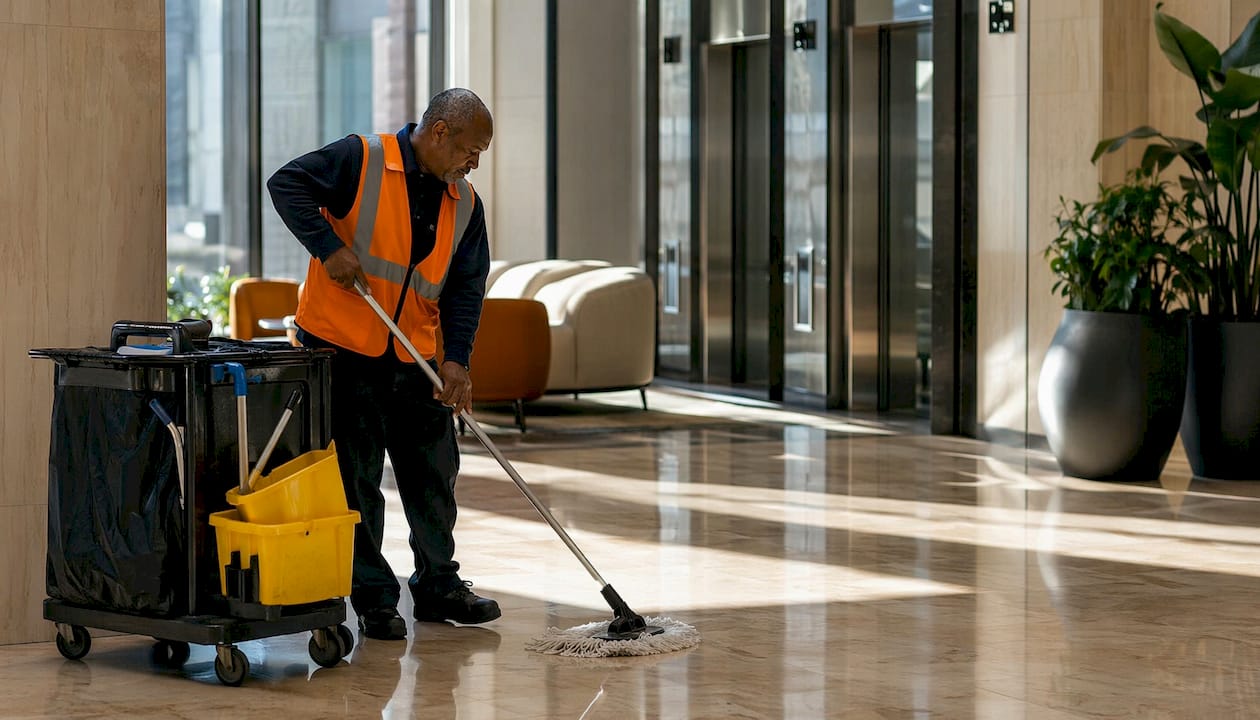
Property owners and managers carry the primary legal duty to maintain common areas. Landlords retain responsibility for the structure, exterior, roof, and shared communal systems, regardless of what a lease may or may not say about day-to-day maintenance. That distinction matters because tenants sometimes assume their lease limits the landlord's obligations. It does not, for structural and safety-critical items.
Statutory compliance is non-negotiable. Mandatory inspections include:
- Gas safety checks: Annual certification required for any gas supply serving communal areas.
- Electrical installation condition reports (EICRs): Required at regular intervals for shared electrical systems.
- Fire safety assessments: Ongoing fire risk assessments are a legal requirement under fire safety legislation in both Ireland and the UK.
- Lift inspections: Lifts in shared areas require periodic statutory examination.
- Lighting checks: Communal lighting must be maintained and tested regularly.
Under the HMO Management Regulations 2006, managers face civil penalties up to £30,000 for failing to keep common parts in good repair, clean, free from obstruction, and adequately lit. That figure alone should focus the mind of any landlord managing a house in multiple occupation. For Irish property owners, equivalent obligations exist under the Residential Tenancies Act and fire safety regulations.
Pro Tip: Keep a dedicated compliance folder for each property. Store inspection certificates, contractor invoices, and correspondence in one place. This documentation protects you if a dispute or enforcement notice arises.
Repair timelines also carry legal weight. Emergency repairs must be addressed within 24 hours, while routine maintenance may be scheduled within a month, provided the delay is documented. Delays without a documented reason invite enforcement notices and civil penalties.
How are common area maintenance fees calculated and managed?
CAM fees, known formally as service charges in UK and Irish property law, are calculated by totalling all anticipated costs for shared area upkeep and dividing them among tenants or leaseholders. The exact method depends on the lease wording, and this is where many landlords run into trouble.
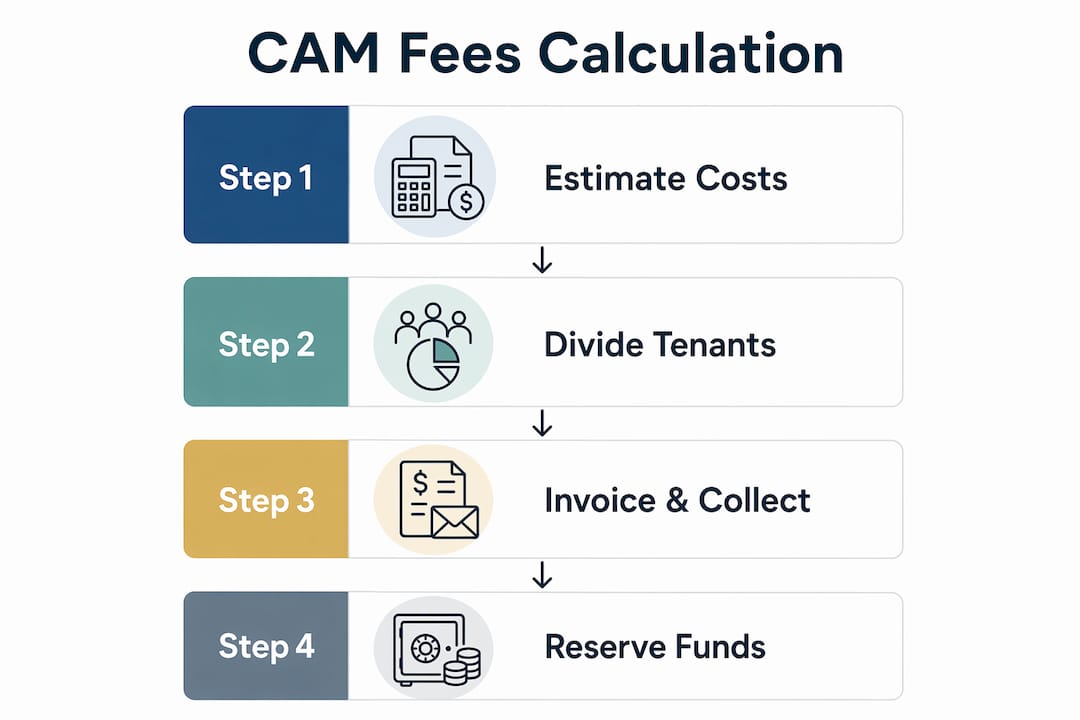
Service charges are legally bound by specific lease wording. Landlords can only recover costs for services or maintenance explicitly listed in the lease contract. If the lease excludes "improvements" or "major works" from the service charge clause, those costs are not recoverable, regardless of how necessary the work may be.
Typical cost components included in CAM fees are:
- Cleaning and janitorial services: Regular cleaning of hallways, stairwells, and communal areas.
- Lighting: Electricity costs and bulb replacements for shared lighting.
- Lift servicing: Maintenance contracts and statutory inspections for lifts.
- Building insurance: The landlord's policy covering the structure and common parts.
- Fire safety assessments: Cost of annual or periodic fire risk assessments.
- Managing agent fees: Where a managing agent is appointed, their fee is typically recoverable through the service charge.
- Grounds maintenance: Lawn care, hedge trimming, and general upkeep of communal outdoor areas.
Beyond operational costs, reserve funds or sinking funds are crucial for budgeting future major repairs. A sinking fund collects contributions over time so that large, infrequent costs, such as roof replacement or lift refurbishment, do not cause sudden spikes in service charges. Effective reserve fund management builds leaseholder confidence and prevents disputes.
One administrative error that catches landlords out is failing to include a prescribed summary of rights and obligations with every service charge demand. Absence of this summary prevents landlords from legally collecting owed charges until the error is corrected. The demand is not invalid forever, but the delay can cause cash flow problems and tenant friction.
| Cost type | Typically recoverable via service charge? |
|---|---|
| Routine cleaning | Yes, if listed in lease |
| Structural repairs | Yes, if lease includes structure |
| Major improvements | Only if lease explicitly permits |
| Managing agent fees | Yes, if listed in lease |
| Reserve fund contributions | Yes, if lease includes provision |
Pro Tip: Review your lease service charge clause with a solicitor before committing to any major works. Recovering costs later is far harder than confirming recoverability upfront.
What are the benefits and challenges of effective common area maintenance?
Good CAM practice delivers clear, measurable benefits for property owners and managers. Well-maintained shared areas reduce accident risk, lower the chance of enforcement action, and make a property more attractive to quality tenants. Properties with clean, safe communal spaces also retain value better over time, which matters when refinancing or selling.
The benefits of proactive CAM include:
- Tenant retention: Tenants renew leases more readily when shared areas are well kept.
- Legal compliance: Regular inspections and documented repairs reduce enforcement risk.
- Property value: Well-maintained grounds and communal areas support higher valuations.
- Fewer disputes: Transparent budgeting and clear responsibilities reduce friction with tenants.
The challenges are equally real. Cost disputes arise when tenants question whether charges are reasonable or permitted under the lease. Legal compliance is genuinely complex, particularly for landlords managing properties across both Irish and UK jurisdictions. Contractor coordination across multiple trades, cleaning, electrical, grounds, and lift servicing, creates scheduling and accountability gaps.
Proactive planning reduces unexpected costs significantly. Reserve fund management is more impactful than simply maintaining day-to-day cleaning or repairs. A landlord who sets aside funds annually for roof maintenance avoids a crisis when the roof eventually needs replacing. A landlord who does not faces a large, unbudgeted bill and potentially irrecoverable costs if the lease wording does not support them.
A useful starting point for Dublin landlords is this property maintenance checklist, which covers both statutory and operational tasks for multi-occupancy residential properties.
How can property owners and managers oversee common area maintenance effectively?
Effective oversight starts with appointing a single maintenance partner for all common area tasks where possible. Multiple contractors on shared services cause delays and higher emergency costs. A single point of accountability means faster response times, clearer invoicing, and fewer gaps between trades.
A practical maintenance schedule for common areas should cover:
- Weekly: Cleaning of hallways, stairwells, and communal lobbies; litter removal from outdoor areas.
- Monthly: Lighting checks; inspection of communal doors, locks, and entry systems.
- Quarterly: Fire safety equipment checks; grounds maintenance including lawn care and hedge trimming.
- Annually: Gas safety certification; EICR; lift inspection; fire risk assessment review; insurance renewal.
Record-keeping is as important as the maintenance itself. Every inspection, repair, and contractor visit should be logged with the date, the work carried out, and the cost. This log protects you in disputes and demonstrates compliance to enforcement authorities.
Tenant communication is often overlooked. Sending a brief annual statement of planned maintenance and associated costs builds trust and reduces the likelihood of service charge disputes. Tenants who understand what they are paying for are far less likely to challenge charges.
For guidance on fire safety compliance in Irish properties, the requirements are detailed and worth reviewing separately. Fire safety obligations in communal areas carry criminal as well as civil liability.
A good rental property cleaning checklist can also help property managers set clear standards for routine communal cleaning, whether carried out by in-house staff or a contracted service.
Key takeaways
Common area maintenance requires clear lease review, statutory compliance, and proactive reserve fund planning to protect property value and avoid costly legal disputes.
| Point | Details |
|---|---|
| CAM is legally defined by the lease | Landlords can only recover costs explicitly listed in the service charge clause. |
| Statutory compliance is non-negotiable | Gas, electrical, fire, and lift inspections are mandatory regardless of lease terms. |
| Reserve funds prevent cost spikes | Sinking funds spread the cost of major repairs and reduce tenant disputes. |
| Documentation protects landlords | Logged repairs and inspection records are your defence against enforcement action. |
| A single maintenance partner improves accountability | One contractor for all common area tasks reduces delays and emergency costs. |
Why I think most landlords underestimate the paperwork side of CAM
Most landlords focus on the physical work: cleaning, repairs, inspections. The paperwork side gets treated as an afterthought, and that is where the real risk lives.
I have seen landlords lose the right to collect legitimate service charges simply because they forgot to include a summary of rights and obligations with their demand letter. The work was done, the costs were real, and the lease permitted recovery. But the missing document made the demand legally invalid. That is an entirely avoidable problem.
The other mistake I see regularly is assuming that a broad lease clause covers everything. It rarely does. Leases written more than ten years ago often have vague service charge clauses that do not explicitly include reserve fund contributions or major structural works. When the roof needs replacing, the landlord discovers too late that the cost is not recoverable.
My advice is straightforward. Review your lease service charge clause every two years, not just when a dispute arises. Keep your compliance documentation current and in one accessible place. And if you manage properties in Dublin, treat the grounds and communal outdoor areas with the same rigour as the internal common parts. First impressions matter to tenants, and a neglected garden signals a neglected building.
— gerard
Grounds maintenance for Dublin properties: Sherrypropertycare
If you manage residential or commercial properties in Dublin, communal outdoor areas are part of your CAM obligations, not an optional extra.

Sherrypropertycare provides professional grounds maintenance services for property owners, landlords, and managers across Dublin. Services include lawn care, hedge trimming, landscaping, and general grounds upkeep, all tailored to the specific needs of your property. Getting a quote is straightforward: send photos of your grounds and Sherrypropertycare will provide a personalised estimate. Well-kept outdoor common areas protect your property's value, support tenant satisfaction, and keep you on the right side of your maintenance obligations. Get in touch today to discuss your requirements.
FAQ
What does common area maintenance include?
Common area maintenance covers the upkeep of all shared spaces in a property, including hallways, stairwells, lifts, car parks, communal gardens, shared lighting, and building systems. Costs typically include cleaning, lighting, lift servicing, fire safety assessments, building insurance, and managing agent fees.
How is common area maintenance calculated?
CAM fees are calculated by totalling all anticipated costs for shared area upkeep and dividing them among tenants or leaseholders, based on the formula set out in the lease. Landlords can only recover costs explicitly listed in the service charge clause of the lease.
What are the legal obligations for common area maintenance in Ireland?
Property owners in Ireland must maintain communal areas to a safe standard, carry out annual gas safety checks, periodic electrical inspections, and ongoing fire risk assessments. Failure to comply can result in enforcement notices and significant civil penalties.
What is a sinking fund in common area maintenance?
A sinking fund is a reserve of money collected from tenants over time to cover future large repair costs, such as roof replacement or lift refurbishment. It prevents sudden spikes in service charges and reduces the risk of disputes with leaseholders.
Can a landlord charge tenants for any common area work?
No. Cost recovery is strictly limited to what the lease explicitly permits. If the lease excludes improvements or major works from the service charge clause, those costs cannot be recovered from tenants, regardless of how necessary the work is.