TL;DR:
- Regular drainage maintenance in Dublin involves routine cleaning and professional inspections to prevent blockages, flooding, and structural damage caused by the city's wet climate and clay soils. It includes clearing gutters, surface drains, and checking subsurface pipes to ensure water flows properly and avoid costly repairs. Consistent upkeep preserves property value, reduces hygiene issues, and protects foundations from long-term damage.
Drainage maintenance is defined as the routine inspection, cleaning, and preventive care of drainage systems to keep water flowing freely and prevent blockages, flooding, and structural damage. For homeowners and property managers in Dublin, this covers everything from clearing leaves off storm drain grates to checking subsurface pipes and servicing pumps. Routine drainage upkeep reduces blockages and damage by ensuring water moves as the system was designed to handle. Done consistently, it protects your property's foundations, avoids costly emergency call-outs, and preserves long-term property value across Dublin's residential and commercial areas.
What does drainage maintenance actually involve?
Drainage system upkeep covers a broader range of tasks than most homeowners expect. The work spans both surface-level cleaning and subsurface inspection, and neglecting either side creates problems quickly.
Routine tasks include:
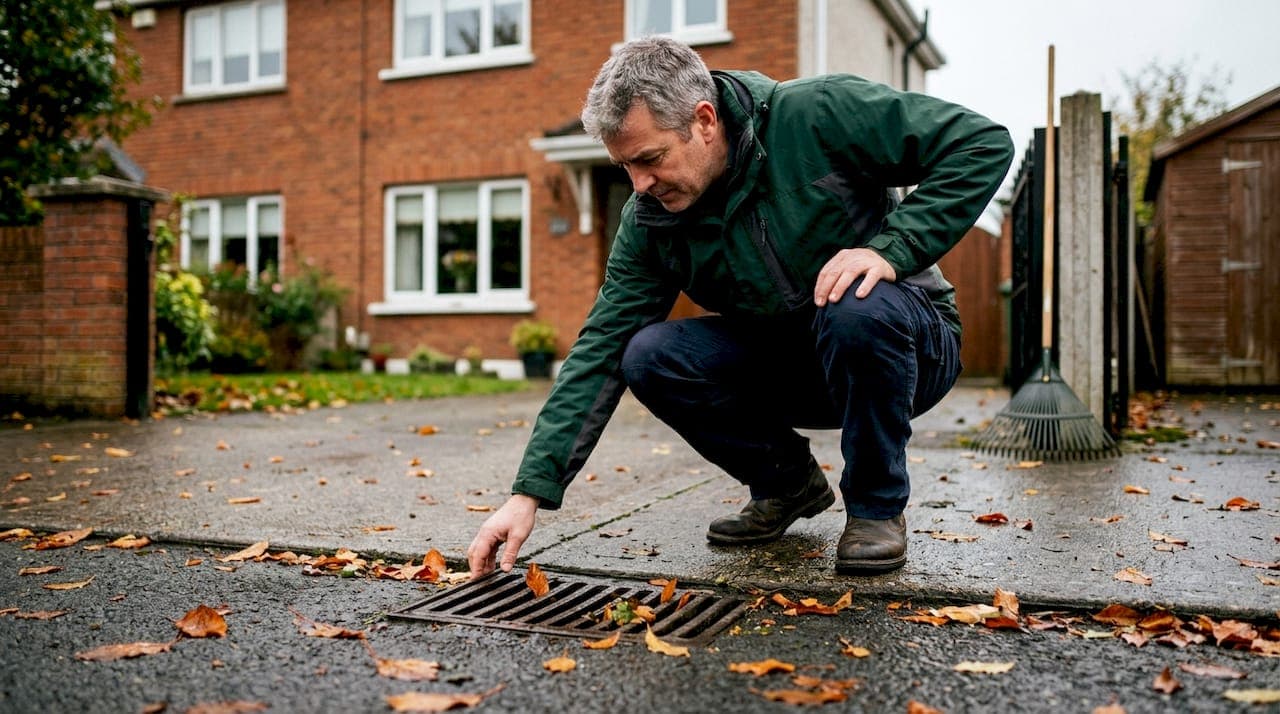
- Clearing gutters and downspouts of leaves, moss, and compacted debris, particularly after autumn leaf fall
- Cleaning external gullies and drain grates to remove silt, soil, and organic matter that restricts water entry
- Inspecting catch basins and storm drains on your property for blockages or visible damage to grates and frames
- Checking pumps and discharge pipes where applicable, particularly in properties with sump pumps or basement drainage
- Clearing vegetation from ditches, swales, and drainage channels, since overgrown plant matter restricts flow capacity and raises flood risk during heavy rain
For subsurface issues, visual checks are not enough. CCTV drain surveys allow a camera to travel through underground pipes and identify cracks, root intrusion, or collapsed sections without excavation. High-pressure water jetting, offered by professional drainage cleaning services, clears compacted blockages that a garden hose cannot shift.
Pro Tip: After any significant rainfall in Dublin, walk your property perimeter and look for pooling water near drain grates or along boundary walls. These spots reveal where flow is restricted before a blockage becomes a full failure.

Why drainage maintenance matters for Dublin properties
Dublin's climate makes drainage system upkeep more demanding than in drier parts of Europe. The city receives consistent rainfall throughout the year, and its prevalent clay-heavy soils absorb water slowly. When surface drainage fails, water has nowhere to go except against your foundations, into your garden, or down into your basement.
"Blocked drains cause pooling water and increase flood risk on private property. Homeowners are directly responsible for keeping storm drains on their land clear." — City of Mississauga guidance on drain maintenance
The structural risks go beyond surface flooding. Water that pools against a building's foundations over time causes subsidence, damp penetration, and mortar erosion. These are not minor cosmetic issues. Foundation repairs in Dublin regularly run into tens of thousands of euros, making the cost of prevention look negligible by comparison.
Poor drainage also creates hygiene problems. Stagnant water and blocked drains produce unpleasant odours from decomposing organic matter and create conditions that attract pests. For landlords and property managers, this directly affects tenant satisfaction and your legal obligations around habitable conditions.
Maintaining drainage also protects property value. A surveyor assessing a Dublin home will flag evidence of poor drainage, damp, or subsidence. These findings reduce sale prices and complicate mortgage applications. Consistent drainage upkeep is, in practical terms, an investment in your asset.
How often should you carry out drainage maintenance?
Frequency depends on your property type, the drainage system installed, and the surrounding environment. There is no single schedule that fits every Dublin property, but the following framework works well for most residential and commercial sites.
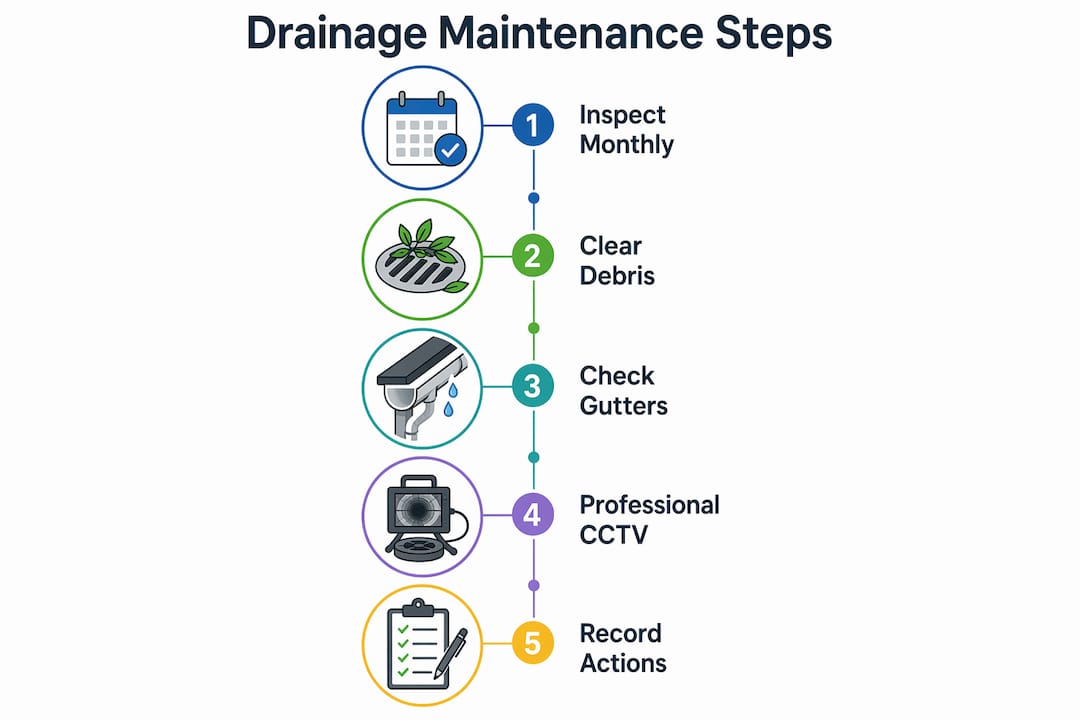
- Monthly visual checks: Walk the property after heavy rain. Look for pooling water, debris-covered grates, and any signs of slow drainage near downspouts or gullies.
- Seasonal cleans: Clear gutters and surface drains in late autumn after leaf fall, and again in early spring before peak rainfall. These are the two highest-risk periods for blockages in Dublin.
- Bi-annual inspections for French drains: French drain inlets and outlets need checking twice a year. Root intrusion and soil compaction are the most common causes of failure in these systems.
- Annual professional inspection: A CCTV survey and professional clean once per year gives you a clear picture of subsurface pipe condition. Annual professional assessments complement monthly homeowner checks for thorough maintenance.
- Condition-based adjustments: Properties with heavy tree coverage, large impervious surfaces such as car parks or paved yards, or older clay pipe systems need more frequent attention. High-load areas benefit from semi-annual professional cleaning rather than annual visits alone.
| Maintenance type | Recommended frequency |
|---|---|
| Visual property walk and grate check | Monthly |
| Gutter and surface drain clear | Twice yearly (autumn and spring) |
| French drain inlet and outlet inspection | Twice yearly |
| Professional CCTV survey and jetting | Annually |
| High-load or tree-heavy sites | Semi-annually for professional clean |
Pro Tip: Keep a simple log of every inspection and clean, including the date, what you found, and what action you took. This documentation supports insurance claims if flooding occurs and is useful evidence when selling the property.
What warning signs indicate a drainage problem?
Most drainage failures give clear signals before they become emergencies. Catching these early saves money and prevents structural damage.
Watch for these indicators:
- Slow drainage in sinks, showers, or external gullies, which signals a partial blockage building up over time
- Gurgling sounds from pipes or drains after water runs, caused by air displacement around a partial obstruction
- Persistent bad odours near drain covers, indicating decomposing organic matter trapped in the system
- Pooling water on lawns, driveways, or near foundations after rain, pointing to a blocked or overwhelmed drain
- Damp patches on internal walls or floors at ground level, which can indicate a leaking or blocked subsurface drain nearby
- Repeated blockages in the same location, which suggests a structural issue such as root intrusion or a collapsed pipe section
Hidden subsurface drains covered by landscaping or debris are a particular risk in Dublin gardens where planting has grown over drainage infrastructure. Walking the property after a storm reveals these overlooked points. Root intrusion from mature trees is also common in older Dublin neighbourhoods where clay pipes were installed decades ago and are now vulnerable to penetration.
When you notice any of these signs, call a professional rather than applying chemical drain cleaners. Chemical products damage older clay and cast-iron pipes and rarely resolve the underlying cause of a blockage.
Practical steps to maintain your drainage system at home
Effective drainage maintenance does not require specialist equipment for most routine tasks. The following steps cover what you can do yourself and when to bring in professional help.
- Clear leaves and debris from gutter channels and downspouts at least twice a year. Use a stable ladder, gloves, and a scoop. Flush with a hose to confirm water flows freely to the outlet. Our guide on gutter maintenance covers this in full detail.
- Lift and clean drain grates on external gullies. Remove accumulated silt and rinse the gully pot below the grate with a hose. This takes ten minutes and prevents the most common cause of surface flooding.
- Test drainage flow rates by running a hose at full pressure into each external gully for 30 seconds. If water backs up rather than draining away, the system needs attention.
- Avoid chemical drain cleaners for outdoor or subsurface drainage. These products corrode older pipe materials and do not clear compacted silt or root intrusion. Mechanical clearing or professional jetting is always the better choice.
- Arrange a professional CCTV inspection every year, or immediately if you notice any of the warning signs listed above. A camera survey identifies problems that no surface check can reveal.
- Keep a maintenance record noting dates, observations, and any work carried out. Good documentation of drainage inspections supports regulatory compliance and helps defend against flood liability claims.
For garden waste that accumulates near drainage channels, practical garden waste clearance keeps debris away from drain inlets and reduces the frequency of blockages.
Pro Tip: Never pour cooking fat, oil, or food waste down external drains. These solidify inside pipes and create blockages that are expensive to clear professionally.
Key takeaways
Consistent drainage maintenance prevents flooding, protects foundations, and avoids costly emergency repairs for Dublin homeowners and property managers.
| Point | Details |
|---|---|
| Define the scope | Drainage maintenance covers gutters, surface grates, subsurface pipes, and pumps, not just visible drains. |
| Follow a seasonal schedule | Clean gutters and grates in autumn and spring; arrange a professional CCTV survey annually. |
| Spot warning signs early | Slow drainage, gurgling pipes, and pooling water all indicate a blockage developing before failure occurs. |
| Avoid chemical cleaners | Use mechanical clearing or professional jetting to protect older pipe materials common in Dublin properties. |
| Document every inspection | Maintenance records support insurance claims and add credibility when selling your property. |
What I've learned about drainage maintenance in Dublin
Most homeowners I speak with in Dublin treat drainage as something to think about only when something goes wrong. A flooded garden or a backed-up gully gets attention. Everything else gets ignored until it becomes a crisis. That reactive approach costs far more in the long run than a consistent maintenance routine ever would.
What surprises people most is how much of their drainage system is invisible. Subsurface pipes, French drains, and soakaways sit under lawns and patios doing their work quietly until they fail. By the time you see the symptoms, the problem has usually been developing for months. Even when drains appear to be working, subsurface blockages can be progressing without any visible sign at the surface.
Dublin's clay soils add a layer of complexity that homeowners in other parts of Ireland do not always face. Clay drains slowly, so any reduction in drainage capacity from a partial blockage has an outsized effect on surface flooding. Properties in areas like Clontarf, Rathfarnham, and Terenure with mature tree coverage face particular pressure from root intrusion into older clay pipes.
My honest view is that homeowner misunderstanding is the single biggest obstacle to good drainage upkeep. People assume that if water is disappearing, the system is fine. It often is not. Combining a simple monthly visual check with an annual professional inspection gives you real confidence in your drainage, not just the appearance of it.
— gerard
How Sherrypropertycare supports drainage maintenance in Dublin
Sherrypropertycare provides professional grounds maintenance and drainage care services for residential and commercial properties across Dublin. If your gutters are overflowing, your gullies are silting up, or you are not sure when your drainage was last properly checked, we can help.

Our team carries out thorough external drainage cleaning, vegetation clearance from drainage channels, and routine inspection of surface drainage components. We work with property owners, landlords, and managers who want reliable, scheduled maintenance rather than emergency call-outs. Visit Sherrypropertycare's property care services to find out more or to request a quote tailored to your property in Dublin. Send us a photo of your site and we will come back to you with a clear, no-obligation price.
FAQ
What is drainage maintenance in simple terms?
Drainage maintenance is the regular cleaning, inspection, and care of drainage systems to keep water flowing freely and prevent blockages or flooding. It covers gutters, surface drains, subsurface pipes, and pumps.
How often should Dublin homeowners clean their drains?
Surface drains and gutters should be cleared at least twice a year, in autumn and spring. A professional CCTV inspection is recommended annually, with more frequent checks for properties with heavy tree coverage or older pipe systems.
What are the signs of a blocked drain?
Slow drainage, gurgling sounds from pipes, persistent bad odours near drain covers, and pooling water on hard surfaces or lawns are the most common early indicators of a developing blockage.
Can I maintain my drainage system myself?
Routine tasks such as clearing gutter channels, lifting and cleaning drain grates, and testing flow with a hose are straightforward DIY jobs. Subsurface inspections, high-pressure jetting, and pipe repairs require a professional drainage service.
Why is drainage maintenance particularly important in Dublin?
Dublin's consistent rainfall and clay-heavy soils mean drainage systems are under greater stress than in drier regions. Blocked or failing drains in Dublin lead quickly to garden flooding, foundation damp, and subsidence, making regular upkeep a practical necessity rather than an optional extra.