
TL;DR:
- Leasehold maintenance divides responsibilities between leaseholders and freeholders based on lease agreements and law. Leaseholders handle interior repairs, while freeholders manage the building's structure and communal areas funded through service charges. Compliance with legal standards and proactive, transparent management prevent disputes and protect property value.
Leasehold maintenance is the allocation of repair and upkeep responsibilities between leaseholders and freeholders, as defined by the lease agreement and relevant legislation. In practical terms, leaseholders own the right to occupy a property for a fixed term, while the freeholder retains ownership of the building structure and communal areas. This split creates a formal maintenance framework that every property owner and landlord in Ireland needs to understand clearly. Getting it wrong costs money, causes disputes, and can reduce property value.
What is leasehold maintenance and how does it work?
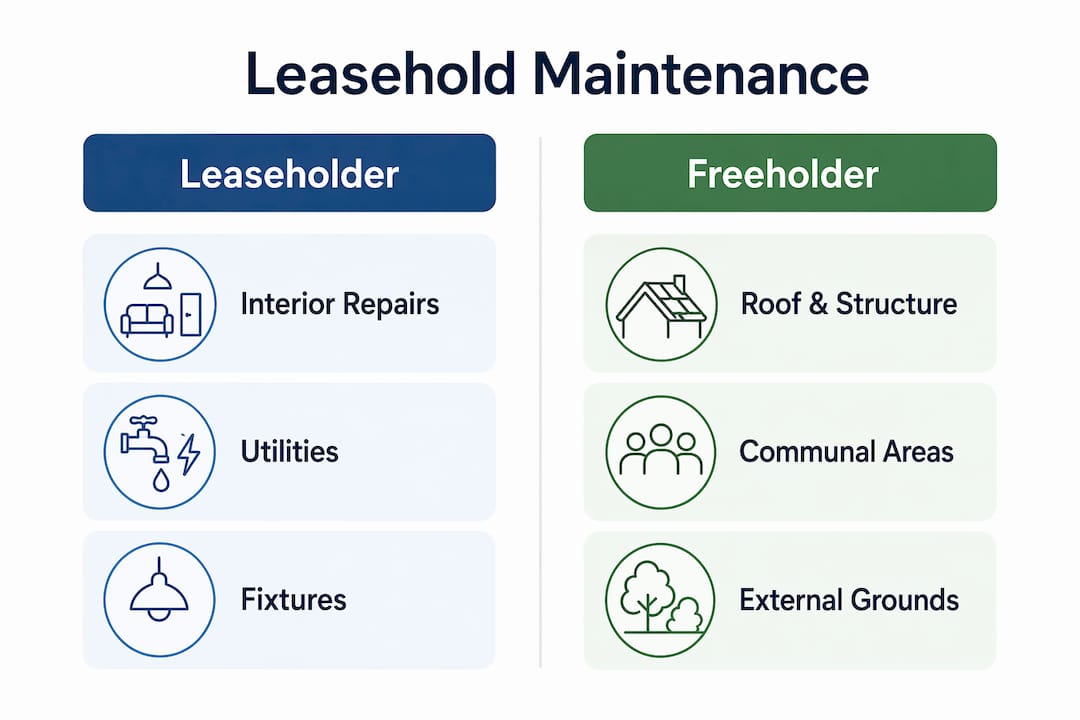
Leasehold maintenance divides property upkeep into two distinct zones of responsibility. The leaseholder handles everything within their individual unit. The freeholder, or a professional managing agent acting on their behalf, handles the building structure and shared spaces.
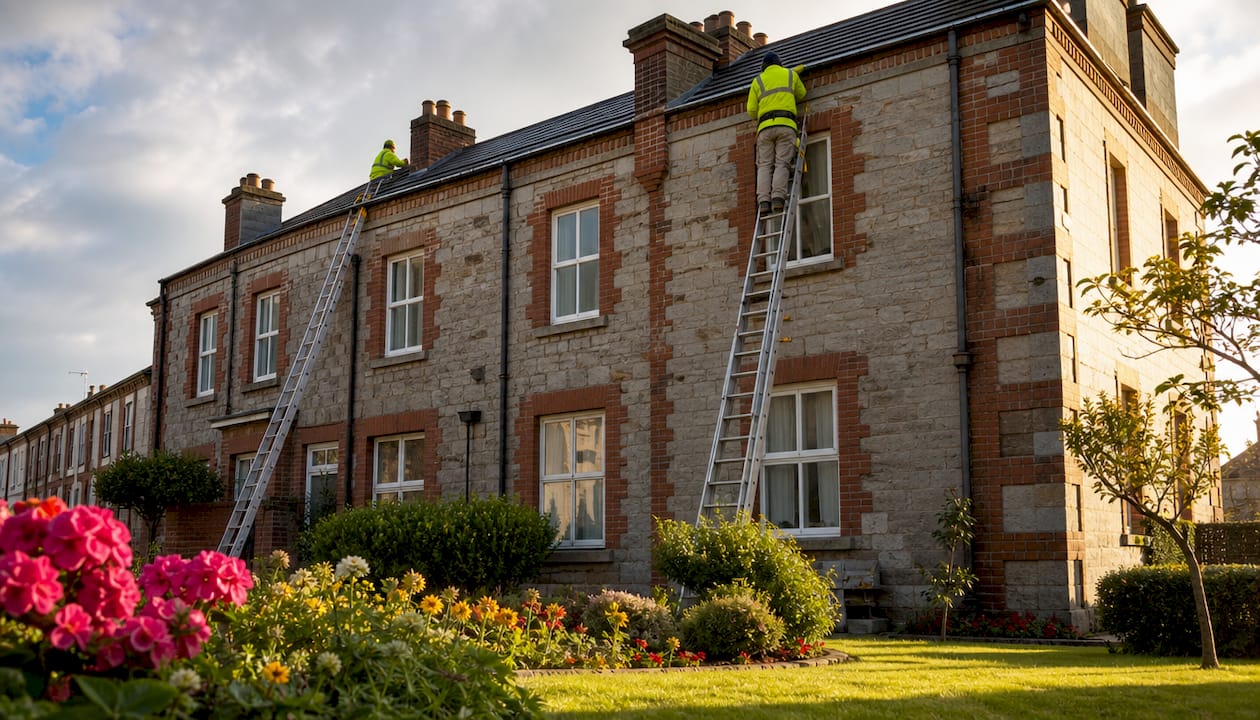
Communal hallways, roofs, foundations, external walls, and lifts all fall under freeholder responsibility. These are funded through service charges collected from leaseholders. The service charge is the financial mechanism that makes leasehold property management function. Without it, large-scale structural repairs would have no reliable funding source.
Understanding lease maintenance starts with reading your lease document carefully. The lease defines the exact boundary of each party's obligations, and those boundaries are not always obvious. A leaseholder in Dublin managing a flat in a period conversion faces very different obligations from one in a modern apartment block.
Who is responsible for what in leasehold maintenance?
The division of responsibilities follows a clear general pattern, though your specific lease always takes precedence.
Leaseholder responsibilities typically include:
- Internal walls, floors, and ceilings within the unit
- Plumbing and electrical systems inside the flat
- Internal fixtures, fittings, and appliances
- Windows and internal doors (though this varies by lease)
- Decorating the interior
Freeholder or managing agent responsibilities typically include:
- The roof and external walls
- Foundations and structural elements
- Communal hallways, stairwells, and lifts
- Shared gardens and external grounds
- Building insurance
One important exception involves lease terms like 'demise', which define the precise boundary of leaseholder obligations. A top-floor flat, for example, may carry roof liability where the lease specifies it. This shifts a traditionally freeholder responsibility directly onto the leaseholder. Always check the demise clause before assuming standard obligations apply.
Professional managing agents collect service charges, arrange maintenance contracts, and handle day-to-day building affairs. Their fees form a legitimate part of the service charge, provided they are reasonable. For landlords in Dublin managing leasehold blocks, engaging a qualified agent is often the most practical route to meeting obligations consistently.
Pro Tip: Request a copy of the lease demise plan alongside the lease document itself. The plan shows the physical boundary of your unit in diagram form, making responsibility disputes far easier to resolve.
What are your legal rights around leasehold fees and charges?
The legal framework governing leasehold maintenance costs is detailed and protective of leaseholders. Section 19 of the Landlord and Tenant Act 1985 mandates that all service charge costs must be reasonably incurred and that works must be carried out to a reasonable standard. This applies regardless of what the lease says about cost recovery.
The Section 20 consultation process is the most frequently misunderstood legal obligation in leasehold property management. Landlords must consult leaseholders before carrying out works that exceed £250 per leaseholder, or before entering long-term maintenance contracts that exceed £100 per leaseholder per year. These thresholds trigger a formal consultation requirement with specific notice periods and response windows.
The consequences of non-compliance are significant. Failure to follow Section 20 limits the landlord's ability to recover the full cost of works through service charges, regardless of how good the work was. That is a direct financial penalty for procedural failure.
Leaseholders also hold the right to challenge unreasonable charges. The First-tier Tribunal hears disputes where costs are not reasonably incurred or where work is substandard. Common dispute reasons include disproportionate management fees, poor-quality contractors, and charges for works never carried out.
Leaseholders can challenge service charges even when the lease technically permits the landlord to recover those costs. The test is reasonableness, not contractual permission. A charge that is disproportionate or relates to substandard work can be reduced or disallowed by a tribunal, regardless of what the lease says.
The Right to Manage (RTM) gives leaseholders another powerful option. RTM allows leaseholders to take control of building maintenance management without needing to prove any fault by the freeholder. This delivers direct control over contractor selection, cost transparency, and maintenance standards. For landlords and property owners in Dublin who feel their building is poorly managed, RTM is worth understanding in detail.
- Obtain a copy of your lease and identify the demise clause and repair obligations.
- Review all service charge demands against the Section 19 reasonableness standard.
- Check whether any recent major works required Section 20 consultation.
- Request a summary of service charge accounts, which you are legally entitled to receive.
- If charges appear disproportionate, seek advice on challenging them at tribunal.
How are leasehold maintenance costs calculated and managed?
Service charges cover a range of costs, and understanding what you are paying for is the first step to managing them well.
| Cost component | What it covers |
|---|---|
| Maintenance and repairs | Routine upkeep and reactive repairs to communal areas and structure |
| Building insurance | Cover for the structure and communal areas, arranged by the freeholder |
| Management fees | Fees paid to the managing agent for administering the building |
| Shared services | Cleaning, lighting, and landscaping of communal areas |
| Reserve or sinking fund | Contributions set aside for future major works |
Service charges include maintenance, insurance, management fees, and shared services. Each leaseholder's share is typically calculated as a proportion of the total building costs, based on a formula set out in the lease. That formula may be equal shares, or it may be weighted by flat size or floor position.
Transparency in service charge accounts is not optional. Leaseholders have the right to audit accounts and challenge fees they consider disproportionate. Active auditing prevents overcharging and mismanagement of maintenance funds. For landlords managing blocks in Dublin, commissioning an independent review of service charge accounts every few years is a sound practice.
Long-term maintenance contracts carry particular risk. Not all costs from maintenance contracts are automatically valid. Leaseholders should verify that costs are reasonable and that work meets a proper standard before accepting charges. A poorly negotiated grounds maintenance or cleaning contract can generate years of unjustified expense. Reviewing maintenance contracts for value regularly protects both landlords and leaseholders from unnecessary cost.
Pro Tip: Ask your managing agent for a breakdown of management fees as a percentage of total service charge income. Industry practice varies, but a figure above 15% warrants scrutiny and a direct conversation about what is included.
Best practices for managing leasehold maintenance effectively
Good leasehold property management is built on consistency, communication, and clear records. These practices reduce disputes and protect property value over time.
- Schedule regular inspections. Inspect communal areas and the building exterior at least twice a year. Catching minor defects early prevents expensive reactive repairs later. Landlords managing apartment block upkeep in Dublin should document each inspection with dated photographs.
- Use qualified contractors. Only engage contractors with relevant qualifications and insurance. Poor workmanship is one of the most common grounds for service charge disputes at tribunal.
- Communicate proactively. Notify leaseholders of planned works before they begin, not after. Clear communication reduces complaints and builds trust between all parties.
- Prepare for Section 20 consultations early. Do not wait until costs are committed. Identify major works in advance, budget for them, and begin the consultation process with enough lead time to meet statutory notice periods.
- Maintain detailed records. Keep copies of all maintenance contracts, invoices, inspection reports, and correspondence. Good records are your best defence in any dispute.
- Budget for a sinking fund. A reserve fund for major future works, such as roof replacement or lift refurbishment, prevents sudden large demands on leaseholders. Consistent contributions spread the cost fairly over time.
For landlords in Dublin, understanding your maintenance responsibilities under Irish law is equally important alongside the UK legislative framework. Irish property law has its own provisions, and staying current with both is part of responsible leasehold property management.
Key takeaways
Leasehold maintenance is defined by the lease and governed by statute, making both document review and legal compliance non-negotiable for landlords and leaseholders in Ireland.
| Point | Details |
|---|---|
| Responsibility split | Leaseholders maintain their unit interior; freeholders manage structure and communal areas. |
| Section 20 compliance | Consult leaseholders before works exceeding £250 per person or risk losing cost recovery rights. |
| Reasonableness standard | All service charges must meet the Section 19 test, regardless of what the lease permits. |
| Transparency and auditing | Leaseholders can request and audit service charge accounts to challenge disproportionate fees. |
| Proactive management | Regular inspections, clear records, and early budgeting prevent disputes and protect property value. |
What I have learned managing leasehold properties in Dublin
The biggest mistake I see landlords make is treating the lease as a formality rather than a working document. They sign it, file it, and never look at it again until something goes wrong. By then, a dispute is already brewing and the costs of resolving it are far higher than the cost of understanding the lease from the start.
The main disputes between leaseholders and landlords centre on the reasonableness and quality of maintenance costs, not on whether the landlord has the right to charge. That distinction matters. A landlord can be entirely within their contractual rights and still lose a tribunal case because the work was overpriced or poorly done. Winning on entitlement but losing on reasonableness is a costly lesson.
What actually works is building a cooperative relationship with leaseholders before problems arise. Share maintenance plans early. Explain why costs are what they are. Invite questions. Leaseholders who feel informed are far less likely to challenge charges, even when those charges are substantial. The transparency is not just good practice. It is a practical cost-saving measure.
Dublin's property market has its own character. Older Georgian and Victorian conversions carry structural quirks that standard maintenance schedules do not anticipate. Newer apartment blocks come with complex shared systems that require specialist contractors. Neither type manages itself. The landlords who do this well are the ones who treat maintenance as an ongoing programme, not a series of emergencies.
— gerard
Grounds maintenance for leasehold properties in Dublin
Leasehold maintenance obligations extend to the external grounds of a property, and that is where presentation directly affects value and tenant satisfaction.

Sherrypropertycare provides professional gardening and grounds maintenance for leasehold properties across Dublin. From lawn care and hedge trimming to full grounds upkeep for apartment blocks, the service is built around the specific needs of landlords and property managers. Every quote is tailored to your property. Send a photo of your grounds and Sherrypropertycare will provide a clear, personalised quote with no obligation. Visit Sherrypropertycare to get started and keep your leasehold property looking its best year-round.
FAQ
What does leasehold maintenance cover?
Leasehold maintenance covers the repair and upkeep of both the individual unit and the shared building, split between leaseholder and freeholder responsibilities as defined in the lease. Leaseholders handle internal repairs; freeholders manage the structure, roof, and communal areas.
Who pays for communal area repairs in a leasehold property?
The freeholder arranges and funds communal area repairs, recovering costs from leaseholders through service charges. Each leaseholder's contribution is calculated according to the formula set out in their lease.
Can I challenge my service charge if it seems too high?
Yes. Section 19 of the Landlord and Tenant Act 1985 requires all service charge costs to be reasonably incurred. Leaseholders can apply to the First-tier Tribunal to challenge charges they consider disproportionate or relating to substandard work.
What is the Section 20 consultation process?
Section 20 is a legal requirement for landlords to consult leaseholders before carrying out works costing more than £250 per leaseholder or entering long-term contracts above £100 per leaseholder per year. Non-compliance limits the landlord's right to recover those costs through service charges.
What is the Right to Manage in leasehold property?
The Right to Manage allows leaseholders to take over the management of their building without proving freeholder fault. It gives leaseholders direct control over contractor selection, maintenance standards, and cost transparency.